
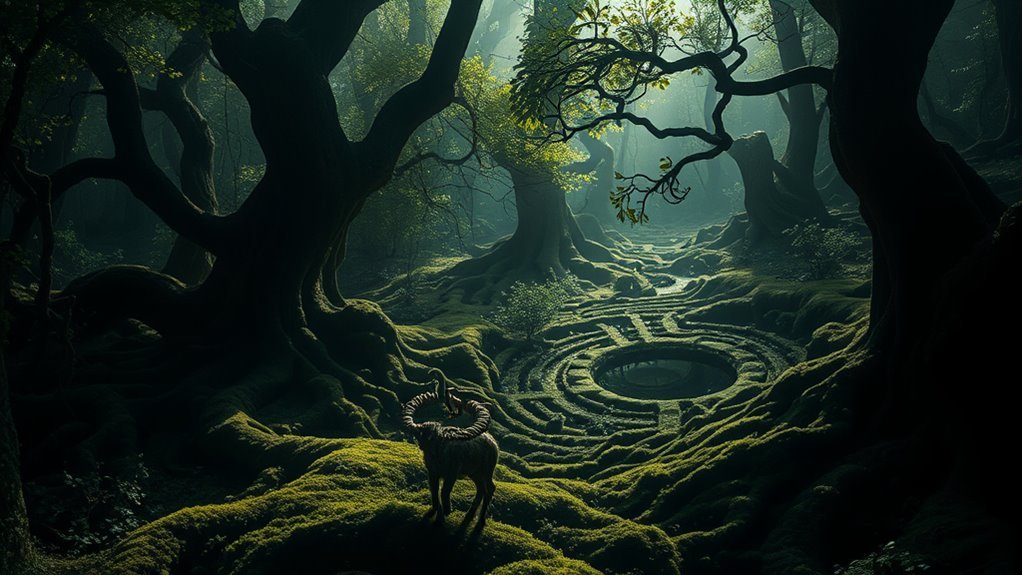
Why Is It Called Pan’s Labyrinth?
You’re probably wondering why it’s called Pan’s Labyrinth when the mysterious creature is actually a faun from Roman mythology, not the Greek god Pan. Guillermo del Toro chose the title to evoke mythic themes of innocence, moral tests, and a magical journey through the labyrinth.
This faun guides Ofelia through challenges that blend fantasy and reality, symbolizing growth and self-discovery. If you explore deeper, you’ll find how myth, literature, and symbolism enrich the story’s meaning.
What Is the Mythological Origin of Pan’s Labyrinth?
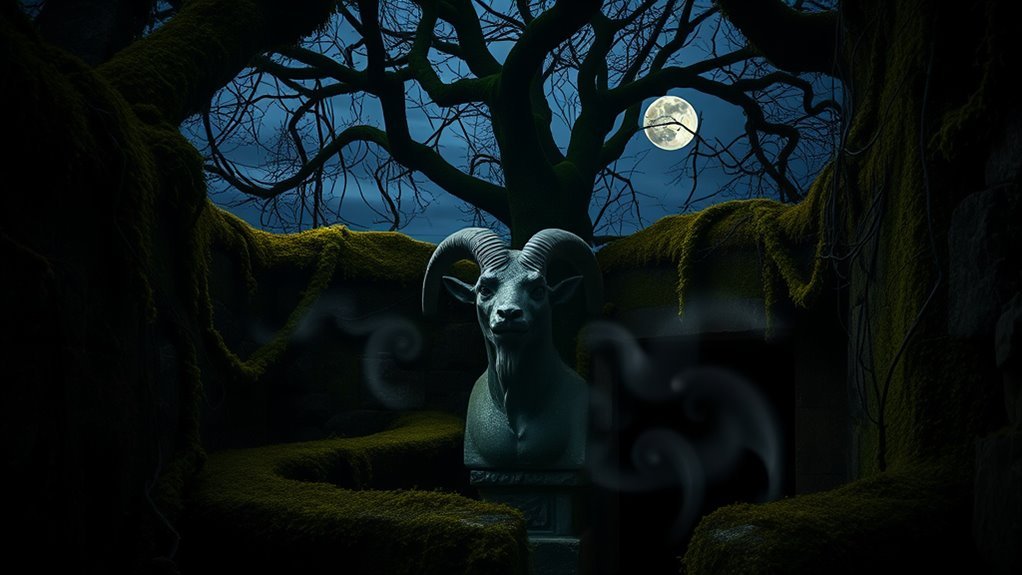
Why does the film use the name Pan when its central creature is actually a faun? In fact, the creature you see is a faun, which comes from Roman mythology, not Pan from Greek mythology. Pan is a Greek god tied to nature, shepherds, and music, known for his goat legs and wild personality.
The faun in the film has a mossy, bark-like look, emphasizing mystery rather than Pan’s more earthy traits. The original Spanish title, *El Laberinto del Fauno*, translates to *The Labyrinth of the Faun*, making clear the creature’s mythological origin. The labyrinth itself symbolizes a journey, but the faun’s role differs from Pan’s Greek myth, focusing on whimsy and the natural world, not the god’s specific associations.
How Guillermo Del Toro Chose the Film’s Title
Although the film’s creature is a faun, Guillermo del Toro chose the title “Pan’s Labyrinth” to tap into the rich mythological and symbolic associations that the name Pan evokes. You’ll notice that the original Spanish title, *El Laberinto del Fauno*, directly highlights the labyrinth and faun, key to the story’s symbolism. Del Toro intentionally avoided naming the creature Pan to prevent confusion, since the faun in the film isn’t the Greek god but a mysterious guide.
Why the Faun Is Key to Pan’s Labyrinth’s Story
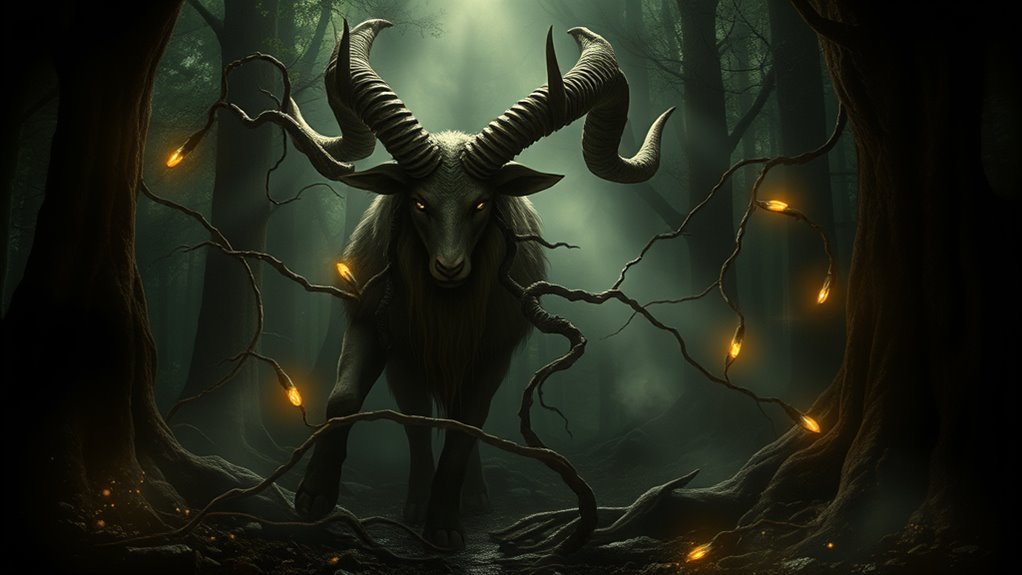
When you watch *Pan’s Labyrinth*, the faun stands as a crucial figure guiding Ofelia through the story’s mystical and moral challenges. This mythological creature, rooted in Roman mythology, serves as both a gatekeeper and mentor as she navigates the labyrinth’s complexities. Guillermo del Toro deliberately chose a faun—not the Greek god Pan—to embody the film’s themes, highlighting the creature’s ambiguous nature and connection to the mythical world.
The faun’s presence ties the human and supernatural domains, testing Ofelia’s courage and purity. By focusing on this mythological creature, the story deepens its exploration of innocence, sacrifice, and escape within the labyrinth’s twisting paths, making the faun essential to understanding the film’s haunting, symbolic narrative.
Why the Film’s Faun Differs From Classical Pan
How does the faun in *Pan’s Labyrinth* differ from the classical figure of Pan you might expect? Unlike the Greek god Pan, known for his wild sexuality, the film’s faun draws from Roman mythology and lacks those associations. Guillermo del Toro deliberately changed the faun’s appearance from the typical half-goat to a mossy, bark-like creature, adding mystery and ambiguity.
This faun feels more whimsical and deeply connected to nature, rather than embodying the lustful traits of Pan. Although the title references Pan, the character itself isn’t the Greek god. Del Toro’s choice highlights a distinct mythological origin and symbolic meaning, making the faun a unique figure rather than a direct adaptation of Pan from classical mythology.
This difference shapes your understanding of the creature’s role in the story.
How the Labyrinth Symbolizes Ofelia’s Journey
The faun’s unique nature sets the stage for understanding the labyrinth as more than just a physical space—it becomes a reflection of Ofelia’s inner world. As you follow Ofelia through the twisting maze, you realize the labyrinth symbolizes her journey of growth and self-discovery. Like the fairy tales she cherishes, this maze challenges her with moral tests and choices between innocence and the harsh adult world.
The labyrinth’s complex paths mirror the internal struggles she faces, guiding her toward understanding her true identity and destiny as a princess. At the maze’s heart, the faun’s tasks represent Ofelia’s psychological passage through fear, obedience, and morality. This labyrinth isn’t just a setting—it’s a powerful metaphor for her passage from darkness to enlightenment.
How Pan’s Labyrinth Blends Fantasy and Reality
Although you might expect *Pan’s Labyrinth* to center on the mythical character Pan, Guillermo del Toro uses the title to evoke deeper mythological symbolism that blurs fantasy and reality. You’ll find the labyrinth serves as a powerful metaphor for the tangled line between the brutal reality Ofelia faces and the fantasy world she escapes into.
The faun, a mythological guide, leads you through this maze of moral and magical trials, making you question what’s real. Del Toro blends surreal, dreamlike visuals with historical cruelty, forcing you to navigate a domain where childhood imagination and adult horrors coexist.
This fusion of fantasy elements and harsh reality deepens the story, showing how mythological creatures and labyrinthine journeys reflect inner struggles amid external chaos.
How the Title Symbolizes Innocence and Danger
When you hear “Pan’s Labyrinth,” you might picture a simple fairy tale, but the title actually captures a complex blend of innocence and danger. The labyrinth symbolizes a world where childhood curiosity meets hidden threats, inviting you into a fantasy that’s both enchanting and perilous.
As you navigate this maze, you experience the delicate balance between a child’s innocence and the lurking dangers that test it. The title hints at a progression—not just through physical paths, but through the emotional journey from innocence to harsh reality.
How the Myth of Pan Shapes the Film’s Themes
You might notice the faun’s mysterious presence echoes the mysticism linked to Pan, even though they’re distinct figures. This contrast shapes how the film explores nature’s duality—its beauty and its danger.
As you watch, pay attention to how the faun guides you through this complex blend of innocence and wildness.
Pan Symbolism And Mysticism
How does the myth of Pan shape the themes in Pan’s Labyrinth? While the film’s faun isn’t Pan, the myth of Pan deeply influences its mysticism and symbolism. You’ll notice how Pan’s wildness and primal nature echo through the labyrinth’s mysterious, shadowy paths.
This myth connects nature, music, and untamed forces, enriching the story’s exploration of innocence facing darkness. The labyrinth itself acts as a metaphorical space where myth and reality blur, inviting you into a world shaped by ancient mysticism.
Although the faun differs from Pan, the film weaves Pan-like imagery to evoke the myth’s primal energy, deepening your experience of the labyrinth’s magical and foreboding atmosphere. This blend of myth and mysticism makes the film’s themes resonate more powerfully.
Faun’s Role Versus Pan
Although many viewers associate the film’s central creature with Pan, Guillermo del Toro deliberately calls it a faun to highlight its distinct mythological origin. You’ll notice the faun differs from Pan, who belongs to Greek mythology as a god of nature and music. Instead, this creature draws from Roman mythology, embodying a more enigmatic presence within the labyrinth.
Nature And Duality Themes
The faun’s distinct identity doesn’t erase the powerful influence of Pan’s myth on the film’s themes. You’ll notice how the labyrinth, a key symbol tied to Pan’s myth, represents your journey through the confusing maze of childhood innocence clashing with harsh adult realities. Pan’s duality as both a nurturing nature god and a wild, unpredictable force shapes the story’s tension between purity and brutality.
When you explore the film, you see nature isn’t just a backdrop but a living, symbolic presence reflecting temptation, disobedience, and growth. This duality in the labyrinth and the faun’s character invites you to confront moral challenges and spiritual transformation, deepening your understanding of how Pan’s myth weaves its rich symbolism into the film’s core themes.
How Pan’s Labyrinth Connects to Literary Influences
When you watch Pan’s Labyrinth, you’ll notice Guillermo del Toro weaves rich literary influences into its fabric, drawing from mythologists like Borges and Machen as well as dreamlike storytellers such as Dunsany. The film’s labyrinth symbolizes a journey of self-discovery deeply rooted in classic literature and mythology. The faun, a key figure, reflects Roman and Greek mythologies while embodying literary archetypes of nature spirits.
Del Toro blends fantasy and reality, using themes of innocence, disobedience, and moral growth inspired by fairy tales and mythic narratives.
- The labyrinth as a metaphor for inner exploration and choice
- The faun’s design inspired by classical mythology and literary depictions
- Influences from Borges, Machen, and Dunsany shaping the film’s tone
- Themes of innocence and brutality reflecting fairy tale motifs
These literary influences enrich Pan’s Labyrinth’s storytelling and symbolism.
Frequently Asked Questions
Why Is Pan’s Labyrinth Called Pan’s?
You call it Pan’s Labyrinth because the faun resembles Pan, the Greek god, even though the film features a faun from Roman mythology.
The title links mythological themes, making it more recognizable and intriguing for audiences.
What Is the Meaning of Pan Labyrinth?
Over 80% of viewers find Pan’s Labyrinth symbolizes your journey through innocence to harsh reality, blending myth and mystery.
You’ll see the labyrinth as your challenge, while “Pan” evokes nature’s primal, enchanting force guiding you.
Was the Faun in Love With Ofelia?
No, the faun isn’t in love with Ofelia. You’ll see he acts as a mystical guide, protective and mysterious, but Guillermo del Toro doesn’t suggest any romantic feelings between them in the film’s story or symbolism.
What Does the Pale Man Symbolize in Pan’s Labyrinth?
You might expect a monster, but the Pale Man symbolizes oppressive systems feeding on the helpless. His eerie, faceless form and deadly feast reveal how power dehumanizes victims.
The Pale Man urges you to resist patriarchal control and injustice.
Conclusion
You might think Pan’s Labyrinth is just a mythical maze ruled by a mischievous faun, but it’s really your guide through innocence tangled with danger. Guillermo del Toro didn’t just pick a catchy name—he twisted the myth, blending fantasy and harsh reality.
So, while you expect a simple fairy tale, you get a labyrinth where childhood wonder and dark truths dance. This proves that sometimes, the most enchanting stories are the ones that don’t let you escape easily.
In the end, Pan’s Labyrinth is more than a name; it’s a symbol of the complex journey between innocence and darkness, making it a powerful and unforgettable tale.