
Why Is My AC Pan Filling With Water and How Do I Fix It?
Your AC pan fills with water mainly because the condensate drain line is clogged or the drain pan is damaged, stopping proper drainage. Dirty filters can also cause coil freezing, leading to excess water melting into the pan. These common AC problems often result in water overflow and potential damage.
You can fix it by clearing clogs with a wet/dry vacuum and vinegar, checking for leaks or cracks, and ensuring outdoor drain exits are clear. Regular maintenance is key to preventing these issues.
Keep your system maintained, and if problems persist, deeper issues might be at play. Keep exploring to find out how to handle these fixes and prevent future overflow.
Why Your AC Pan Is Filling With Water: Common Causes
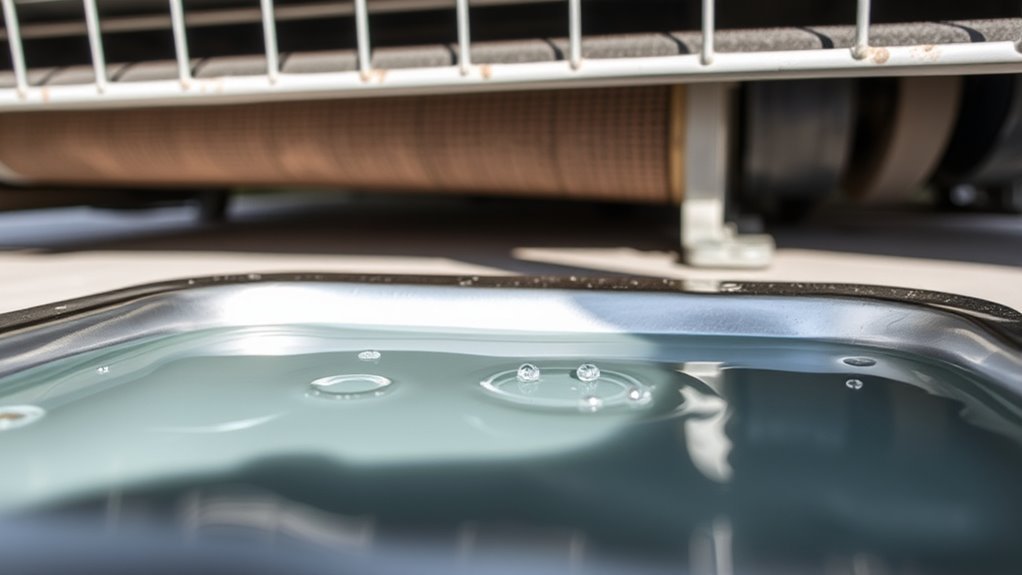
If your AC pan is filling with water, it’s often because the condensate drain line is clogged, blocking water from draining properly. A clogged drain line leads to water pooling in the drain pan, which can cause water damage if left unchecked.
Dirty filters contribute by causing the evaporator coil to freeze; when the ice melts, it adds excess water to the pan, resulting in an overflowing A/C. You might also find that algae or debris build up inside the drain pipes, further obstructing the condensate drain.
Additionally, cracks or rust in the drain pan itself can let water leak or pool unexpectedly. Improper installation or a poorly tilted unit can prevent water from flowing freely, increasing the risk of water pooling and damaging your system.
How to Stop AC Pan Overflow and Inspect for Damage
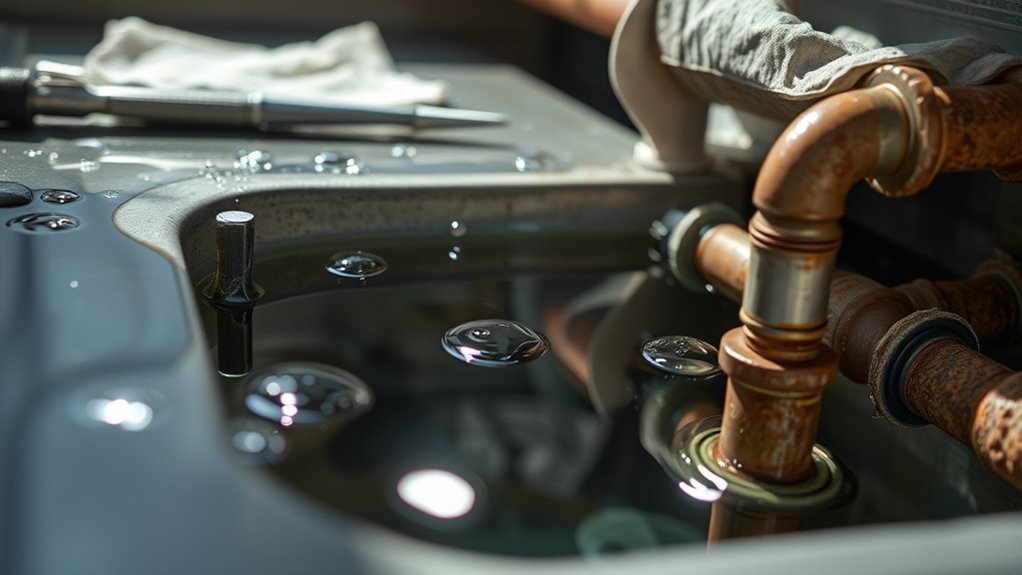
When your AC pan starts overflowing, you need to act quickly to prevent water damage and system failure. First, inspect for damage by checking the drain pan for cracks or rust, which can cause leaks. Next, look for water pooling outside the pan or signs of drain line blockage.
A clogged drain line is a common cause of drain pan overflow. Use a wet/dry vacuum to clear the drain and remove any debris or algae buildup. Don’t forget to test the float switch; a malfunction here can prevent system shutdown during overflow, worsening the problem.
Addressing these issues promptly helps stop drain pan overflow and protects your AC system from costly damage.
How to Clear AC Pan Clogs and Fix Drainage Problems
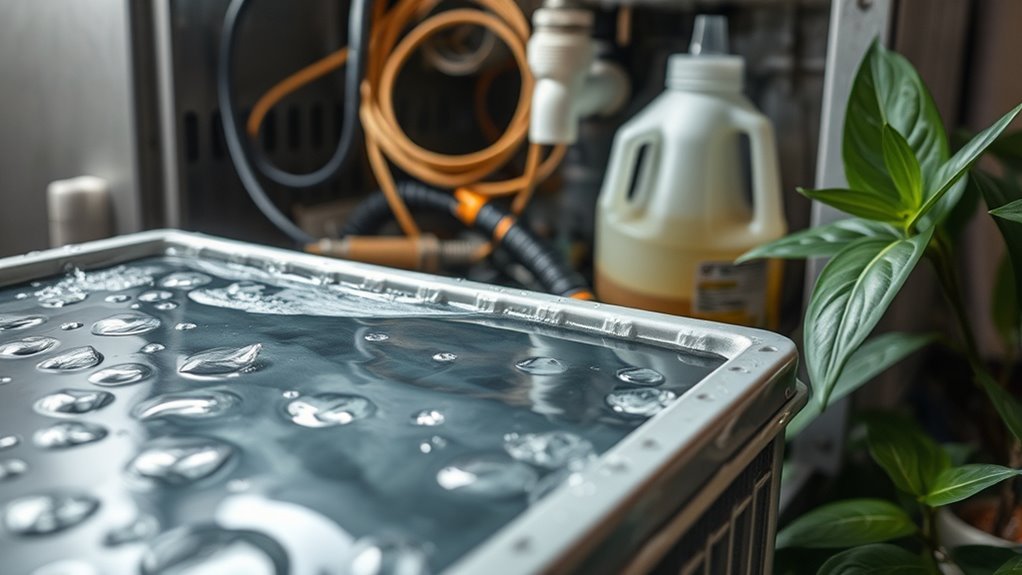
Regularly clearing clogs in your AC pan and drainage system keeps water flowing smoothly and prevents costly backups. When you notice a drain pan full of water, a clogged drain line is often the culprit. Use a wet/dry vac to clear the line by removing debris and algae from the condensate drain.
After vacuuming, flush with vinegar to break down organic buildup and maintain flow. Inspect the drain pan for cracks or rust; perform drain pan repair or replace it if damaged to avoid drainage problems. Also, check the outdoor drain exit for obstructions.
Don’t forget to test the float switch regularly—it triggers before the drain pan overflows, helping you catch issues early and protect your system from water damage.
Preventing AC Pan Water Buildup With Easy Maintenance
Although AC pan water buildup can cause serious issues, you can prevent it with simple maintenance steps. Regularly clean your condensate drain line to avoid clogs from algae or mold. Change air filters every 1 to 3 months to maintain airflow and prevent coil freezing, which leads to excess water.
Check the drain pan for blockages and clear outdoor drain exits to ensure smooth water flow. Installing a float switch can stop the system if the drain pan fills and gets full of water. Here’s a quick maintenance guide:
| Task | Frequency | Result |
|---|---|---|
| Clean condensate drain | Monthly | Prevents clogged drain line |
| Change air filters | 1-3 months | Keeps air filters clean and airflow steady |
| Clear outdoor drain | Monthly | Avoids drain pan fills |
| Inspect drain pan | Regularly | Stops dripping and overflow |
Regular maintenance keeps your AC drip-free and efficient.
When to Call a Pro If Your AC Pan Keeps Filling
If your AC pan keeps filling with water despite your efforts to clear clogs, it’s time to call a professional. Persistent water overflow might mean a faulty float switch or a clogged drain line that needs expert repair. It could also signal drain pan damage or a refrigerant leak causing excess condensation—issues best handled by an HVAC technician.
Attempting further DIY fixes risks worsening water damage or drainage system problems. A licensed pro will perform a thorough professional diagnosis to pinpoint the root cause and safely restore proper function. Scheduling regular AC maintenance with a specialist can prevent recurring filling issues and keep your system running smoothly over time.
Don’t wait for water damage to escalate; contacting a pro ensures effective, lasting solutions.
Frequently Asked Questions
What to Do if an AC Pan Is Full of Water?
You should turn off your AC, empty the water from the pan, and clear the condensate drain line. Check for clogs or damage, clean the filter, and call a professional if the issue continues.
Why Is There so Much Water in My AC Drip Pan?
You’re seeing so much water because the drain line’s clogged, the filter’s dirty, or the pan’s damaged.
Fix these by cleaning, replacing parts, or ensuring proper installation so water drains correctly and doesn’t overflow.
How Do I Unclog My AC Condensate Drain Line?
You can unclog your AC condensate drain line by using a wet/dry vacuum to remove debris, then flushing it with a vinegar-water solution or garden hose.
Regular cleaning and, if needed, a plumber’s snake will keep it clear.
How Much Does It Cost to Fix a Condensate Drain Line?
Fixing your condensate drain line won’t cost a fortune—you’re looking at $100 to $500 depending on the damage.
Simple clogs are cheaper, but if it’s broken, expect higher repair or replacement fees.
Conclusion
Now that you know why your AC pan is filling with water and how to fix it, you can take control and prevent costly damage. Regularly checking for clogs, leaks, and proper drainage keeps your system running smoothly.
Don’t ignore those early signs—after all, wouldn’t you rather stop a small problem before it becomes a big headache? If things get tricky, don’t hesitate to call a pro to keep your AC in top shape.
Maintaining your air conditioner’s drainage system is key to avoiding water buildup in the AC pan. Routine maintenance and timely repairs will ensure your air conditioning unit works efficiently and lasts longer.