How Do You Clean a Burnt Stainless Steel Pan Easily
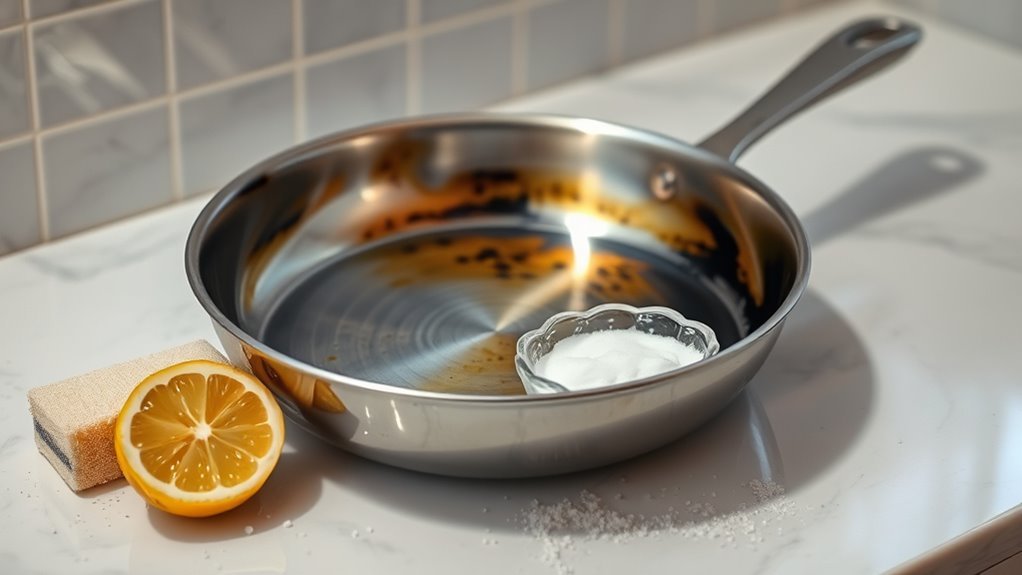
To clean a burnt stainless steel pan easily, start by filling it with equal parts hot water and vinegar. This combination helps break down burnt residue effectively. Heat the mixture until it begins to steam, then let it simmer for about 20 minutes to loosen stubborn burnt bits.
Next, make a paste using baking soda and water. Apply this paste to the burnt areas and gently scrub using crumpled aluminum foil. This method lifts burnt particles without scratching the pan’s surface.
Avoid using harsh chemicals or metal scrubbers, as these can damage the finish of your stainless steel pan. After cleaning, dry the pan thoroughly to prevent water spots.
If you want tips on preventing burns and other quick cleaning tricks, there’s plenty more to explore.
How to Clean a Burnt Stainless Steel Pan Quickly
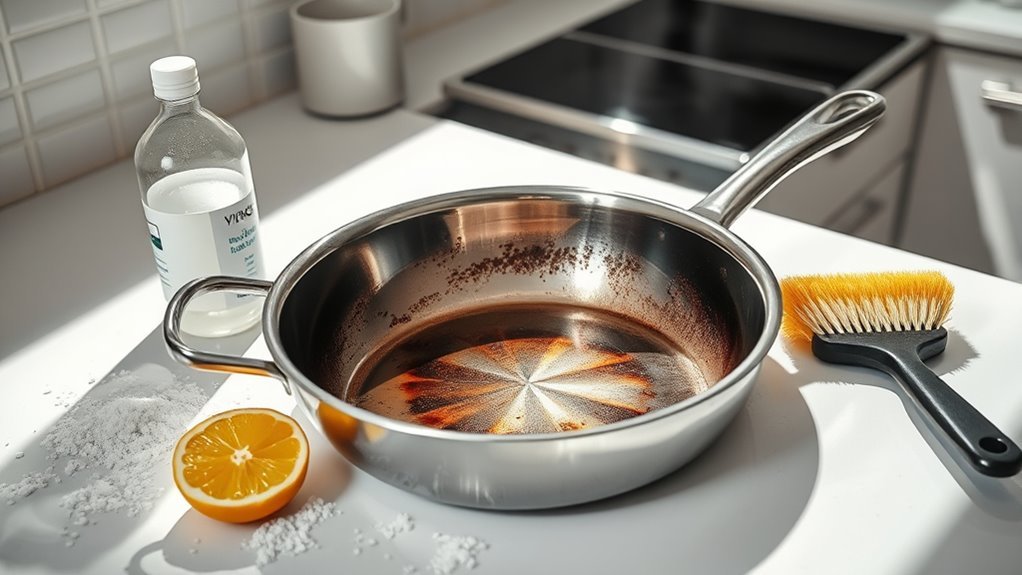
When you need to clean a burnt stainless steel pan quickly, start by adding a small amount of water and a dishwasher tablet, then warm the pan on low heat—this helps lift burnt food with minimal scrubbing.
For tougher spots on your steel cookware, apply a baking soda paste to the burnt stainless steel surface. Use crumpled aluminum foil to gently scrub the area without scratching the finish.
You can also boil water with lemon slices in the pan for 5 to 10 minutes, loosening burnt residues before scrubbing. These methods avoid harsh chemicals and protect your steel cookware’s surface, making cleanup fast and effective.
Stick to these simple steps to restore your burnt stainless steel pans without wasting time or effort.
Soften Burnt Residue With Hot Water and Vinegar
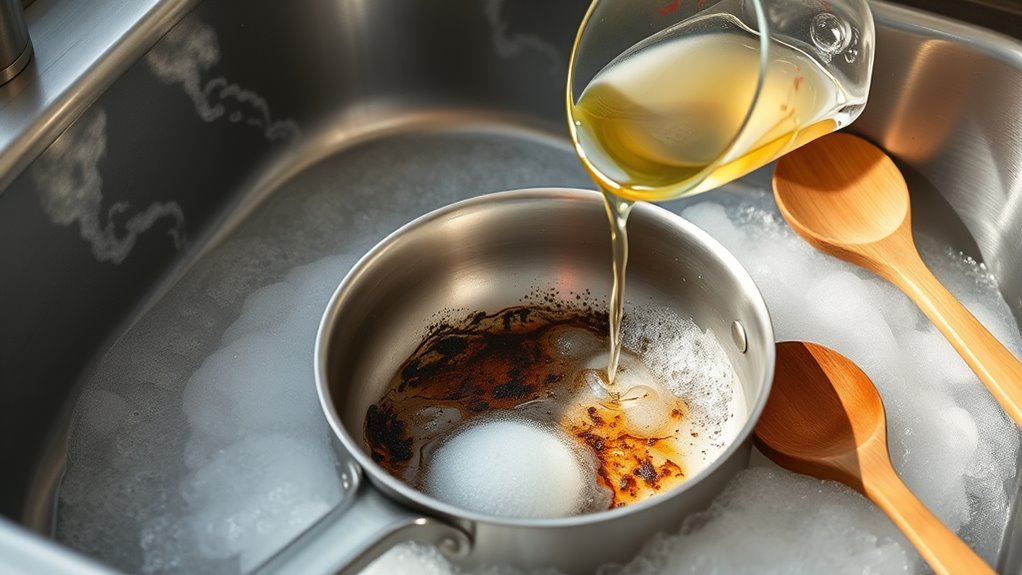
If you’ve tried quick fixes like baking soda paste or boiling lemon water but still face stubborn burnt spots, softening the residue with hot water and vinegar can make a big difference. Fill your pan with equal parts hot water and vinegar, then heat until it steams.
Lower the heat to simmer and cover the pan for about 20 minutes. This acidic steam breaks down burnt-on grease and loosens food particles, making cleanup easier.
| Step | Purpose |
|---|---|
| Fill pan with hot water & vinegar | Creates acidic solution |
| Heat until steaming | Softens burnt residue |
| Simmer 20 minutes | Enhances residue breakdown |
| Cover pan | Traps heat and vapor for better effect |
This method preps your pan for effortless scrubbing afterward.
Scrub Burnt Pans Using Baking Soda Paste and Aluminum Foil
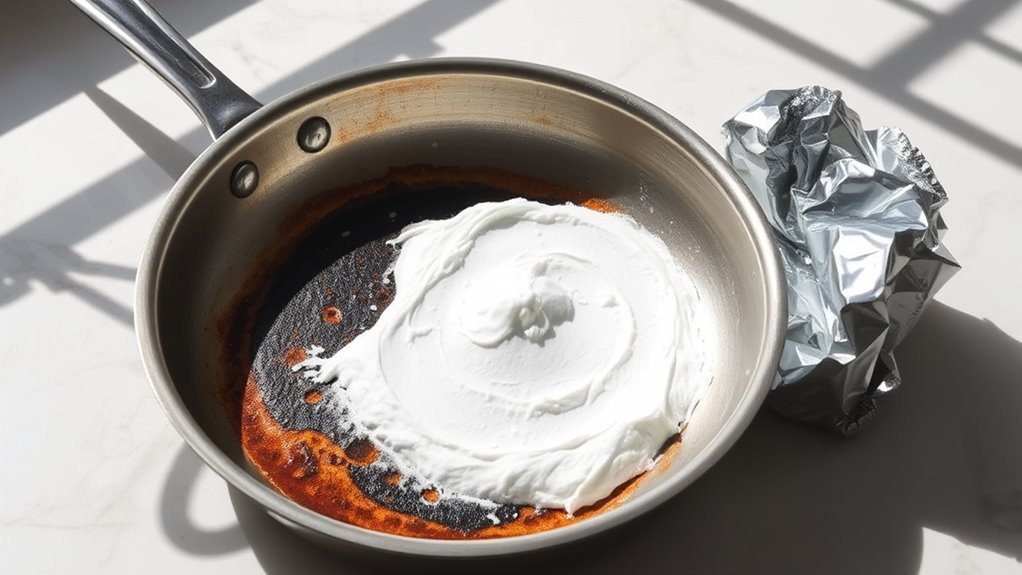
Although the burnt residue may seem tough to remove, applying a thick layer of baking soda paste onto the affected areas makes scrubbing much easier. Instead of using steel wool, which can scratch your stainless steel pan, try aluminum foil for a gentler approach.
Here’s how:
- Crumple a sheet of aluminum foil into a ball.
- Use the foil ball to scrub the baking soda paste in circular motions with light pressure, lifting burnt bits without damaging the surface.
- Rinse the pan thoroughly with warm, soapy water to wash away loosened debris and baking soda.
This quick method often restores your pan’s shine in just about 3 minutes, avoiding the harshness of steel wool while effectively removing burnt residue.
Loosen Burnt Food Gently by Boiling Lemons
You can easily loosen burnt food by boiling quartered lemons in your pan with water for 5 to 10 minutes. The heat and acidity help break down stubborn residues, making them float to the surface for quick removal.
After discarding the lemon water, a simple scrub will wipe away the remaining debris effortlessly.
Boiling Lemons Benefits
When you boil lemons in your stainless steel pan for 5 to 10 minutes, the natural citrus acids break down burnt food residues, making them much easier to remove. This simple method uses lemon acid to gently loosen stuck-on grime without harsh chemicals.
Here are three key benefits of boiling lemons:
- The acid softens stubborn burnt bits, reducing effort needed for scrubbing.
- Steam generated helps lift food particles off the pan’s surface.
- After discarding the lemon water, floating debris is easier to wipe away.
Using leftover lemon halves or slices enhances this natural cleaning process, especially if you’ve already cooked with them. This approach is effective, eco-friendly, and preserves your pan’s finish while tackling tough burnt stains.
Easy Burnt Food Removal
If burnt food sticks stubbornly to your stainless steel pan, boiling lemons offers a gentle yet effective way to loosen it. Start by quartering lemons and placing them in your burnt steel pan. Add enough water to cover the affected areas, then bring it to a gentle boil for 5 to 10 minutes.
The natural acidity and steam help lift burnt food particles, causing residues to float to the surface. Once done, discard the lemon water and loosened debris. Finally, scrub the pan gently with dish soap and a soft brush.
This straightforward, chemical-free method makes cleaning your burnt stainless steel pan easier, especially when you have lemons on hand or use them in cooking.
Clean Burnt Stainless Steel Pans Fast With Dishwasher Tablets
Although burnt stainless steel pans can be tough to clean, using a dishwasher tablet makes the process quick and effortless. You just need to cover the pan’s bottom with a little water, add a dishwasher tablet, and warm it on low heat. The tablet lifts burnt food residues fast, acting as a cleaner and gentle abrasive without scrubbing.
Here’s how to do it efficiently:
- Add water to cover the burnt area, then place the dishwasher tablet in the pan.
- Heat on low for 3 to 5 minutes until burnt food loosens.
- Remove the pan from heat and wipe away loosened residues easily.
This method saves time and keeps your stainless steel pans looking new with minimal effort.
Why Dryer Sheets Don’t Clean Burnt Stainless Steel Pans Effectively
Since dryer sheets are designed to soften laundry and reduce static, they don’t have the cleaning power needed to remove burnt food or stains from stainless steel pans effectively. The chemical makeup of dryer sheets lacks strong cleaning agents required to break down burnt residues. Soaking your pan with a dryer sheet won’t provide enough abrasion or chemical action to lift stubborn burnt-on food.
Unlike specialized cleaners, dryer sheets don’t contain abrasive particles or potent ingredients that target burnt deposits. You might try using dryer sheets repeatedly, but you’ll find they offer minimal improvement. If you’re dealing with a burnt stainless steel pan, relying on dryer sheets won’t give you the results you want, so it’s best to contemplate other cleaning methods designed specifically for tough burnt stains.
Avoid Harsh Chemicals and Metal Scrubbers on Stainless Steel
You’ll want to skip harsh chemicals like bleach and ammonia, as they can damage your pan’s surface. Metal scrubbers might seem effective, but they often leave scratches and dull the finish permanently.
Instead, use gentle cleaners like vinegar or baking soda with soft cloths to keep your stainless steel looking great.
Harsh Chemicals To Avoid
When cleaning your stainless steel pan, steer clear of harsh chemicals like bleach, chlorine cleaners, and ammonia, as they can corrode and discolor the surface over time. These substances weaken the protective chromium oxide layer, making your pan more prone to rust and stains.
To keep your stainless steel looking its best, avoid these common harsh chemicals:
- Bleach – causes corrosion and dullness.
- Chlorine-based cleaners – lead to discoloration.
- Ammonia – damages the surface finish.
Instead, opt for gentle, natural cleaners like vinegar or baking soda. These safer alternatives clean effectively without harming your pan’s surface, preserving its shine and durability.
Avoiding harsh chemicals will extend the life and appearance of your stainless steel cookware.
Risks Of Metal Scrubbers
Although metal scrubbers might seem like a quick fix for burnt residue, they can seriously damage your stainless steel pan’s surface. Metal scrubbers like steel wool create fine scratches that not only dull the finish but also trap food particles, making future cleaning harder.
These abrasions can remove the protective chromium oxide layer on stainless steel pans, leaving them vulnerable to rust and stains. When combined with harsh chemicals, metal scrubbers increase the risk of discoloration and corrosion, further compromising your cookware.
To keep your stainless steel pans in top shape, it’s best to avoid metal scrubbers altogether. Instead, use gentler methods that protect the pan’s surface and maintain its durability over time.
Gentle Alternatives For Cleaning
Since harsh chemicals and metal scrubbers can damage your stainless steel pan, choosing gentle cleaning alternatives is essential. You want to protect the pan’s finish while effectively removing burnt residue. Here are three gentle methods using natural cleaning agents and non-metallic scrubbers:
- Use a mixture of vinegar and baking soda to loosen burnt-on food without harming the surface.
- Avoid bleach or ammonia, as they can dull or corrode your pan over time.
- Scrub gently with non-metallic scrubbers like nylon brushes or soft sponges to prevent scratches.
You can also apply a baking soda paste and use a crumpled aluminum foil ball for tough spots, which cleans effectively while preserving the stainless steel’s shine.
Stick to these gentle options for a clean, scratch-free pan.
Tips to Prevent Burnt Stainless Steel Pans and Ease Cleaning
To keep your stainless steel pans from burning and make cleanup easier, you should cook on medium or low heat and never overheat the pan. Using enough oil or liquid creates a barrier that helps prevent food from sticking and burning. Also, regularly stir and watch your food to avoid residues at the pan’s bottom.
Before cooking, season your stainless steel pan by heating a small amount of oil; this builds a natural non-stick surface, easing cleaning later. After cooking, soak the pan in warm water with a mild cleaning solution to loosen stuck-on bits. Following these tips not only protects your pans but also simplifies cleaning, keeping your stainless steel cookware in great shape without tough scrubbing or harsh chemicals.
Regular Maintenance Tricks to Keep Stainless Steel Pans Looking New
When you clean your stainless steel pans regularly with a vinegar and water mixture, you prevent stains and burnt residues from building up, keeping their shine intact. To maintain your pans’ appearance, follow these essential cleaning tips:
- Wipe your pan immediately after cooking and dry it thoroughly to avoid water spots and rust.
- Use a baking soda paste once a month to remove minor stains and maintain a smooth, shiny surface.
- Apply a stainless steel cleaner periodically to restore luster and prolong the pan’s pristine look.
Avoid harsh chemicals and metal scrubbers, as they can scratch and dull your stainless steel finish. With these regular maintenance tricks, your pans will keep looking new and perform their best.
Frequently Asked Questions
How to Clean a Badly Burnt Stainless Steel Saucepan?
You should soak the pan in hot soapy water or vinegar, then apply a baking soda paste on burnt areas.
Scrub gently with crumpled foil or a non-metallic pad, rinse well, and dry promptly to restore shine.
How Do I Get the Black Stuff off My Burnt Pan?
You know what they say: “Where there’s smoke, there’s fire.” To get the black stuff off your burnt pan, boil vinegar and water, then scrub with baking soda paste or crumpled aluminum foil for quick, easy results.
Can a Burnt Stainless Steel Pan Be Saved?
Yes, you can save a burnt stainless steel pan by acting quickly. Use baking soda, lemon water, or aluminum foil scrubs to loosen burnt residues.
With patience and gentle cleaning, your pan can look nearly new again.
Does Baking Soda Really Clean Burnt Pans?
Yes, baking soda really cleans burnt pans. You’ll find its mild abrasiveness and fizzing with vinegar help loosen burnt residue, making scrubbing easier.
Just apply a paste, let it sit, then scrub gently for best results.
Conclusion
You might think cleaning a burnt stainless steel pan is a nightmare, but it’s easier than you expect—sometimes the simplest ingredients in your kitchen do the trick. Just like those unexpected moments when everything falls into place, a little vinegar, baking soda, or a boiled lemon can bring your pan back to life.
So next time you face that stubborn burn, remember: the solution might be closer—and simpler—than you ever imagined. Using these common household items can make cleaning a burnt stainless steel pan easy and effective. Give these quick and simple methods a try to restore your cookware without hassle.