10 Factors That Affect How Much to Replace a Shower Pan
When replacing a shower pan, costs can vary significantly based on several key factors. Size, shape, and the material you choose play a major role, with custom or larger pans generally costing more.
Labor rates and the experience level of your contractor also affect the overall price.
The difficulty involved in removing and disposing of the old shower pan can add to the expense.
Unexpected issues like hidden water damage or necessary repairs might increase costs further.
Additionally, permits and adherence to local building codes can introduce extra fees.
If you want to understand all the details that could influence your project’s cost, there’s more to explore.
Considering these factors upfront can help you budget effectively and avoid surprises during your shower pan replacement.
Shower Pan Size and Shape
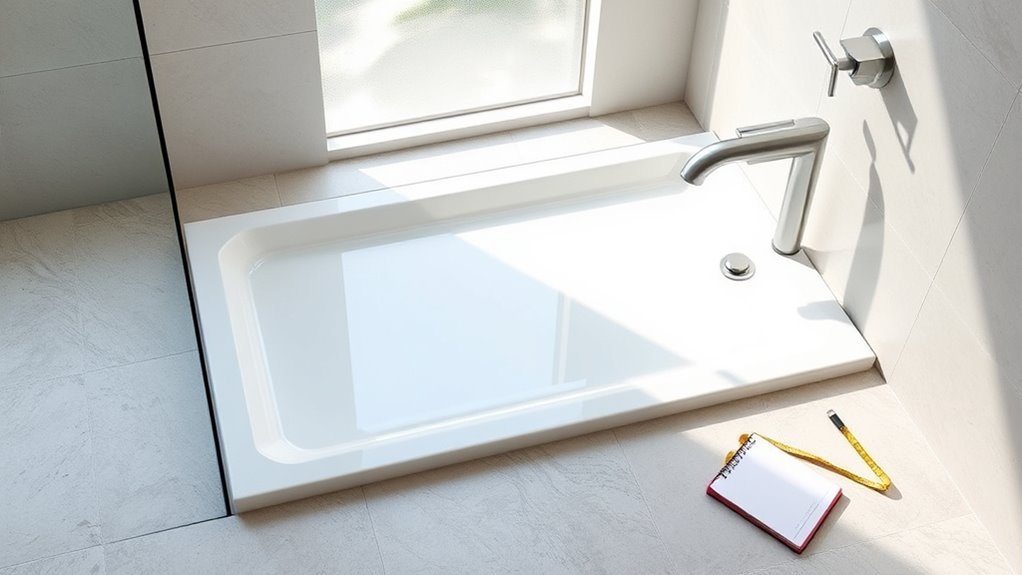
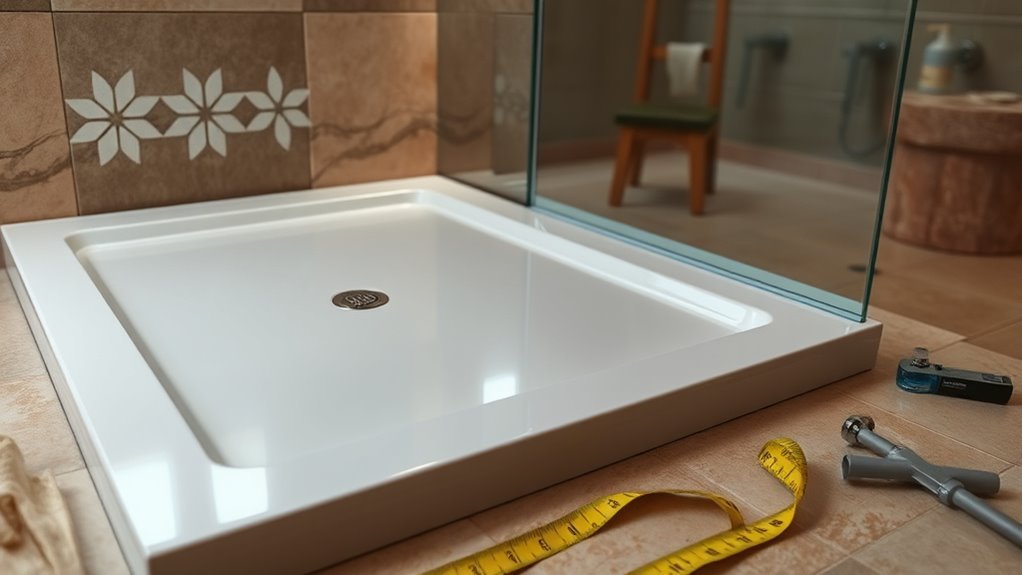
How much you pay to replace your shower pan often depends on its size and shape. Larger shower pans, like 48×48 inches, usually cost more due to higher material costs and installation complexity.
If your pan has an irregular shape or is custom-shaped—such as curved or asymmetrical designs—you’ll face even steeper expenses because these demand specialized fabrication. Rectangular pans, especially those measuring 36×60 inches, tend to be pricier than standard sizes, not just because of their dimensions but also the extra waterproofing and tiling required.
Standard sizes generally simplify the replacement process, keeping costs lower. On the other hand, irregular shapes often require custom orders, increasing both material costs and labor time.
Shower Pan Material Choices and Costs
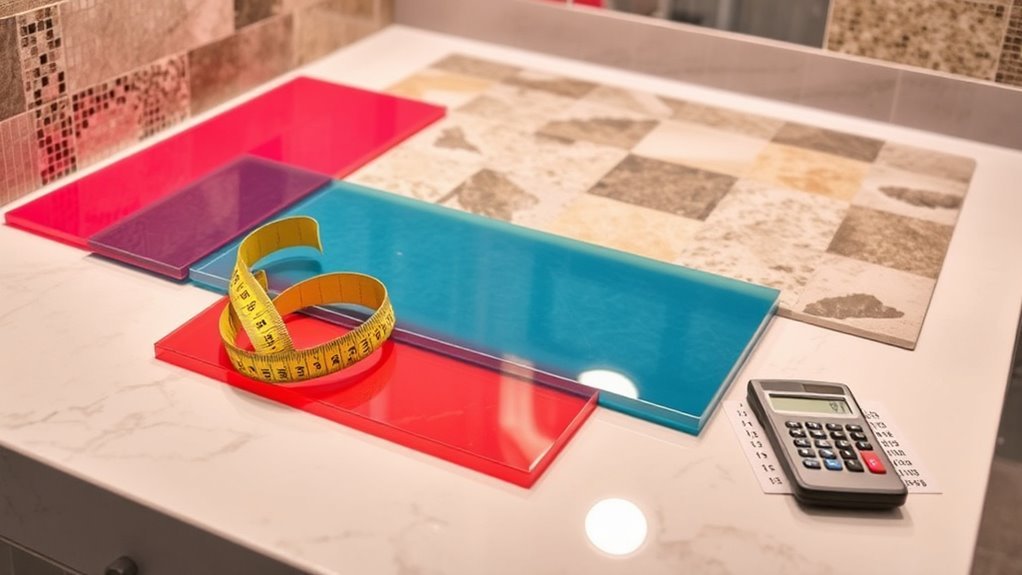
Since the material you choose for your shower pan affects both cost and maintenance, it’s important to weigh your options carefully. Fiberglass pans offer the lowest shower pan costs, typically $150 to $450, but they scratch easily. An acrylic shower pan, costing $200 to $620, provides durability with less upkeep.
If you want a luxurious look, natural stone pans range from $200 to $950 but need regular sealing. Cast iron is the toughest and most expensive option, running $800 to $1,300, ideal for longevity. For a custom tile shower, tile-over pans cost $500 to $800 plus tile expenses, giving you flexibility in design.
Your shower pan material choice will directly impact installation complexity and future maintenance, so consider your budget and style before deciding.
Removing the Old Shower Pan: Challenges and Costs
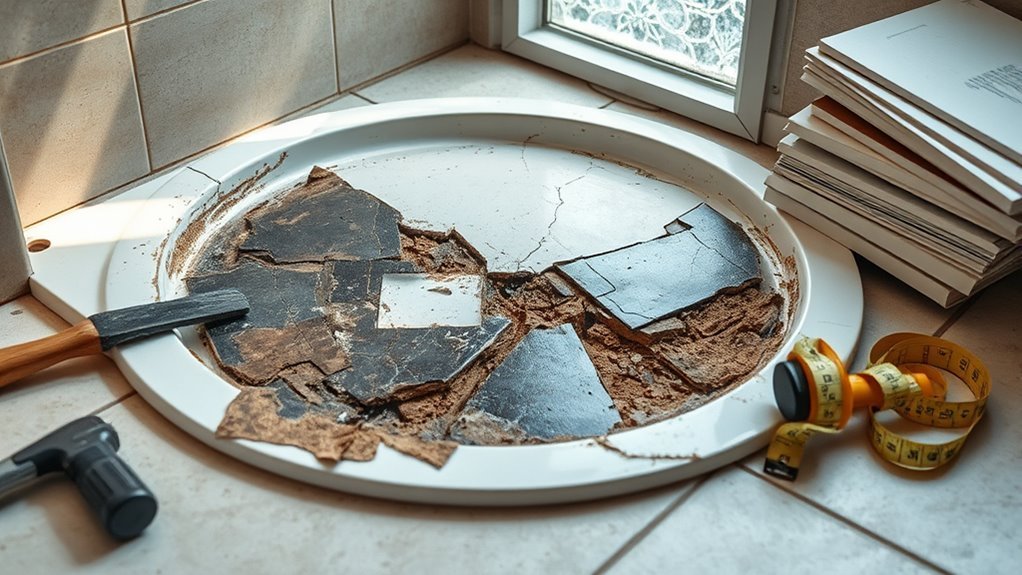
Although removing an old shower pan might seem straightforward, it often involves careful work to avoid damaging surrounding walls and floors. Removal challenges increase with heavy pans or custom pans made from materials like cast iron or stone, which require more demolition work and drive up removal costs.
You’ll also need to factor in disposal fees, as proper disposal is necessary and sometimes requires junk removal services. If your old shower pan has underlying water damage or structural issues, the removal process can take longer, adding to labor time and complexity.
Material type heavily influences both difficulty and cost, so understanding these factors helps you prepare for what’s involved in replacing your shower pan efficiently and safely.
Labor Rates and Contractor Experience
When you hire a contractor to replace your shower pan, labor rates can vary widely, typically ranging from $50 to $150 per hour depending on their experience and location. Skilled professionals with extensive contractor experience often charge higher rates but handle installation complexity—such as demolition, plumbing adjustments, and waterproofing—with greater efficiency.
This expertise can reduce overall project costs by minimizing mistakes and delays. Regional pricing also plays a role, so rates may differ based on where you live. Choosing a contractor with a solid reputation and proper licensing guarantees quality workmanship and adherence to building codes.
While upfront costs might be higher, experienced contractors typically deliver reliable results, protecting your investment and preventing future issues related to poor installation or waterproofing failures.
Waterproofing for Shower Pan Replacement
If you want to protect your bathroom from water damage, you need to guarantee proper waterproofing when replacing your shower pan. Installing a waterproof membrane, like a vinyl or rubber liner, beneath the pan is vital to prevent water intrusion into the subfloor and walls. Use high-quality waterproofing materials and sealant to ensure a tight barrier against water leaks.
Proper waterproofing requires extending the membrane at least six inches up the walls or to the top of the shower curb for full protection. Additionally, the shower pan and membrane must be sloped correctly to direct water toward the drain, preventing pooling.
Skipping these steps in your shower pan replacement risks costly water damage, mold, and structural rot, so invest in thorough waterproofing to avoid future repairs.
Plumbing Access and Modifications
Since plumbing access directly impacts the ease of shower pan replacement, you’ll want to make certain there’s enough room to work efficiently. Limited plumbing access can increase labor costs due to the installation complexity and may require structural changes like removing walls or fixtures.
Plumbing modifications, such as drain line relocation or pipe rerouting, often add $600 to $1,600 to your project. Water line adjustments might also be necessary, further complicating the job. Don’t forget plumbing permits, which can cost between $30 and $500 depending on local regulations.
Properly planning access points before starting helps reduce labor time and avoids costly delays. Taking these factors into account ensures smoother shower pan replacement with fewer unexpected expenses tied to plumbing access and modifications.
Water Damage Repairs and Their Costs
You might not realize hidden water damage until you spot warped drywall or mold odors in your bathroom. Repairs can get pricey, especially if structural elements like joists need replacing or mold remediation is necessary.
Catching these issues early can save you a lot on costly fixes down the line.
Identifying Hidden Water Damage
Before replacing a shower pan, you need to identify any hidden water damage that could lead to mold, wood rot, or structural issues. Look for water stains on drywall, musty odors, and sagging subflooring. Moisture testing helps detect trapped moisture beneath the pan, preventing costly repair costs later.
Ignoring hidden water can worsen water leakage, causing extensive mold growth and structural issues.
| Signs of Hidden Water Damage | What to Check |
|---|---|
| Water stains | Discolored or warped drywall |
| Musty odors | Mold growth near shower area |
| Soft floorboards | Sagging or spongy subflooring |
| Moisture testing | Trapped moisture beneath pan |
| Water leakage | Visible leaks or damp spots |
Detecting these early saves you from expensive subflooring replacements and more extensive repairs.
Structural Repair Expenses
When water damage from a failing shower pan goes unnoticed, repair costs can quickly skyrocket. You might face extensive structural repair expenses involving subflooring, drywall, and wood replacement. Water damage often requires concrete repair or replacing damaged joists and support beams, which can push costs beyond $2,000.
Early signs like mold growth or softened flooring are vital to catch, as ignoring them risks compromising your building integrity. Removing and replacing damaged wood or concrete generally adds $250 to $1,200, but severe damage can cost much more.
Addressing these issues promptly helps you avoid costly repairs and maintains your home’s structural soundness. Don’t underestimate the impact of water damage—staying vigilant is key to managing expenses effectively.
Mold Remediation Costs
Water damage from a failing shower pan often leads to mold growth, which can considerably increase repair costs. When water leaks go unnoticed, hidden mold can develop behind walls or under flooring, requiring professional removal to avoid health hazards and further structural damage.
Mold remediation costs typically range from $500 to $6,000, depending on the severity of mold growth and water damage. You might also face additional water damage repairs, such as replacing drywall and insulation, adding $1,000 to $3,000 to your expenses.
Effective mold remediation often involves specialized cleaning, HEPA vacuuming, and antimicrobial treatments, costing between $1,200 and $3,000. Addressing water leaks promptly can help reduce these costs and prevent worsening structural damage, making timely intervention vital in managing repair costs efficiently.
Shower Pan Custom Features and Upgrades
Although customizing your shower pan can raise the cost, adding features like curbless designs, built-in benches, or personalized drainage can transform your shower experience. Custom features and upgrades often involve specialized fabrication, especially for unique sizes or shapes, which can add $500 to $2,000 to your bill.
Enhancing waterproofing with membrane liners and extra sealants boosts durability but adds $200 to $600. Choosing high-end materials like natural stone or glass mosaics further increases expenses, sometimes exceeding $3,500.
Incorporating installation complexity with integrated lighting, heated flooring, or advanced drainage systems also drives up costs. When you invest in these upgrades, you’re not just paying more—you’re creating a tailored shower that fits your style and comfort perfectly.
Costs of Disposal and Demolition
Upgrading your shower pan with custom features often means you’ll need to contemplate what happens to your old unit. Disposal costs and demolition fees can add up, especially if demolition labor involves breaking the pan or removing surrounding tiles. You’ll want to consider removal methods that comply with environmental regulations to avoid hefty disposal fees.
Key factors affecting costs include:
- Demolition time and complexity of removing demolition materials
- Old shower removal techniques, whether manual or with tools
- Debris disposal options like junk removal services or local dumps
- Compliance with environmental regulations to prevent contamination
- Varying disposal fees depending on size and material of the pan
Understanding these will help you budget accurately for your shower pan replacement.
Geographic Location, Permits, and Fees
Because labor rates differ widely across regions, the cost to replace your shower pan can vary by 20 to 30 percent, with urban areas generally charging more. Regional differences in labor rates profoundly impact your overall expenses.
Additionally, local regulations and building codes often require permits, which can range from $30 to $500 depending on your jurisdiction and the project scope. Some areas mandate permits for plumbing or structural changes, adding to fees and inspection costs. These inspections ensure compliance but may increase your total cost variation.
Since neighborhoods have distinct rules, it’s essential to check local regulations before starting. Understanding these factors helps you anticipate permit fees and avoid surprises, ensuring your replacement stays within budget despite geographic and regulatory complexities.
Frequently Asked Questions
How Much Should It Cost to Replace a Shower Pan?
You should expect to pay between $900 and $2,300 to replace a shower pan. Costs vary based on size, material, and installation complexity, so be prepared for potential extra expenses if issues like water damage arise.
How Do You Know if Your Shower Pan Needs to Be Replaced?
Don’t ignore minor cracks or musty smells—you’ll know it’s time to replace your shower pan when you spot water stains, pooling, or leaks.
Acting quickly prevents costly damage and keeps your bathroom fresh and safe.
What Is the Most Expensive Part of a Bathroom Remodel?
The most expensive part of a bathroom remodel is usually custom tile work, which can cost thousands. High-end fixtures and structural changes also drive up costs, so be ready for surprises beyond just materials and labor.
How Much Should It Cost to Replace a Shower Tray?
Replacing your shower tray can cost anywhere from $530 to $2,700, depending on materials and labor.
Don’t forget, custom designs and hidden repairs might push the price higher than you expect.
Conclusion
Replacing your shower pan is more than just a simple swap—it’s a chance to refresh your space and avoid future headaches. While costs can vary based on size, materials, and unexpected surprises like hidden water damage, thinking ahead can save you from unwelcome surprises.
Embrace the process as an investment in comfort and peace of mind. With the right choices, your bathroom will feel like a gentle retreat for years to come. Understanding the 10 factors that affect how much to replace a shower pan will help you make informed decisions and manage your budget effectively.