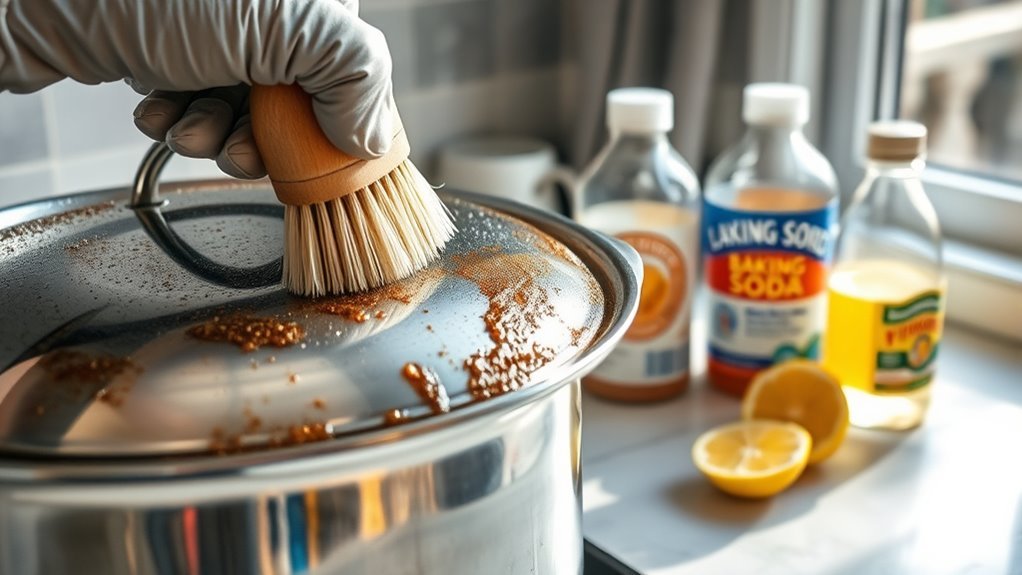
How to Clean Baked-On Grease From Pots and Pans Quickly
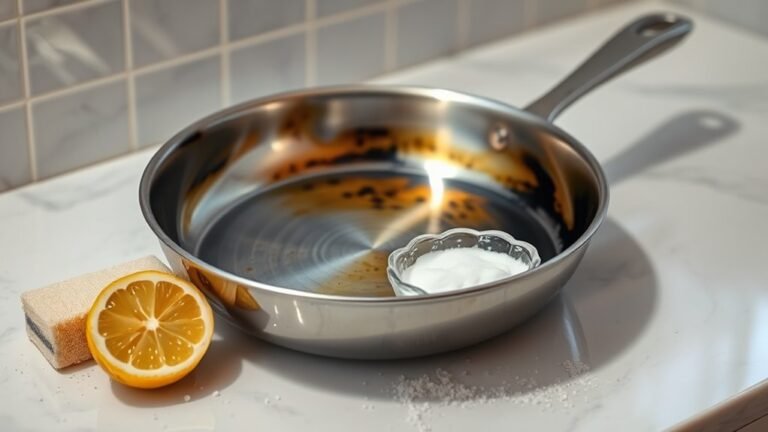
To quickly clean baked-on grease from your pots and pans, start by soaking them in hot water mixed with baking soda or vinegar for at least an hour to loosen residue. This method is effective for breaking down stubborn grease and grime without harsh chemicals.
Then, apply a baking soda paste for gentle abrasion and scrub with a nylon brush or steel wool, depending on your cookware material.
For tougher stains, boiling vinegar in the pan helps break down grease faster, making the cleaning process even more efficient.
Combining these steps makes cleaning easier and more effective—keep exploring for smarter, faster ways to restore shine. With these simple techniques, your pots and pans will look like new in no time.
Why Baked-On Grease Is So Hard to Remove
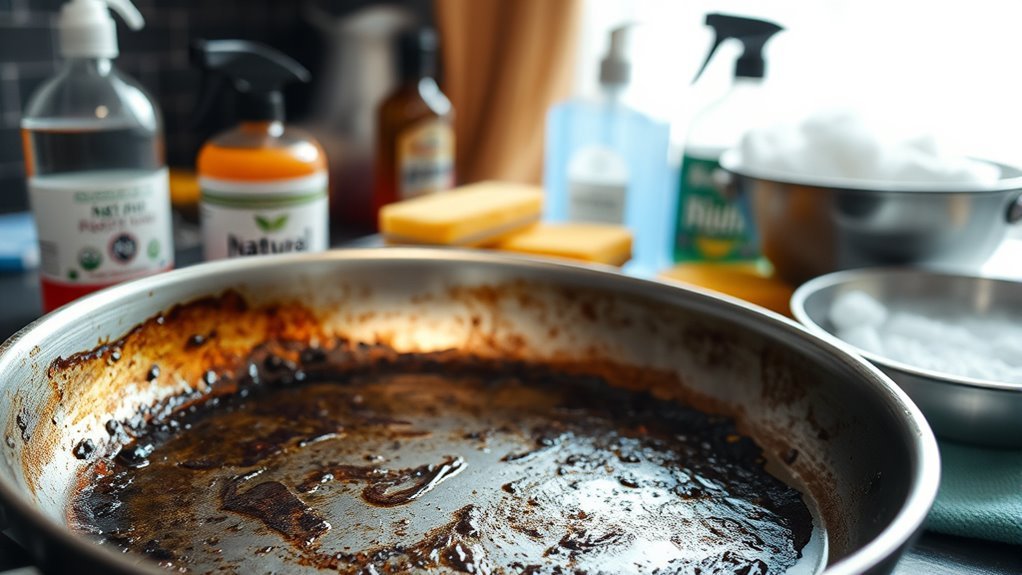
Although it might seem like simple grease, baked-on residue clings stubbornly to your pots and pans because high heat causes fats and oils to chemically bond and polymerize on the surface. This process creates a hard, caramelized film that sticks tightly to metal or non-stick cookware.
Over time, these layers become crusted and resist normal washing methods. You’ll find that scrubbing alone often won’t cut through this durable, insoluble deposit. That’s where a baking soda paste comes in handy.
When applied, it works as a gentle abrasive and helps break down the polymerized grease without damaging your cookware. Understanding this chemical bonding explains why baked-on grease is so tough to remove and why targeted treatments like baking soda paste are essential for effective cleaning.
How Soaking Helps Loosen Baked-On Grease
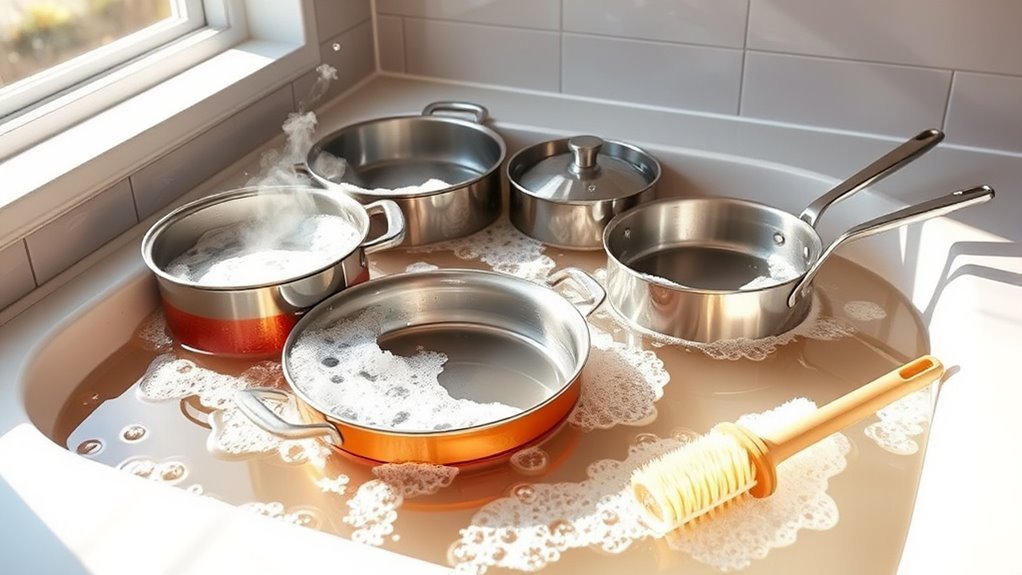
You’ll find soaking your pots and pans in warm water with the right cleaning agents softens stubborn grease, making it easier to remove. Using effective agents like baking soda or dishwasher detergent and allowing enough soaking time helps break down baked-on residues.
Make sure to cover the entire greasy area and use hot water to boost the process and reduce scrubbing effort.
Benefits Of Soaking
When you soak pots and pans, the warm water and cleaning agents work together to penetrate and break down baked-on grease. Soaking softens hardened residues, making them easier to wipe or scrub away without much effort.
The longer you let your cookware soak, the more stubborn grease loosens, reducing the need for aggressive scrubbing that can damage surfaces. Warm or hot water speeds up this process by enhancing the chemical breakdown of grease.
Effective Soaking Agents
Because baked-on grease clings stubbornly to cookware, choosing the right soaking agents makes a big difference in loosening it effectively. Soaking allows cleaning agents to penetrate and soften grease, making cleanup easier.
Here are four effective soaking agents you can use:
- Hot water with dishwasher soap – breaks down grease quickly.
- Baking soda mixed with warm water – creates a gentle abrasive solution.
- White vinegar diluted in water – cuts through grime and deodorizes.
- Commercial degreasers – designed specifically to tackle tough residues.
Soaking Duration Tips
Although short soaks might seem convenient, allowing your pans to soak for at least an hour with warm water and dish soap will loosen baked-on grease much more effectively. During soaking, the warm water helps break down grease molecules, making scrubbing easier.
For stubborn, baked-on residue, soaking overnight can soften it fully, reducing the effort needed when you clean. To boost soaking power, add dishwasher detergent or baking soda, which enhance grease dissolution over time.
Avoid short soaking times of 15-20 minutes, as they often aren’t enough for heavy buildup. By adjusting your soaking duration and using hot water, you’ll save time and energy, making the cleanup process quicker and less frustrating.
Soaking smartly is key to tackling tough baked-on grease efficiently.
Using Baking Soda Paste for Grease Removal
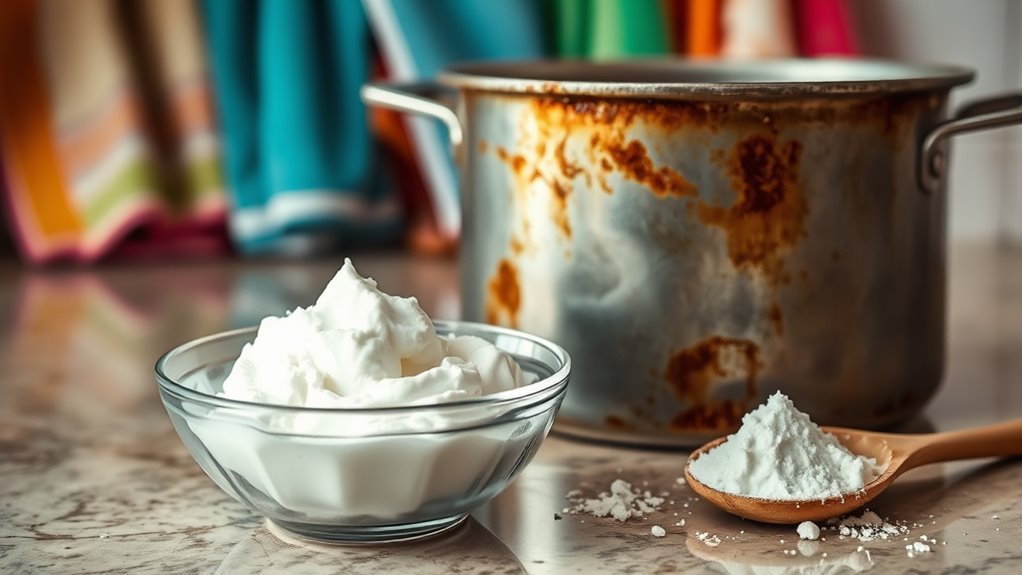
You can tackle stubborn grease by making a simple baking soda paste with water, which gently lifts residue without harming your cookware.
Apply it generously, let it sit, then scrub to see the grease break down. For tough spots, don’t hesitate to reapply and scrub again for a spotless finish.
Baking Soda Paste Benefits
When you apply a thick baking soda paste to baked-on grease, it works as a gentle abrasive that lifts grime without damaging your cookware. This natural method effectively breaks down stubborn residues while keeping your pots and pans safe.
Here’s why baking soda paste is a great choice:
- It softens burnt-on food after sitting for 15–20 minutes, making scrubbing easier.
- Baking soda’s alkaline nature neutralizes acids in grease, helping to dissolve stains.
- The paste targets grease precisely, allowing for effective cleaning without harsh chemicals.
- It’s a cost-effective, eco-friendly solution suitable for most cookware surfaces.
Using baking soda paste lets you tackle tough grease quickly and safely, saving time and preserving your kitchenware.
Application Tips And Tricks
Building on the benefits of baking soda paste, applying it correctly can make grease removal even more effective. Start by mixing baking soda with just enough water to form a thick paste that sticks well to greasy spots. Spread the paste generously over the baked-on grease, covering every stubborn area completely.
Let the baking soda paste sit for 15 to 20 minutes to break down tough residues. Afterward, use a non-abrasive scrub brush or sponge to gently scrub the surface, adding more paste if needed. Finally, rinse your pot or pan thoroughly with warm water, washing away both the baking soda and loosened grease.
Following these tips ensures your cookware gets clean without damage or extra effort.
When and How to Use Vinegar to Remove Grease
Though stubborn baked-on grease can seem impossible to remove, vinegar’s acetic acid breaks it down effectively. You can use vinegar to tackle tough grease by following these simple steps:
- Fill your pan with equal parts water and white vinegar.
- Bring the mixture to a boil to loosen the baked-on grease.
- Let the solution sit for 15-20 minutes if residue remains.
- After cooling, wipe away the grease and rinse thoroughly to remove any acidity and odor.
Using vinegar not only saves time but also avoids harsh chemicals. Just remember to rinse well, and your pots and pans will be spotless and fresh without extra effort.
Best Scrubbing Tools to Remove Baked-On Grease
If you want to remove baked-on grease effectively, choosing the right scrubbing tool is essential. A scrub brush with stiff nylon bristles works great on non-stick pans, while steel wool pads—especially 0000-grade—offer strong abrasion without scratching stainless steel.
Aluminum foil balls paired with baking soda paste provide a quick, chemical-free option. For tougher stains, brass or copper scrubbers excel on cast iron and stainless steel.
| Scrubbing Tool | Best Use |
|---|---|
| Nylon scrub brush | Non-stick cookware |
| Steel wool pads | Stainless steel pots and pans |
| Aluminum foil balls | Quick, chemical-free cleaning |
| Brass/Copper scrubbers | Heavy grease on cast iron & steel |
Pick your tool based on your cookware to remove grease without damage.
Top Commercial Cleaners for Tough Grease Stains
Choosing the right scrubbing tool can make a big difference, but sometimes baked-on grease needs extra help from commercial cleaners. When dealing with tough stains on stainless steel pots and pans, you’ll want reliable products that cut through grime efficiently.
Here are four top commercial cleaners to contemplate:
- Bar Keepers Friend – Excellent for stainless steel surfaces, it removes baked-on grease with just a damp cloth and gentle scrubbing.
- Easy Off Gel – Designed to dissolve stubborn food residues quickly, ideal for oven-safe cookware.
- Carbon Off! Gel – Targets carbon buildup and baked-on grease on metal with minimal effort.
- Spray Nine – Powerful for heavy grease and outdoor cookware, breaking down grime fast.
These cleaners will save you time and restore the shine of your stainless steel cookware effectively.
Easy Home Remedies That Safely Remove Grease
When you want to avoid harsh chemicals, easy home remedies can tackle baked-on grease effectively and safely. Soak your pots and pans in hot water mixed with a few drops of dish soap for at least an hour to loosen burnt-on food.
For tough spots, make a paste using baking soda and water, then apply it to the baked-on food and let it sit for 20 minutes. Gently scrub with steel wool or crumpled aluminum foil dipped in the paste—an effective method tested in the test kitchen to remove stubborn grease without damaging steel surfaces.
After soaking, you can also use a dryer sheet to wipe away bits of food and grease. Using enough water and a bit of elbow grease, this approach is the best way to clean your cookware safely and efficiently.
Combining Methods for Faster, Better Grease Removal
Although individual methods work well on their own, combining soaking, boiling lemon water, and scrubbing with baking soda paste and aluminum foil can speed up grease removal and make your pots shine faster. Start by soaking your pans in warm water mixed with dishwasher detergent to soften baked-on grease.
Next, boil lemon water in the pan to loosen stubborn residues naturally. Then, apply a baking soda paste to the greasy areas for added abrasion. Finally, scrub vigorously using crumpled aluminum foil or a steel wool pad to lift the last bits of grime.
- Soak to loosen grease
- Boil lemon water for natural degreasing
- Apply baking soda paste for gentle abrasion
- Scrub with aluminum foil for quick grease removal
This combo method reduces cleaning time and restores your pots efficiently.
Tips to Prevent Grease Build-Up and Simplify Cleaning
To keep your pots and pans cleaner for longer, tackle grease buildup before it hardens by scrubbing them right after use. Wiping cookware with a bit of oil or cooking spray before storage creates a barrier that slows grease buildup.
Clean your pots and pans thoroughly within a day to avoid stubborn residue. Periodically rinsing with vinegar and baking soda breaks down grease and prevents accumulation. Using liners or parchment paper while cooking minimizes direct grease contact, simplifying cleanup.
| Tip | Action | Benefit |
|---|---|---|
| Immediate scrubbing | Wash right after use | Prevents hardened grease |
| Oiling cookware | Wipe with oil before storing | Creates protective barrier |
| Timely cleaning | Clean within 24 hours | Reduces stubborn residue |
| Vinegar & baking soda rinse | Periodic deep cleaning | Breaks down existing grease |
| Use liners/parchment paper | Line pans during cooking | Minimizes grease contact |
Frequently Asked Questions
How Do You Remove Thick Baked-On Grease From Pans?
You soak the pan in hot soapy water, then scrub with a baking soda paste and crumpled foil.
For stubborn grease, use steel wool or a commercial cleaner carefully, ensuring you follow all safety instructions.
What Will Dissolve Baked Grease?
You’ll dissolve baked grease with baking soda and vinegar, with boiling lemon water, with commercial cleaners, or with soaking detergent. Use these methods to break down grease, to loosen grime, and to restore your pans quickly.
How Do You Dissolve Hardened Grease?
You dissolve hardened grease by soaking your pots in hot water with dishwasher detergent or applying a baking soda and vinegar paste.
Scrub gently with crumpled aluminum foil or boil lemon halves to soften grease quickly.
How Do You Remove Oil on Pots That Have Become Sticky and Brown?
You know what they say, “slow and steady wins the race.” Soak your pots in hot, soapy water, apply baking soda paste, then gently scrub.
Repeat as needed, and stubborn brown oil will come off easily.
Conclusion
Think of baked-on grease like a stubborn shadow clinging to your pots and pans—it takes patience and the right tools to chase it away. By soaking, scrubbing, and using natural or commercial cleaners, you’re not just cleaning; you’re restoring the shine beneath the grime.
Combine these methods, and you’ll turn your cookware from a battleground back into a gleaming stage, ready for your next culinary masterpiece. Keep up these habits, and baked-on grease won’t stand a chance. With quick and effective cleaning techniques, your pots and pans will stay spotless and grease-free.