How to Get Burnt Oil Off a Non-Stick Pan
If burnt oil sticks to your non-stick pan, it can be frustrating to clean without damaging the surface. To remove burnt oil from a non-stick pan, start by cooling the pan completely.
Then, simmer equal parts vinegar and water in the pan to help loosen the stubborn residue.
After the mixture cools, sprinkle baking soda over the burnt areas. Gently scrub with a soft sponge to avoid scratching the non-stick coating.
For especially stubborn spots, soak the pan in warm, soapy water mixed with baking soda for a while.
Using gentle tools and methods keeps your pan safe and clean. Keep reading to discover more effective cleaning techniques and maintenance tips to prolong your pan’s lifespan.
What Causes Burnt Oil on Your Non-Stick Pan?
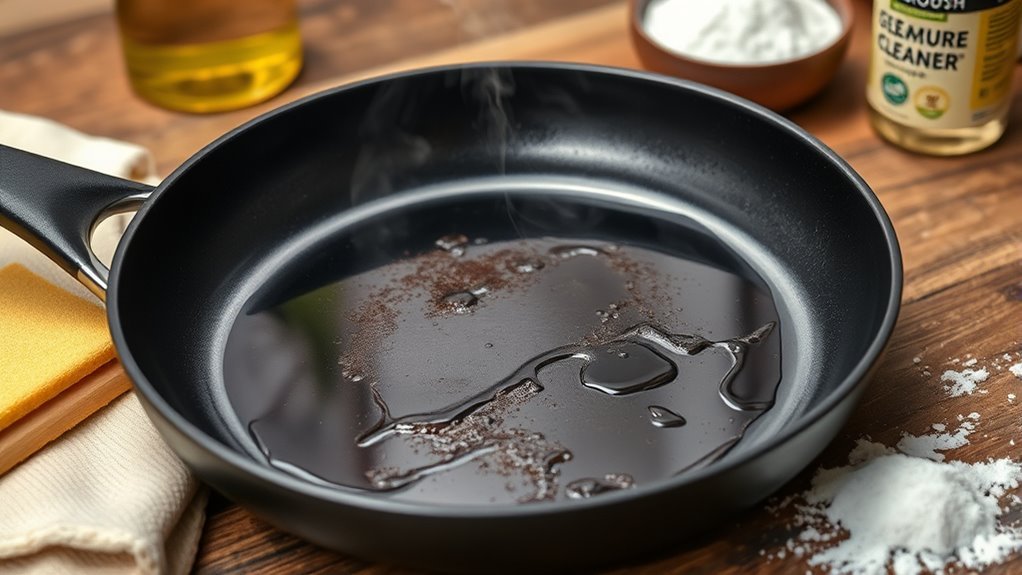
When you cook at high temperatures or leave oil unattended, it often burns and sticks to your non-stick pan. Burnt oil forms when you expose the pan to high heat for too long, causing the oil to break down and leave stubborn residue. Using cooking sprays with additives can worsen this by creating sticky, hardened layers that cling to the pan’s surface.
Overheating an empty non-stick pan accelerates this process, damaging its coating. If you don’t clean your pan properly after cooking oily foods, leftover oil can polymerize, baking onto the surface and making future cleaning tougher. Understanding these causes helps you prevent burnt oil buildup and maintain your non-stick pan’s effectiveness and longevity.
Preparing Your Pan for Effective Burnt Oil Cleaning
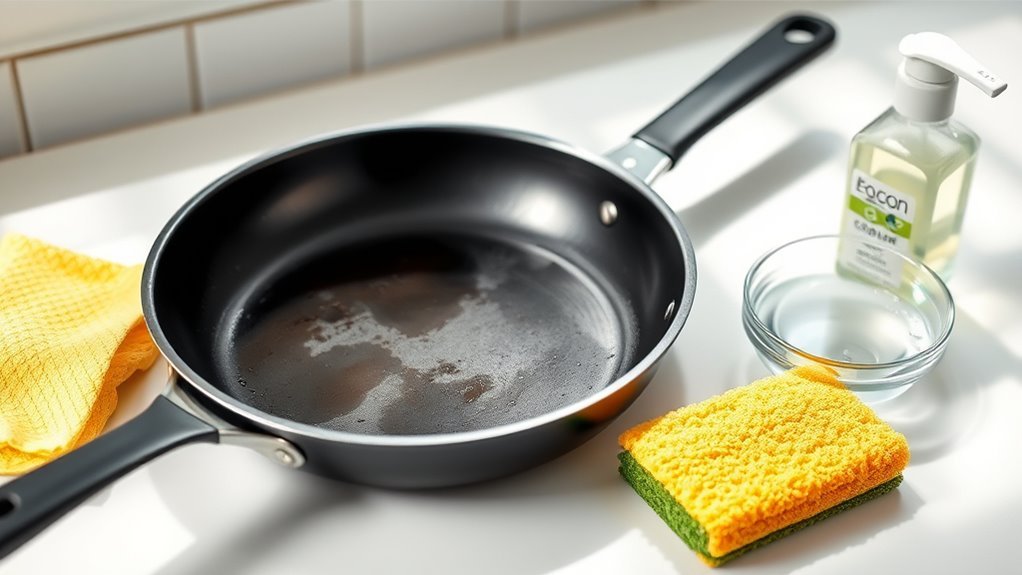
Before you start cleaning, check your pan carefully for any damage to avoid making it worse. Gather gentle cleaning supplies like dish soap and soft sponges to protect the non-stick surface.
Always let the pan cool completely and handle it safely to prevent burns or warping.
Pre-Cleaning Inspection
Although it might be tempting to dive straight into cleaning, you should first inspect your non-stick pan carefully for burnt oil residues, discoloration, or any surface damage. This cleaning inspection helps you understand the extent of burnt residue and prevents further harm.
Start by removing loose food particles and excess oil with a soft spatula or paper towel to avoid spreading the burnt oil. Next, check the pan’s non-stick coating for scratches or peeling—surface damage like this can affect cleaning methods or signal it’s time for a replacement.
Finally, assess how severe the burnt oil is and ensure the pan has completely cooled to prevent warping. This thorough pre-cleaning inspection sets you up for effective and safe cleaning.
Choosing Cleaning Supplies
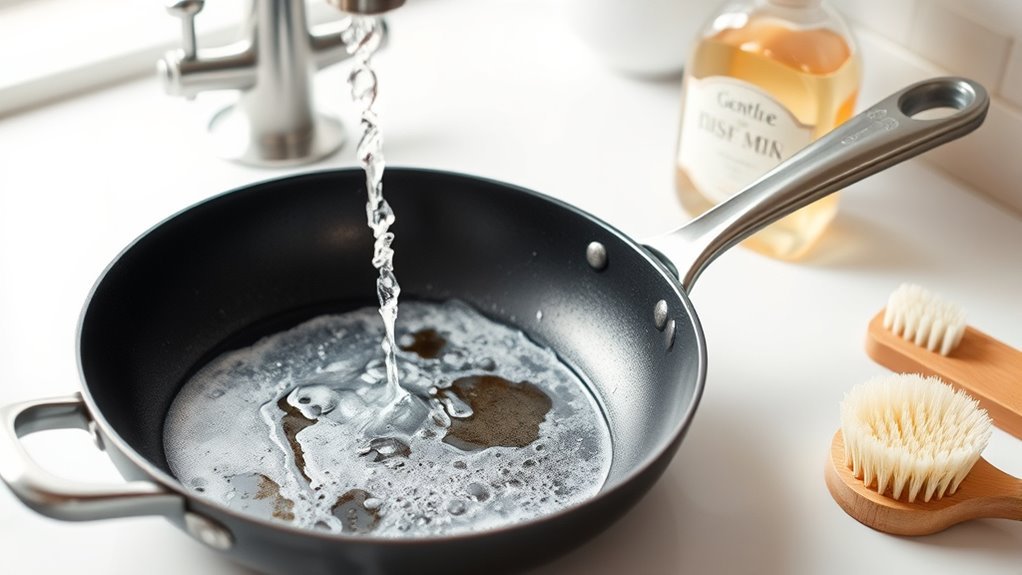
After inspecting your pan and understanding the burnt oil’s severity, choosing the right cleaning supplies makes the process more effective and protects your non-stick surface. Use gentle cleaning agents like dish soap and avoid harsh abrasives. Soaking the pan in warm, soapy water softens burnt residues, making removal easier.
Always select soft cloths or non-metal brushes to prevent scratches on the non-stick surface.
| Cleaning Supply | Purpose | Tips |
|---|---|---|
| Dish Soap | Breaks down grease | Use hot water for soaking |
| Baking Soda | Mild abrasive | Mix with water for paste |
| Vinegar Solution | Dissolves oily buildup | Apply before scrubbing |
| Soft Cloths | Gentle scrubbing | Avoid rough materials |
| Warm Soapy Water | Loosens burnt oil | Soak overnight if needed |
Safety Precautions
When you start cleaning burnt oil from your non-stick pan, make sure it’s completely cool to prevent burns or warping. For safety, work in a well-ventilated area to avoid inhaling fumes from burnt residues or cleaning agents. Always wear gloves and, if possible, eye protection when handling strong cleaning agents like vinegar, baking soda, or commercial degreasers.
Before scrubbing, remove loose burnt oil or food scraps using a plastic spatula to protect the non-stick surface. Avoid abrasive tools such as steel wool or harsh scrubbers during prep, as they can damage the coating. Prioritizing these safety precautions ensures you clean effectively without risking injury or compromising your pan’s non-stick finish.
Step-by-Step Cleaning Using Baking Soda and Vinegar
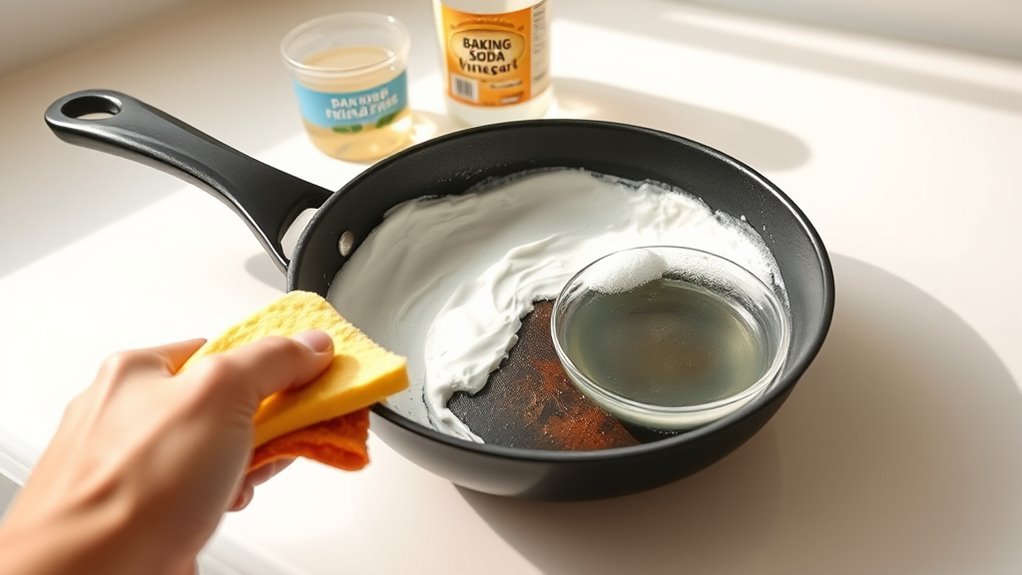
If you want to remove burnt oil from your non-stick pan effectively, start by mixing equal parts white vinegar and water to cover the affected area. Then, follow these steps for thorough cleaning:
- Pour the vinegar-water mix into the pan and bring it to a boil over medium heat.
- Let it simmer for about 5 minutes to loosen burnt oil residues.
- Remove the pan from heat and allow it to cool completely.
- Sprinkle baking soda generously over the cooled surface to create a cleaning paste.
- Gently scrub with a soft sponge, focusing on stubborn burnt oil spots, then rinse with hot water.
This method uses baking soda and vinegar to safely clean your non-stick pan without damaging its coating.
Alternative Cleaning Methods for Burnt Oil on Non-Stick Pans
Although the baking soda and vinegar method works well, you can try several alternative approaches to tackle burnt oil on your non-stick pan. Start by soaking the pan in hot water mixed with dish soap and baking soda for 30 minutes to loosen residues. For tougher spots, apply a paste of baking soda and white vinegar directly onto the burnt areas and let it sit for 15-20 minutes.
Then, use a soft dish brush dipped in warm, soapy water to gently scrub without harming the coating. Another option is to heat a small amount of cooking oil in the pan for about 20 minutes, then wipe it clean. You can also cover the pan with a vinegar-soaked cloth and let it sit overnight to break down stubborn burnt oil.
Protect Your Non-Stick Pan While Cleaning Burnt Oil
Trying different cleaning methods to remove burnt oil is helpful, but protecting your non-stick pan throughout the process is just as important. To preserve the non-stick coating, focus on gentle cleaning and avoid abrasives that can cause scratches.
Here’s how you can protect your pan effectively:
- Use a soft sponge or non-abrasive scrubber for cleaning.
- Apply natural remedies like baking soda paste or vinegar to break down burnt oil safely.
- Soak the pan in warm water with mild dish soap before scrubbing.
- Steer clear of steel wool and harsh abrasive cleaners that damage the surface.
- Always dry thoroughly after cleaning to prevent water spots and maintain coating integrity.
Tips for Maintaining Your Non-Stick Pan After Cleaning
Once you’ve thoroughly cleaned your non-stick pan, maintaining its condition is key to extending its lifespan and ensuring ideal performance. After cleaning, rinse the pan well with hot water to remove any remaining oil residue or cleaning agents. Dry it completely to avoid water spots that can damage the surface.
Lightly coat the pan with a bit of olive or mineral oil to preserve the non-stick layer. Use gentle tools like soft sponges during pan maintenance to prevent scratches. Regularly inspect your pan for wear and replace it if the coating is damaged.
| Step | Tip |
|---|---|
| Rinse | Use hot water |
| Dry | Ensure it’s completely dry |
| Oil | Lightly coat with olive oil |
| Cleaning tools | Use soft sponge or cloth |
Frequently Asked Questions
How to Clean a Nonstick Pan With Burnt Oil?
You soak your pan in hot soapy water, then gently scrub with a soft sponge.
For tough burnt oil, apply a baking soda paste, let it sit, scrub again, and rinse well to restore your nonstick surface.
What Removes Burnt Oil From a Pan?
You can gently erase stubborn kitchen memories with baking soda paste or a vinegar-water boil. Dish soap or commercial degreasers like Dawn Power Dissolver also work wonders.
Just scrub softly to keep your pan happy.
Does Vinegar Remove Burnt Oil?
Yes, vinegar removes burnt oil effectively. You can soak the pan in vinegar for 30 minutes or boil it with water and vinegar.
Then, gently scrub with a soft sponge to dissolve and lift stubborn burnt oil residues.
How to Remove Black From Non-Stick?
You can remove black residue from your non-stick pan by scrubbing gently with a baking soda paste, boiling vinegar and water inside, or soaking it overnight in hot soapy water before wiping with a soft sponge carefully.
These methods help to lift the black marks without damaging the non-stick surface. Always avoid abrasive scrubbers to keep your pan in good condition. Regular maintenance will prolong the life of your cookware.
Conclusion
Now that you know how to tackle burnt oil on your non-stick pan, why let residue ruin your cooking experience? With simple ingredients like baking soda and vinegar, you can restore your pan’s shine without damaging its surface.
Remember to clean gently and protect your pan to keep it lasting longer. Taking a little time to care for your pan means better meals and less hassle—doesn’t that sound worth it?
By removing burnt oil effectively, you ensure your non-stick pan stays in great condition, enhancing your cooking and making cleanup easier every time.