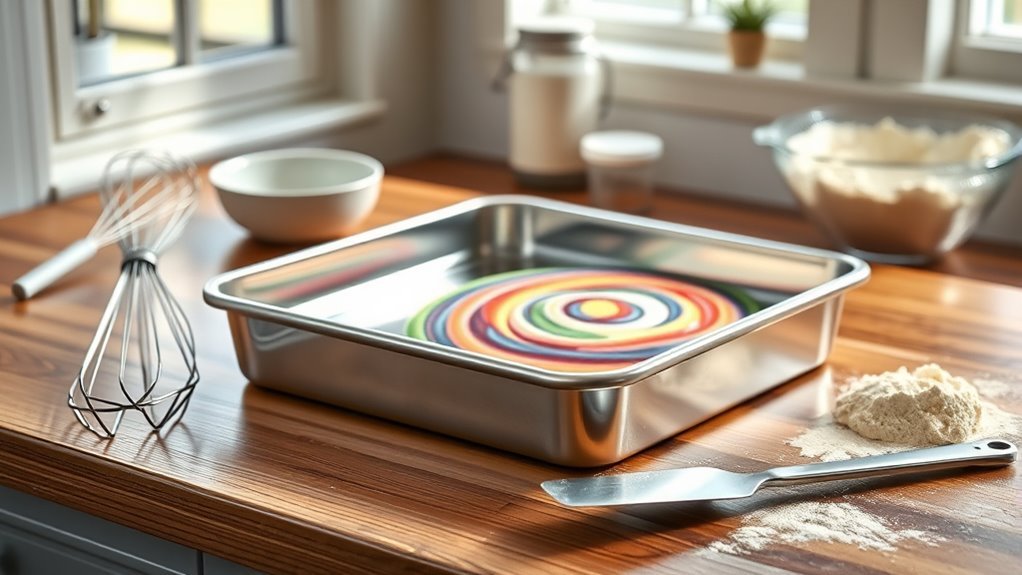
How Is a Jelly Roll Cake Pan Used?
You use a jelly roll cake pan by first lining it with parchment paper and lightly greasing it to prevent sticking. This shallow, rectangular pan, measuring about 15×10 inches, is designed to create a thin, uniform cake layer perfect for rolling.
Pour your batter evenly into the pan to ensure consistent baking.
After baking until the cake is golden, invert the warm cake onto a powdered sugar-dusted towel. Carefully peel off the parchment paper, then roll the cake up gently with the towel inside.
This technique helps the cake hold its shape without cracking.
Keep going to discover tips for perfect results and handy alternatives to the traditional jelly roll cake pan. These insights will help you master the art of making beautiful, rolled cakes every time.
Features That Make a Jelly Roll Pan Ideal for Baking
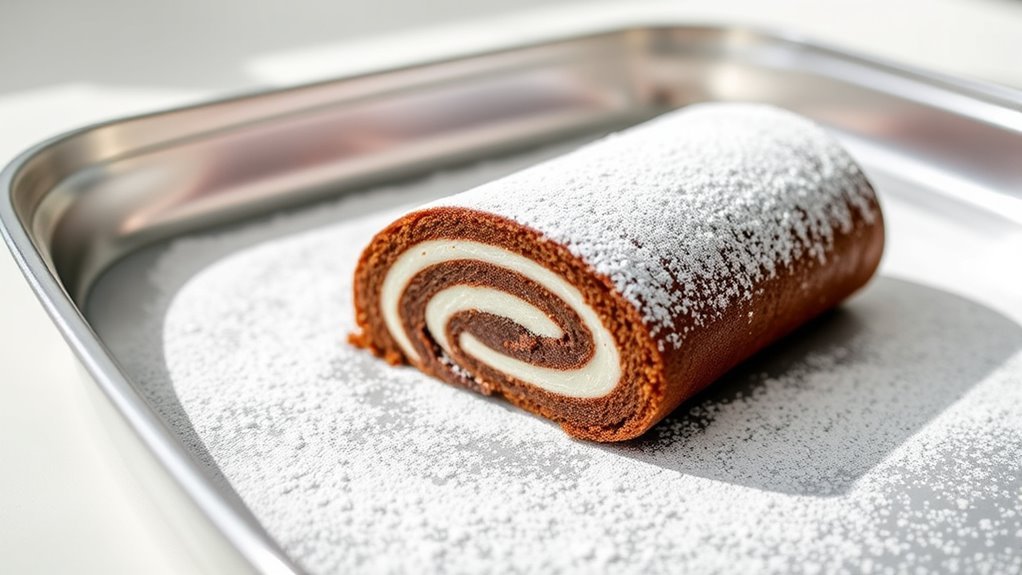
Because a jelly roll pan measures about 15×10 inches with 1-inch high sides, it provides the perfect size and shape for baking thin, even layers of cake batter without overflow. You’ll appreciate the raised edges that keep liquids contained, preventing any mess in your oven.
This shallow sheet pan promotes quick, uniform baking, so your cake turns out tender and ready to roll. Many jelly roll pans come with a non-stick coating, which makes removing the delicate cake easy without sticking or tearing. If your pan isn’t non-stick, lining it with parchment paper works just as well.
The combination of its ideal dimensions, raised edges, and non-stick surface makes the jelly roll pan uniquely suited for creating rolled cakes like Swiss rolls and roulades with ease.
Preparing and Using a Jelly Roll Pan for Cakes
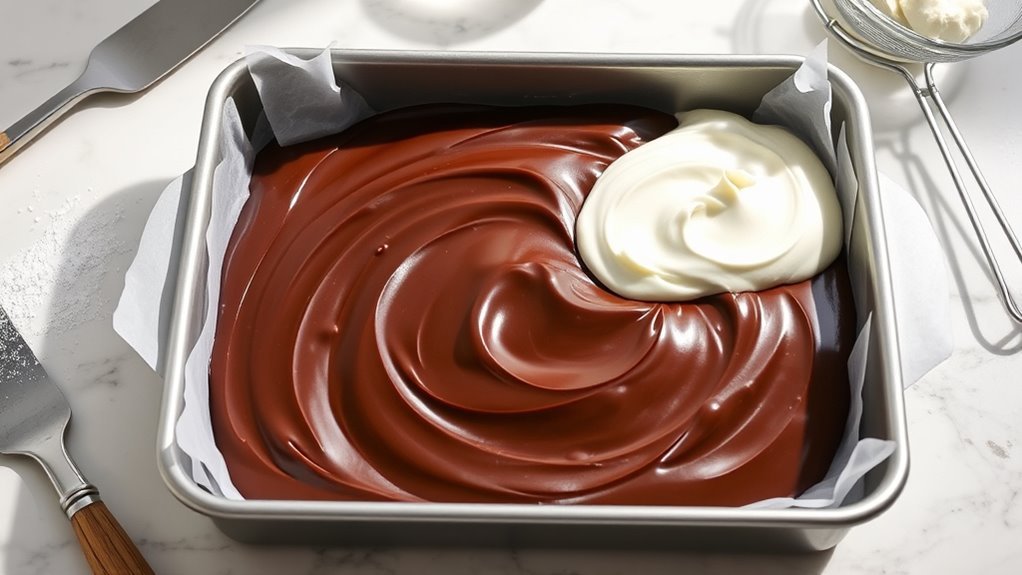
When you prepare a jelly roll pan for baking, start by lining it with parchment paper and lightly greasing the surface to prevent the cake from sticking. This guarantees easy removal after baking.
Pour your batter onto the jelly roll pan or a similar baking sheet, spreading it evenly to create a uniform thin layer. Bake it at the recipe’s specified temperature until the cake turns golden and a toothpick tests clean.
Once out of the oven, invert the cake onto a powdered sugar-dusted towel, then gently peel off the parchment paper. Roll the warm cake with the towel to shape it, then unroll, add your filling, and re-roll to achieve that classic jelly roll look. This method makes the most of your jelly roll pan’s design.
Tips for Baking Perfect Jelly Roll Cakes
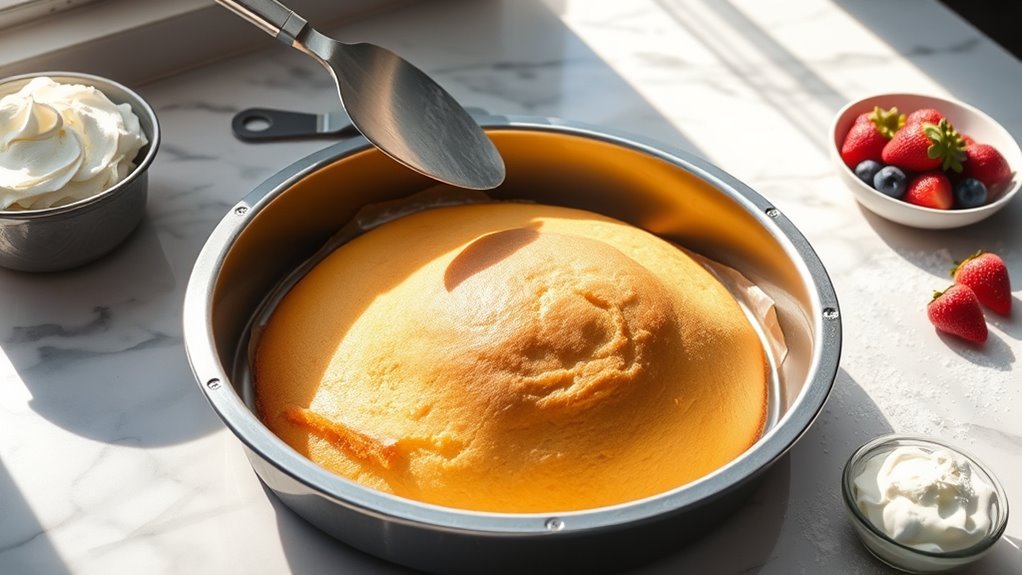
If you want your jelly roll cake to come out perfectly every time, start by spreading the batter evenly in your greased or parchment-lined 15×10-inch pan to guarantee a consistent thickness. Whether you’re using a traditional jelly roll pan or debating roll pan vs half sheet, remember that the pan size affects baking time and cake thickness.
Bake at the recommended temperature until the cake is lightly golden and springs back when pressed, usually 10-15 minutes. Right after baking, invert the warm cake onto a powdered sugar-dusted towel or parchment to prevent sticking. Peel off the parchment, then roll the cake with the towel inside to form the spiral.
Let it cool completely before unrolling to fill, avoiding cracks and ensuring a smooth finish.
Alternatives to a Jelly Roll Pan
Getting the perfect jelly roll cake often depends on using the right pan size, but you don’t have to own a traditional jelly roll pan to bake one.
You can use a sheet pan, half-sheet pan, or even a glass baking dish as practical alternatives. Just remember, using different pans may require adjusting baking times and batter thickness for your rolled cake to turn out well.
| Alternative Pan Type | Notes |
|---|---|
| Quarter-sheet pan | 13×9 inches, close to jelly roll size |
| Rimmed baking sheet | Line with parchment, adjust batter size |
| Glass baking dish | Adjust recipe for thickness and time |
These alternatives let you enjoy a delicious rolled cake without a specialized pan.
Creative Uses for a Jelly Roll Pan Beyond Cakes
Although jelly roll pans are designed for making rolled cakes, you can easily expand their use to a variety of other dishes. Because they’re smaller than traditional cookie sheets, the dimensions of a jelly roll pan specifically suit tasks needing even baking and easy handling.
Here are some creative uses beyond cake:
- Bake layered dessert bars like brownies or lemon bars by spreading batter evenly.
- Roast small batches of vegetables, chicken, or fish; the pan’s shallow sides catch juices.
- Make thin cookies, crispy crackers, or sheet-pan appetizers using it as a cookie sheet.
- Prepare thin, baked flatbreads or small casseroles for even cooking and simple serving.
This versatility makes the jelly roll pan a handy tool in your kitchen.
Frequently Asked Questions
What Is the Purpose of a Jelly Roll Pan?
The purpose of a jelly roll pan is to help you bake thin, even cake layers perfect for rolling. Its shallow sides keep batter contained, and you can also use it for roasting veggies or baking cookies.
What’s the Difference Between a Jelly Roll Pan and a Cake Pan?
Imagine a shallow tray cradling a delicate canvas; that’s your jelly roll pan—smaller, with low sides for thin, even layers.
Unlike deeper, versatile cake pans, it’s tailored for rolling, not stacking towering cakes.
What Can You Use a Jelly Roll Pan For?
You can use a jelly roll pan to bake thin cakes, roast veggies, toast nuts, or make sheet-pan dinners.
It’s perfect for spreading fillings on flat desserts and easily removes treats when lined with parchment paper.
Do I Really Need a Jelly Roll Pan?
You don’t absolutely need a jelly roll pan, but it’s like having a secret weapon in your kitchen. It makes baking and rolling cakes easier, ensuring even layers and neat results you’ll love every time.
Conclusion
Now that you know how a jelly roll pan makes baking easier and more fun, you might think that’s all there is to it. But wait—there’s a little secret: mastering this pan can open endless creative possibilities in your kitchen.
Whether you stick to classic cakes or experiment with savory dishes, the jelly roll pan is more than just a baking tool.
Ready to discover what surprises it holds for your next culinary adventure? Using a jelly roll cake pan not only simplifies baking but also inspires creativity, making it an essential item for any home baker.