3 Best Types of Utensils to Use on Ceramic Pans
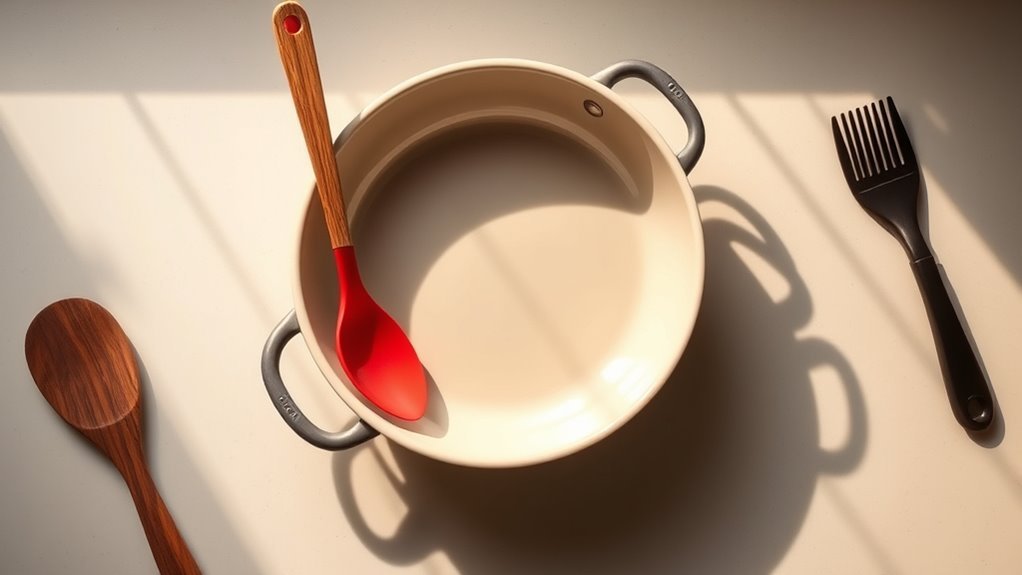
You should use wooden, nylon, or silicone utensils with your ceramic pans to keep them scratch-free and long-lasting. Choosing the best utensils for ceramic cookware is essential to maintain their quality and performance.
Wooden utensils are gentle, heat resistant, and durable.
Nylon utensils resist cracking and handle typical cooking temperatures well but may cause more sticking.
Silicone tools are flexible, non-abrasive, and easy to clean, protecting the ceramic surface effectively.
Choosing the right utensils guarantees your pans stay in great shape, and there’s more to discover about their specific benefits and care.
Why Wooden Utensils Are the Best Choice for Ceramic Cookware
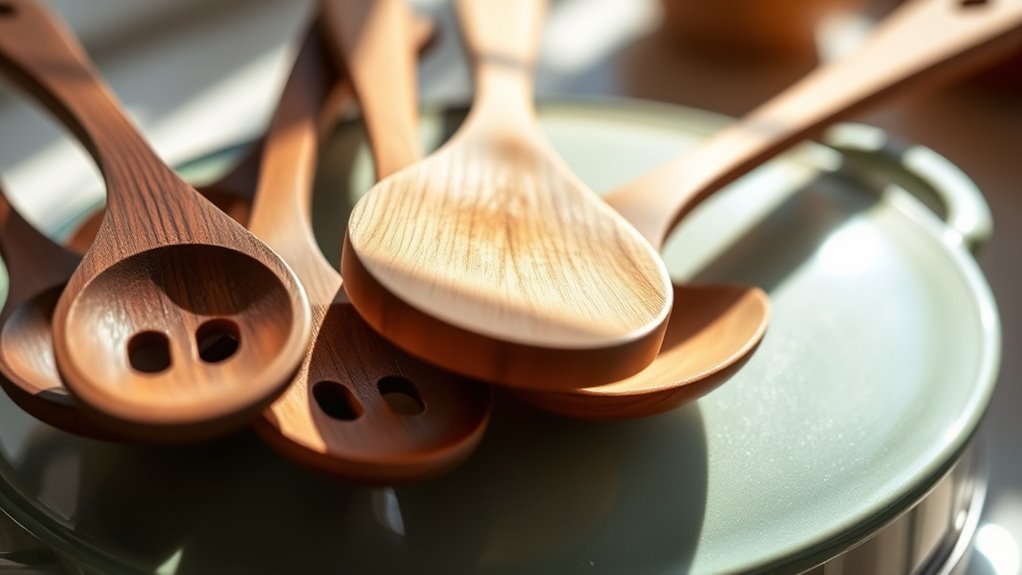
When you use wooden utensils on ceramic cookware, you protect its delicate surface from scratches and damage. Wooden utensils are gentle on ceramic, preventing scratches that can ruin the non-stick surface. Wooden spoons and spatulas, with their smooth, rounded edges, help preserve the coating and maintain your cookware’s integrity.
Unlike metal or plastic, wood is heat resistant and won’t melt or warp, ensuring durability and safety during cooking. These utensils don’t react with food or ceramic coatings, so they last for decades if properly cared for. Choosing wooden utensils means you’re actively preserving the non-stick surface and extending the lifespan of your ceramic cookware while enjoying reliable, durable tools that protect your investment.
Benefits and Limitations of Nylon Utensils for Ceramic Pans
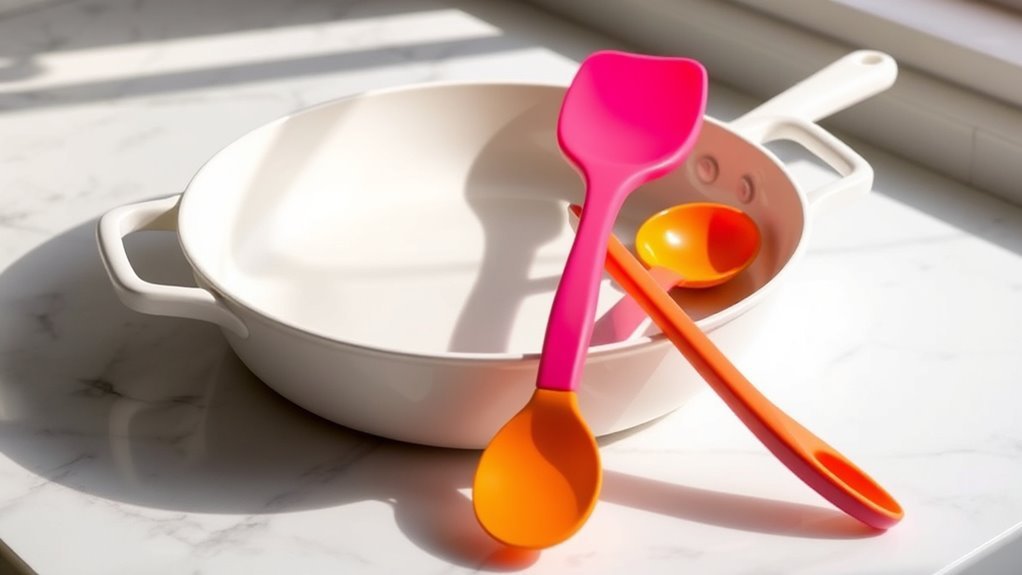
Wooden utensils do an excellent job protecting ceramic pans, but nylon tools also offer unique advantages worth considering. Nylon utensils feature a soft, non-abrasive surface that excels in scratching prevention, keeping your ceramic pans safe during cooking. Their durability means they resist cracking or breaking with regular use.
Plus, nylon utensil material is heat resistant up to about 400°F, suitable for most cooking temperatures. However, be cautious not to expose them to higher heat, as they can melt or deform. One limitation is that nylon utensils may cause more food sticking than wooden or silicone options, especially with sticky or delicate ingredients.
Despite this, they’re easy to clean gently, making nylon utensils a practical choice for many ceramic pan users.
How Silicone Utensils Protect and Preserve Ceramic Cookware
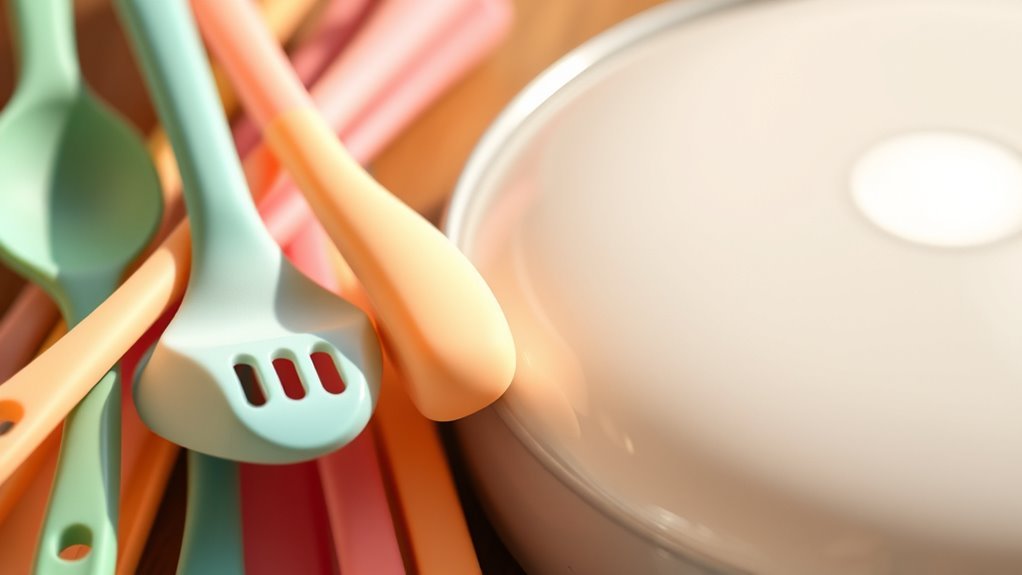
Because silicone utensils are soft and non-abrasive, they safeguard your ceramic cookware from scratches and damage that can ruin the non-stick coating. These flexible tools make it easy to stir and scrape without applying harsh pressure, supporting cookware preservation.
Silicone utensils also resist heat up to 400°F, so they won’t melt or warp during cooking. Their smooth, non-porous surface prevents food sticking, reducing the risk of damaging your ceramic cookware when you clean.
Plus, silicone’s gentle cleaning properties mean you can maintain the ceramic coating’s integrity longer. By choosing silicone utensils, you guarantee scratch prevention while extending the life of your non-stick ceramic pans, making them a smart, durable choice for everyday cooking and care.
Frequently Asked Questions
What Utensils Are Best for Ceramic Pans?
You should use silicone, wooden, or nylon utensils on ceramic pans. They won’t scratch or damage the surface, helping your pans last longer and stay non-stick.
Avoid metal utensils to protect your cookware.
Do Ceramic Pans Need Special Utensils?
You bet they do—don’t rock the boat with metal utensils! Stick to wood, silicone, or nylon to keep your ceramic pans scratch-free and cooking like a charm.
It’s the key to long-lasting performance.
Can You Use Metal Utensils on Ceramic Coated Pans?
You shouldn’t use metal utensils on ceramic-coated pans because they can scratch and damage the surface over time.
Instead, choose silicone, wood, or nylon utensils to keep your pans in great condition and extend their lifespan.
What Not to Use on Ceramic Pans?
You shouldn’t use metal utensils, abrasive scrubbers, sharp knives, or high-heat plastic tools on ceramic pans.
Avoid sudden temperature changes too, like adding cold liquids to hot pans, to prevent damage or cracking of the coating.
Conclusion
Choosing the right utensil for your ceramic pans isn’t just about convenience—it’s about protecting your investment. Wooden utensils offer unmatched gentleness, nylon brings versatility with some caution, and silicone balances care with durability.
But which one will truly extend the life of your cookware and elevate your cooking experience? The answer might surprise you, and it’s worth considering before your next meal.
Choose wisely, because your ceramic pans deserve more than just any utensil. Using the best utensils for ceramic pans will help maintain their non-stick surface and ensure your cookware lasts longer.