Does a Hen Have to Mate to Lay Eggs?
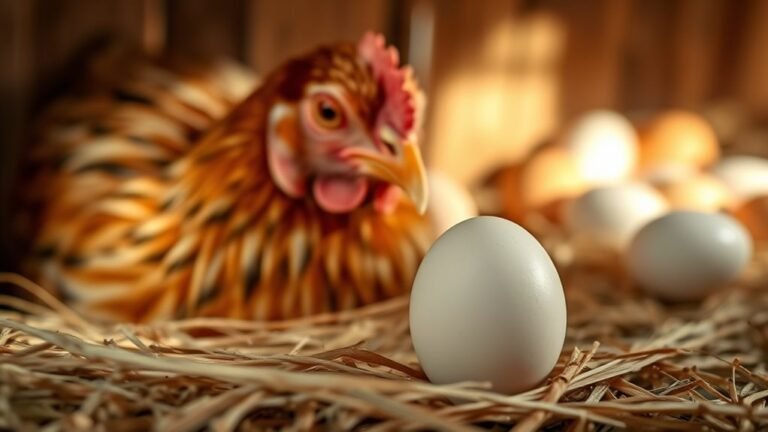
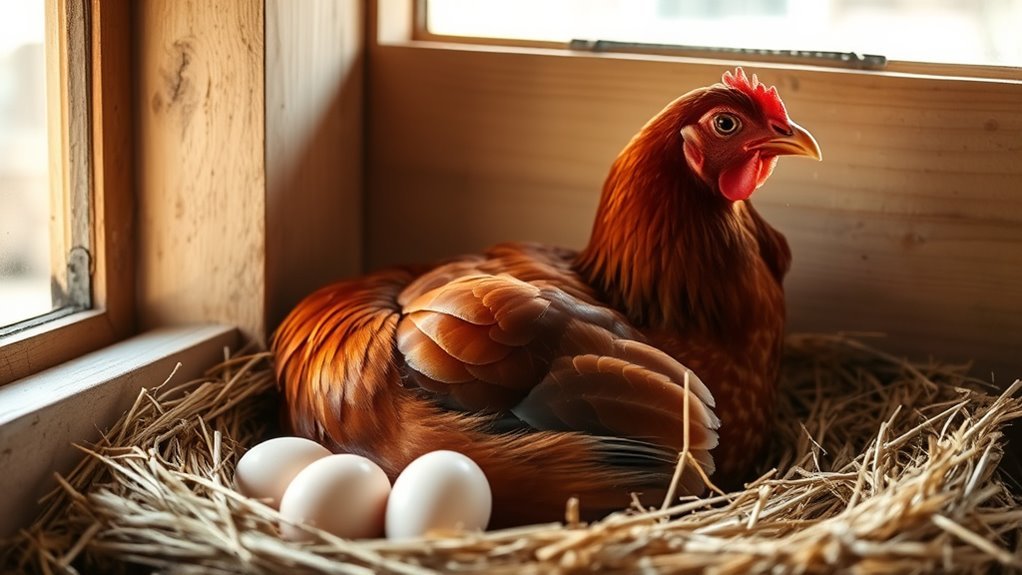
You don’t need a rooster or mating for your hen to lay eggs because hens produce eggs based on natural hormonal cycles and environmental factors like daylight. Hens lay eggs regularly, independent of whether they have mated.
Mating only fertilizes the eggs, allowing them to develop into chicks, but hens will lay eggs regardless. Without a rooster, those eggs won’t hatch, yet they’re perfect for eating.
If you want to understand how fertilization works and why roosters matter beyond egg-laying, there’s more to uncover. This knowledge helps clarify the role of roosters in poultry keeping and egg production.
Do Hens Need a Rooster to Lay Eggs?
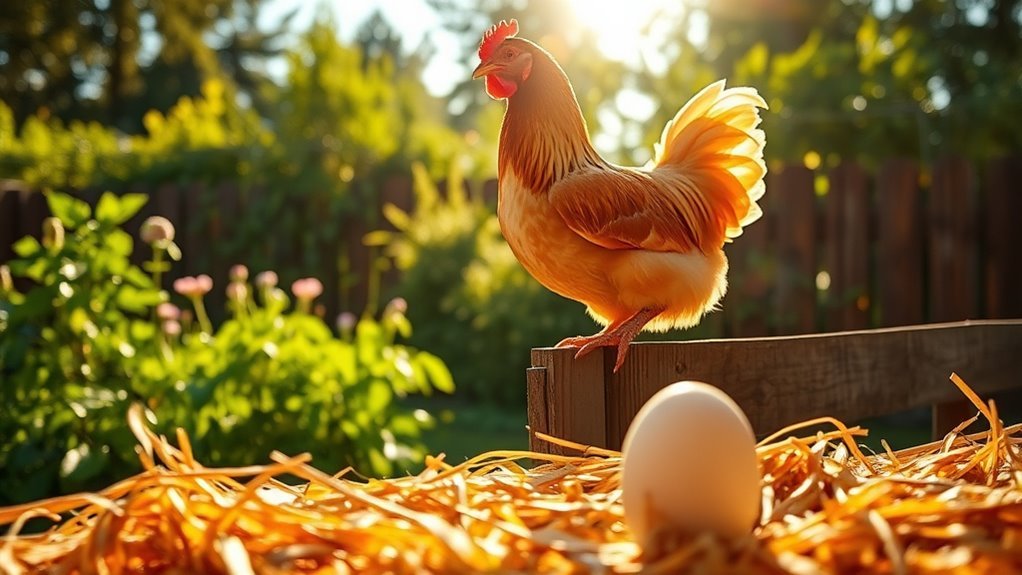
Wondering if hens need a rooster to lay eggs? The answer is no. Hens can lay eggs without a rooster since egg production doesn’t depend on fertilization. You’ll find that hens naturally produce eggs as part of their reproductive cycle, influenced mainly by environmental factors like daylight.
Even without mating, hens will consistently lay eggs without a rooster present. However, these eggs are infertile, meaning they won’t develop into chicks. So, if your goal is simply to collect eggs for eating or baking, you don’t need a rooster at all.
The presence of a rooster only matters if you want fertilized eggs, but it doesn’t affect the hen’s ability to lay eggs in the first place.
What Role Does a Rooster Play in Fertilizing Eggs?
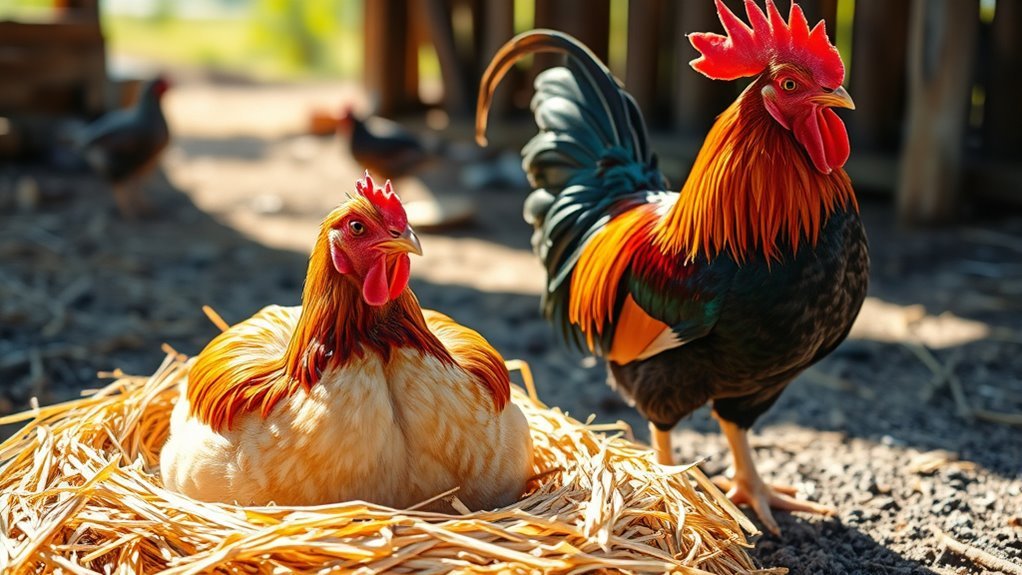
While hens can lay eggs without a rooster, those eggs won’t develop into chicks since they’re infertile. The rooster plays a vital role in fertilizing eggs by providing sperm during mating. When a hen mates with a rooster, sperm enters her reproductive tract, allowing eggs to become fertilized.
You don’t need constant mating; typically, 2-3 times a week is enough for sperm to fertilize multiple eggs over several days. Remember, the rooster’s presence doesn’t affect how often hens lay eggs—it only influences whether those eggs are fertilized.
Without a rooster, the eggs you collect will remain unfertilized and won’t hatch. So, if you want chicks, the rooster’s role in fertilizing eggs is indispensable.
How Hens Store Sperm to Lay Fertile Eggs
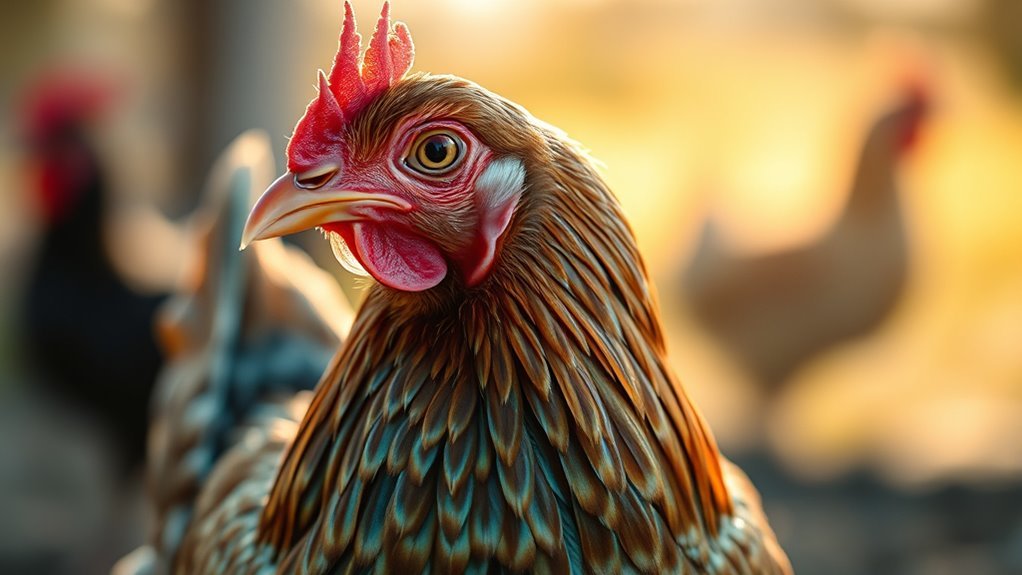
Because hens can store sperm in specialized structures called sperm storage tubules (SSTs), they can lay fertile eggs for days or even weeks after a single mating. When sperm enters the SSTs at the oviduct-cloaca junction, it remains viable for 10 to 14 days or longer.
This sperm storage lets fertilization happen over time without repeated mating. As a result, you’ll notice hens producing fertile eggs continuously from just one encounter with a rooster.
| Feature | Location | Duration of Sperm Viability |
|---|---|---|
| Sperm Storage Tubules | Oviduct-cloaca junction | 10-14 days (sometimes more) |
| Fertilization Timing | After sperm migration | Days after mating |
| Egg Fertility | Dependent on stored sperm | Multiple eggs fertilized |
| Mating Frequency | Single or infrequent | Fertile eggs for weeks |
| Sperm Use | Gradual release from SSTs | Extended fertilization |
Why Hens Lay Eggs Without a Rooster’s Help
Even if a rooster isn’t around, hens keep laying eggs regularly because their bodies follow a natural hormonal cycle that drives egg production independently of fertilization. When you raise Backyard Chickens, it’s important to know that hens don’t need to mate to lay eggs. They produce eggs routinely, but without a rooster, these eggs won’t be fertile and won’t develop into chicks.
Your hen’s reproductive system continuously works, influenced more by light, diet, and health than by mating. So, if you just want fresh eggs for your kitchen, you don’t have to worry about a rooster. However, if you want your hens to lay fertile eggs to hatch chicks, then a rooster’s presence becomes essential.
Otherwise, your hens will keep laying eggs just fine on their own.
How Roosters Protect Hens and Maintain Flock Order
You’ll notice roosters play a key role in keeping hens safe by warning them of predators and standing guard.
They also keep the flock organized by enforcing a social order that reduces fights.
Understanding this helps explain how roosters contribute beyond just mating.
Rooster’s Role In Protection
While hens focus on laying eggs, roosters take on the critical job of protecting the flock. You’ll see roosters actively patrol the area, watching closely for predators and using loud crows or alarm calls to alert the hens. They position themselves between threats and the hens, acting as a physical barrier.
When danger approaches, their aggressive posturing and pecking help defend the flock from intruders or rivals. By doing this, roosters help protect the flock and maintain order. Their dominant presence reduces conflicts within the group and ensures the hens can lay eggs in a safer environment.
Maintaining Flock Social Order
How do roosters keep peace among hens and maintain order in the flock? They establish a clear social hierarchy, which reduces conflicts and discourages aggression. By maintaining flock social order, roosters protect hens from danger and guarantee a calm environment where hens can lay comfortably.
Their vigilant presence alerts the flock to predators and keeps the group cohesive.
| Rooster Role | Benefit to Flock |
|---|---|
| Establishes pecking order | Reduces hen conflicts |
| Defends against predators | Keeps hens safe |
| Alerts to dangers | Prevents surprise attacks |
| Monitors environment | Ensures safe foraging |
| Leads flock cohesively | Improves health, productivity |
Thanks to these roles, roosters are crucial for maintaining flock social order and supporting hens as they lay eggs.
When You Need a Rooster to Grow Your Flock Naturally
If you want to grow your flock naturally, you need a rooster to fertilize the eggs. Hens will lay eggs without mating, but these eggs won’t hatch into chicks. A rooster to lay with your hens guarantees fertilized eggs, which are essential for incubation and flock expansion.
Once a rooster mates with a hen, she can store sperm for up to 14 days, allowing multiple eggs to be fertilized without daily mating. This means you don’t need constant rooster presence, but having one around maintains a steady supply of fertile eggs.
For best results, keep one rooster for every ten hens. Without a rooster, your hens will produce only unfertilized eggs, so if you want to raise chicks naturally, a rooster is indispensable.
Frequently Asked Questions
How Does a Hen Lay Eggs Without Mating?
You don’t need a hen to mate to lay eggs because her body naturally produces eggs through hormonal cycles. The eggs form in her oviduct regardless, but they’ll be infertile without fertilization by a rooster.
How Does a Rooster Fertilize an Egg?
A rooster fertilizes an egg by briefly touching cloacas with a hen during mating, transferring sperm that travels to her oviduct.
There, it meets and fertilizes the ovum inside the hen’s reproductive tract.
What Should I Do if My Bird Laid an Egg Without a Mate?
Think of your hen’s egg as a gift from a tree—no need to unwrap it differently.
You can simply enjoy it, no action required, since it’s perfectly normal and safe without a mate involved.
What Is a Fairy Egg?
A fairy egg is a tiny, irregular egg your hen lays, usually without yolk. It’s harmless and happens occasionally, often due to stress or changes in her reproductive system.
You don’t need to worry about it.
Conclusion
You don’t need a rooster for your hen to lay eggs since hens naturally produce them regardless. However, if you want fertile eggs and to grow your flock the old-fashioned way, a rooster plays a vital role.
Beyond fertilization, roosters help keep order and protect the hens, truly wearing many hats. So, when it comes to egg-laying, you can have your cake and eat it too—eggs with or without a rooster’s help.
In conclusion, a hen does not have to mate to lay eggs, but a rooster is essential if you want fertilized eggs. This means hens lay eggs naturally, but a rooster supports the flock’s growth and safety.