How You Bread Chicken Without Eggs Step by Step
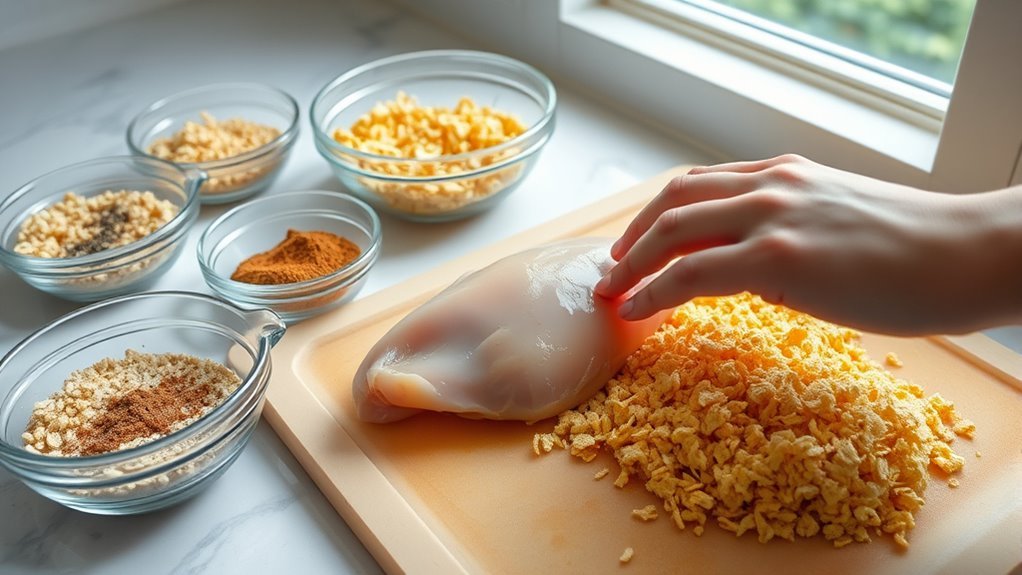
To bread chicken without eggs, start by patting your chicken dry to remove excess moisture. This step is crucial for helping the coating stick properly.
Next, coat the chicken with a sticky binder such as mayonnaise, Greek yogurt, or mustard.
Then, dip the chicken into seasoned breadcrumbs or crushed crackers. Press firmly to ensure the coating adheres well to the surface.
Allow the breaded chicken to rest for a few minutes so the breading can set properly.
Finally, bake or air fry the chicken at 375°F until it becomes crispy and is cooked through.
Keep experimenting, and you’ll discover flavor tips and allergy-friendly swaps to perfect your egg-free breaded chicken.
What You Need to Bread Chicken Without Eggs
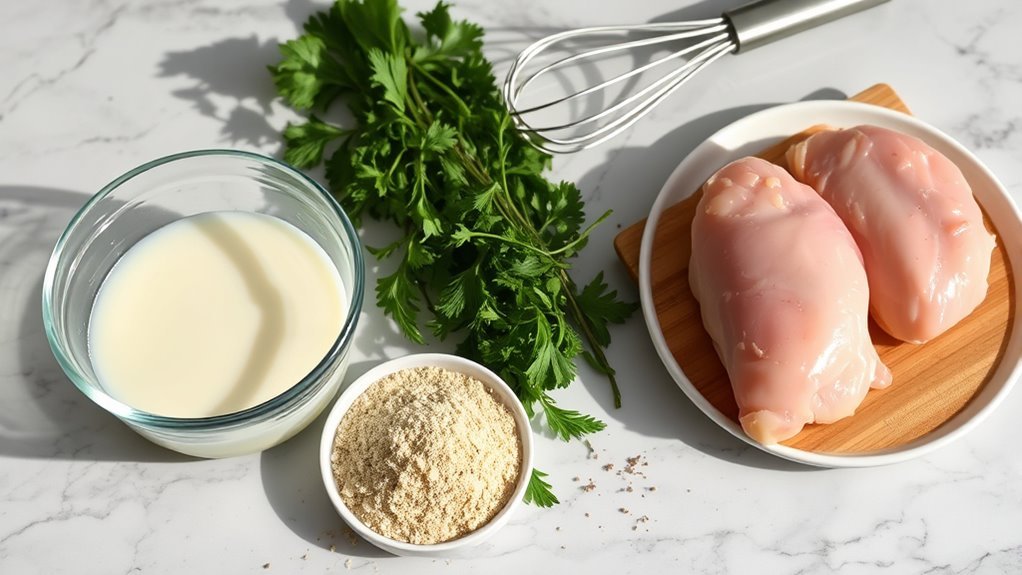
If you want to bread chicken without eggs, you’ll need a sticky binder like mayonnaise, Greek yogurt, or mustard to help the coating adhere. These egg-free options create the perfect surface for your coating to stick to the chicken.
Before applying the coating, dip your chicken in a moist agent such as buttermilk, dairy-free yogurt, or a seasoned oil mixture to enhance adhesion. For the coating itself, consider crushed crackers, cereal, or gluten-free bread crumbs instead of traditional bread crumbs.
To boost crispiness and ensure the coating clings well, brush a thin layer of melted butter or olive oil on the chicken. Prepping your chicken this way guarantees an even, crunchy, and flavorful egg free coating every time you cook.
How to Make an Egg-Free Slurry for Breading
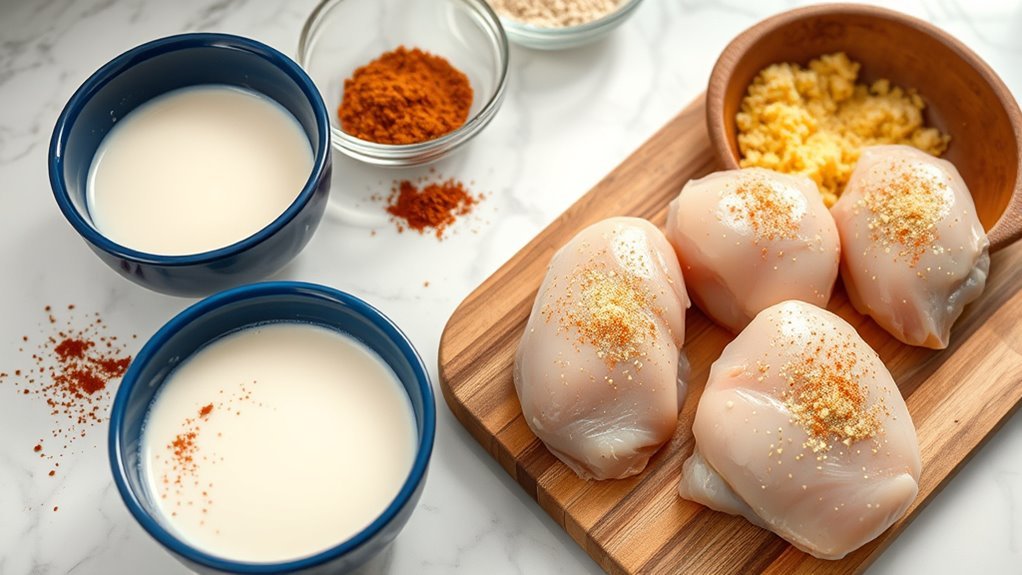
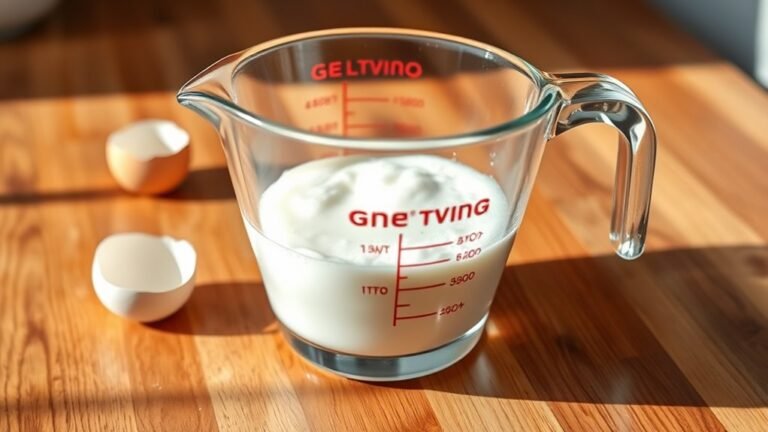
When you want a reliable binder without eggs, making an egg-free slurry is your best bet. Start by combining equal parts cornstarch and water, whisking until you get a smooth slurry with no lumps. This mixture acts as the perfect base to help your breading stick evenly to the chicken.
For extra flavor, you can stir in grated Parmesan cheese, Dijon mustard, or a pinch of garlic powder. Mix everything thoroughly until the slurry has a slightly thick, pourable consistency. Use it immediately to guarantee it stays viscous and adheres well.
Dip your chicken pieces into this egg-free slurry before coating them with breadcrumbs, and you’ll achieve a crispy, well-breaded finish every time.
Preparing Chicken for Eggless Breading
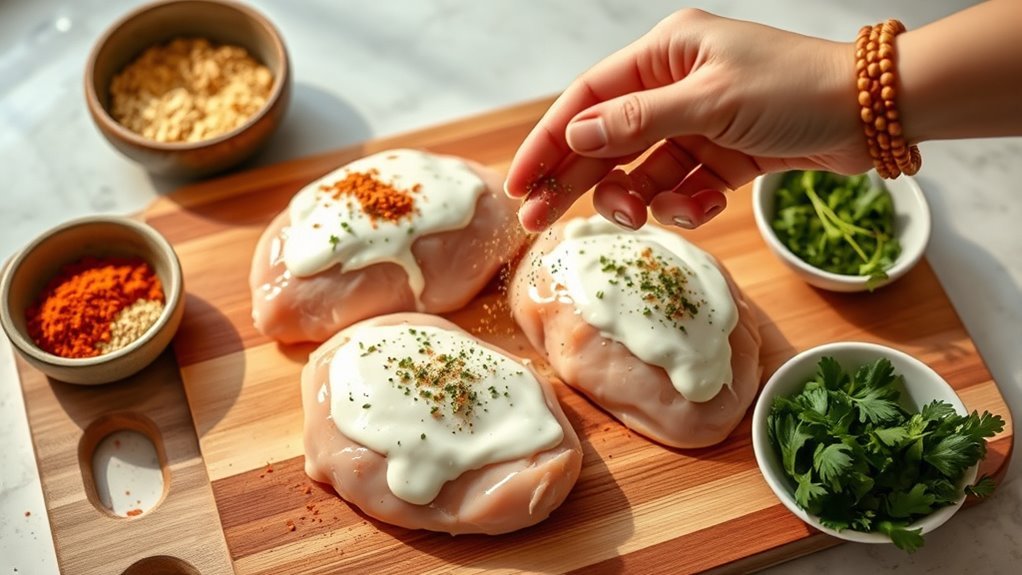
Although skipping eggs might seem tricky, preparing your chicken properly guarantees the breading sticks perfectly. Start with boneless skinless chicken pieces and pat them dry to remove excess moisture. This step is vital for the coating to adhere well.
Next, marinate the chicken in a moist binder like seasoned olive oil, Greek yogurt, or mustard for 10-15 minutes. The binder creates a tacky surface, helping crumbs cling evenly. Avoid rushing this process—you want the coating to stick firmly.
When ready, set up your dipping station with the moist binder separate from your seasoned crumbs. Thoroughly coat each piece in the binder before pressing it into the crumbs, ensuring every side is covered. Let the coated chicken rest briefly so the coating sets before cooking.
How to Coat Chicken Evenly Without Eggs
To coat chicken evenly without eggs, start by prepping the surface with a moist binder like mayonnaise or Greek yogurt to help the coating adhere. Make sure you cover every inch before pressing the breadcrumbs firmly onto the chicken.
Working one piece at a time and chilling them briefly will ensure a smooth, even crust that stays put during cooking.
Preparing The Chicken Surface
Since eggs are off the table, you’ll need to prep the chicken surface carefully to get the coating to stick evenly. Follow these steps to ensure proper coating adhesion:
- Pat the chicken dry with paper towels to remove excess moisture, which can prevent the coating from sticking.
- Lightly season the chicken with salt and pepper to boost flavor right at the start.
- Spread a thin layer of a moisture source like mayonnaise, Greek yogurt, or mustard over the chicken. This acts as a binder and improves coating adhesion.
- Dip the chicken evenly into your dry coating mixture, turning it to cover all sides thoroughly.
Using Effective Binding Agents
How can you guarantee your chicken breading sticks perfectly without eggs? Start by using effective binding agents like Greek yogurt, mayonnaise, or mustard. These dairy-free options provide excellent coating adhesion for your egg-free breading.
Before coating, marinate your chicken in a moisture-rich mixture for 10-15 minutes to improve the surface’s tackiness. Next, apply a thin layer of oil or melted butter to help the crumbs stick better. Press the chicken firmly into your seasoned crumbs or crushed crackers to ensure even coverage and reduce fallout during cooking.
Finally, let the coated chicken rest for a few minutes. This step allows the binding agents to set, enhancing both adhesion and crispiness in your delicious egg-free breading.
Applying Breadcrumbs Uniformly
Even without eggs, you can achieve an evenly coated chicken by first dredging it in a moist binder like mayonnaise or yogurt, which helps the breadcrumbs stick uniformly. To guarantee a perfect coating, follow these steps:
- Use a shallow dish filled with seasoned breadcrumbs for easy access and even coverage.
- Press the chicken firmly into the breadcrumbs, making sure to coat all sides thoroughly.
- Gently shake off any excess crumbs to avoid clumping and maintain a smooth layer.
- Place the coated chicken on a wire rack to let extra breadcrumbs fall off and promote even browning during cooking.
Best Cooking Methods for Egg-Free Breaded Chicken
You’ll get perfectly crispy egg-free breaded chicken by oven baking at 375°F for 20-30 minutes or air frying at the same temperature for 10-15 minutes.
Make sure to preheat your oven or air fryer to lock in that crunch. Using a wire rack during baking helps keep your chicken crispy by letting excess oil drain away.
Oven Baking Tips
When baking egg-free breaded chicken, preheating your oven to 375°F (190°C) guarantees even cooking and a crispy texture. To get the best results, follow these tips:
- Place a wire rack on a baking sheet to allow hot air circulation and prevent sogginess.
- Lightly spray or brush the chicken with oil before baking to promote browning and extra crunch.
- Bake the coated chicken for 20-30 minutes, flipping halfway through for even crispness.
- Use a meat thermometer to check that the internal temperature reaches 165°F (74°C), ensuring safety and perfect doneness.
These steps help you achieve a golden, crispy coating without eggs, making your oven-baked chicken delicious and satisfying every time.
Air Fryer Techniques
Although breading chicken without eggs might seem tricky, using an air fryer makes it easy to achieve a crispy, golden crust. Start by preheating your air fryer to 375°F (190°C) to guarantee ideal crispiness.
Coat your chicken in a binder like Greek yogurt, mayonnaise, or melted butter to help the coating stick without eggs. Next, dredge the chicken in seasoned panko or gluten-free bread crumbs, pressing gently to secure a crispy coating.
Arrange the breaded chicken in a single layer in the air fryer basket, avoiding overcrowding for even cooking. Cook for 10-15 minutes, flipping halfway through, until the chicken reaches 165°F (74°C) and the coating turns golden brown.
This method guarantees deliciously crispy breaded chicken every time.
Tips for a Crispy, Golden Crust Without Eggs
If you want a crispy, golden crust without using eggs, start by choosing the right binder like mayonnaise, Greek yogurt, or even aquafaba to help the coating stick and crisp up perfectly. To maximize crispiness, follow these tips:
- Use a moist binder such as olive oil, mustard, or buttermilk to ensure even coating and better adhesion of breadcrumbs.
- Opt for crunchy alternatives like crushed crackers, corn flakes, or gluten-free breadcrumbs to enhance texture.
- Add a pinch of baking powder or baking soda to your dry coating to boost browning and crispiness.
- Avoid overcrowding the pan or air fryer so chicken pieces cook evenly and maintain their golden crust.
These tricks guarantee a perfectly coated, crispy chicken without eggs every time.
Flavor Variations: Herbs, Spices, and Seasonings
To elevate your egg-free breaded chicken, you can easily customize the flavor by mixing herbs, spices, and seasonings into the coating. Incorporate dried herbs like thyme or rosemary for an aromatic touch, or add fresh parsley for a vibrant twist. Spices such as smoked paprika or cayenne pepper bring boldness, while blends like Cajun or curry powder create distinctive crusts.
Don’t forget seasonings like onion powder or Italian seasoning to round out the flavor profile.
| Herbs (Dried/Fresh) | Spices & Seasonings |
|---|---|
| Thyme, Oregano | Smoked Paprika, Cayenne |
| Rosemary, Parsley | Garlic Powder, Onion Powder |
| Cilantro | Cajun Blend, Curry Powder |
Experiment with these to find your perfect egg-free breading flavor!
Allergy-Friendly Swaps for Egg-Free Breading
You don’t need eggs or dairy to get a great breading on your chicken. Try using dairy-free spreads or plant-based milk mixed with lemon juice as binders, and swap traditional breadcrumbs for gluten-free options like crushed crackers or corn flakes.
These allergy-friendly swaps keep your breading crispy and flavorful without common allergens.
Dairy-Free Breading Alternatives
When replacing eggs in chicken breading, you can rely on a variety of dairy-free options that keep your coating flavorful and crisp. Here are four great dairy-free, egg-free alternatives to help your breadcrumbs stick perfectly:
- Use plant-based milk like almond or soy milk as a binding agent instead of eggs.
- Try non-dairy options such as coconut yogurt, cashew cream, or aquafaba to enhance adhesion.
- Opt for gluten-free, dairy-free breadcrumbs made from rice, corn, or tapioca starch for a crunchy texture.
- Add flavor with vegan Parmesan-style cheese or nutritional yeast to replace traditional dairy-based cheese.
These swaps ensure your breaded chicken remains allergy-friendly without sacrificing taste or texture.
Gluten-Free Egg Replacements
Although traditional egg-based breading offers excellent adhesion, gluten-free egg replacements provide effective, allergy-friendly alternatives that keep your chicken crispy and flavorful. You can use chickpea flour, flaxseed meal mixed with water, or applesauce as natural egg substitutes in gluten-free breading recipes. Non-dairy binders like aquafaba or commercial egg replacers also help coatings adhere without gluten or eggs.
For a crispy coating, swap traditional breadcrumbs with gluten-free options like rice puffs, crushed gluten-free crackers, or almond flour. Combining gluten-free flour blends with tapioca or potato starch creates a sticky texture that mimics egg adhesion. Always test your gluten-free egg replacements for binding strength and adjust moisture to ensure your chicken has a perfectly crispy coating every time.
Storing, Reheating, and Serving Egg-Free Breaded Chicken
Since egg-free breaded chicken can lose its crispiness quickly, storing leftovers properly is key to preserving their texture and flavor. Follow these tips for the best results:
- Store leftover chicken in an airtight container in the refrigerator for up to 3 days to maintain freshness and prevent sogginess.
- To reheat, preheat your oven to 375°F (190°C) and place the chicken on a wire rack over a baking sheet; heat for 10-15 minutes to restore crispiness.
- If using a microwave, reheat in 30-second intervals, then finish in the oven to regain crunch.
- Serve the chicken immediately after reheating to enjoy its ideal texture and flavor.
Proper storage and reheating will help you keep the crispiness and taste just right every time.
Troubleshooting Common Issues With Eggless Breading
Keeping your egg-free breaded chicken crispy after cooking is just one part of the challenge; you may also run into issues with the breading falling off or not sticking properly during the cooking process.
To improve adhesion, make sure you coat the chicken in a thick layer of mayo or crushed crackers—this adds the right moisture needed to bind the breading. However, avoid excess moisture by patting the chicken dry before applying coatings, as too much moisture can cause slipping.
Also, let the coated chicken rest for 10 minutes before cooking; this helps the breading adhere better. Finally, cook at the correct temperature, between 375°F and 400°F, to set the coating firmly and prevent peeling during baking or frying.
Frequently Asked Questions
How to Get Breading to Stick to Chicken Without Egg?
You’ll want to marinate chicken in yogurt or mustard, then lightly coat it with oil.
Press your breading firmly onto the surface, let it rest for 10 minutes, and guarantee the chicken is dry and even.
What Can You Use in Place of an Egg When Breading Chicken?
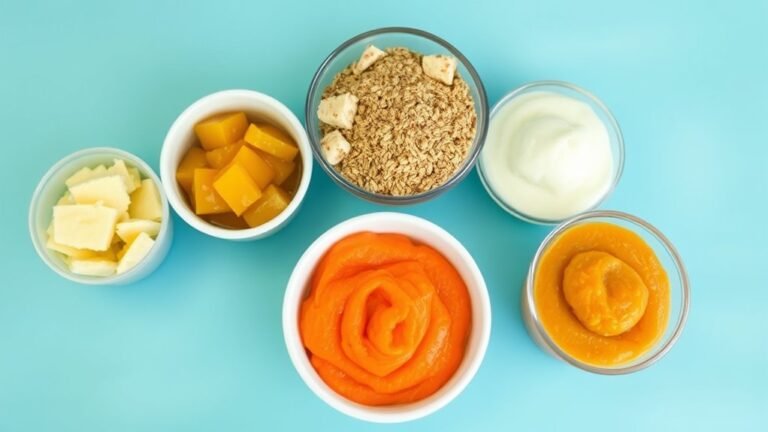
You can use mayonnaise, Greek yogurt, or plant-based milk mixed with vinegar or mustard. Mashed avocado, pumpkin puree, or commercial egg replacers also work well.
Butter or melted margarine helps breadcrumbs stick without eggs.
How to Bread Chicken Tenders Without Eggs?
Imagine your chicken as a blank canvas—you’ll coat it by first dunking it in yogurt or mustard, then press it into crunchy crumbs.
Chill briefly to set, then cook until golden perfection wraps every tender bite.
What Can I Use Instead of Eggs for Bread?
You can use mayo, yogurt, or vegan mayo as a binder. Milk with lemon juice, mustard, honey, or aquafaba work too.
Try hummus or tahini mixed with seasonings for a tasty, egg-free breading.
Conclusion
Now, imagine biting into crispy, golden chicken, perfectly breaded without eggs—each crunch bursting with flavor and warmth. You’ve mastered the art of egg-free breading, turning simple ingredients into a comforting meal that’s both allergy-friendly and delicious.
Whether it’s a family dinner or a solo treat, you’ve created something nourishing and satisfying. Keep experimenting with herbs and spices, and enjoy the cozy, savory moments you’ve crafted, one bite at a time.
By following these steps on how to bread chicken without eggs, you’re able to enjoy a flavorful, crispy coating without compromising on taste or texture. Embrace this egg-free breading method for a versatile and allergy-friendly cooking experience.