How to Do Clean Fresh Chicken Eggs in 5 Simple Steps
First, check your fresh chicken eggs for cracks and dirt, discarding any damaged ones. Handling fresh eggs properly is essential to maintain their quality and safety.
Next, gently clean them with warm water and a soft cloth to avoid harming the shells. Be careful not to use harsh scrubbing techniques that can damage the protective coating.
Then, sanitize your eggs briefly using a mild bleach or vinegar solution, followed by drying them thoroughly with a clean towel to keep moisture out. This step helps reduce bacteria on the eggshell surface.
Finally, store the eggs pointed end down in a cool place or fridge. Proper storage helps keep your eggs fresh longer and safer for consumption.
Keep going to discover tips that keep your eggs fresh longer and safer.
Check Your Eggs for Cracks and Dirt
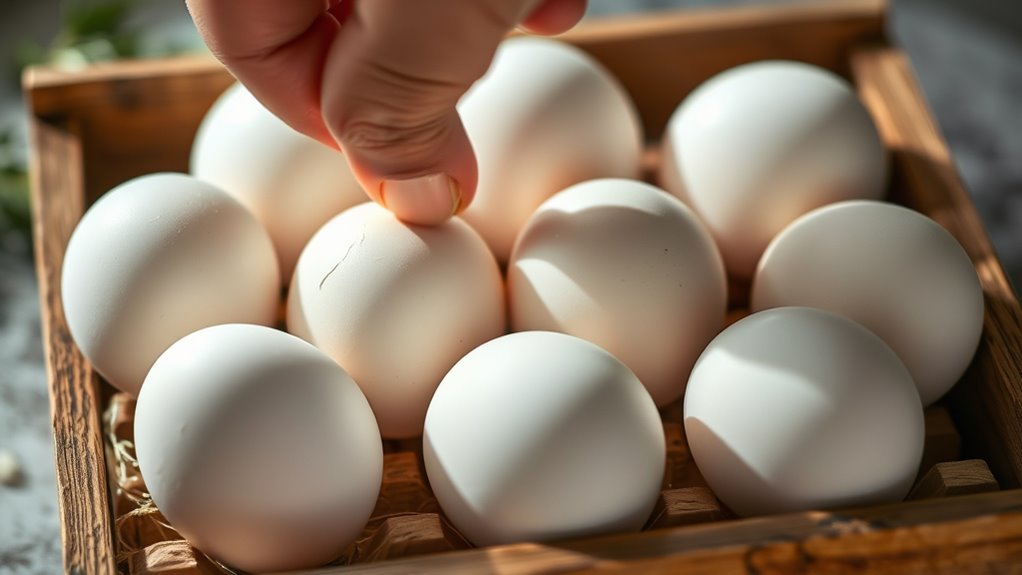
Before you start cleaning fresh chicken eggs, check each one carefully for cracks or dirt. You need to inspect the shells closely because cracks can lead to bacterial contamination and spoilage. Discard any eggs with visible cracks to ensure safety.
Next, examine the shell surface for dirt, feathers, or debris that might require cleaning. When you handle the eggs, do so gently to avoid causing cracks or further damage. For dirt removal, use a dry cloth or a soft brush to wipe off any obvious debris without wetting the shells.
This careful inspection and cleaning preparation help maintain the eggs’ quality and safety, promoting effective cracks prevention and dirt removal before you move on to more thorough cleaning techniques.
Gently Clean Eggs With Warm Water and a Soft Cloth
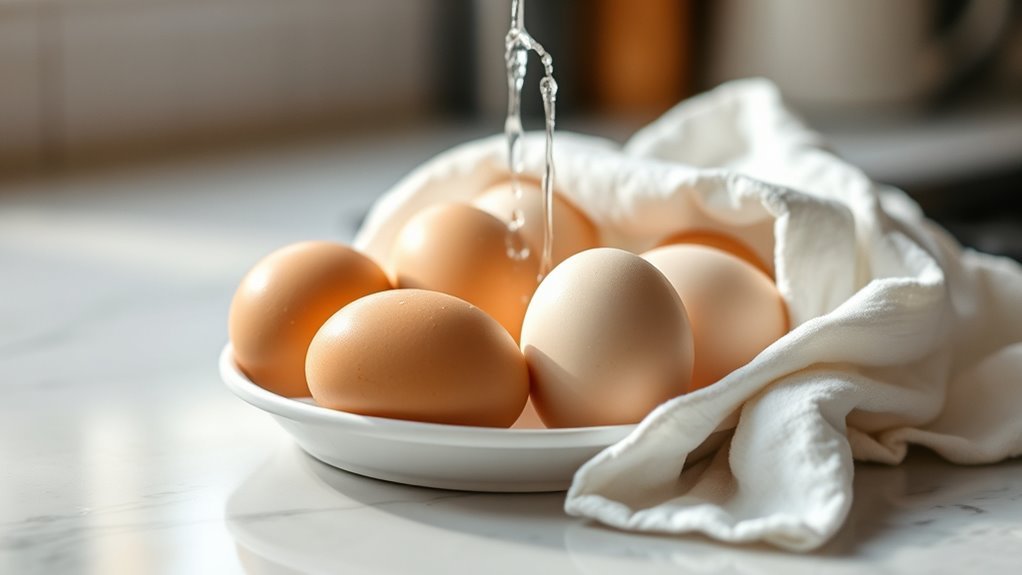
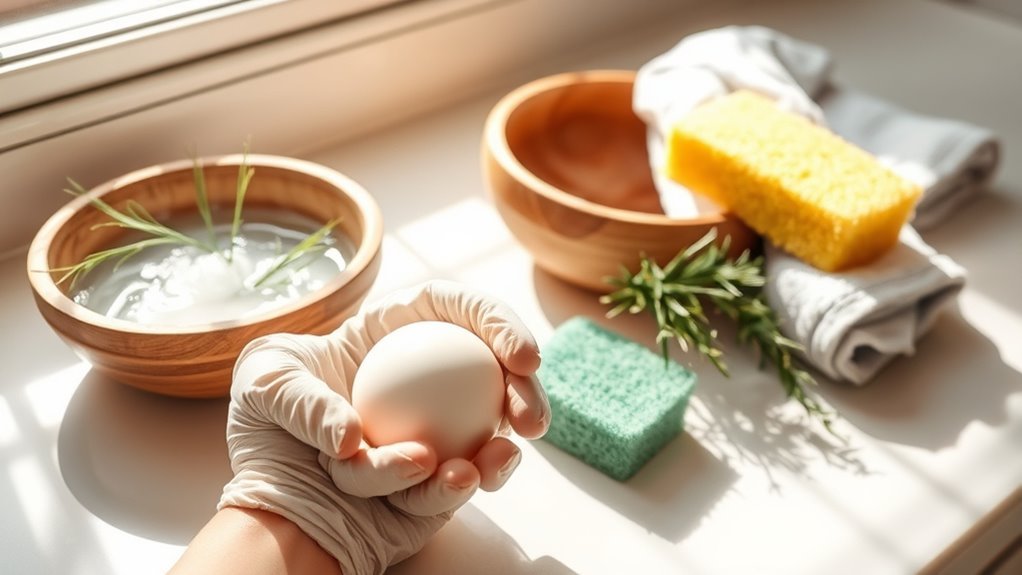
When you’re ready to clean your fresh chicken eggs, use warm water between 90-120°F to gently rinse them and loosen any dirt without harming the shell’s natural coating. Dampen a soft cloth with warm water and perform a gentle cleaning by giving each egg a careful, damp wipe to remove dirt and debris. Avoid harsh scrubbing or using soap, as this can damage the eggshell’s protective layer.
Handle eggs delicately to prevent cracks while ensuring you clean every spot. Afterward, dry the eggs immediately with a clean, soft towel to prevent moisture absorption, which can lead to shell damage and bacterial growth. This gentle approach keeps your eggs clean and safe while preserving their natural defenses.
When and How to Sanitize Eggs Safely Using Vinegar or Bleach
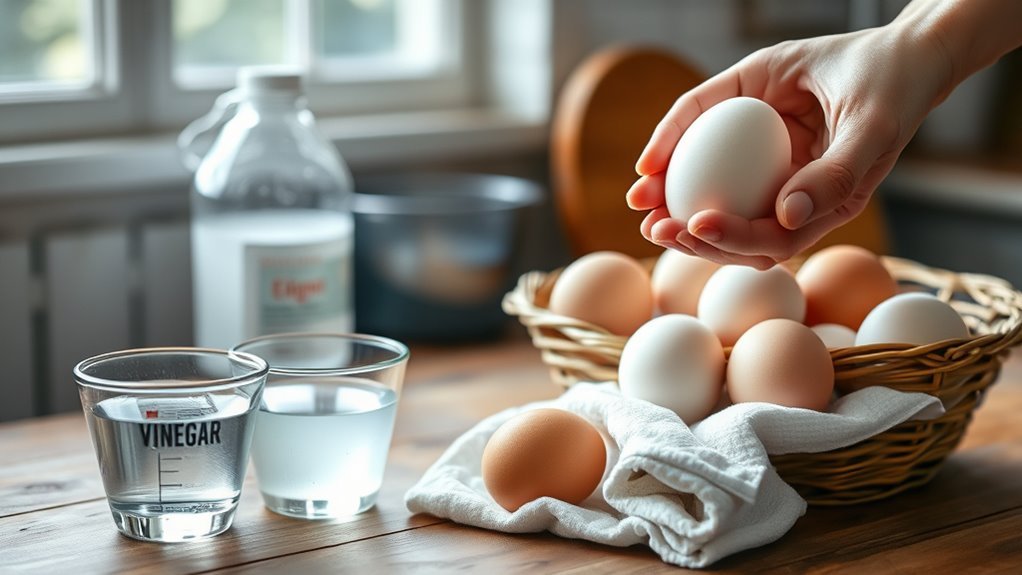
Although gentle cleaning removes most dirt, sanitizing your eggs can further reduce bacteria and guarantee safety, especially if the eggs appear visibly soiled. You should sanitize eggs immediately after cleaning or before use to maintain egg safety.
Use a bleach solution by briefly dipping eggs in warm water mixed with ¼ to ½ teaspoon of unscented bleach, or opt for a vinegar rinse (1 part vinegar to 3 parts water) to reduce surface bacteria while preserving the natural bloom. Avoid soaking eggs too long to prevent shell damage. After sanitizing, focus on drying eggs thoroughly to prevent contamination.
| Method | Key Points |
|---|---|
| Bleach Solution | Brief dip, warm water, food-safe |
| Vinegar Rinse | Reduces bacteria, preserves bloom |
| Timing | Sanitize immediately, before use |
Dry Your Eggs Well to Keep Them Safe
After sanitizing your eggs, drying them thoroughly is just as important to keep them safe. When you wash eggs, moisture can linger on the egg shells, increasing the risk of bacterial growth and mold.
To guarantee storage safety and effective egg preservation, follow these steps for proper drying:
- Use a clean towel or paper towel that’s soft and lint-free to gently dry eggs.
- Dry eggs immediately after washing to prevent moisture loss that could weaken shells.
- Avoid trapping water or steam under the shell, which can cause cracks.
- Ensure eggs are completely dry before storing to maintain their natural protective coating.
Store Your Clean Eggs the Right Way
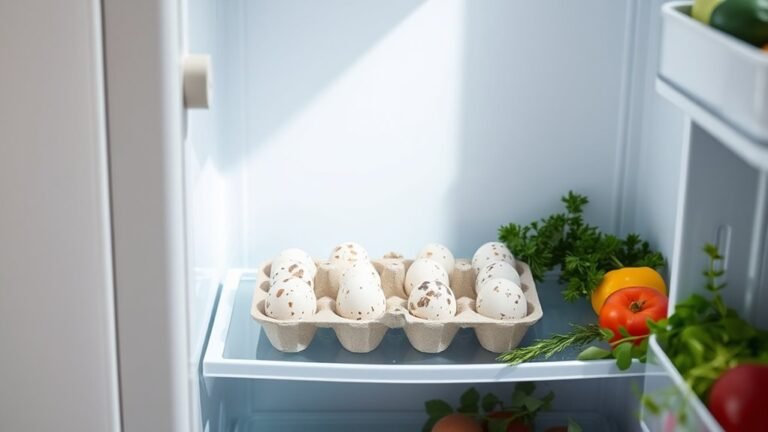
To keep your clean eggs fresh and safe, store them in a cool, dry place or refrigerate them promptly. Proper egg handling means placing eggs pointed end down in egg cartons or designated containers to protect egg shell protection and preserve freshness.
Refrigerate eggs soon after cleaning to slow bacterial growth and extend egg shelf life. Rotate your eggs regularly, using the oldest first, to ensure freshness preservation and reduce waste.
Here’s a quick guide to store eggs properly:
| Tip | Benefit | Action |
|---|---|---|
| Cool dry place | Maintains egg freshness | Store away from heat |
| Refrigerate eggs | Prevents spoilage | Use fridge’s main compartment |
| Egg cartons | Protects shell | Avoid plastic bags |
| Pointed end down | Preserves yolk center | Place eggs with narrow end down |
| Rotate eggs | Extends shelf life | Use oldest eggs first |
Frequently Asked Questions
How Do You Clean Fresh Chicken Eggs?
You clean fresh chicken eggs by gently rinsing them with warm water, scrubbing off dirt with a soft brush if needed, then drying them thoroughly with a clean towel.
Only wash eggs right before you use them.
How Do I Make Sure Farm Fresh Eggs Are Safe?
You make sure farm fresh eggs are safe by collecting them daily, handling with clean hands, inspecting for cracks, washing only if dirty using warm water, drying thoroughly, and storing them promptly in a cool, dry place or refrigerator.
Avoid washing eggs if they are clean, as the natural coating helps protect them. When washing is necessary, use warm water and dry the eggs immediately to prevent bacteria from entering through the pores.
Store eggs with the pointed end down to keep the yolk centered and maintain freshness longer. Keep eggs refrigerated or in a cool, dry place to slow bacterial growth and preserve quality.
How to Clean Farm Fresh Eggs Without Removing Blooms?
Picture a gentle breeze brushing dirt away—wipe your farm-fresh eggs with a dry or slightly damp cloth, avoiding water until use.
This keeps the bloom intact, guarding freshness like a natural armor you don’t want to lose.
Can You Use Dawn Dish Soap to Wash Farm Fresh Eggs?
You shouldn’t use Dawn dish soap on farm-fresh eggs because it strips the protective bloom. If you do, rinse thoroughly with warm water to avoid soap residue.
It’s better to clean eggs gently with just water or a wipe.
Conclusion
Just like a knight prepares for battle, you’ve armed your fresh eggs by cleaning and storing them properly. By checking for cracks, gently washing with warm water, sanitizing safely, drying thoroughly, and storing correctly, you’re ensuring your eggs stay fresh and safe.
Follow these simple steps every time, and you’ll always have clean, ready-to-use eggs—your kitchen’s own treasure. Clean eggs, happy cooking! Remember, clean fresh chicken eggs are key to delicious and safe meals every day.