How Do You Boil Eggs in the Oven in 7 Easy Steps
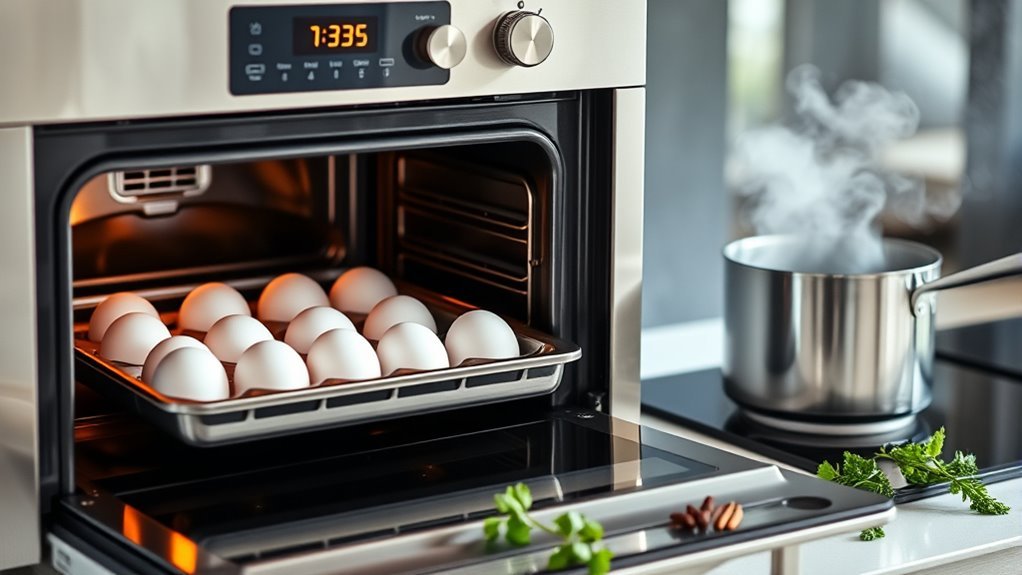
To boil eggs in the oven, first preheat it to 325°F. Place room-temperature eggs in a muffin tin to keep them steady during baking. This method offers a simple alternative to traditional boiling and can help you achieve perfectly cooked eggs with minimal effort.
Bake the eggs for 20–30 minutes, adjusting the time depending on how firm you want the yolks.
Once done, transfer the eggs to an ice bath for 10 minutes. This step stops the cooking process and makes peeling easier.
After cooling, tap and roll the eggs gently to crack the shells before peeling them.
Keep the peeled or unpeeled eggs refrigerated and use them soon for the best taste and safety.
If you want to perfect your technique, there’s more helpful advice ahead.
Preheat Oven and Prepare Muffin Tin for Eggs
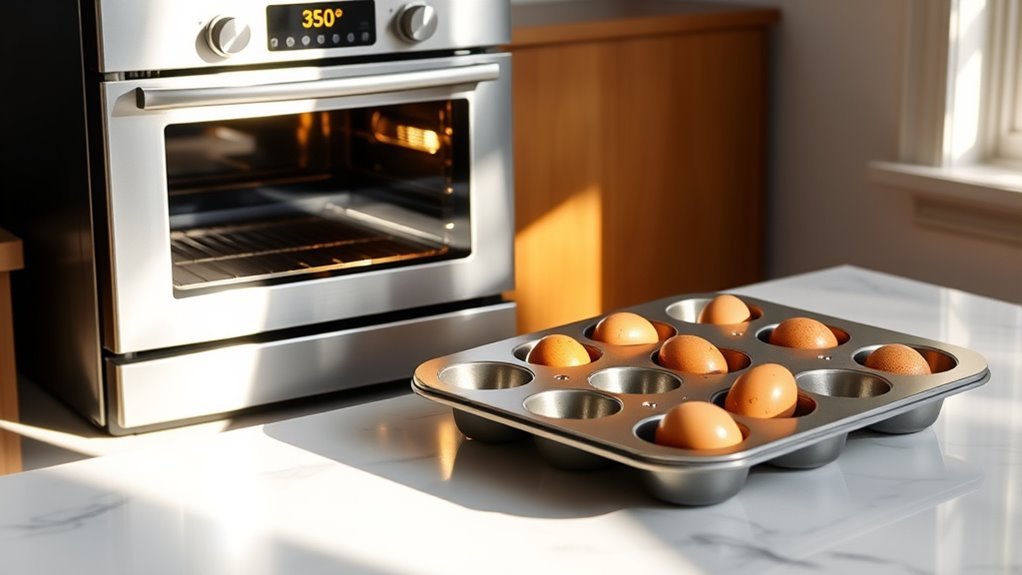
Before you start, preheat your oven to 325°F (163°C) so it’s ready when you place the eggs inside. This baking temperature guarantees even cooking without cracking the shells. While the oven heats, grab a standard muffin tin or silicone muffin cups to hold each egg securely.
Using a muffin tin prevents eggs from rolling around and helps them cook evenly. Make sure your eggs are at room temperature before placing them in the muffin tin, as cold eggs are more likely to crack during baking.
Properly preheating the oven and using room temperature eggs will help you control the cooking time better, whether you prefer softer yolks with about 20 minutes or firmer ones closer to 30 minutes.
Arrange Eggs Carefully in Muffin Tin Cups
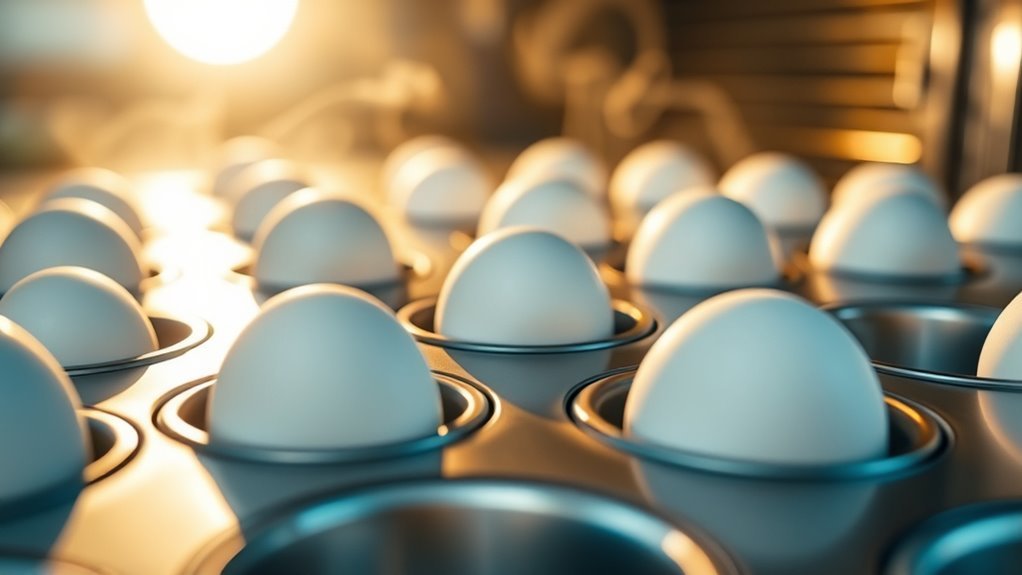
When you place the eggs into the muffin tin cups, handle them gently to prevent cracking or rolling around. Using a muffin tin keeps the eggs stable and secure during baking, making the process smoother. Here’s how to arrange your eggs carefully:
- Place each egg gently into a separate muffin tin cup to prevent cracking.
- Arrange eggs with the fat end down if possible for even cooking.
- Avoid overcrowding the muffin tin to allow proper heat circulation.
- Position eggs carefully to prevent knocking or jostling.
Following these steps ensures your eggs stay stable and intact while baking, helping you achieve perfectly cooked eggs without cracks or mess.
Bake Eggs at the Right Temperature and Time
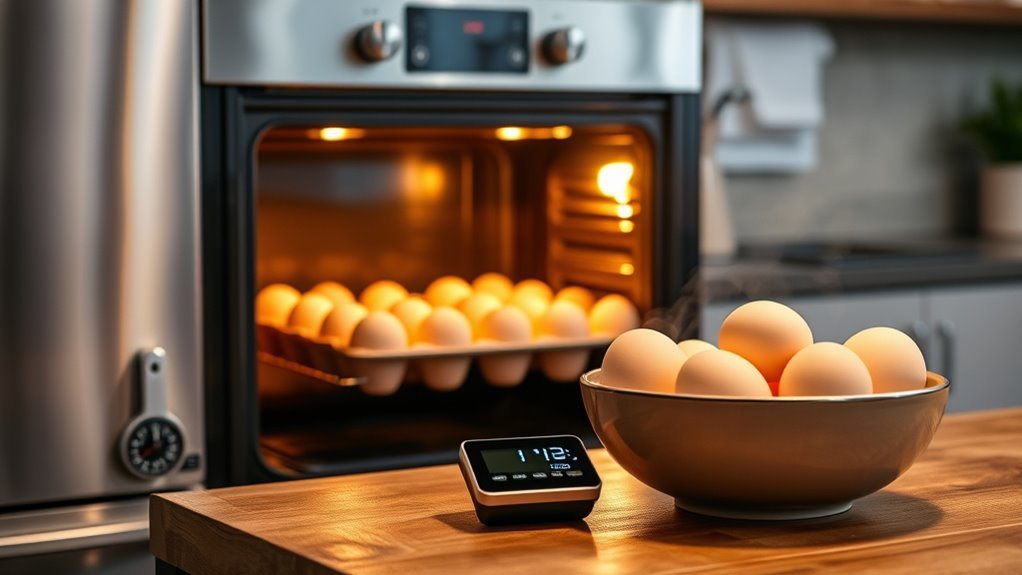
Although baking eggs in the oven may seem unconventional, setting your temperature to 325°F (163°C) guarantees they cook evenly without cracking. Preheat your oven to this ideal oven temperature to ensure consistent baked eggs. Place each egg in a muffin tin cup and bake for 20 to 30 minutes, adjusting cooking time based on how firm you want the yolks—20 minutes for softer yolks, closer to 30 for fully hard-boiled eggs.
Using room temperature eggs helps maintain even cooking and prevents cracking. Avoid overcrowding the pan to promote uniform heat distribution. Once baked eggs reach your desired egg firmness, promptly remove them from the oven.
While the next step involves an ice bath, here focus on timing and temperature to perfect your oven-cooked eggs every time.
Transfer Eggs to Ice Water to Stop Cooking and Ease Peeling
Since the eggs continue cooking even after you take them out of the oven, you’ll want to transfer them immediately into a bowl of ice water. This step is essential to stop cooking and guarantee perfect hard boiled eggs. Here’s what to do:
Immediately placing oven-baked eggs in ice water stops cooking and ensures perfectly hard boiled eggs every time.
- Place the hot eggs straight from the oven into a bowl filled with ice water.
- Let them soak for about 10 minutes; this cools the eggs and stops cooking instantly.
- The ice water causes the shell to contract, making it easier to peel.
- Avoid leaving the eggs in ice water too long, as overcooling can make peeling tricky.
Using ice water after oven baking prevents green yolks and rubbery whites, helping you achieve ideal hard boiled eggs every time.
Peel Oven-Baked Eggs Easily: Tips and Techniques
To peel your oven-baked eggs easily, start by plunging them into an ice water bath right after baking to stop the cooking and loosen the shells.
Then, gently tap and roll each egg to crack the shell all over, which helps it come off smoothly. These simple steps make peeling quicker and less frustrating.
Ice Bath Benefits
When you plunge oven-baked eggs into an ice bath right after cooking, you quickly cool them down, which makes peeling much easier. This simple step offers several benefits for peeling eggs:
- The ice bath causes rapid cooling eggs contraction, loosening the bond between egg shells and membranes.
- Cooling eggs in ice water for about 10 minutes prevents overcooking and preserves tender, bright yolks.
- The cold shock from ice water ensures eggs are firm enough to peel without cracking.
- Using an ice bath reduces peeling eggs time and helps achieve smooth, clean egg shells.
Shell Cracking Techniques
Although oven-baked eggs are easy to cook, peeling them can sometimes be tricky. To make shell cracking easier, start by gently tapping the egg all over with a spoon or knife to loosen the shell. Next, roll the egg on a hard surface to create fine cracks, which helps with peeling.
Focus on starting from the air pocket end of the egg, as this area often reduces shell sticking. After cracking, dip the eggs quickly in ice water; this contracts the shell and separates it from the egg white, making peeling smoother. You can also place the cracked egg in a container and shake it gently to further loosen the shell.
These shell cracking techniques guarantee you peel oven-baked eggs effortlessly every time.
Tips for Perfect Oven-Baked Eggs and How to Avoid Problems
Since oven-baked eggs require steady heat, preheating your oven to 325°F (163°C) and letting the eggs reach room temperature will set you up for success. This guarantees even cooking and easier peeling afterward.
To perfect your oven eggs and avoid common issues, follow these tips:
- Use a muffin tin or silicone cups to keep eggs stable and prevent shell marks while baking.
- Bake for 20-30 minutes, adjusting time to achieve your preferred firmness.
- Immediately transfer eggs to an ice bath to stop cooking and simplify peeling.
- Gently crack and roll eggs after cooling to loosen shells for cleaner peeling.
Store and Use Your Hard-Boiled Oven Eggs Safely
To keep your hard-boiled oven eggs fresh and safe, store them in the refrigerator at or below 40°F (4°C) in a covered container or egg carton. Proper refrigerator storage prevents bacterial growth and maintains your eggs’ freshness for up to one week.
When you’re ready to eat, peel eggs carefully to avoid damaging the whites, or serve them in their shells for easy handling and presentation. Remember, once peeled, use your hard-boiled eggs within 1-2 days to enjoy ideal quality and safety.
To track freshness, label your container with the cooking date. Following these simple steps ensures your oven-baked eggs stay safe and delicious every time you enjoy them.
Frequently Asked Questions
How Can I Boil an Egg in the Oven?
You preheat your oven to 325°F, place eggs in a muffin tin, bake for 20-30 minutes, then immediately cool them in ice water for 10 minutes.
This makes peeling easier and gives you perfect oven-boiled eggs.
What Oven Temperature Is Best for Hard Boiling Eggs?
You might think higher heat cooks eggs faster, but 325°F is best for hard boiling eggs in the oven. It guarantees even cooking, prevents overcooking, and avoids shell discoloration, giving you perfect results every time.
How to Bake Eggs in the Oven Instead of Boiling?
You preheat your oven to 325°F, place eggs in a muffin tin, and bake them for 20-30 minutes.
Then, cool them in ice water before peeling for perfectly cooked eggs without boiling water.
How Long Should You Cook an Egg in the Oven?
You’ll want to give your eggs a cozy 20 to 30-minute spa at 325°F. Shorter for a gentle hug of softness, longer for a firm handshake.
Don’t forget the cool-down ice bath after!
Conclusion
Now that you know how to boil eggs in the oven, you’re ready to impress like it’s the Victorian era—but with modern convenience! Just preheat, bake, chill, and peel with ease. Remember, timing and temperature are your best friends here.
Follow these simple steps, and you’ll have perfectly cooked eggs without the fuss of boiling water. Store them safely, and enjoy your hassle-free, oven-baked hard-boiled eggs anytime!
By mastering how to boil eggs in the oven, you combine tradition with simplicity. Oven baking eggs offers a convenient alternative to the stovetop, making meal prep easier and cleanup quicker. Try this method for perfectly cooked eggs every time!