How Do You Cook Hard Boiled Eggs in the Microwave in 5 Easy Steps?
To cook hard boiled eggs in the microwave, start by piercing each egg’s rounded end with a needle to release steam safely. This step is crucial to prevent eggs from bursting during cooking.
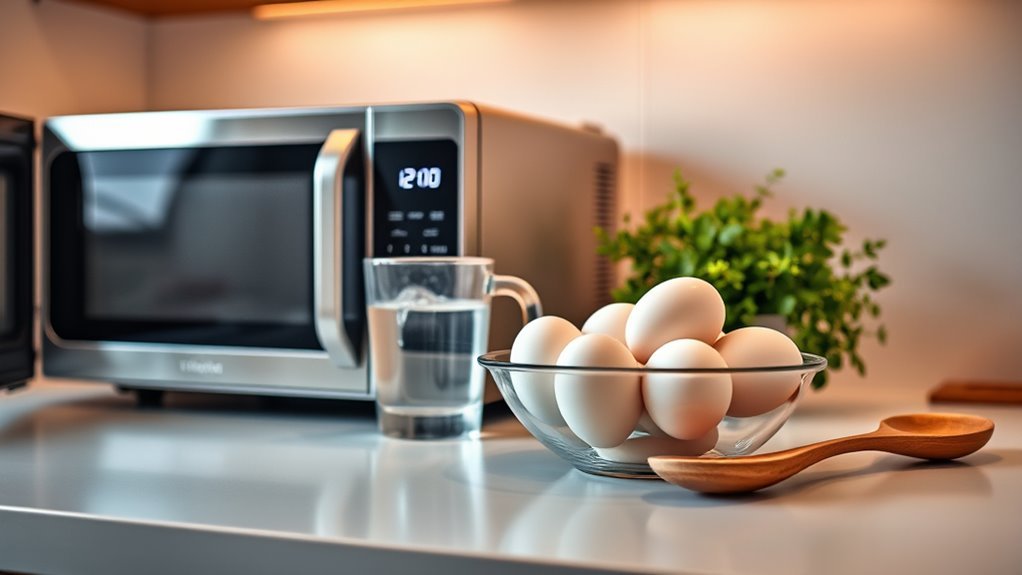
Next, place the eggs in a microwave-safe bowl filled with water and a pinch of salt, ensuring the eggs are fully submerged. Microwave the eggs in short intervals, checking their doneness between sessions to avoid overcooking.
After microwaving, cool the eggs in ice water for easy peeling. Finally, peel the eggs gently and store them properly.
Keep reading to discover tips that make this process foolproof and simple.
Pierce Eggs and Prepare Them for Microwave Cooking
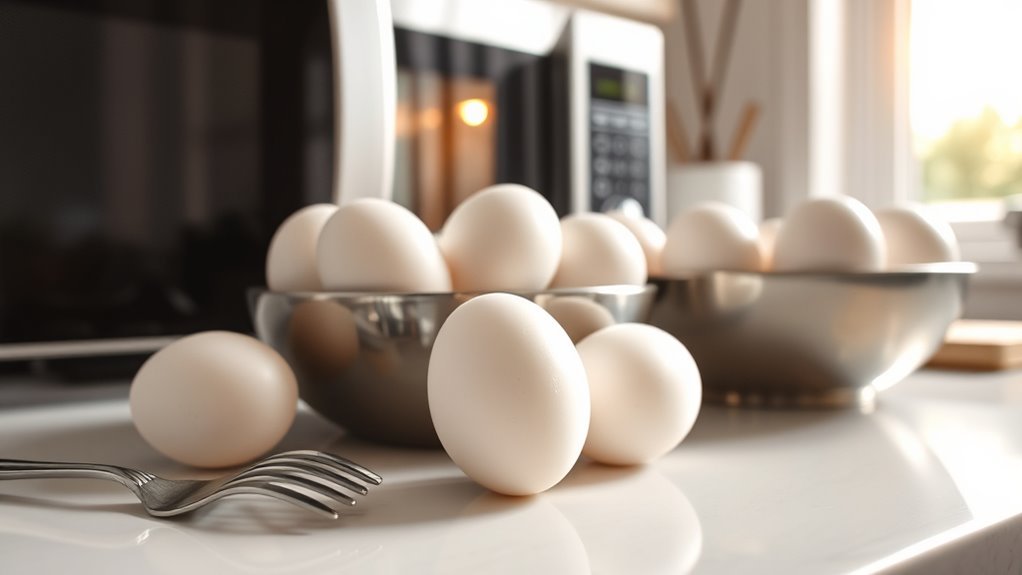
Before microwaving your eggs, you’ll need to pierce the rounded end with a sharp pin or needle to create a vent for steam to escape. This egg shell puncture is essential to prevent pressure buildup inside, which can cause eggs to crack or even explode during microwave cooking. Use a gentle piercing technique at the base of each egg to protect eggshells and maintain egg safety.
When you pierce eggs carefully, you prepare eggs properly for microwave eggs cooking by allowing steam to escape safely. Handling eggs delicately after piercing helps prevent cracking before cooking. This simple step ensures your eggs cook evenly and safely in the microwave, making the process quick and hassle-free while protecting the eggshells throughout microwave cooking.
Choose a Microwave-Safe Container and Add Water and Salt
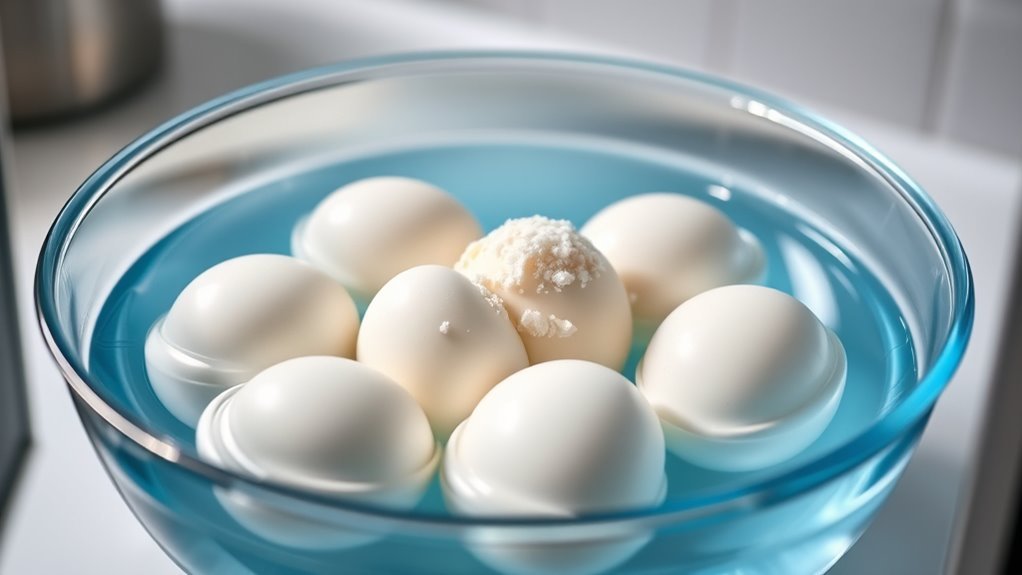
When you choose a microwave-safe container, make sure it’s large enough to fully submerge the eggs in water. A large bowl works best to ensure even cooking and safety. Follow these steps:
- Select a microwave-safe container big enough to hold eggs with at least 1 inch of water above them.
- Gently place the eggs inside without cracking the shells.
- Add enough water to cover the eggs completely to avoid uneven heating.
- Stir in ½ teaspoon of salt per egg to help prevent explosion during microwaving.
If you haven’t already, consider piercing the eggshell at the wider end to release pressure. This combination of a proper container, water, salt, and piercing will help you safely cook hard boiled eggs in the microwave.
Microwave Eggs Using Short, Controlled Intervals
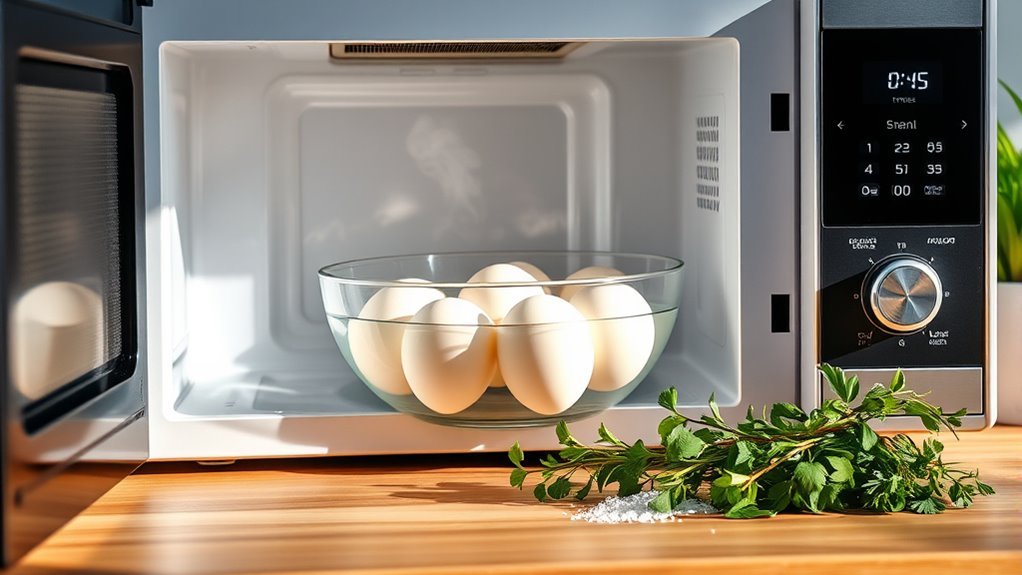
Since microwaving eggs too long can cause them to explode or overcook, you should heat them in short, controlled intervals of 30 seconds to 1 minute. Start by placing the eggs fully submerged in a microwave-safe bowl filled with water and a pinch of salt. Before microwaving eggs, pierce each eggshell at the wider end to allow steam escape and prevent cracking.
After each short cooking interval, carefully check the eggs’ firmness or gently spin them to assess doneness. Adjust cooking time as needed to avoid overcooking. Between intervals, you can rest the eggs in hot water or an ice bath to halt cooking.
Using these short cooking intervals guarantees even heating and overcooking prevention when you microwave eggs safely and effectively.
Let Eggs Cool in Ice Water for Easy Peeling
After microwaving your eggs, immediately transfer them to a bowl of ice water to stop the cooking process and make peeling easier. Cooling in ice water creates an ice water shock that contracts the shells, simplifying the peeling process.
Immediately cooling microwaved eggs in ice water stops cooking and makes peeling simpler by contracting the shells.
Follow these steps for easy peeling:
- Submerge the eggs fully in an ice water bath right after microwaving.
- Let the eggs cool in ice water for at least 5 minutes until they’re cool enough to handle.
- Handle eggs gently to avoid cracking shells prematurely before peeling eggs.
- Peel eggs under cool running water to loosen shells and prevent sticking.
This method guarantees your eggs cool quickly, making it much easier to peel eggs without frustration.
Peel and Store Microwave Hard Boiled Eggs Properly
Letting your eggs cool fully in an ice bath guarantees you for easier peeling and storage. This cooling process helps prevent shell sticking, making shell removal smoother.
To peel microwave eggs, gently tap the shell on a hard surface and start peeling from the wider end where the air pocket is. Peeling under cold running water loosens the shell and washes away fragments.
If you plan to peel in advance, place peeled eggs in an airtight container and store them in the refrigerator, consuming within three days for best quality. Unpeeled microwave eggs stay fresh up to five days when stored in their original carton in the refrigerator.
Proper peel and store methods ensure your microwave eggs remain fresh and easy to enjoy.
Frequently Asked Questions
How to Do Boiled Eggs in the Microwave?
You place eggs in a microwave-safe bowl, cover with water, and add salt. Pierce the shell, microwave at half power for about 4 minutes, then rest in hot water before cooling in ice.
How to Cook an Egg in the Microwave Without It Exploding?
Think of your egg as a tiny pressure cooker. You’ve gotta pierce its shell, submerge it fully in salted water, microwave on low power in short bursts, then cool it quickly to keep the explosion at bay.
What Is the 5 5 5 Method for Boiling Eggs?
The 5-5-5 method means you simmer eggs in hot water for 5 minutes, cover and rest for 5 minutes, then chill them in ice water for 5 minutes.
You’ll get perfectly cooked, tender eggs every time.
What Are Some Tips for Microwaving Eggs Perfectly?
You should pierce the eggshell to vent steam, use 50% power, add salt to cushion eggs, cover them fully with water, microwave carefully, then cool immediately in ice water to avoid explosions and guarantee easy peeling.
Conclusion
Now that you know how to cook hard boiled eggs in the microwave in just five simple steps, you can save time and enjoy perfectly cooked eggs anytime. Imagine Sarah, a busy mom, who used to dread boiling eggs on the stove but now quickly preps breakfast in minutes.
Give it a try—you’ll be surprised how easy and convenient it is. With practice, you’ll have delicious, ready-to-eat eggs without the wait or mess. Cooking hard boiled eggs in the microwave is a quick and efficient method that fits into any busy schedule.