
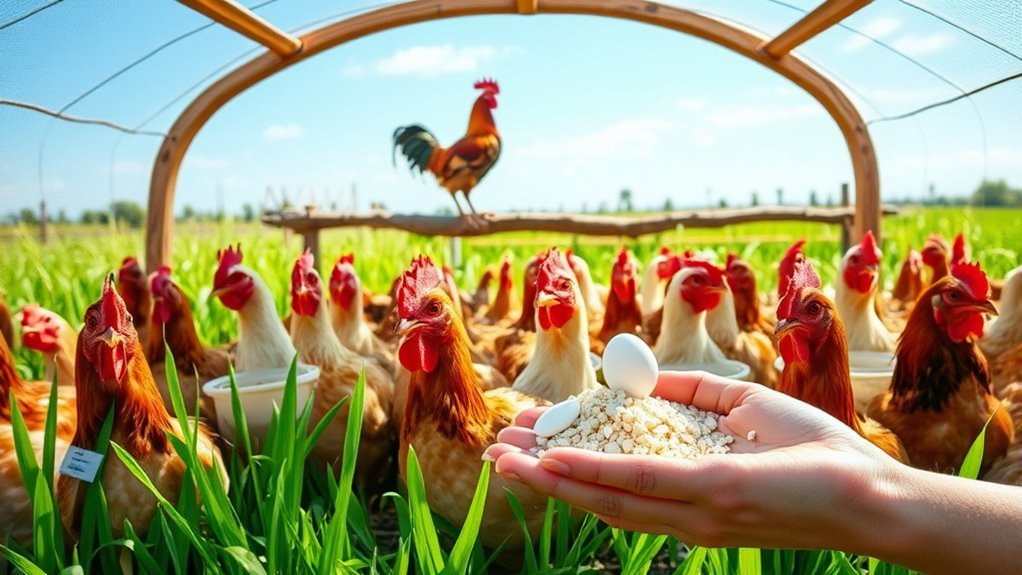
How Do You Increase Egg Production in Chickens With 10 Tips
To increase egg production in chickens, start by ensuring your hens receive 14 hours of light daily. Use timers to provide consistent lighting, which is essential for maintaining steady laying cycles.
Feeding them a high-protein diet is crucial, especially during colder months. Incorporate treats like mealworms and alfalfa to supply extra nutrients that support egg production.
Offer fresh pelleted food regularly, but limit scratch grains to prevent nutrient imbalances. Always keep clean water available to your flock at all times.
Vitamin supplements can boost their health and laying capacity. Selecting high-producing breeds also makes a significant difference.
Regular health checks and preventing overcrowding help maintain optimal laying conditions.
If you want to boost your flock’s productivity further, there are more helpful strategies to explore.
Provide 14 Hours of Light to Boost Egg Production
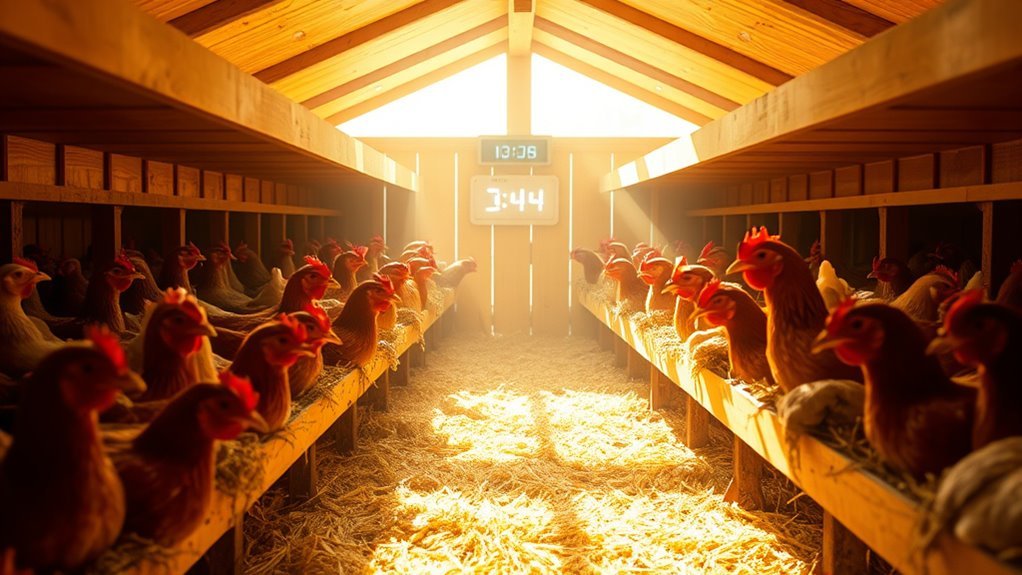
Although chickens naturally respond to daylight, you can boost their egg production by providing about 14 hours of light each day. Hens’ internal clocks react to longer light periods by increasing laying activity, so extending light exposure is essential.
You can easily add supplemental artificial lighting in the early morning and evening to reach the 14-hour daily target. Using timers to automate the lighting schedule helps guarantee your hens get consistent light every day, which is vital for maintaining steady egg production.
Boost Protein to Increase Egg Production in Winter
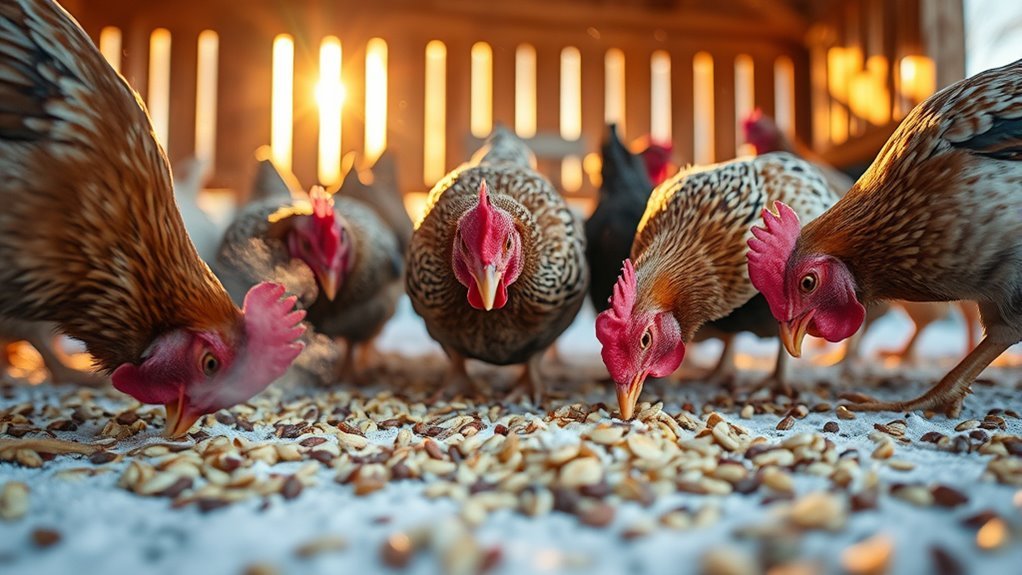
You’ll need to increase your hens’ protein intake to 18-20% during winter to meet their higher energy demands. Adding protein-rich treats like mealworms or sea kelp can help boost their diet effectively.
Choosing winter-specific feed formulations guarantees your chickens maintain strong shells and steady egg production despite the cold.
Winter Protein Needs
Because colder temperatures increase your hens’ energy needs, you should boost their protein intake during winter to maintain egg production. Raising protein levels from 16% to 18-20% supports their higher nutrient demands. This helps hens produce strong eggshells and keeps egg-laying consistent despite the cold stress.
Focus on providing a richer diet to meet these elevated needs.
- Increase feed protein to 18-20% during winter
- Offer high-protein treats like mealworms or fish meal
- Feed Meatbird Poultry Feed every other day for extra calories and protein
- Ensure protein supports strong eggshell formation
- Monitor hens’ condition to adjust protein as needed
Meeting winter protein needs is essential to sustaining healthy egg production all season long.
Protein Supplement Sources
A variety of protein supplement sources can help you boost your hens’ intake during winter when natural forage is scarce. To increase egg production, aim to raise protein levels in their diet to 18-20%. Incorporate protein supplements like mealworms, fishmeal, or sea kelp to provide essential amino acids for healthy egg development.
You can also add plant-based options such as soybean meal or alfalfa meal to keep your flock productive. Using high-protein poultry feed, like Meatbird Poultry Feed, every other day boosts caloric intake and supports sustained egg output during colder months.
Ensuring your hens get enough protein in their total diet helps maintain reproductive health, enabling them to lay more eggs despite shorter daylight hours.
Feed Fresh Pelleted Food to Improve Egg Production
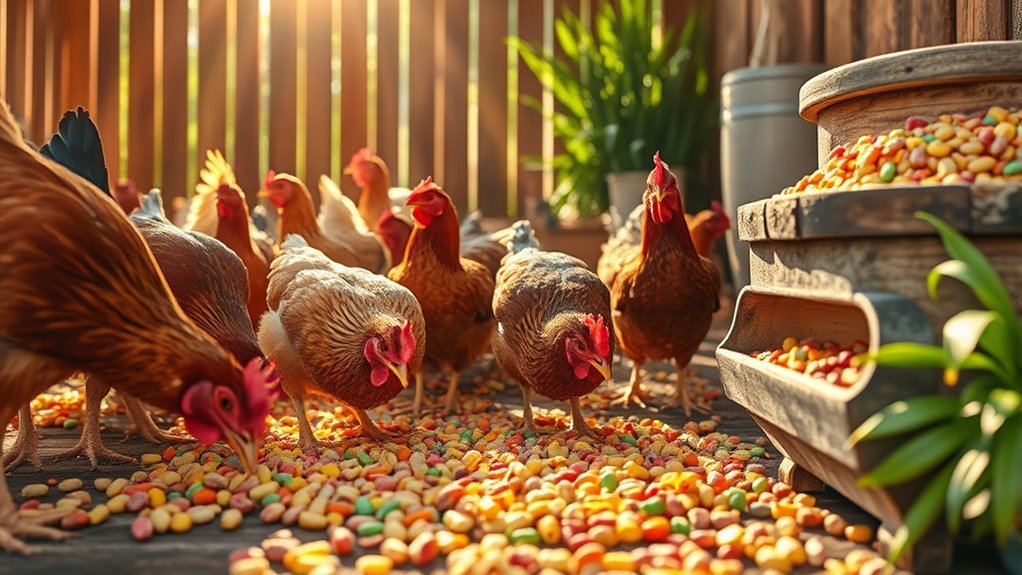
When you feed chickens fresh pelleted food, they get the balanced nutrition needed to boost egg production. Pelleted feed ensures hens consume a consistent, nutrient-rich diet, eliminating selective feeding and reducing waste. This improves digestion and supports steady egg production.
To keep the feed fresh and nutritious, order it every two weeks, preferably from local suppliers who guarantee quality and support sustainable farming. Fresh pelleted food is easier for your chickens to eat, encouraging regular intake and better health.
Key benefits include:
- Balanced nutrition for ideal egg production
- Reduced feed waste and selective eating
- Maintained freshness by frequent ordering
- Easier consumption promoting digestion
- Support of local, sustainable suppliers
Limit Scratch Grains to Maintain Egg Production
You should limit scratch grains to just 10-15 minutes a day to keep your hens focused on their balanced pelleted feed. Overfeeding scratch grains can disrupt their nutrient intake and lower egg production.
Offering scratch grains in the evening helps bring hens back to the coop, but be careful not to overdo it.
Scratch Grain Feeding Limits
Although scratch grains are a favorite treat for hens, you should limit feeding them to 10-15 minutes daily to prevent neglecting the balanced pelleted feed. Overfeeding scratch grain can reduce essential nutrient intake, harming egg production. By setting clear feeding limits, you help maintain hens’ health and laying consistency.
Scratch grain in the evening encourages hens to return to the coop but must be portioned carefully to avoid nutritional imbalances.
Keep these points in mind regarding scratch grain feeding limits:
- Limit scratch grain to 10-15 minutes daily
- Avoid overfeeding to maintain nutrient balance
- Proper portions support ideal egg production
- Evening feeding encourages coop return and warmth
- Excessive scratch can cause thinner eggshells and lower laying rates
Managing scratch grain feeding limits is key to sustaining strong egg production.
Impact On Feed Balance
Since hens tend to fill up on scratch grains quickly, limiting their intake to 10-15 minutes daily helps guarantee they don’t skip the balanced pelleted feed that provides essential nutrients. Overfeeding scratch grains floods their diet with starch, which reduces their appetite for protein and calcium-rich feed, vital for egg production and shell quality.
Keeping scratch grain consumption controlled maintains a balanced diet, ensuring hens get the nutrients they need to lay consistently.
| Feed Component | Effect of Overfeeding Scratch Grains | Impact on Egg Production |
|---|---|---|
| Scratch Grains | Excess starch, low nutrients | Decreases shell quality |
| Pelleted Feed | Reduced intake | Lower egg production |
| Protein | Insufficient intake | Weaker eggs, less frequent laying |
| Calcium | Insufficient intake | Poor shell strength |
| Balanced Diet | Maintained with limited grains | Consistent, high-quality eggs |
Timing Scratch Grain Offering
When you limit scratch grain feeding to just 10-15 minutes daily, you help guarantee hens prioritize their balanced pelleted feed, which is crucial for strong eggshells and steady egg production. Proper timing of scratch grains ensures hens don’t overconsume treats, which can reduce their intake of essential nutrients.
Offering scratch grains in the evening encourages hens to return to the coop, promoting warmth and lowering stress, especially in colder months. Keep scratch grains as a supplement, not a main diet, to maintain ideal egg production.
- Limit scratch grains to 10-15 minutes daily
- Offer scratch grains in the evening for coop return
- Prevent overfeeding to protect calcium absorption
- Use scratch grains as a treat, not a staple
- Avoid excessive starch to prevent obesity and egg production drops
Keep Fresh Water Available to Support Egg Laying
How often do you check your chickens’ water supply? Providing fresh water constantly is essential to maintain their hydration and maximize egg production. Dehydrated hens lay smaller eggs with weaker shells and less frequently.
To support consistent laying, offer multiple water sources, especially in hot weather or crowded coops. Warming water several times daily encourages hens to drink more. Regularly clean water containers to prevent contamination and ensure safe drinking water.
| Time of Day | Water Temperature | Action Needed |
|---|---|---|
| Morning | Cool | Clean & Refill |
| Midday | Warm | Refill & Monitor |
| Afternoon | Warm | Clean & Refill |
| Evening | Cool | Refill |
| Night | Cool | Check & Cover |
Keep fresh water accessible to boost hydration and egg production effectively.
Add Alfalfa to Improve Egg Quality and Hen Health
You can boost your hens’ health and egg quality by adding alfalfa to their diet, thanks to its rich nutrients and vitamins. Alfalfa also enhances egg yolk color, making your eggs more attractive and nutritious.
Plus, it serves as a great winter foraging supplement when fresh greens are scarce.
Alfalfa Nutritional Benefits
Why should you consider adding alfalfa to your hens’ diet? Alfalfa offers powerful nutrition that supports both hen health and egg production. Its rich protein and vitamin content strengthen your flock, leading to better-quality eggs and more consistent laying.
Key nutritional benefits of alfalfa include:
- High levels of protein and vitamins A, D, E, and K for overall health
- Calcium-rich content that enhances eggshell strength and reduces defects
- Natural antioxidants and enzymes from fresh alfalfa to boost immunity and digestion
- Improved fertility rates, promoting steady egg production
- Supports balanced nutrition, contributing to healthier hens and superior eggs
Incorporating alfalfa ensures your hens get essential nutrients that directly impact egg production and quality, making it a valuable addition to their diet.
Egg Yolk Color Enhancement
When you add alfalfa to your hens’ diet, you’ll notice a remarkable improvement in egg yolk color thanks to its high carotenoid content. Alfa, whether in daily flakes or forage cubes, provides essential nutrients that boost egg quality and support healthy hens. This natural pigment enhances the yolk’s richness and vibrancy, making eggs more appealing to consumers.
Beyond color, alfalfa improves the nutritional profile of eggs while promoting overall hen health and fertility. Consistent supplementation leads to more uniform and attractive yolk coloration, which reflects the hens’ well-being. By including alfalfa in your flock’s feed, you’re not just enhancing egg yolk color but also supporting healthier hens that produce better-quality eggs consistently.
Winter Foraging Supplement
Although winter limits natural forage availability, adding alfalfa flakes or forage cubes daily provides your hens with essential greens that boost energy and egg production. Incorporating alfalfa into their diet supports their natural winter foraging instincts while delivering *crucial* nutrients to maintain vitality.
This supplement enhances egg yolk color and overall egg quality by supplying vitamins A, K, and calcium. Plus, alfalfa’s high protein content meets the increased energy demands hens face in colder months. Regular feeding also strengthens their immune system, helping prevent winter illnesses and ensuring consistent laying.
- Boosts egg production during winter
- Enhances egg yolk color and quality
- Supports natural foraging behavior
- Increases protein and nutrient intake
- Improves hen health and immunity
Use Vitamin Supplements to Boost Egg Production
Since hens rely on vitamins to stay healthy and produce eggs consistently, you should consider adding vitamin supplements like Boost to their water. These supplements support hens laying regularly by improving overall health and immune function. Vitamin D3, for example, enhances calcium absorption, resulting in stronger eggshells and higher egg production.
During molting or illness, vitamin complexes help your flock recover quickly and maintain egg output. Regularly providing vitamin supplements ensures your hens meet their nutritional needs, especially when natural sunlight is limited in winter months. By keeping their vitamin levels balanced, you encourage steady egg production and reduce stress, which can otherwise lower laying rates.
Incorporating vitamin supplements is a simple, effective way to boost your hens’ productivity and keep them healthy year-round.
Choose High-Producing Breeds to Maximize Egg Output
To boost your flock’s egg production, you should choose breeds known for their high laying capacity. High-producing breeds like White Leghorns, Rhode Island Reds, and Plymouth Rocks can lay 200-250 eggs yearly, making them excellent for maximizing egg production. Hybrid breeds such as Isa Brown and Hyline often exceed 300 eggs per year thanks to selective breeding.
Picking breeds adapted to your climate also ensures steady laying and less stress. You can further increase egg output by replacing older hens with these productive varieties or crossbreeding to enhance hybrid vigor.
- White Leghorns, Rhode Island Reds, Plymouth Rocks: 200-250 eggs/year
- Hybrid breeds like Isa Brown and Hyline: 300+ eggs/year
- Choose climate-adapted breeds for consistency
- Replace low-yield hens with high-producing breeds
- Crossbreed to boost hybrid vigor and egg production
Check for Illness and Parasites to Protect Egg Production
When you regularly check your chickens for illness and parasites, you can catch problems early before they impact egg production. Conduct weekly health checks to spot signs like lethargy, abnormal droppings, or feather loss. These symptoms often indicate illness that can reduce laying.
Inspect for external parasites such as mites and lice, which cause anemia and stress, lowering productivity. Encourage dust baths using diatomaceous earth, ash, or sand to help your flock naturally control pests and boost immunity. Keep the coop clean and change bedding frequently to prevent bacterial and parasitic infections.
Also, vaccinate against common diseases like Newcastle and avian influenza to avoid outbreaks that drastically drop egg output. Staying vigilant with health checks guarantees your hens stay healthy and productive.
Prevent Overcrowding to Enhance Egg Production
Although it might seem easier to keep many hens in a small space, overcrowding actually stresses your flock and lowers egg production. When hens can’t move freely, their health suffers, leading to reduced laying. To prevent overcrowding and boost egg production, focus on creating enough space and resources.
Overcrowding stresses hens, harming health and reducing egg production—space and resources are key to thriving flocks.
- Provide at least 4 square feet per hen to encourage hen movement and reduce stress
- Maintain one nesting box for every 2-3 hens to avoid competition
- Ensure proper ventilation to control ammonia and humidity levels
- Design the coop to allow natural behaviors, promoting overall health
- Monitor and prevent aggressive behaviors like pecking and feather plucking
Frequently Asked Questions
What Can I Give My Chickens to Increase Egg Production?
You can give your chickens a high-protein diet, fresh greens, and calcium like crushed oyster shells.
Also, add vitamins and minerals to their water and provide poultry-specific feed to boost their health and egg production.
What Is the 90/10 Rule for Chicken?
You might think the 90/10 rule sounds unfair, but it means 90% of eggs come from just 10% of hens.
What Are 5 Foods That Improve Egg Quality?
You’ll want to feed your chickens crushed oyster shells, fresh alfalfa, mealworms, vitamin D3 supplements, and flaxseed. These foods boost shell strength, yolk color, protein quality, and overall egg nutrition effectively.
Including these in their diet can lead to healthier, more nutritious eggs. Each component plays a unique role in enhancing egg quality. For example, oyster shells provide essential calcium for stronger shells.
Which Is the Best Egg Booster?
The best egg booster is supplemental lighting, giving your hens 14-16 hours of light daily. It jumpstarts their reproductive hormones, increasing egg production more effectively than diet or supplements alone.
You’ll see faster, consistent results.
Conclusion
So, if you want your chickens to turn into egg-laying machines, just flood their coop with light, feed them like royalty, and throw in some vitamins like you’re mixing a magic potion. Don’t forget to keep them comfy and parasite-free—because nothing says “happy hen” like personal space and a spa day.
Follow these genius tips, and soon you’ll have more eggs than you know what to do with—unless you’re secretly planning an omelette empire! Increasing egg production in chickens is all about creating the perfect environment and care routine. By focusing on lighting, nutrition, health, and comfort, you can maximize your flock’s egg-laying potential.