How Do You Make Cookies Without Eggs Simply
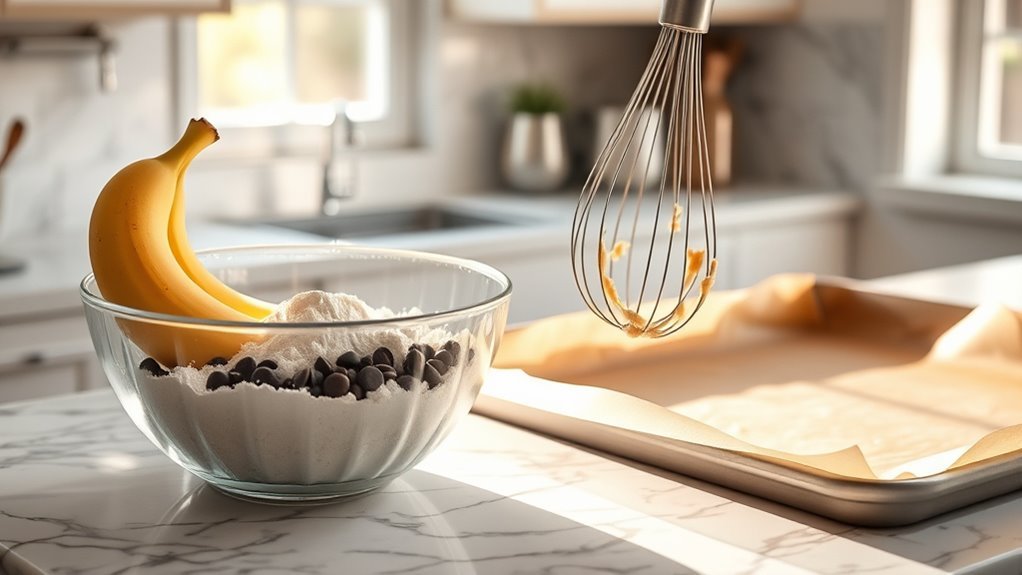
You can make cookies without eggs simply by using easy substitutes like ¼ cup of applesauce, mashed banana, or a flaxseed gel (1 tablespoon ground flaxseed mixed with 3 tablespoons water). These ingredients add moisture and help with binding, just like eggs do.
Start by mixing softened butter and sugar, then add your chosen substitute. Next, combine this mixture with your dry ingredients.
For best results, chill the dough before baking.
Bake your cookies at 350°F for about 10 minutes to prevent spreading.
Want tips on perfect texture or storage? Keep exploring for easy tricks and variations.
How To Replace Eggs In Eggless Cookie Recipes
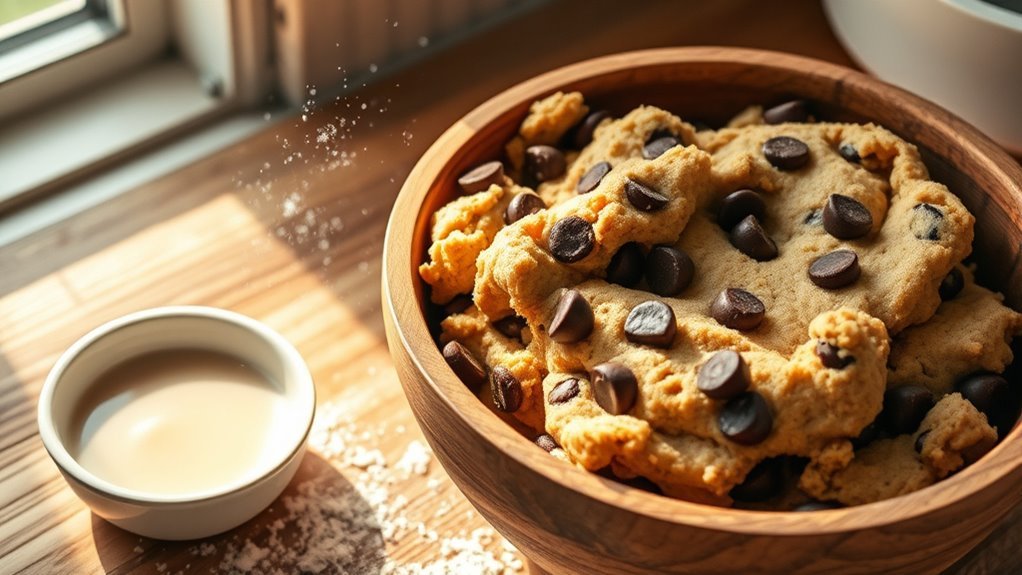
When you want to make eggless cookies, you can substitute eggs with ingredients like applesauce, mashed bananas, or a mixture of ground chia seeds and water, which add moisture and bind the dough. These egg substitutes work well in any eggless cookie recipe, especially if you’re into vegan baking or plant-based treats.
For example, 1/4 cup of applesauce or mashed banana replaces one egg and adds subtle flavor plus moisture binding. Alternatively, mix ground flaxseed or ground chia seeds with water to create a gel that mimics eggs’ binding power.
Using these options guarantees your vegan cookies hold together and stay moist without eggs. Just remember to adjust other liquids slightly to keep the dough’s right consistency for perfect results every time.
Choosing The Best Egg Substitutes For Moist, Chewy Cookies
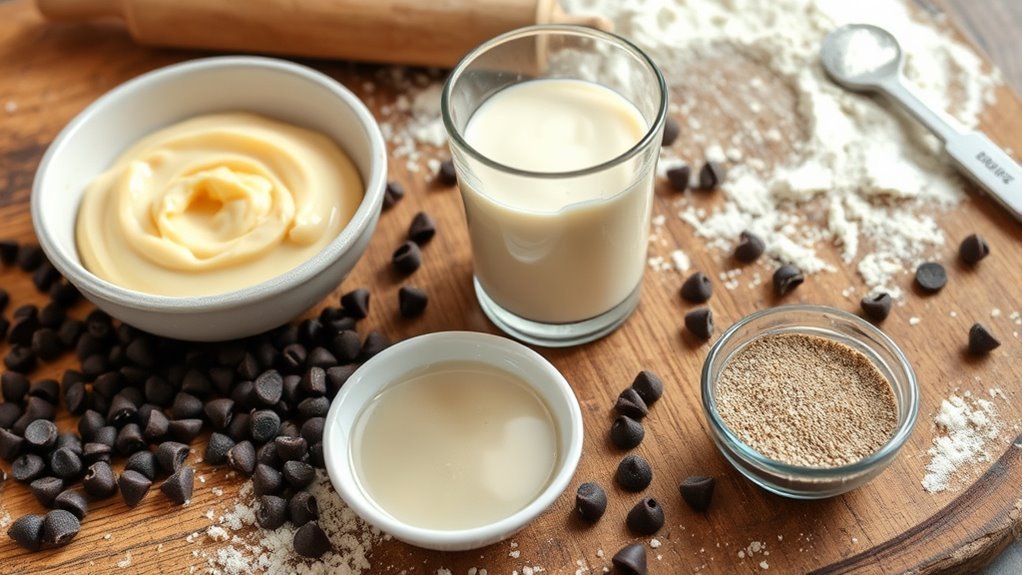
You’ll want to pick egg substitutes that keep your cookies moist and chewy without losing structure. Ingredients like applesauce, flaxseed gel, or aquafaba can add the right balance of moisture and binding.
Let’s explore how these options enhance texture while replacing eggs effectively.
Moisture-Rich Egg Alternatives
Although eggs play a key role in adding moisture and binding ingredients, you can achieve soft, chewy cookies by using alternatives like applesauce, mashed bananas, or plant-based milks. These moisture-rich egg substitutes keep your eggless cookies tender and flavorful without compromising texture.
Consider these effective options:
- Applesauce and mashed bananas: Add natural sweetness and moisture, perfect for soft, chewy cookies.
- Plant-based milks: Almond, soy, or oat milk hydrate dough and enhance tenderness.
- Flaxseed gel or chia seed gel: When soaked in water, these create a sticky binder that also boosts moisture.
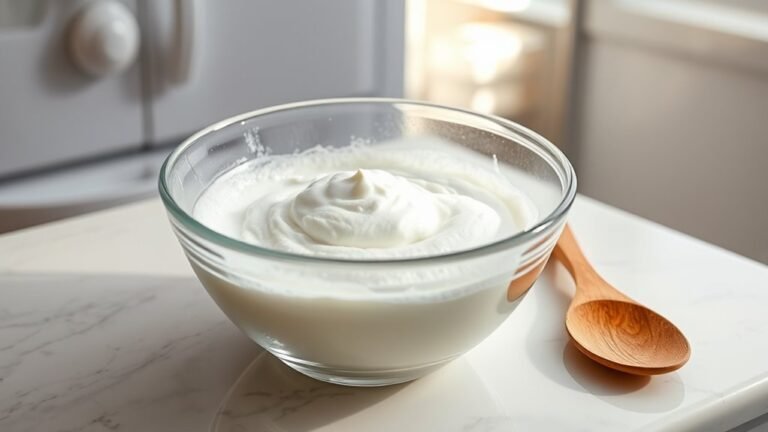
You can also try yogurt or buttermilk for a tangy softness. Using these moisture-packed substitutes helps you bake delicious eggless cookies every time.
Enhancing Texture Without Eggs
Since eggs provide both moisture and structure in cookie recipes, choosing the right substitutes is essential to keep your cookies moist and chewy. In eggless baking, egg substitutes like flaxseed gel or ground chia seeds mixed with water act as effective binding agents, enhancing texture by creating a soft, cohesive crumb.
Adding moisture-rich ingredients such as dairy-free milk or applesauce helps prevent cookies from turning crumbly or dry. To further boost chewiness, adjust wet ingredients and slightly reduce flour, ensuring better moisture retention.
These texture enhancements let you enjoy moist cookies with the perfect chewy texture, even without eggs. By selecting egg substitutes that balance moisture and binding, you’ll master making tender, satisfying cookies that don’t compromise on flavor or structure.
How To Mix Eggless Cookie Dough Step-By-Step
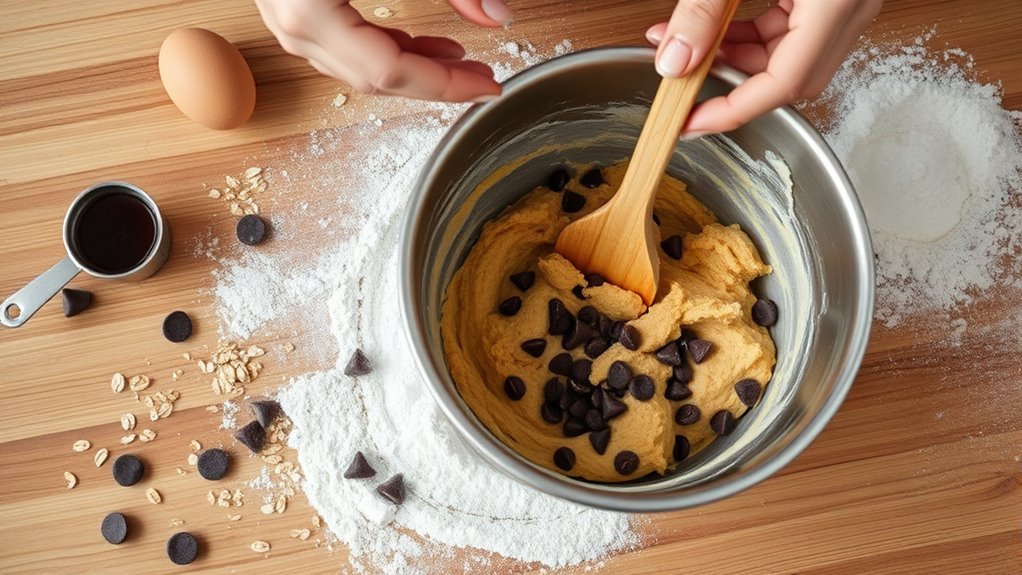
When making eggless cookie dough, start by beating softened butter and sugars together until creamy, then add your chosen substitute for eggs like milk or flaxseed gel. This mixing step-by-step guarantees a smooth base.
Next, combine dry ingredients separately—flour, baking soda, and salt—and gradually mix them into the wet mixture. Stir in chocolate chips gently by hand to maintain their shape. To improve texture and prevent spreading, chill the dough for 30-60 minutes before shaping.
When ready, portion the dough onto baking sheets, flatten slightly if needed, and bake at the recommended baking temperature.
- Cream butter and sugar thoroughly with your egg substitute
- Incorporate dry ingredients carefully for even dough consistency
- Chill the dough to enhance texture before cookie shaping
How To Bake Eggless Cookies For Perfect Texture
To bake eggless cookies with the perfect texture, you’ll want to carefully balance moisture and leavening agents. Use egg substitutes like milk, applesauce, or yogurt to provide moisture and binding without eggs. Combine baking soda or baking powder with an acidic ingredient to boost cookie rise and create a tender crumb.
Don’t forget to chill the dough before baking; this step helps control spreading and develops a chewy texture. Set your baking temperature around 350°F (175°C) and keep oven time between 8 to 12 minutes to avoid overbaking, which can dry out the cookies. Adding mix-ins like chocolate chips or nuts and pressing toppings into the dough enhances flavor and texture.
With these tips, your eggless cookies will have that texture perfect balance you’re aiming for.
How To Prevent Flat Or Crumbly Eggless Cookies
To keep your eggless cookies from turning flat or crumbly, make sure you chill the dough for at least 30 minutes before baking.
Getting your ingredient measurements right is vital, especially the balance between flour and wet ingredients. These steps help your cookies hold their shape and texture perfectly.
Dough Chilling Benefits
Although eggless cookie dough can be tricky to handle, chilling it for 30 minutes to an hour solidifies the fats, which helps prevent your cookies from spreading too much and becoming flat. Dough chilling also improves gluten development during the resting time, giving your eggless cookies a better structure and preventing crumbliness.
Plus, cold cookie dough is easier to shape without cracking or sticking, especially when using softened butter.
Here’s why you should embrace dough chilling:
- Enhances spread prevention by solidifying fats, leading to thicker cookies during the baking process
- Boosts moisture retention and flavor concentration for softer, chewier cookie texture
- Supports gluten development, strengthening cookie dough structure and minimizing crumbling
Chilling is a simple step that transforms your eggless cookies from flat and crumbly to perfectly textured.
Ingredient Measurement Accuracy
When you measure your ingredients accurately, you set the foundation for perfectly textured eggless cookies. Use measuring cups properly—spoon flour into the cup and level it off to avoid excess that leads to crumbly cookies. Pay close attention to ingredient accuracy, especially with liquid ingredients; too much or too little can cause your cookies to spread too flat or crumble.
Verify you use fresh baking powder and baking soda, measuring them precisely to help your cookies rise just right. Work with room temperature ingredients for a smooth dough, which prevents uneven spreading. During dough mixing, stop as soon as all ingredients combine to avoid developing gluten, which makes cookies dense and crumbly.
Maintaining correct ingredient proportions is key to achieving the perfect eggless cookie texture.
Flavor Variations And Add-Ins For Eggless Cookies
Since eggless cookies have a neutral base, you can easily boost their flavor by adding extracts like almond, orange, vanilla, or maple. These flavor extracts create a rich foundation for your cookies. Beyond that, try incorporating add-ins such as nuts and dried fruit to enhance texture and taste.
Don’t hesitate to experiment with spices and zest for seasonal flavors or a fresh twist. For creative combinations, mix white chocolate with macadamia nuts or add a touch of chili to dark chocolate.
- Spice it up with cinnamon, pumpkin spice, or cayenne pepper for unique, eggless cookie varieties.
- Add citrus zest or peppermint extract to brighten flavors and add freshness.
- Combine dried cranberries, chopped nuts, and butterscotch chips for delightful texture and taste contrasts.
How To Store And Keep Eggless Cookies Fresh
Airtight containers are your best friend for keeping eggless cookies fresh at room temperature for up to a week. To store eggless cookies properly, make sure they’re completely cooled before placing them inside the airtight container. This prevents moisture buildup and sogginess, essential for cookie freshness.
When layering cookies, use parchment paper between them to avoid sticking and preserve texture. For longer cookie storage, freeze baked cookies or dough in resealable bags, then thaw or bake directly from frozen. Always keep your container away from direct sunlight and excess moisture to maintain flavor and freshness.
Frequently Asked Questions
What Can I Use if I Have No Eggs for Cookies?
You can use applesauce, mashed bananas, or a flaxseed-water mix as egg substitutes. Yogurt or commercial egg replacers work too. These options keep your cookies moist and chewy without eggs.
Give one a try!
What Happens if You Don’t Add Eggs to Cookies?
If you skip eggs, your cookies can turn out 30% softer and less chewy. You’ll notice they’re thicker and more crumbly because eggs help bind ingredients and add moisture, so your texture and spread will change noticeably.
Conclusion
Baking bliss begins by boldly banishing eggs, bringing better, buttery bites your way. By choosing clever substitutes and carefully combining components, you create cookies that’re chewy, charming, and completely crave-worthy. Keep consistency controlled, and don’t ditch details to dodge dryness or dullness.
Feel free to flavor freely and store smartly, so your eggless delights stay fresh and fabulous. With these simple steps, your sweet success is just a sprinkle away!
Making cookies without eggs simply involves using ingredients like applesauce, mashed bananas, or flaxseed meal as effective egg replacements. These options help maintain moisture and texture, ensuring delicious results every time. Embrace these tips to perfect your eggless cookie baking today!