How Long Do Farm Eggs Last in the Refrigerator?
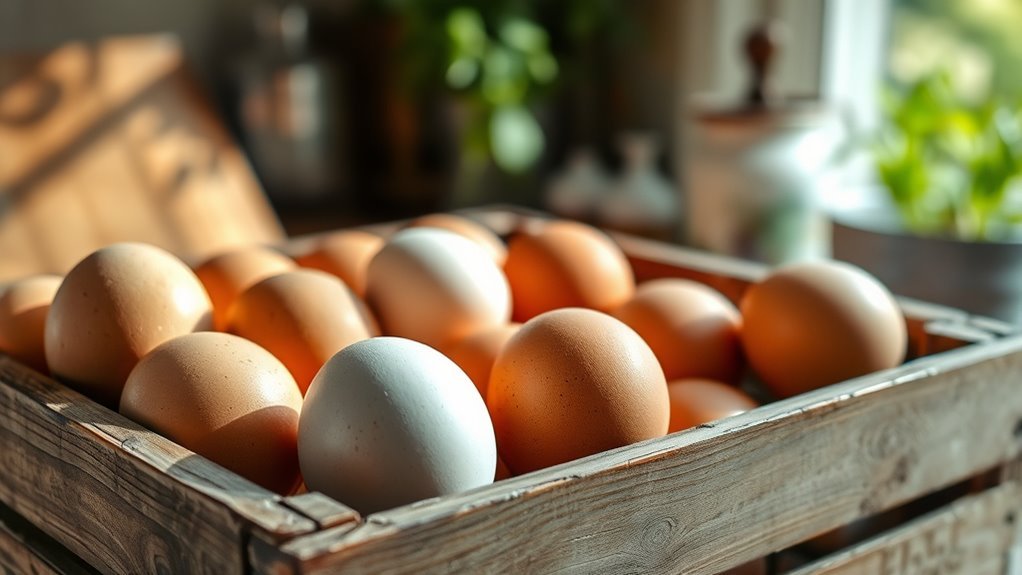
You can keep your farm eggs fresh in the refrigerator for about 3 to 5 weeks by storing them properly. Keeping eggs at or below 40°F is essential, preferably in their original carton on an inside shelf. This method helps maintain their quality and safety.
Remember, washed eggs need refrigeration immediately since washing removes their natural protective coating. Avoid storing eggs in the refrigerator door or near strong odors, as this can affect their freshness and taste.
If you want to get the most from your eggs, there’s more to explore about proper storage and freshness checks to ensure they remain safe and delicious.
How Long Do Farm Eggs Last Refrigerated and Unrefrigerated?
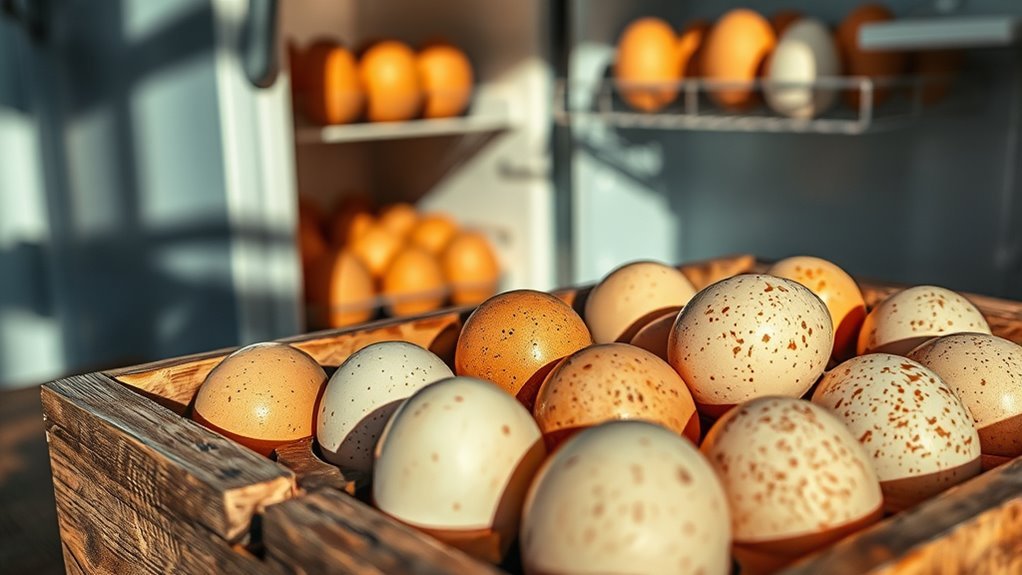
Although unwashed farm eggs can last one to two months at room temperature when stored in a cool, dry place, once you wash them, you need to refrigerate them to keep them safe. Unwashed eggs have a natural protective coating called the bloom, which helps resist bacteria and extends their shelf life without refrigeration. However, washing removes this layer, making refrigeration essential.
Once refrigerated at 40°F or below, washed farm eggs typically last about 3 to 5 weeks, while unwashed eggs stored in the fridge can remain fresh for 4 to 6 weeks beyond their collection date. To maximize freshness and safety, keep your eggs in the coldest part of the fridge, not the door, where temperatures fluctuate more.
How Washing Changes Your Eggs’ Shelf Life
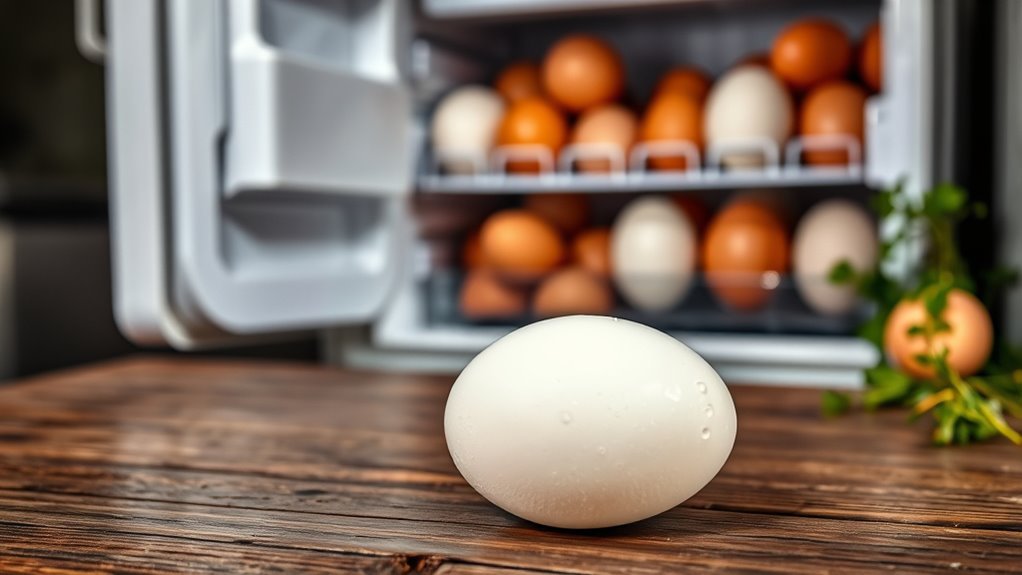
Because washing removes the natural protective bloom on farm eggs, you need to refrigerate them to keep bacteria at bay. When eggs are washed, their shelf life shortens markedly since the protective layer that prevents bacterial entry is gone. Washed eggs become more vulnerable to contamination, so refrigeration isn’t just recommended—it’s essential.
Unlike unwashed eggs, which can last unrefrigerated for weeks thanks to their intact bloom, washed eggs must be stored in the fridge to stay safe and fresh. To properly wash your eggs, gently scrub them with warm water, dry them quickly, and then refrigerate immediately. This way, you maintain the best shelf life possible and protect yourself from spoilage and potential foodborne illnesses.
How to Store Farm Eggs to Maximize Freshness
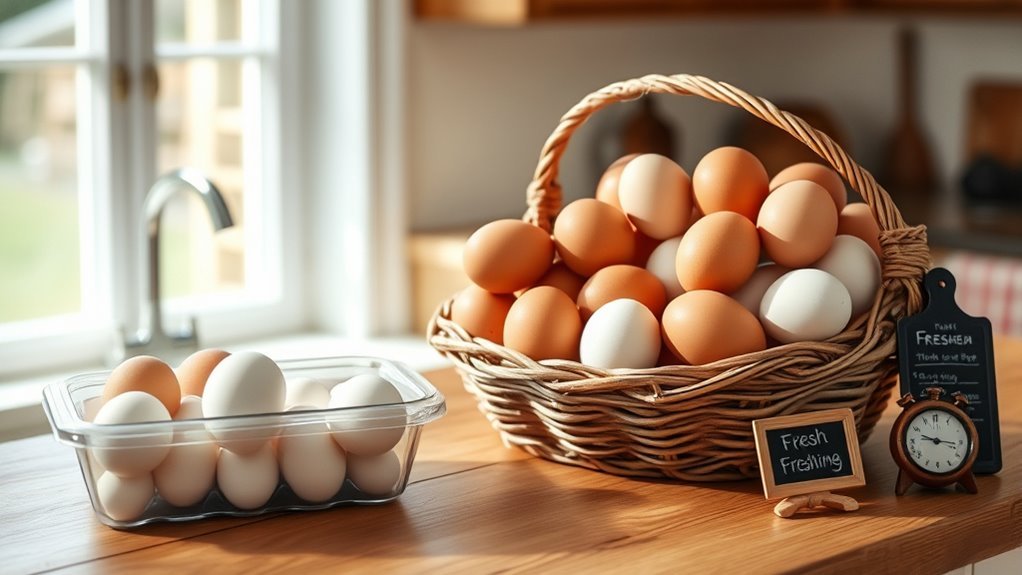
After washing and refrigerating your farm eggs, how you store them can make a big difference in keeping them fresh longer. Always store eggs in their original carton on an inside shelf of the refrigerator, where the temperature stays steady at 40°F or below. Avoid placing eggs in the door since temperature fluctuations there can reduce freshness.
Keep eggs away from strong-smelling foods because their shells can absorb odors, altering taste. Label your eggs with the date you collected them to track freshness and use the oldest first. If you haven’t washed your eggs, they can last even longer when properly refrigerated.
Following these simple storage tips helps you maintain the quality and safety of your farm eggs for as long as possible.
How to Check If Refrigerated Farm Eggs Are Fresh and Safe
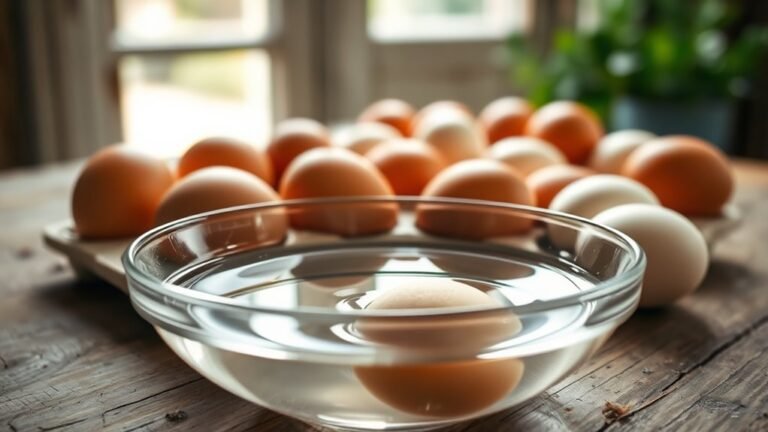
To make sure your refrigerated farm eggs are still good to use, you can perform simple freshness checks at home. Start with the float test: place the egg in a bowl of water. Eggs that sink and lie flat show great freshness, while floating eggs are older and may indicate spoilage.
Check egg freshness easily at home with the float test—fresh eggs sink and lie flat in water.
Next, inspect the shell for cracks, powdery mold, or discoloration—any of these signs mean you should discard the egg. Finally, when you crack the egg open, check the yolk and whites; a firm yolk and thick whites mean the egg is fresh, but a sour smell signals spoilage.
Following these steps helps you enjoy fresh eggs safely every time. Remember to store them properly in the fridge to maintain their freshness longer.
- Use the float test for quick freshness insight
- Look for shell cracks or mold as spoilage signs
- Check yolk firmness and whites for quality
- Trust your nose to detect sour smells
Freezing Farm Eggs for Longer Storage
You can extend the life of your farm eggs by freezing them properly. Start by cracking eggs into airtight containers and label them with the date to keep track.
When thawing, use the eggs quickly and mainly for cooking or baking to maintain quality.
Preparing Eggs For Freezing
When freezing farm eggs for longer storage, crack them into a clean bowl and beat until well combined. Proper preparation guarantees your eggs stay fresh and ready for future use.
Before freezing, keep these tips in mind to protect the texture and flavor:
- Use airtight, labeled containers or ice cube trays for freezing eggs.
- Specify if the container holds whole eggs, whites, or yolks.
- Add 1/8 teaspoon salt per ¼ cup yolks to prevent gelling (or 1.5 teaspoons sugar for dessert yolks).
- Store eggs at 0°F (-18°C) or lower for up to a year to maintain quality.
Following these steps makes freezing and storage easy, so you can enjoy your farm eggs whenever you need them.
Freezing Guidelines And Tips
Freezing farm eggs properly extends their usability well beyond the fridge’s typical lifespan. To freeze eggs effectively, never freeze them in their shells, as they may crack or explode. Instead, crack and beat them before freezing.
For yolks, mix in 1/8 teaspoon salt or 1.5 teaspoons sugar per ¼ cup to prevent gelling. Always label your containers with the date and contents—whole eggs, whites, or yolks. Store frozen eggs in the freezer for up to one year for ideal quality.
| Egg Type | Preparation | Freezing Tip |
|---|---|---|
| Whole Eggs | Crack & beat | Freeze in airtight containers |
| Yolks | Add salt/sugar | Prevent gelling |
| Whites | Use directly frozen | No additives needed |
Keep your frozen eggs in the refrigerator freezer and label them clearly.
Thawing And Usage Methods
Although freezing farm eggs extends their shelf life, proper thawing is essential to preserve their texture and safety. When you freeze eggs, crack them open and mix yolks and whites separately, adding salt or sugar to avoid yolk gelation.
To thaw, place frozen eggs in the refrigerator overnight—never thaw at room temperature—to keep them safe and maintain quality.
Remember these tips for the best results:
- Thaw eggs slowly in the refrigerator to prevent bacterial growth.
- Avoid freezing hard-boiled eggs; they get tough and watery.
- Label containers with the freeze date to track freshness.
- Use thawed eggs promptly for cooking or baking to enjoy their best texture.
Following these steps ensures your frozen farm eggs taste fresh and safe every time you use them.
Tips for Handling and Using Your Farm Eggs Safely
To keep your farm eggs safe, store them in their original carton in the coldest part of your fridge and use them within 4 to 5 weeks. You can test their freshness by doing a simple water float test—eggs that sink and lay flat are good to use.
Always check for cracks or spoilage before cooking to confirm you’re eating safely.
Proper Egg Storage
When you bring farm eggs home, storing them properly is key to keeping them fresh and safe to eat. To maintain their freshness, always keep eggs stored in their original carton on an inside refrigerator shelf at 40°F or below. Avoid washing eggs unless necessary, as their natural bloom protects against bacteria.
Remember, washed eggs must be refrigerated immediately to prevent contamination. Label your eggs with the date they were collected to use the oldest first. Handle eggs gently and discard any cracked or contaminated ones promptly.
- Store eggs on an inside refrigerator shelf, not the door
- Keep unwashed eggs at room temperature only up to two weeks
- Label eggs to track freshness easily
- Avoid washing eggs to preserve their protective coating
Proper storage ensures your farm eggs stay fresh and safe longer.
Freshness Testing Methods
Since farm eggs can vary in age and handling, testing their freshness before use helps guarantee safety and quality. One simple method is the egg float test: place the egg in water—if it sinks and lies flat, it’s fresh. Eggs that float are older and should be discarded.
Always perform a visual inspection too; check the shell for cracks, powdery mold, or brittleness. When you crack the egg, observe the white and yolk—a firm white and rounded, vibrant yolk mean freshness, while runny whites and flat yolks suggest age.
Don’t forget to smell the egg after cracking; any bad odor means you should toss it immediately. Combining the float test with visual inspection ensures you handle your farm eggs safely and enjoy their best quality.
Safe Egg Consumption
Although farm eggs often feel fresher than store-bought ones, you still need to handle them carefully to keep them safe. Maintaining freshness starts with proper storage and handling. Always wash your hands before touching eggs to prevent bacterial transfer.
Store them in their original carton on an inside shelf at 40°F or below. Consume your eggs within 3 to 5 weeks to enjoy safe, excellent quality. Before using, check for cracks, slimy shells, or foul odors—discard any eggs that show these signs.
When uncertain, try the water float test: eggs that sink and lie flat retain their freshness, while floating eggs should be discarded. Following these tips ensures you enjoy your farm eggs safely and deliciously every time.
Frequently Asked Questions
Are Eggs Still Good After 6 Months in the Refrigerator?
No, eggs aren’t good after six months in the refrigerator.
You’ll notice spoilage signs like off-odors or runny whites. It’s safer to use them within three to five weeks to avoid health risks.
How Do I Know if Farm-Fresh Eggs Are Still Good?
You can tell farm-fresh eggs are still good if they sink and lie flat in water. Avoid eggs that float, have cracks, slimy shells, or powdery spots—they’re likely spoiled and should be discarded.
When Should You Not Eat a Farm-Fresh Egg?
Don’t eat a farm-fresh egg if it’s cracked like a bad joke, floats like it’s avoiding your omelet, smells worse than your gym socks, or looks moldier than your forgotten science project.
Toss it!
Why Do Mexicans Not Refrigerate Eggs?
You don’t refrigerate eggs in Mexico because their natural coating keeps bacteria out, letting them stay fresh at room temperature.
Refrigeration can also dry them out and change their flavor, so many prefer keeping them unrefrigerated.
Conclusion
Now that you know how to store and handle farm eggs properly, you can enjoy their freshness longer. For example, imagine you collect a dozen eggs from your backyard chickens and refrigerate them promptly. By following these tips, those eggs can stay fresh for up to five weeks.
Just remember to keep them clean but unwashed until use, and always check their freshness before cooking. With a little care, you’ll get the best taste and safety from your farm eggs. Proper storage and handling are key to extending the shelf life of farm eggs in the refrigerator.