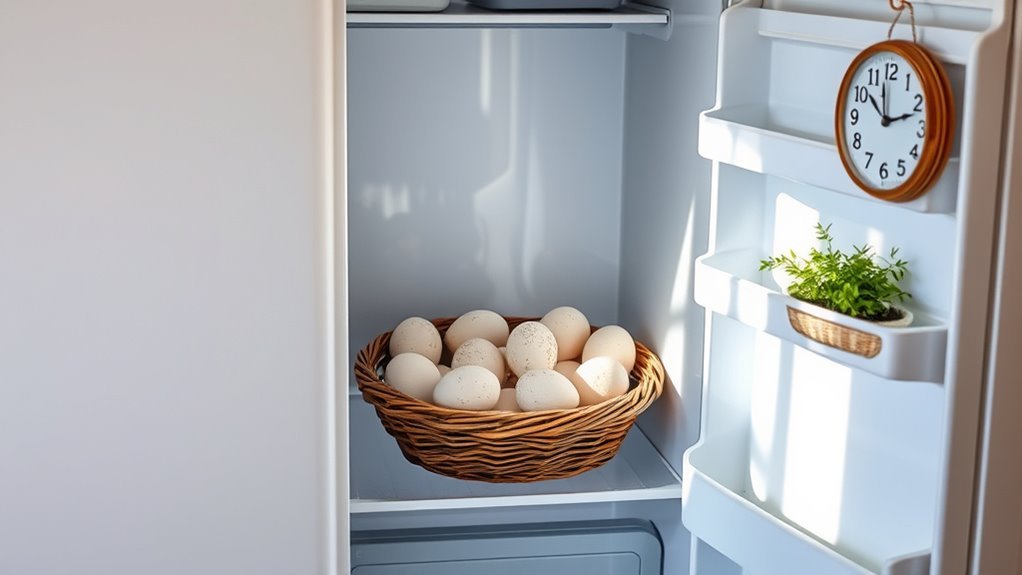
How Long Do Fresh Eggs Keep in the Refrigerator?
You can keep fresh eggs in your refrigerator for about 3 to 5 weeks when stored properly at or below 40°F. Proper storage is essential to maintain egg freshness and safety.
Always keep them in their original carton and place them in the main fridge, not the door, to maintain a consistent temperature.
Avoid washing eggs before storing, as this removes their protective coating and shortens shelf life.
If you want tips on maximizing freshness and checking if your eggs are still good, there’s plenty more to explore.
How Long Do Fresh Eggs Last in the Refrigerator?
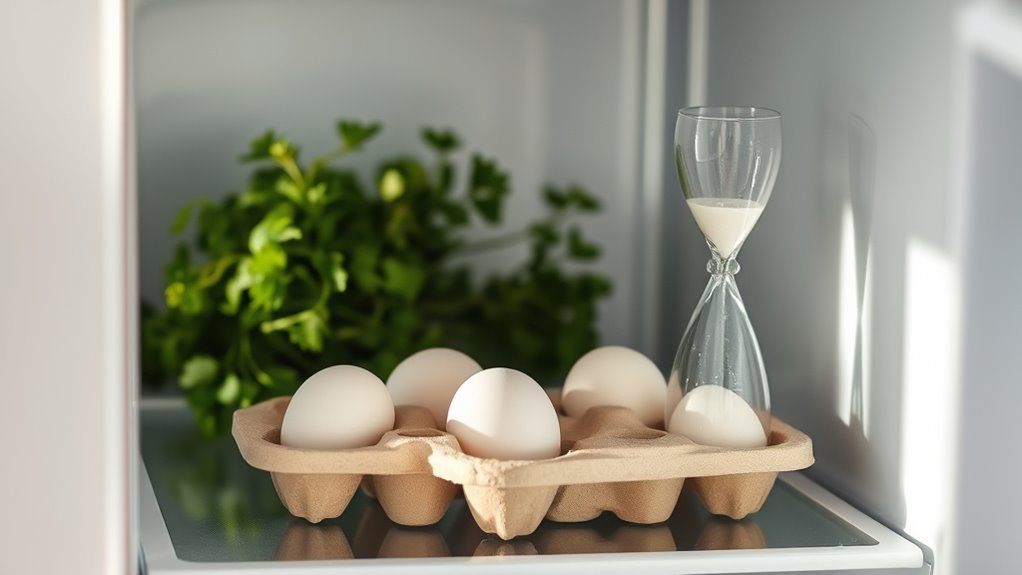
Although fresh eggs can last several weeks when refrigerated, you should store them properly to maximize their shelf life. When kept in their original carton inside the refrigerator at 40°F or below, eggs can maintain their quality for up to three months. Typically, fresh eggs last about three to five weeks beyond the pack or purchase date.
To keep eggs fresh longer, avoid transferring them to different containers since the carton protects them from absorbing odors and moisture. For hard-boiled eggs, you can safely store them in the refrigerator for up to one week. If you’re unsure about freshness, try the water test: eggs that sink to the bottom are fresher than those that float, indicating they’ve aged more.
Proper storage in the refrigerator is key to keeping your eggs fresh and safe.
How Refrigeration Helps Keep Fresh Eggs Safe
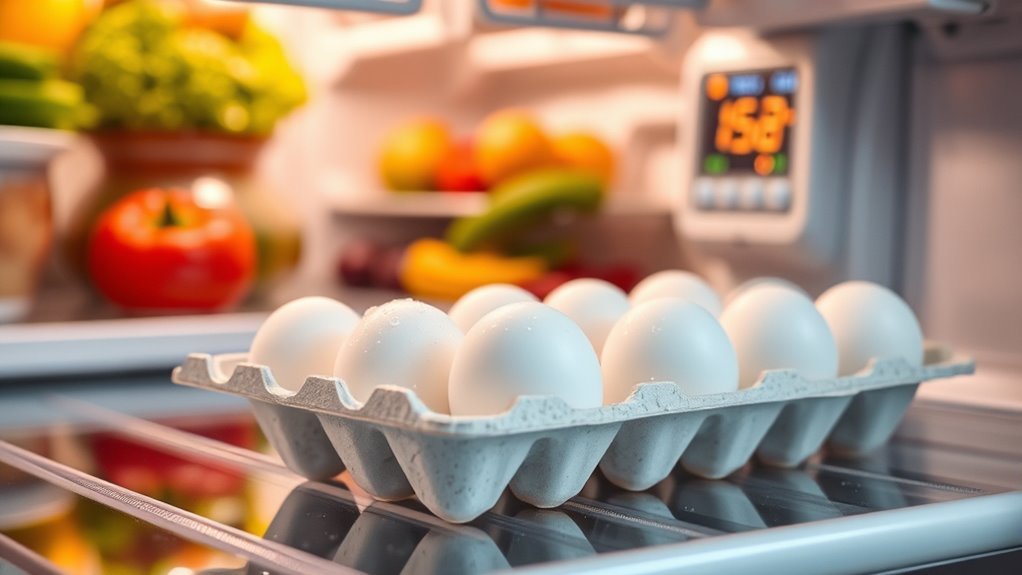
When you keep eggs refrigerated at 40°F or below, you slow down bacterial growth and keep them fresher longer. Storing eggs in their original carton on a stable shelf temperature extends their shelf life up to three months.
Temperature Control Benefits
Because refrigeration keeps the temperature at or below 40°F, it slows bacterial growth and substantially extends how long your eggs stay safe and fresh. When you keep cool eggs consistently kept in fridge shelves rather than the door, you provide a stable environment that prevents spoilage caused by temperature fluctuations.
This steady cold preserves the egg’s internal quality, maintaining texture and flavor for up to 3-5 weeks beyond the pack date. Plus, proper refrigeration helps maintain the natural protective coating on eggs, especially if they’ve been washed, which otherwise might degrade faster at warmer temperatures.
Bacterial Growth Prevention
Keeping your eggs refrigerated at temperatures below 40°F effectively slows bacterial growth, including harmful pathogens like Salmonella. Refrigeration creates an environment that inhibits bacteria from multiplying, helping keep your eggs safe to eat.
Here’s how refrigeration helps prevent bacterial growth on fresh eggs:
- It maintains consistent cold temperatures, reducing the risk of bacteria penetrating cracks or pores in the shell.
- It preserves the natural protective cuticle (bloom) on unwashed eggs, which acts as a barrier against bacteria.
- Storing eggs in their original carton on an inside shelf minimizes temperature fluctuations and exposure to contaminants from other foods.
Extended Shelf Life
Refrigeration doesn’t just slow bacterial growth; it also extends how long your fresh eggs stay safe and fresh. By keeping eggs at a steady 40°F or below, refrigeration markedly boosts egg longevity, allowing them to remain safe and high-quality for up to 3 to 5 months.
When you store eggs in their original carton inside the fridge, you maintain proper humidity and prevent odor absorption. The cold environment also preserves the egg’s natural protective bloom, especially important if eggs were washed before refrigeration, further prolonging shelf life.
Does Washing Eggs Affect Their Refrigerator Shelf Life?
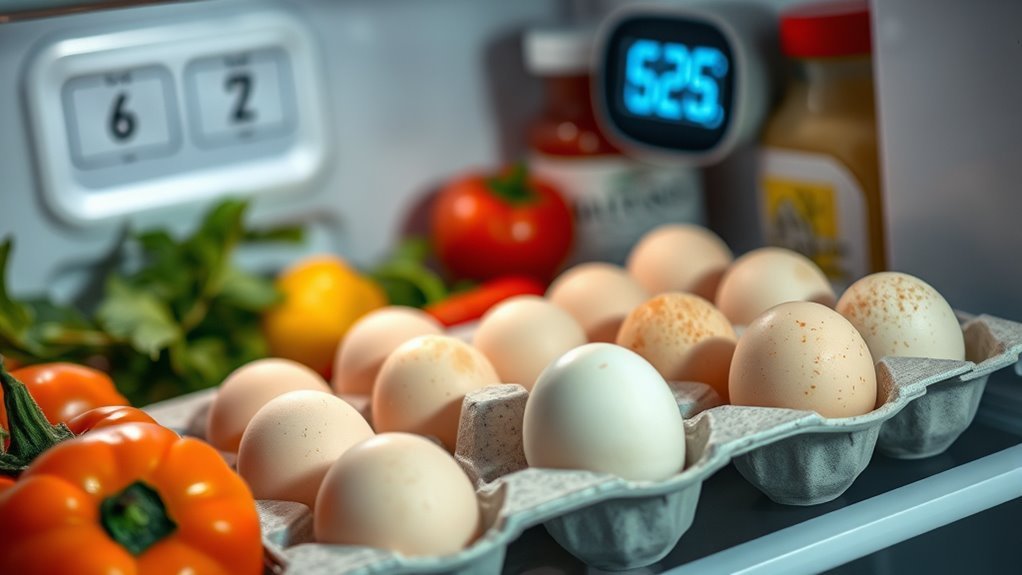
When you wash eggs, you remove their natural protective bloom, which normally helps keep bacteria out. Without this coating, eggs need to be refrigerated to stay safe.
This means washing eggs directly affects how you store them and how long they’ll last in your fridge.
Washing Removes Protective Bloom
Although washing eggs removes the natural protective bloom that shields them from bacteria, you should refrigerate washed eggs promptly to keep them safe. This bloom acts like a barrier, preventing contamination.
When you wash chicken eggs, you strip away this defense, making the eggs more vulnerable. That’s why eggs are good to store unwashed at room temperature, but once cleaned, refrigeration becomes essential.
Keep these points in mind:
- Washing removes the bloom, increasing bacterial risk.
- Washed eggs must be dried quickly before refrigerating.
- Without the bloom, eggs lose their ability to stay fresh unrefrigerated for long.
Refrigeration Necessity After Washing
Removing the natural protective bloom from eggs exposes them to bacteria, so you need to refrigerate washed eggs quickly to keep them safe. Washing removes the shell’s coating, making eggs more vulnerable if left at room temperature.
Proper refrigeration after washing is essential to maintain freshness and prevent spoilage, typically extending shelf life to 3-5 weeks. Here’s a quick comparison:
| Egg Condition | Storage Temperature | Safe Storage Duration |
|---|---|---|
| Unwashed Eggs | Room Temperature | Up to several weeks |
| Washed Eggs | Room Temperature | Only a few days |
| Washed Eggs | Refrigerated | 3-5 weeks |
How to Store Eggs Properly to Maximize Freshness
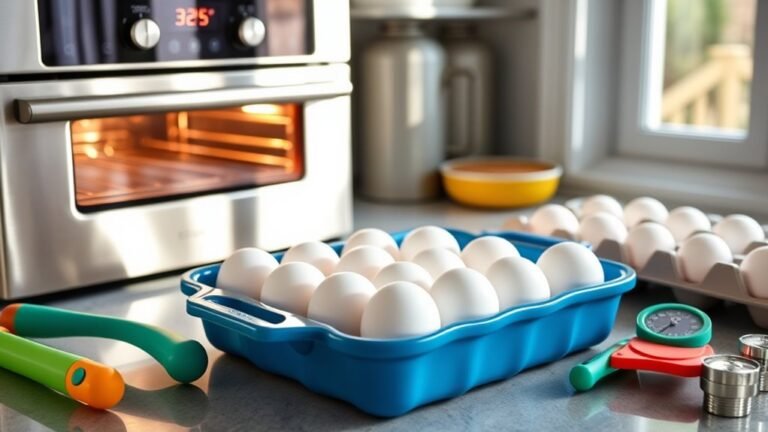
To maximize the freshness of your eggs, store them in their original carton on an inside shelf of the refrigerator set at 40°F or below. Proper storage helps eggs last longer by protecting them from temperature fluctuations and odors. Avoid placing eggs in the fridge door, where frequent opening causes temperature changes that shorten their shelf life.
Store eggs inside the fridge at 40°F in their carton to keep them fresh longer.
Follow these tips for ideal egg storage:
- Keep eggs pointed end down to preserve the yolk and reduce spoilage risk.
- Store eggs in their carton or a sealed container to prevent odor absorption from other foods.
- Label the carton with the purchase or collection date to track freshness and use eggs within the recommended period.
How to Tell If Refrigerated Eggs Are Still Good
Knowing how to tell if refrigerated eggs are still good helps you avoid waste and foodborne illness. Fresh eggs can last 3 to 5 weeks beyond their pack date if stored at 40°F or below. To check, try the float test: if eggs sink and lie flat, they’re fresh; if they stand upright or float, they might be too old.
However, don’t rely solely on this test. Examine the shell for cracks, slimy, powdery surfaces, or foul odors—these signs mean the eggs no longer last safely. When you crack an egg open, look for a clear, thick white and a bright, centered yolk.
Cloudy whites or off smells indicate spoilage. Always combine these checks to be sure your eggs are good before use.
How to Freeze Eggs Safely: Methods and Tips
Although freezing eggs might seem tricky, you can preserve them safely by following a few simple steps. Remember, never freeze eggs in their shells, as they can crack and spoil. Instead, use good containers designed for freezing.
Freezing eggs is easy and safe when you avoid freezing shells and use proper containers.
Here’s how to freeze eggs properly:
- Beat whole eggs lightly and pour them into labeled airtight containers or ice cube trays.
- Freeze egg whites in sealed containers for up to a year.
- Mix yolks with salt or sugar before freezing to prevent gelling.
When you’re ready to use frozen eggs, thaw them gradually in the refrigerator overnight. Avoid freezing hard-boiled eggs since their texture changes and becomes unpleasant.
These tips help you freeze eggs safely while maintaining their quality.
Tips for Organizing and Rotating Eggs in Your Fridge
When you store eggs in their original carton on an inside shelf of your fridge, you help maintain a steady temperature that keeps them fresh longer. To organize effectively, place the oldest eggs in front or on top, practicing a first-in, first-out rotation system. Label each egg with its collection or purchase date to track freshness easily.
Since eggs can absorb odors, keep them away from strong-smelling foods by storing them in their carton or a sealed container. For those raising chickens as a companion animal technical practice, collect eggs 2-3 times daily during peak laying to minimize cracking and bacterial risks.
Following these simple tips ensures your eggs stay safe and fresh, making your fridge more efficient and your meals better.
Frequently Asked Questions
How Long Do Farm Fresh Eggs Last in the Refrigerator?
You can keep farm fresh eggs in the refrigerator for about 3 to 5 weeks, sometimes up to 2 months if stored properly.
Always keep them in their carton on an inside shelf to stay fresh longer.
Are Eggs Still Good After 2 Months in the Refrigerator?
Eggs after 2 months in your fridge are like old friends—still around but not as reliable.
You can use them if they pass the float test, but don’t expect peak freshness or perfect texture.
What Is the 5 5 5 Rule for Eggs?
The 5-5-5 rule means you should store eggs for up to 5 weeks, keep them refrigerated at 40°F or below, and consume them within 5 weeks of purchase to guarantee safety and maintain freshness.
This guideline helps ensure that eggs remain safe to eat and retain their best quality. Proper refrigeration is key to slowing bacterial growth and preserving taste.
How Do I Know if Farm Fresh Eggs Are Still Good?
You know farm fresh eggs are good if they sink and lay flat in water—95% of fresh eggs do this.
Check for no cracks, no foul smell, and firm yolks to be sure they’re safe to eat.
Conclusion
By properly placing your fresh eggs in the fridge, you preserve their peak potential and prevent premature spoilage. Remember, refrigeration reduces risks and retains richness, making your meals more marvelous. Washing might weaken their natural warmth, so handle with care.
Stay sharp by checking for freshness frequently. With simple storage strategies and smart freezing tips, you’ll savor safe, scrumptious eggs longer.
Keep caring, keep cracking, and keep your kitchen cozy with confidence! Proper refrigeration of fresh eggs is key to maintaining their quality and extending their shelf life in the refrigerator.