How Long Do Guinea Eggs Take to Hatch?
Guinea eggs usually hatch in 26 to 28 days, with most keets emerging around days 26 or 27.
You might see some hatch as early as day 25 or as late as day 29. Understanding how long guinea eggs take to hatch is essential for successful incubation.
To get the best results, keep your incubator at a steady 99.5°F with proper humidity.
Stop turning the eggs by day 25 to prepare for hatching.
If you want to guarantee a successful hatch, there’s plenty more to learn about ideal handling and incubation care. Proper attention during these final days can make all the difference.
How Long Does It Take for Guinea Eggs to Hatch?
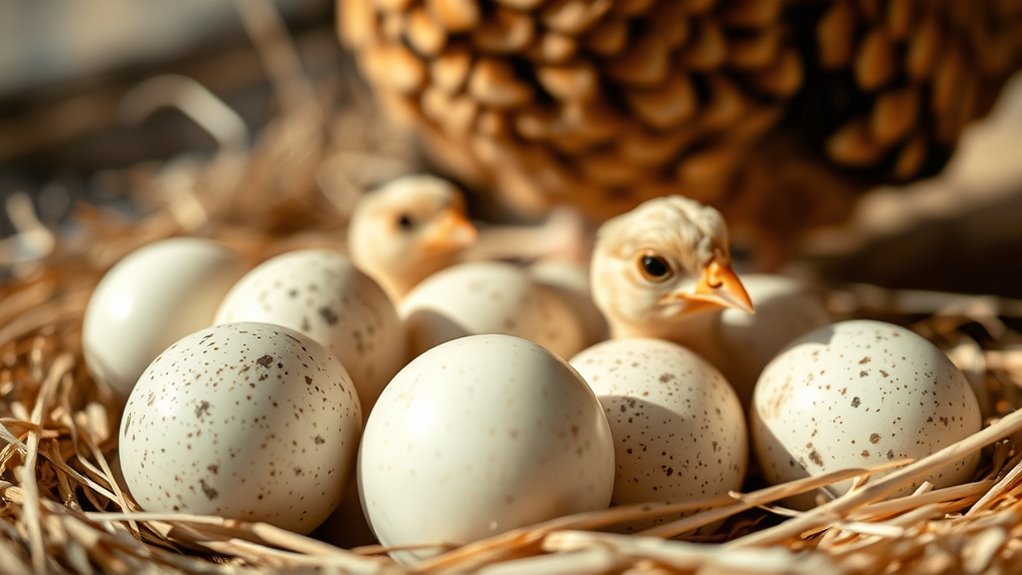
Although hatching times can vary slightly, guinea eggs usually hatch between 26 and 28 days of incubation. You’ll notice most keets hatch around days 26 or 27, but sometimes it can happen as early as day 25 or as late as day 29.
The key to a successful hatch rate lies in maintaining proper temperature and humidity throughout the incubation process. When you see external pipping—small cracks where the keet starts breaking through the shell—and the egg begins rocking, it means hatching is imminent, often within 24 hours.
How to Handle and Store Guinea Eggs for Best Hatch

When you collect guinea eggs, make sure they’re fresh, clean, and fertile from healthy hens to maximize hatch success. Handle eggs gently with clean hands and avoid washing to protect embryo development.
If you won’t start the incubation period immediately, store eggs at 55°F (12.8°C) in a slightly tilted carton for up to 10 days. Turn them daily if stored more than four days to prevent embryos from sticking.
| Action | Condition | Purpose |
|---|---|---|
| Store eggs | 55°F, tilted carton | Maintain freshness |
| Turn daily | If stored >4 days | Support embryo development |
| Rest after ship | 12–24 hours | Normalize yolk position |
Proper egg storage and handling ensure a smooth hatch process and healthy chicks.
Best Temperature and Humidity for Incubating Guinea Eggs
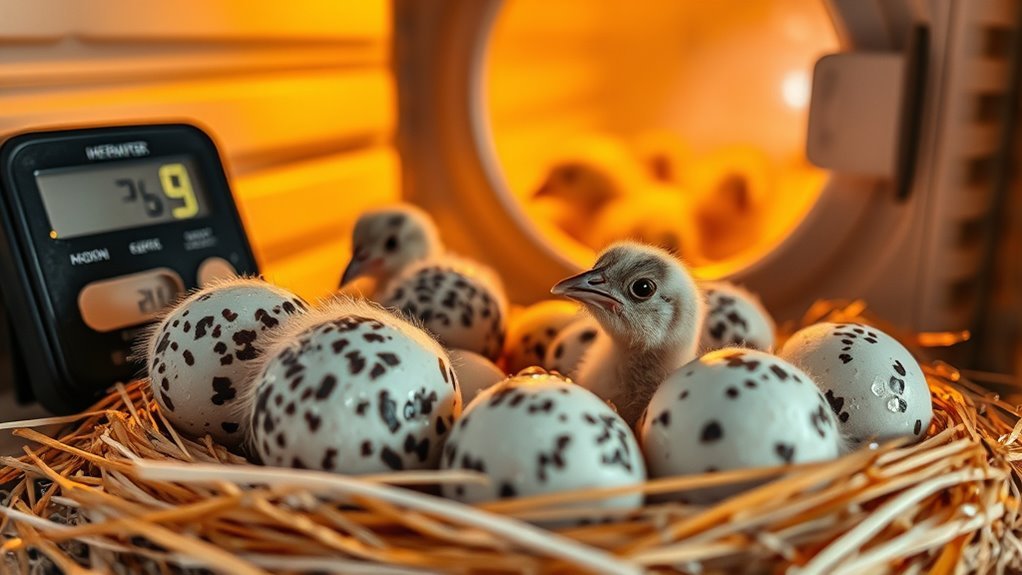
After properly handling and storing your guinea eggs, setting the right temperature and humidity for incubation will help guarantee healthy embryo development. Use an incubator to maintain stable conditions throughout the 26-28 days of incubation.
Here’s what you need for ideal results:
- Set the temperature at 99.5°F (37.5°C) for forced-air incubators, or 100-101°F (37.8-38.3°C) for still-air types.
- Keep humidity at 45-50% for the first 25 days.
- Increase humidity to 65-70% during the last 3 days before the hatch.
- Monitor humidity with a calibrated hygrometer and adjust water or vents accordingly.
Proper control of temperature and humidity prevents early hatching or embryo death, ensuring your guinea eggs hatch healthy and on time.
When and Why Stop Turning Guinea Eggs Before Hatch?
Since turning guinea eggs promotes proper embryo development, you need to prevent the process by day 25 to help the chick prepare for hatching. Continuing to turn eggs past day 25 can disrupt the embryo’s positioning, making it harder for the chick to hatch successfully.
Stopping turning at the right day allows the embryo to orient itself for pipping without becoming disoriented or stuck inside the shell. Most incubator guides advise halting turning at day 25 to optimize hatch rates and ensure smooth incubation.
| Day of Incubation | Action | Reason |
|---|---|---|
| 1–24 | Turn eggs | Promote embryo development |
| 25 | Stop turning | Prepare embryo for hatching |
| 26–28 | No turning | Avoid disorientation of chick |
| Hatch day (~28) | Monitor eggs | Ensure successful chick hatch |
What Signs Show That Guinea Eggs Are About to Hatch?
Although the exact timing can vary, you’ll notice several clear signs that guinea eggs are about to hatch. Around hatch day, the keet begins internal pipping, positioning itself inside the egg. Soon, you’ll see an egg crack or external pipping as the keet starts pecking through the shell.
Increased peeping sounds often signal imminent hatching. Also, the air cell grows noticeably larger, helping the keet breathe during this process. Watch carefully for shrink wrapping, where the membrane clings tightly around the keet, indicating it may need help.
Key signs include:
- Internal pipping and slight egg rocking
- External pipping with visible egg cracks
- Increased peeping from inside the egg
- Enlarged air cell and possible shrink wrapping
These signs mean your guinea keets are almost here!
How to Care for Guinea Keets Right After Hatching
Once your guinea keets hatch and are dry, you’ll want to gently move them to a warm brooder set at 95°F. Keeping the temperature steady and gradually lowering it each week helps them adjust comfortably.
Make sure their environment stays dry, clean, and free from drafts to support their health right from the start.
Immediate Post-Hatch Care
When your guinea keets hatch after about 26 to 28 days of incubation, you need to make certain they stay healthy. Immediate post-hatch care is vital to support their transition from hatching to thriving. Keep them dry and protected from drafts while ensuring fresh air circulates without chilling them.
Proper humidity for guinea eggs before hatching helps, but after, focus on maintaining warmth and hydration.
Here are four key steps for immediate post-hatch care:
- Gently handle keets to avoid stress and keep them dry and protected.
- Provide constant access to clean, fresh water to prevent dehydration.
- Keep keets warm in a brooder, but avoid sudden temperature changes.
- Monitor keets closely for any signs of distress or cold stress.
Brooder Temperature Management
After ensuring your guinea keets are dry and stable in the incubator for the first 24 hours at 37°C (98.6°F), you’ll need to move them to a brooder set at 35°C (95°F). Proper temperature management is vital at this stage to keep them warm and active.
Use heat lamps as your heat source, hanging them 18-24 inches above the litter in porcelain sockets to provide steady brooder heat. Regularly monitor temperature and observe your keets for signs of discomfort.
Gradually lower the brooder heat by about 2°C each week to mimic natural outdoor temperature shifts. Don’t forget to adjust temperature or ambient temperature as needed to prevent warmth or cold stress.
Consistent monitoring ensures your keets thrive beyond the incubation temperature phase.
Troubleshooting Common Guinea Egg Incubation Problems
You’ll want to keep a close eye on temperature and humidity since fluctuations can cause issues like shrink wrapping or delayed hatching.
If eggs aren’t developing properly, it might be due to poor fertility or inconsistent conditions. By monitoring these factors and removing non-viable eggs, you can improve your hatch rates considerably.
Temperature And Humidity Issues
Because maintaining the right temperature and humidity is essential, even slight deviations can cause serious incubation problems for guinea eggs. You must keep incubation temperature steady—above 100°F (37.8°C) risks early hatching or embryo death.
Likewise, humidity levels need careful control; too low leads to dehydration and shrink-wrapping, while too high causes drowning or mold growth.
To ensure hatching success, focus on:
- Proper calibration of your incubator’s hygrometer and thermometer.
- Consistent incubator monitoring to avoid humidity fluctuations.
- Maintaining stable humidity levels, ideally between 30%-70%.
- Regular egg turning to support healthy embryo development.
Egg Development Problems
Although guinea eggs usually hatch within 26 to 28 days, various development problems can delay or prevent successful hatching. You must monitor temperature and humidity carefully, guarantee proper turning, and practice gentle egg handling to support healthy embryo development.
Use candling to detect issues like blood rings or lack of movement early. Incubator issues and fungal contamination can also cause embryo death or infertile eggs.
| Problem | Cause | Solution |
|---|---|---|
| Poor embryo growth | Incorrect temperature or humidity | Adjust incubator settings |
| Embryo death | Fungal contamination | Clean incubator regularly |
| Low hatch rates | Improper turning or handling | Turn eggs gently 3-5 times daily |
| No development | Incubator malfunction | Inspect and repair incubator |
Frequently Asked Questions
How Long Do Guineas Sit on Their Eggs?
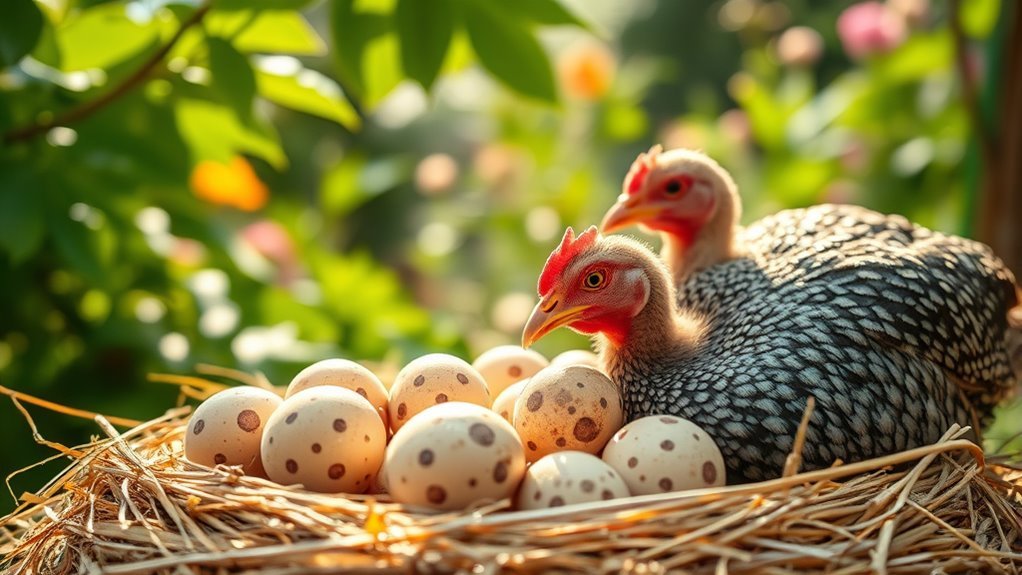
You’ll find guineas sit on their eggs for about 26 to 28 days. They mostly stay on the nest, especially during the last week, only leaving briefly to feed before returning to keep the eggs warm.
What Is the Downside of Guinea Fowl?
Guinea fowl can be as noisy as a marching band, making them disruptive. You’ll deal with their aggressive pecking, constant alarm calls, and their knack for escaping, which means you must secure their environment carefully.
How Many Eggs Will a Guinea Lay in a Year?
You can expect a hen guinea to lay around 100 eggs annually during the breeding season. However, individual hens usually lay about 30 eggs before going broody or stopping for the season, depending on conditions.
Should You Help a Guinea Fowl Hatch?
Don’t rush to crack the nut—usually, you shouldn’t help a guinea fowl hatch unless it’s clearly stuck or distressed.
Monitor humidity and give nature time; premature intervention can harm the fragile chick inside.
Conclusion
Hatching guinea eggs takes patience—usually around 28 days—but with the right care, you’re setting the stage for new life to bloom. Keep your eggs warm, moist, and gently turned until it’s time to stop.
When those tiny cracks appear, you’ll know the miracle is near. Remember, every step you take is like watering a seed; with attention and care, you’ll soon welcome healthy, chirping keets ready to explore their new world.
Understanding how long do guinea eggs take to hatch and providing proper incubation conditions are key to success. With dedication, your efforts will result in thriving keets and a rewarding hatching experience.