
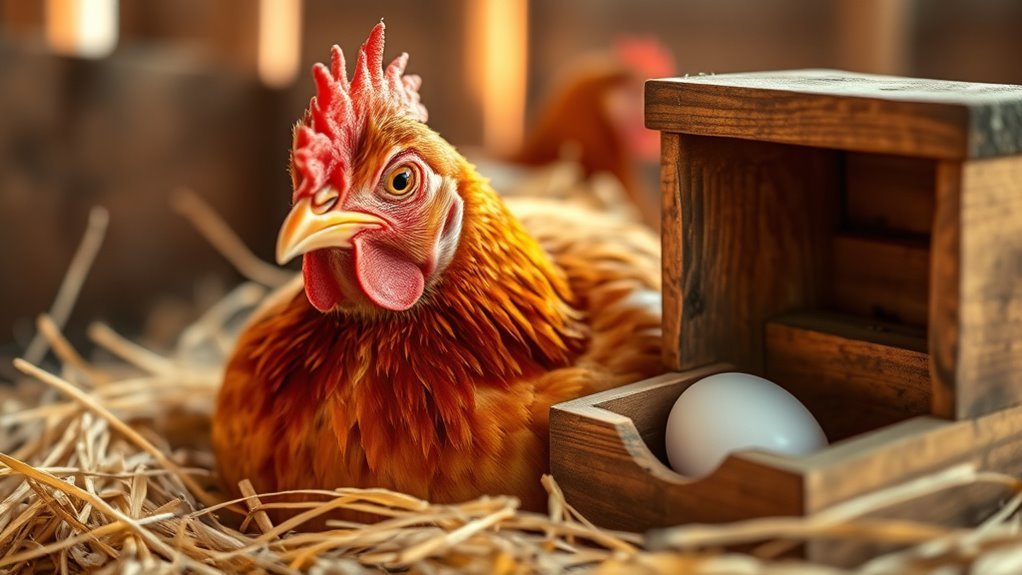
How Long Does It Take for a Chicken to Start Laying Eggs?
You can expect your chicken to start laying eggs around 18 to 22 weeks old, depending on the breed and conditions. Some breeds like sexlinks may lay as early as 16 weeks.
Look for signs like a bright red comb, nesting behavior, and squatting when approached.
Lighting and diet also play a big role, with 14 to 16 hours of light and proper feed helping encourage laying. Keep an eye on these factors, and you’ll know exactly when your hens are ready to lay.
When Do Chickens Usually Start Laying Eggs?
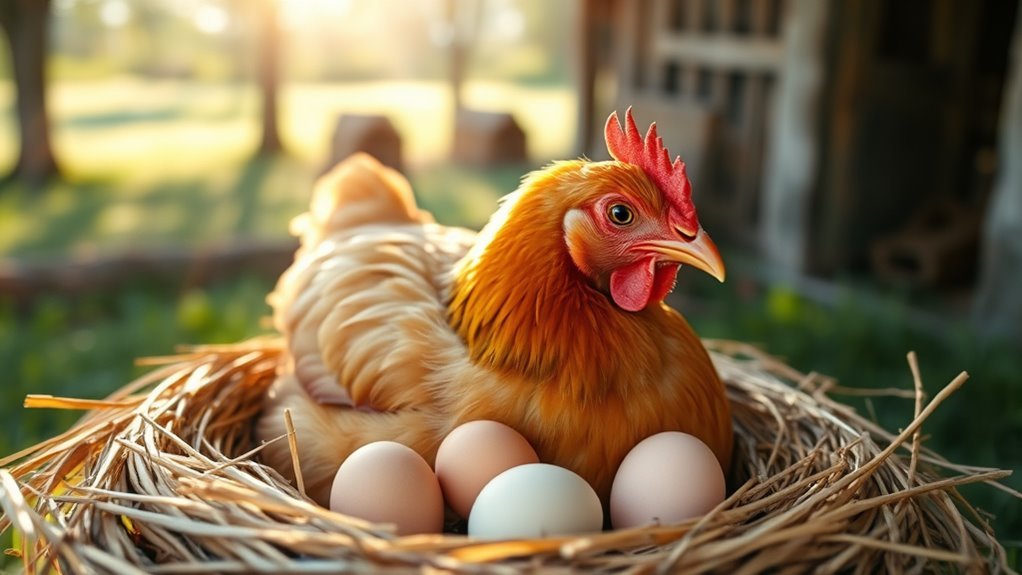
Although the exact timing varies, most chickens start laying eggs between 18 and 22 weeks old. When your pullets reach physical maturity, they’ll begin producing their first egg, but the age of laying can shift based on breed, housing and environment, and lighting hours.
Some breeds, like sexlinks, might surprise you by laying as early as 16 weeks. You’ll notice that better diet and stable lighting hours encourage earlier laying by supporting their hormonal readiness. Proper housing and environment also play a essential role in how soon your hens start laying; stress or poor conditions can delay it.
How to Tell When Your Hen Is About to Lay Eggs
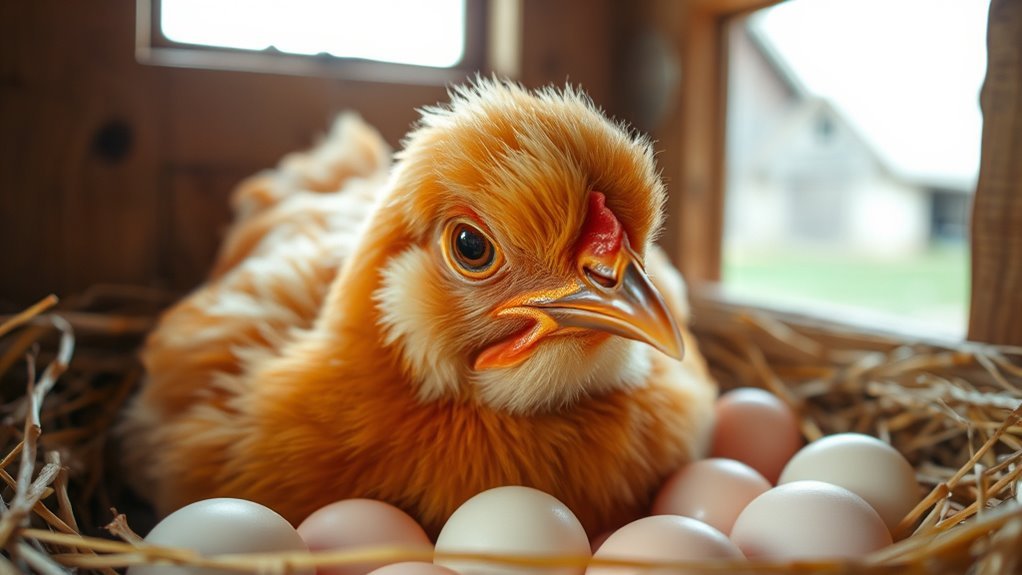
You’ll notice physical signs like a brightened comb and wattles when your hen is close to laying eggs. Pay attention to her behavior—she might squat when you approach or spend more time in the nesting box.
These changes, along with increased vocalizations, are clear clues that egg-laying is on its way.
Physical Signs Noted
When your hen is about to lay eggs, you’ll notice her comb and wattles enlarge and turn a vibrant red as blood flow increases. These comb signs are a clear indicator of hormonal readiness. Alongside this, watch for increased nesting behavior—your hen will seek out quiet, secluded spots to prepare for egg-laying.
Early eggs often have soft shells and may be irregular in shape or size. To help you recognize these physical signs, keep an eye out for:
- Enlarged, bright red comb and wattles
- Active nesting behavior and site selection
- Soft-shelled or oddly shaped early eggs
- Submissive squatting posture indicating readiness
Recognizing these signs ensures you’re ready to support your hen as she begins laying.
Behavioral Changes Observed
As your hen approaches her laying period, you’ll notice distinct behavioral changes that signal her readiness. A key behavioral change is her increased interest in nesting boxes, where she inspects and explores meticulously, preparing for egg-laying. You might also see submissive squatting behavior—she crouches with wings slightly spread when you approach, a clear sign of egg-laying readiness.
Additionally, hen behavior often includes louder vocalizations or cackling, indicating she’s near her first egg. Social interactions may increase too, especially with the rooster and other hens. Alongside these behavioral changes, physical signs like a swollen, reddened comb and wattles support her approaching laying phase.
Observing these combined physical signs and hen behavior helps you recognize when your hen is about to lay eggs.
Nesting Habits Developed
Alongside the behavioral signs you’ve noticed, hens develop specific nesting habits that signal they’re ready to lay eggs. These nesting habits often start weeks before the first egg arrives, marking important behavior changes as your hen approaches laying age.
You’ll likely observe these key signs days later:
- Frequent visits to and inspection of nesting boxes, showing increased comfort.
- Spending more time in quiet, secluded areas, preparing a safe spot.
- Enlargement and reddening of the comb and wattles, physical indicators of readiness.
- Elevated nesting activity, including arranging bedding or collecting nesting materials.
How Nesting Boxes and Coop Environment Affect Egg Laying
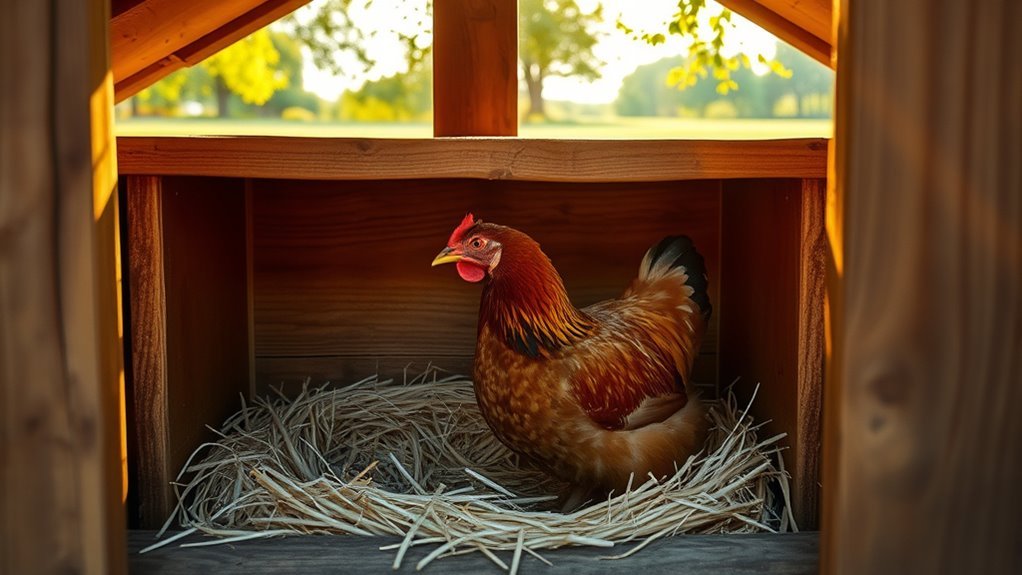
Although egg-laying depends on the hen’s health and diet, the nesting boxes and coop environment play a crucial role in encouraging consistent laying. You want to provide clean, quiet nesting boxes that offer privacy, helping hens feel secure when laying eggs. Aim for one nesting box per four hens to reduce competition and stress.
Use straw or shavings as bedding to create a cozy spot that hens prefer. Your coop environment should minimize disturbances, giving hens a calm space to lay comfortably. While lighting is important, avoid bright or harsh lights in nesting areas to maintain privacy and encourage hens to use the boxes regularly.
How Lighting and Day Length Impact Egg Laying
When daylight hours shorten, your hens slow down or stop laying eggs unless you provide extra light. Chickens need 14-16 hours of day length for consistent egg laying, so seasonal changes in fall and winter can disrupt this.
You can use artificial lighting to keep your hens productive year-round. Here’s how to help:
- Add a 25-watt incandescent bulb per 100 square feet in the coop.
- Use a timer to extend light exposure gradually.
- Mimic natural dawn and dusk with soft lighting transitions.
- Avoid sudden lighting changes to reduce stress on your flock.
When to Switch Chicks to Layer Feed to Support Egg Laying
Providing the right lighting sets the stage for your hens to start laying, but their diet plays an equally important role as they approach egg production. You should switch your chicks to layer feed around 18 weeks, just as they begin to lay eggs. This feed contains the right calcium and nutrients to support shell quality and hen health.
Transition gradually over several days to avoid digestive upset. Feeding layer feed consistently ensures strong eggshells and sustained egg production.
| Age (weeks) | Feed Type | Impact on Hens |
|---|---|---|
| Under 18 | Starter/Grower | Growth, not egg support |
| Around 18 | Layer Feed | Supports shell quality |
| After 18 | Layer Feed | Maintains hen health |
Switching at the right time keeps your hens healthy and producing well.
What to Expect From Your Hens’ Eggs After They Start Laying
As your hens start laying, expect their first eggs to be small and sometimes irregular, with soft shells or even double yolks. Different chicken breeds may begin their first egg at varying times, influencing egg size and appearance.
Expect small, irregular first eggs with soft shells; breed affects timing and size.
As your hens’ reproductive systems mature, egg quality and size improve over several weeks. The laying cycle stabilizes gradually, increasing consistency in production start.
Here’s what to expect after they start laying:
- Small, uneven eggs initially, sometimes yolkless or with soft shells.
- Egg size grows as hens mature and settle into their laying cycle.
- Frequency of eggs increases weekly, reaching a steady rhythm.
- Variations depend on chicken breeds but improve with time and care.
Patience during this phase guarantees rewarding egg production ahead.
Frequently Asked Questions
How Long Does It Take a Chicken to Lay an Egg for the First Time?
You’ll usually see your chicken lay her first egg between 16 and 24 weeks old. It depends on breed, health, and environment.
Make sure she’s well-fed, comfortable, and has proper lighting to encourage earlier laying.
What Is the 90/10 Rule for Chicken?
You’ll find that the 90/10 rule means 10% of your hens lay 90% of the eggs.
Focusing on those top producers lets you manage your flock smarter and boost overall egg production efficiently.
Can a Chicken Lay Two Eggs a Day?
Yes, you can see a chicken lay two eggs in a day, especially if it’s young or conditions are perfect. But it’s rare for mature hens, as their bodies usually can’t keep up that pace consistently.
What Triggers a Chicken to Lay an Egg?
You’ll be amazed that 90% of egg-laying triggers come from increased daylight, which boosts hormone levels.
That hormonal surge activates your hen’s reproductive system, signaling her body it’s time to start producing eggs consistently.
Conclusion
As your hens approach the dawn of their egg-laying days, patience becomes your greatest ally. Like the first light breaking through a morning mist, their eggs will arrive steadily, guided by the rhythm of light, comfort, and care you provide.
By tuning into their needs and creating a nurturing environment, you’ll soon find your coop humming with the gentle promise of fresh eggs. This rewarding harvest is born from your attentive hands and their natural cycle.
Understanding how long it takes for a chicken to start laying eggs helps you set realistic expectations. With the right care, the wait transforms into a fulfilling journey toward fresh, home-laid eggs.