
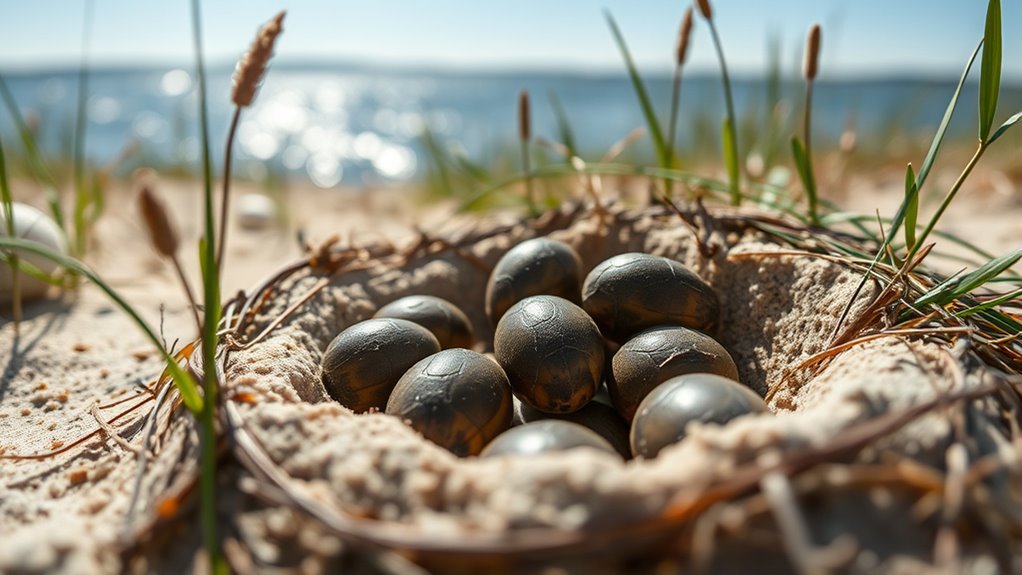
How Long Does It Take for Painted Turtle Eggs to Hatch?
You’ll find that painted turtle eggs usually take between 70 and 80 days to hatch. The exact time can shift depending on the soil temperature and moisture where the eggs are buried.
Warmer conditions speed up development, while cooler ones slow it down, sometimes extending incubation beyond 80 days.
Hatchlings break out with an egg tooth once ready, often emerging in late summer or early fall.
If you want to understand what influences their growth and survival, keep exploring the details.
How Long Does It Take for Painted Turtle Eggs to Hatch?
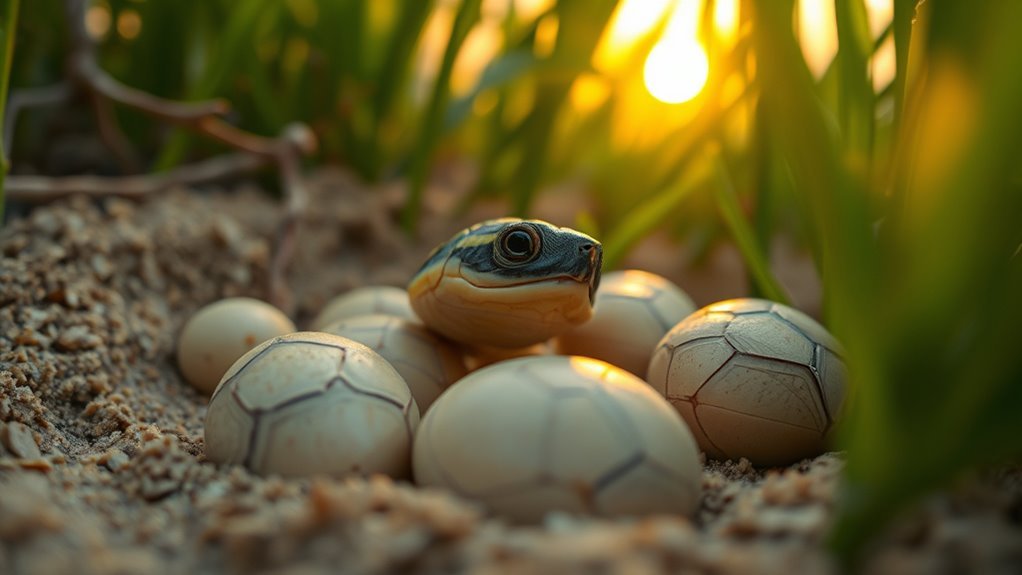
While the exact time can vary, painted turtle eggs usually hatch within 70 to 80 days under normal conditions. You’ll notice that environmental factors like temperature and humidity play a big role here. If the conditions are warmer but still within the ideal range, painted turtles tend to hatch a bit sooner.
On the other hand, if it’s cooler or less suitable, the incubation period can stretch beyond those 80 days. This flexibility helps painted turtles adapt to their surroundings. So, when you’re observing a nest, keep in mind that the timing isn’t set in stone.
The hatchlings patiently dig their way out once incubation wraps up, ready to start their journey in the world.
What Happens During Painted Turtle Egg Incubation?
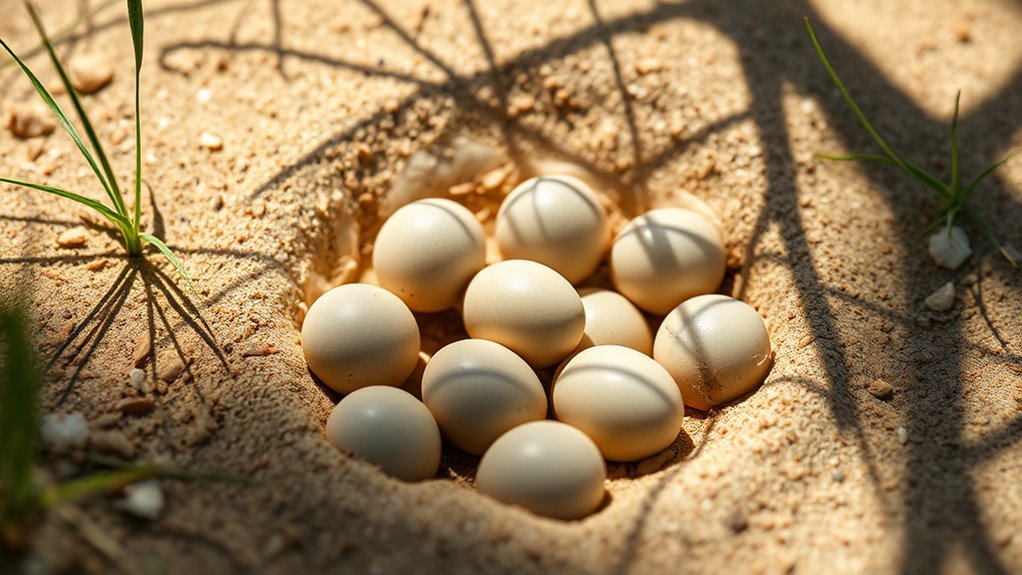
As you watch painted turtle eggs incubate, you’ll notice the length of this period depends largely on temperature, usually lasting between 70 and 80 days. Warmer conditions speed up development, while cooler ones slow it down.
Once hatched, some turtles may wait in the nest until spring before making their way out.
Incubation Period Duration
Because painted turtle eggs rely on soil warmth, their incubation takes about 70 to 80 days, though temperature can speed up or slow down development. During incubation, the eggs stay buried underground, where the steady warmth helps the embryo grow steadily.
You’ll notice that the environment plays a key role in how long incubation lasts, with cooler conditions extending the period and warmer ones shortening it. Throughout this time, the developing turtle inside is busy forming all its body parts, preparing to hatch.
Once the incubation period wraps up, the hatchlings emerge when conditions are just right, usually in late summer or early fall. Understanding incubation helps you appreciate the delicate timing and care these turtles need to survive.
Temperature’s Role
If you monitor painted turtle eggs during incubation, you’ll see temperature plays a vital role in their development and hatching timing. The temperature inside the nest directly influences how fast the embryos develop and when the eggs hatch. Warmer temperatures speed up incubation, leading to shorter hatching times, while cooler conditions slow development, extending the process beyond 80 days in some cases.
Temperature also affects sex determination; higher temperatures tend to produce more female hatchlings. Maintaining a consistent temperature is essential because fluctuations can disrupt proper development or delay hatching. So, by understanding temperature’s role, you can predict hatching time more accurately and grasp how it impacts both the growth and sex ratio of painted turtle hatchlings during incubation.
Hatchling Emergence Process
While the painted turtle eggs incubate, the embryos inside grow steadily, relying on the nest’s warmth and moisture to develop properly. As the incubation period nears 70 to 80 days, you’ll notice tiny cracks forming on the egg’s surface. This marks the start of the hatchling emergence process.
Each hatchling uses a specialized egg tooth to carefully break through the shell. Once free, the hatchlings don’t immediately leave the nest; they often stay underground for a short time, gaining strength and adjusting to their new environment.
After this brief pause, they emerge from the nest and begin their journey toward water. Understanding this hatchling emergence process helps you appreciate how vital the right nest conditions are for successful turtle development.
What Environmental Factors Affect Painted Turtle Egg Incubation?
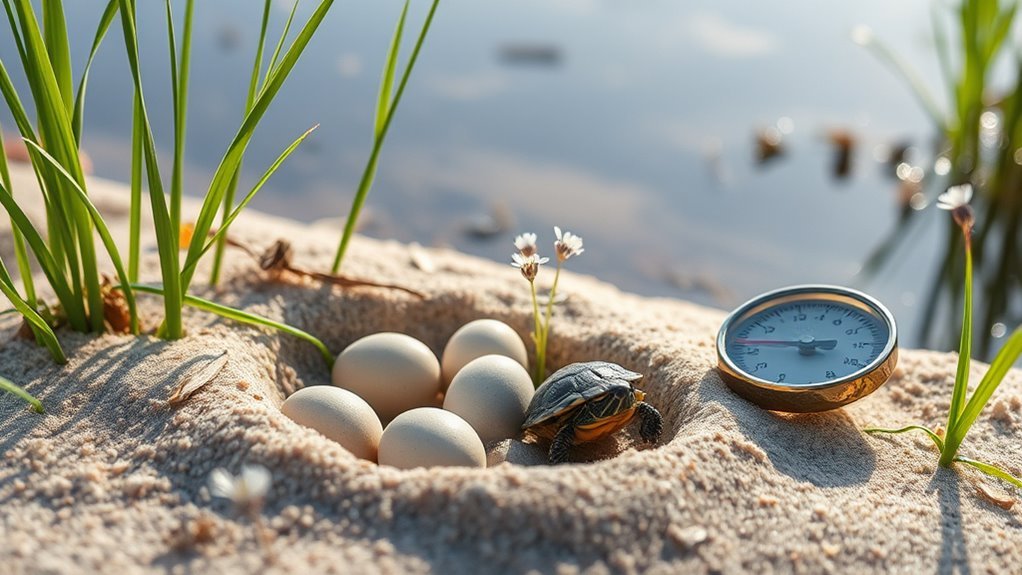
Environmental factors play a crucial role in determining how long painted turtle eggs take to hatch. You’ll find that soil temperature is a key environmental factor—warmer soil speeds up development, while cooler soil slows it down. Humidity also matters; maintaining ideal moisture prevents the eggs from drying out, ensuring healthy growth.
Soil composition and shading influence temperature stability around the nest, which can impact incubation length. Since these environmental factors interact, they collectively shape the incubation period, generally ranging from 70 to 80 days. Understanding these influences helps you appreciate how the nest’s microenvironment affects the timing of hatching, without focusing on how temperature directly determines hatchling sex, which is another topic altogether.
How Does Temperature Affect Painted Turtle Egg Development and Hatchling Sex?
Since temperature plays a critical role during egg incubation, it directly influences both the development speed and the sex of painted turtle hatchlings. When turtles lay eggs in early summer, the temperature of the nest affects how fast those eggs develop. Warmer nests, often sun-exposed, tend to produce mostly female baby turtles, while cooler temperatures favor males.
This temperature-dependent sex determination means turtles get their name from their distinct upper shell but also rely on temperature cues rather than genetics to decide sex. If temperatures rise above 84°F, you’ll likely see more females hatching days later. Maintaining steady temps around 75-85°F is key for balanced hatchling sexes.
If you have questions or want to share observations about turtle laying eggs, rights reserved, let us know!
Where Do Painted Turtles Lay Eggs?
Understanding how temperature influences painted turtle eggs leads naturally to where these eggs are laid. You’ll find female painted turtles nesting on land near ponds, marshes, or other water bodies during spring and summer. They dig a hole in sandy or soft soil using their back feet, carefully depositing 2 to 6 eggs per clutch.
These eggs remain buried underground, where the sun’s warmth and surrounding soil help incubate them. After laying, the female often marks the nest with a stick but doesn’t return to it. The location’s proximity to water ensures hatchlings can quickly reach their aquatic habitat.
Knowing where turtles lay eggs helps you appreciate how they rely on specific environments for successful incubation and hatching.
How Can You Protect Painted Turtle Nests to Ensure Successful Hatching?
To help painted turtle eggs hatch successfully, you need to protect their nests from common predators like raccoons and squirrels. Sprinkling cayenne pepper on the nests is an effective way to deter these animals, reducing the chance they’ll dig up and eat the eggs. Mark the nest site with a white circle so you can easily monitor it throughout incubation.
Covering the nest gently and minimizing human disturbance also play key roles in boosting hatchling survival. Regular observation allows you to spot any threats early and take action. Your intervention, combining predator deterrents and careful monitoring, is essential to give those eggs the best chance to develop and hatch safely.
Frequently Asked Questions
What to Do if a Painted Turtle Lays Eggs in Your Yard?
If a painted turtle lays eggs in your yard, mark the nest location and avoid disturbing it.
Protect it from predators using natural covers or deterrents. Watch quietly as hatchlings emerge and head toward water safely.
Can You Relocate Painted Turtle Eggs?
You can’t just toss painted turtle eggs anywhere—they’re super sensitive! If you must relocate them, handle with extreme care. Keep conditions nearly identical, and consult experts to avoid ruining their chances of hatching.
What Is the Survival Rate of a Baby Painted Turtle?
You can expect only about 10-20% of baby painted turtles to survive to adulthood. Predators and environmental dangers make survival tough, but protecting nests and improving habitat can boost their chances considerably.
How Long After Turtle Eggs Are Laid Do They Hatch?
Imagine you find painted turtle eggs in May; they’ll hatch about 70 to 80 days later, usually by late summer.
Don’t forget, warmer temperatures speed things up, while cooler ones slow the process down for you.
Conclusion
You’ll find that painted turtle eggs typically take about 60 to 90 days to hatch, depending heavily on temperature and environmental conditions. For example, in a 2018 study in Minnesota, nests incubated at warmer temperatures hatched faster but produced more females, showing how vital temperature is.
By understanding these factors and protecting nests from predators and harsh weather, you can help guarantee more hatchlings survive and thrive in their natural habitat. Ensuring the right conditions for painted turtle eggs to hatch is crucial for their development and maintaining population balance.