How Long Will a Duck Sit on Eggs Step by Step
You’ll notice a duck sits on her eggs for about 25 to 29 days, keeping them warm and turning them multiple times daily during the first three weeks.
Around day 25, she stops turning to let the embryos settle for hatching.
Signs like pipping appear near day 28, and hatchlings emerge within 12 to 48 hours after.
Keep your eyes peeled, as understanding these stages helps you support successful hatching and care afterward.
How Long Does a Duck Sit on Duck Eggs?
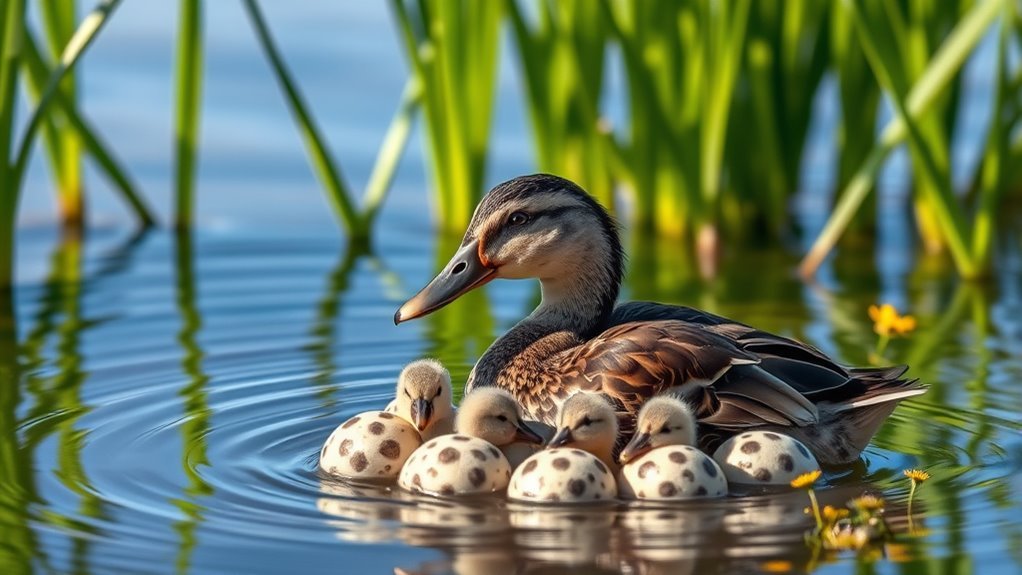
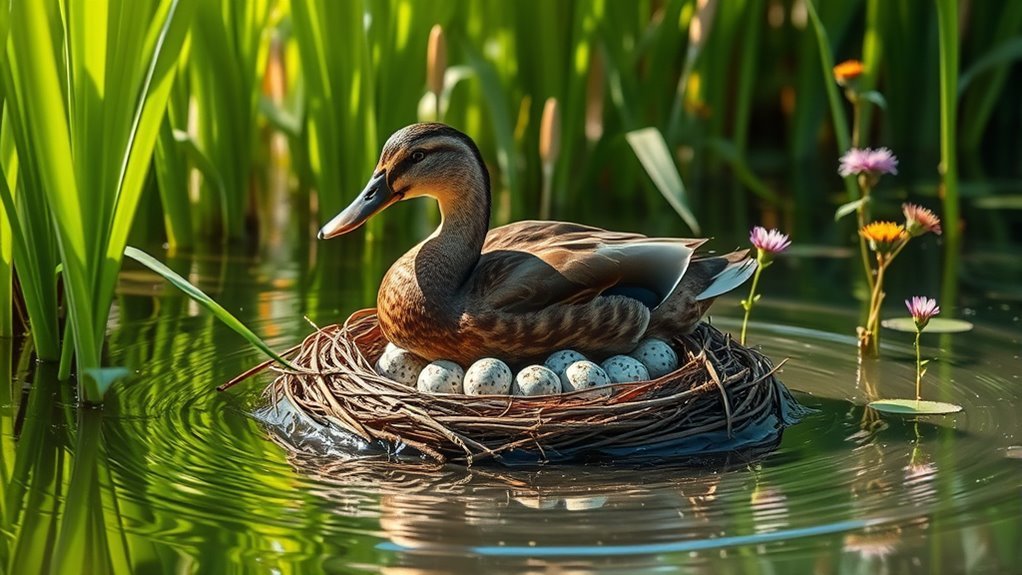
How long does a duck sit on her eggs? During duck incubation, a hen typically sits on eggs for about 25 to 29 days, depending on the species. You’ll notice her broody behavior as she stays on the clutch, which usually ranges from 6 to 15 eggs, maintaining consistent egg temperature essential for embryo development.
She rarely leaves the nest, only briefly to feed or bathe. Throughout the incubation period, the hen sitting on eggs guarantees proper egg turning, which helps embryos develop evenly. By the end of this time, you’ll see the first signs as hatched ducklings begin to pip and emerge, usually around day 28.
This careful process guarantees healthy, strong ducklings ready to thrive after hatching.
Embryo Development and Care During Each Week of Incubation
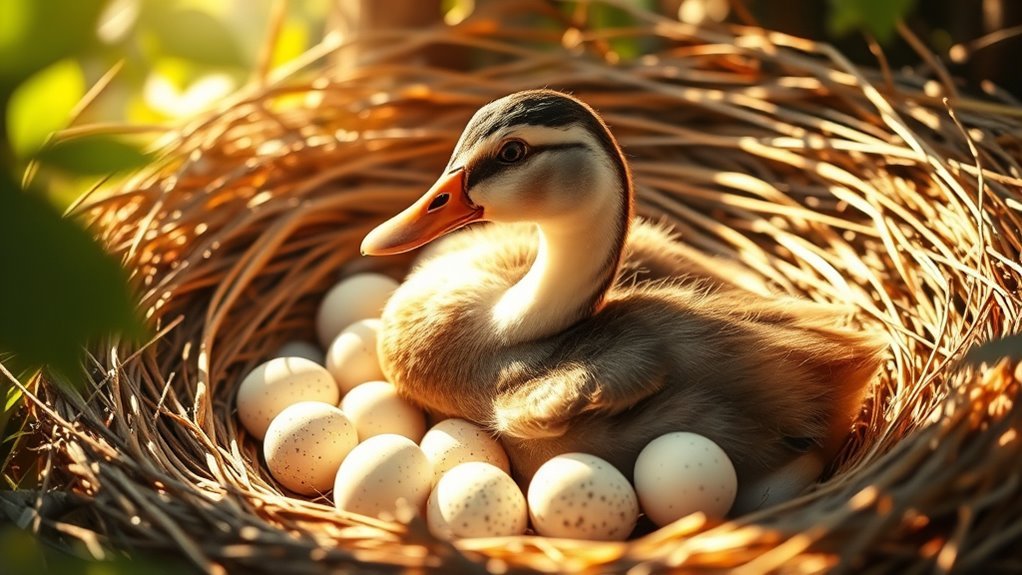
You’ll notice the embryo hits key milestones each week, from early heartbeats to preparing for hatching. Keeping the right temperature and humidity is vital throughout the process.
Plus, turning the eggs regularly helps guarantee the embryo develops properly inside.
Weekly Embryo Milestones
As the duck eggs incubate, you’ll notice distinct changes each week that mark the embryo’s development. In the first week, embryo development begins with a heartbeat and initial organs visible through candling, helping you identify fertile eggs.
By week two, limbs, eyes, and beak form, and blood vessels become prominent. In week three, the embryo rapidly grows, filling most of the egg.
Week four shows significant milestones: feathers, combs, and movement inside the shell signal the nearing hatching process. By week five, the embryo is fully developed and ready to pip, indicating hatching eggs will soon hatch.
Monitoring these weekly embryo milestones during incubation guarantees you’re prepared for each stage of development inside the egg, leading to successful hatching.
Temperature And Humidity
Although monitoring embryo development is essential, maintaining the right temperature and humidity during incubation plays an even more critical role in guaranteeing healthy ducklings. You need to keep the temperature steady at around 99.5°F, as fluctuations greater than 1°F can delay growth or cause deformities.
Early in incubation, maintain humidity levels between 45-55% to prevent the eggs from drying out. As the hatch approaches, increase humidity to about 65% to support proper development and ease hatching.
Consistent temperature control and adjusting humidity weekly are key to maximizing hatch success. By carefully managing these conditions, you guarantee that the eggs develop ideally, leading to strong, healthy ducklings ready to hatch at the right time.
Egg Turning Practices
Maintaining proper temperature and humidity sets the stage for healthy embryo development, but how you handle the eggs during incubation also makes a big difference. Turning eggs regularly is vital during early incubation to prevent embryo sticking and ensure even growth.
Here’s a simple guide to effective egg turning practices during incubation:
- Turn eggs 4-5 times daily during the first week to support proper embryo development.
- Continue consistent turning from days 8 to 14, using candling to monitor embryo progress.
- Reduce turning frequency to twice daily from days 15 to 21 and increase the humidity level for hatching preparation.
- Stop turning eggs after day 21 to avoid damaging the fully developed embryo.
Following these steps helps protect the embryo and promotes successful hatching.
When and Why Does a Duck Stop Turning Duck Eggs?
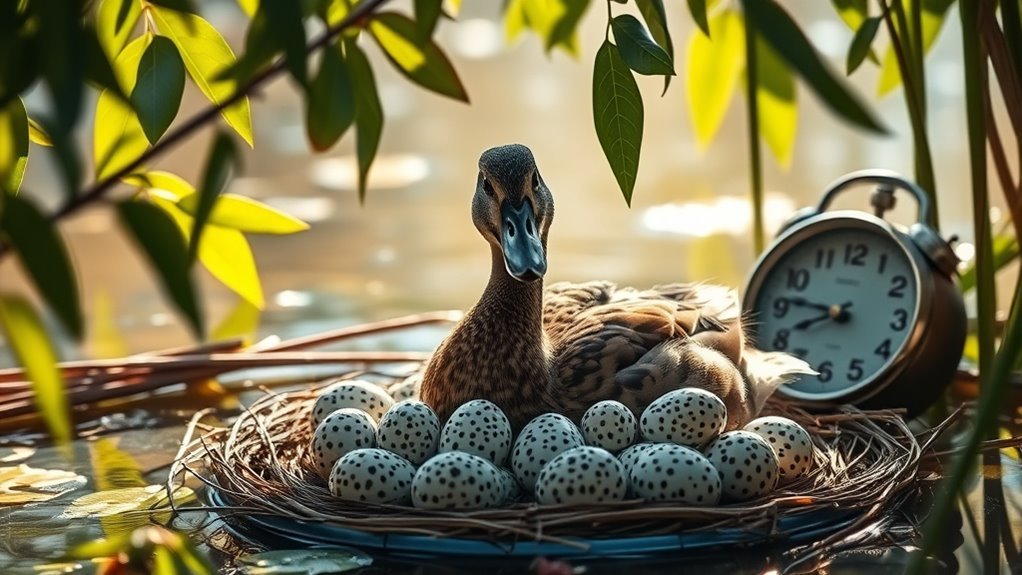
You’ll notice the duck stops turning the eggs around days 25 to 28, a phase called lockdown. This pause assists the embryo settle into the perfect position for hatching.
Turning Ceases At Lockdown
The turning of duck eggs stops around day 25 or 26 of incubation, marking the start of lockdown. At this point, you’ll cease turning the eggs to let the embryo settle into the right position for the hatching process. Lockdown ensures the embryo isn’t disturbed during these critical final days of egg incubation.
Here’s what happens when turning stops at lockdown:
- You cease turning eggs to avoid damaging the embryo.
- The incubator stays closed to maintain stable conditions.
- Embryo position stabilizes, aiding a successful hatch.
- Lockdown begins around day 25, signaling the end of regular handling.
Ensuring Proper Hatch Position
Once turning stops around day 25 to 28, the duck allows the embryo to settle into the proper hatch position. During the incubation period, turning eggs is vital for even embryo development, but as hatch readiness approaches, continuous egg turning can disrupt the hatch process.
By stopping, the duck guarantees the embryo orients itself correctly, typically with its head facing the air cell for easy pipping. This proper positioning is essential for a smooth emergence and helps prevent deformities.
You’ll notice that turning usually ceases abruptly once incubation begins or the last eggs are laid, signaling the embryo’s final development stage. Understanding when and why a duck stops turning eggs helps you manage incubation effectively and supports successful hatching outcomes.
Signs That Ducklings Are Ready to Hatch
How can you tell when ducklings are ready to hatch? There are clear signs during the final days of incubation that indicate the embryo is preparing to emerge from the egg. Watch for these key signs:
- The first pip: a small hole appears at the egg’s rounded end, usually around day 28.
- Peeping sounds from inside the egg show the embryo is active and alert.
- Zipping begins as the duckling cracks a circle around the top of the shell to facilitate hatching.
- Increased movement inside the egg signals that hatching is imminent, often within 24 hours of zipping.
How Long After the First Pip Do Ducklings Hatch?
Although you might feel enthusiastic to see ducklings hatch right after the first pip, they usually take anywhere from 12 to 48 hours to fully emerge. The first pip signals that the duckling has pierced the shell’s rounded end, marking a critical stage in the hatch process.
After this initial breakthrough, the duckling may rest before starting zipping—the gradual cracking around the egg. Once zipping begins, hatching duck eggs tends to progress rapidly, often within a few hours.
Hatch timing varies due to egg development differences and incubation conditions. During nesting, patience is key since each duckling’s readiness can differ.
Understanding this phase helps you appreciate the careful coordination involved in incubation and the delicate moments before the ducklings hatch.
What Happens After Ducklings Hatch?
What changes right after ducklings hatch? Once they hatch, ducklings are wet and fluffy, quickly following their mother duck to water and food. The mother duck plays a crucial role in their early life, providing warmth, protection, and guiding them as they learn survival skills.
You’ll notice these key moments after hatch:
- Ducklings instinctively follow their mother to water, starting exploration.
- They begin eating small insects, plants, and seeds under her watch.
- The mother duck keeps them warm and shields them from danger.
- Proper access to clean water and nourishment supports healthy development.
Your care and attention during this stage ensure the ducklings grow strong until they can survive independently, marking a vital period in their survival and development.
Frequently Asked Questions
How Long Does a Duck Sit on Eggs?
A duck sits on her eggs for about 25 to 29 days, rarely leaving except to eat and drink.
She keeps the eggs warm and turns them regularly until the ducklings hatch within a day or two.
How to Tell if a Duck Is Sitting on Eggs?
Like a guardian shadow, you’ll know a duck sits on eggs when she stays put, puffs her feathers to shield them, crouches low, and hisses if disturbed—she rarely leaves except briefly to eat or drink.
How to Make a Duck Sit on Her Eggs?
You can make a duck sit on her eggs by providing a safe, quiet nesting area with plenty of cover. Keep disturbances minimal, offer food nearby, and guarantee the environment mimics her natural habitat to encourage incubation.
Ensure the nesting spot is comfortable and protected from predators. Consistency in care and environment helps the duck feel secure enough to settle on her eggs.
Do Ducks Sleep in the Same Place Every Night?
Yes, ducks usually sleep in the same place every night, especially if it’s safe and comfortable.
You’ll notice they return to familiar spots to stay protected from predators and keep warm during rest.
Conclusion
Now that you know how long a duck sits on eggs and the stages involved, you might wonder if ducks really stop turning eggs exactly halfway through incubation. While it’s true they reduce turning to help the embryos position for hatching, they don’t just quit cold turkey. This gradual change shows nature’s careful timing.
So, trust the process—each step, from sitting to hatching, is perfectly timed to bring those ducklings safely into the world. Understanding how long a duck sits on eggs helps appreciate the delicate balance of nature’s design. By observing these phases, you can better support and enjoy the fascinating journey of duck incubation.