
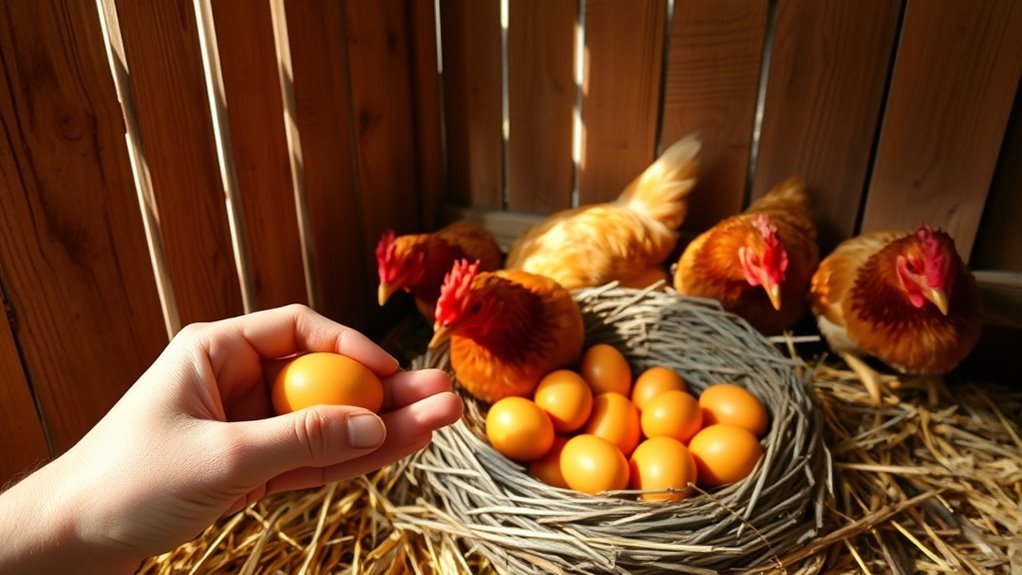
How Many Eggs Do Buff Orpingtons Lay and How to Count Them
Buff Orpingtons are known for their consistent egg production, typically laying about four to five large, light brown eggs per week. This means you can expect roughly 160 to 180 eggs from each hen annually.
Understanding how many eggs Buff Orpingtons lay can help you manage your flock more effectively.
Start counting eggs daily to monitor productivity and notice any seasonal fluctuations. This daily habit also allows you to detect potential health issues early on.
Consistent egg counting is essential for optimizing your hens’ care and maintaining a steady egg supply.
If you’re interested in improving your hens’ laying habits, there’s more to learn about handling challenges like molting or broodiness. Exploring these factors can help you support your flock through various stages and maximize egg production.
How Many Eggs Do Buff Orpington Hens Lay Weekly and Annually?
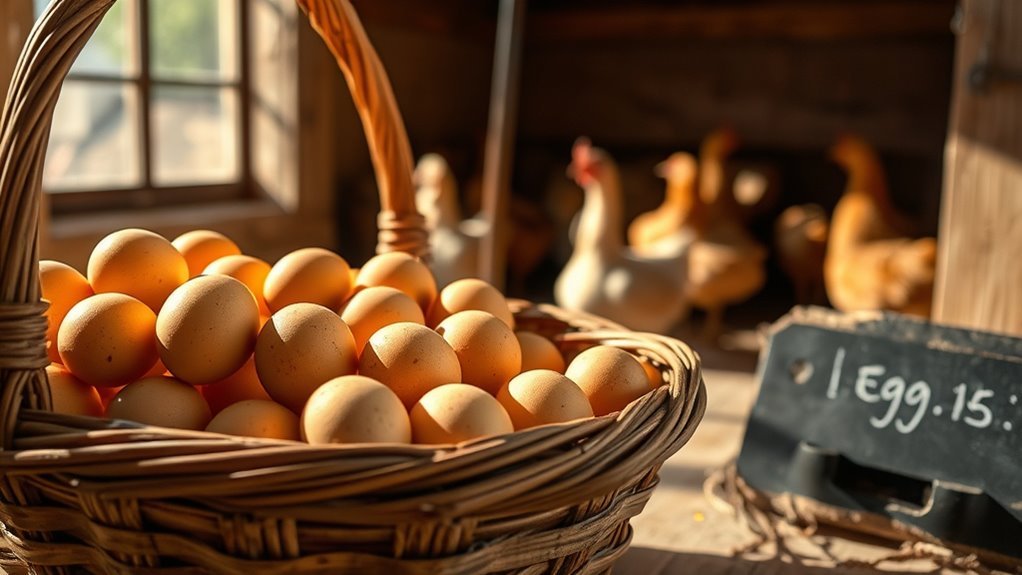
Although egg production can vary with factors like age and environment, Buff Orpington hens typically lay about 4 to 5 eggs each week. This means you can expect around 160 to 180 buff eggs annually from a healthy hen. Buff Orpington hens are known for their consistent egg production, making them a reliable choice if you want a steady supply.
Keep in mind that seasonal changes, like molting or colder months, might temporarily reduce how often they lay. By understanding these patterns, you can better manage your flock and anticipate egg availability throughout the year. Overall, Buff Orpington hens offer a dependable and generous egg production, making them a favorite among backyard chicken keepers.
When Do Buff Orpingtons Start Laying Eggs, and How Does Age Affect Production?
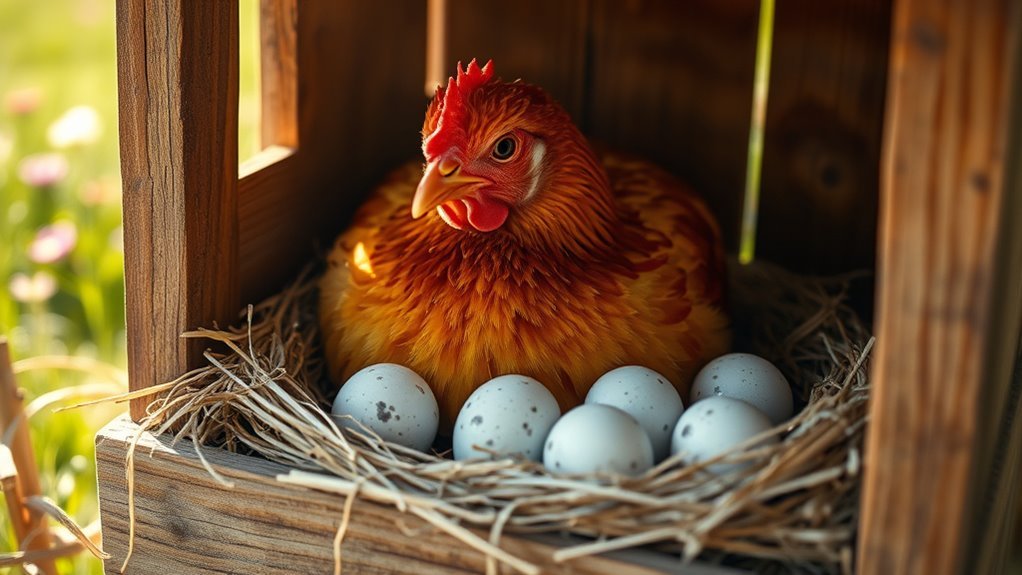
You can expect Buff Orpingtons to start laying eggs between 20 and 26 weeks of age, with production peaking around 26 to 30 weeks. As they reach this peak, their egg output increases steadily.
Keep in mind that after about two years, their laying rate will gradually decline.
Onset Of Laying
When Buff Orpingtons reach about 20 to 22 weeks of age, they usually start laying eggs. You’ll notice your buff hens begin with one egg every other day, which is normal for this early stage. Their production gradually picks up over several weeks as they mature.
How soon they start laying can vary depending on factors like diet, health, and even the season. Once they begin, their egg-laying frequency increases until they hit peak production around 26 weeks. Keep in mind, as your hens age beyond their first year, their egg output will slowly decline.
However, they can keep laying for several years if cared for properly. So, understanding when your buff Orpingtons start laying eggs helps you manage expectations and optimize their care.
Peak Production Age
As Buff Orpingtons approach 26 weeks of age, their egg production ramps up considerably, reaching a peak between 26 and 30 weeks. This peak egg production period marks the time when your hens lay the most eggs, maximizing your egg count. Typically, they start laying between 20 and 26 weeks, but it’s during this peak window that you’ll notice the highest output.
To optimize egg production during their prime laying age:
- Provide balanced nutrition tailored for laying hens
- Maintain a comfortable, stress-free environment
- Ensure consistent lighting to encourage laying cycles
- Monitor health regularly to prevent disruptions
Age-Related Egg Decline
Following their peak production phase, Buff Orpingtons typically begin laying eggs around six months old, giving you a solid start to your flock’s productivity. You’ll notice Buff Orpington hens produce the most eggs during their first year, often 4-5 eggs weekly. However, age-related egg decline naturally sets in as they grow older.
After 2-3 years, you’ll see their egg production drop to about 2-3 eggs per week. This decline includes longer breaks between eggs or complete pauses during molting or broody phases. While their output slows, many Buff Orpington hens still lay moderate amounts into their third or fourth year.
Understanding this age-related egg decline helps you manage your flock’s expectations and plan accordingly.
What Size and Color Eggs Do Buff Orpingtons Lay?
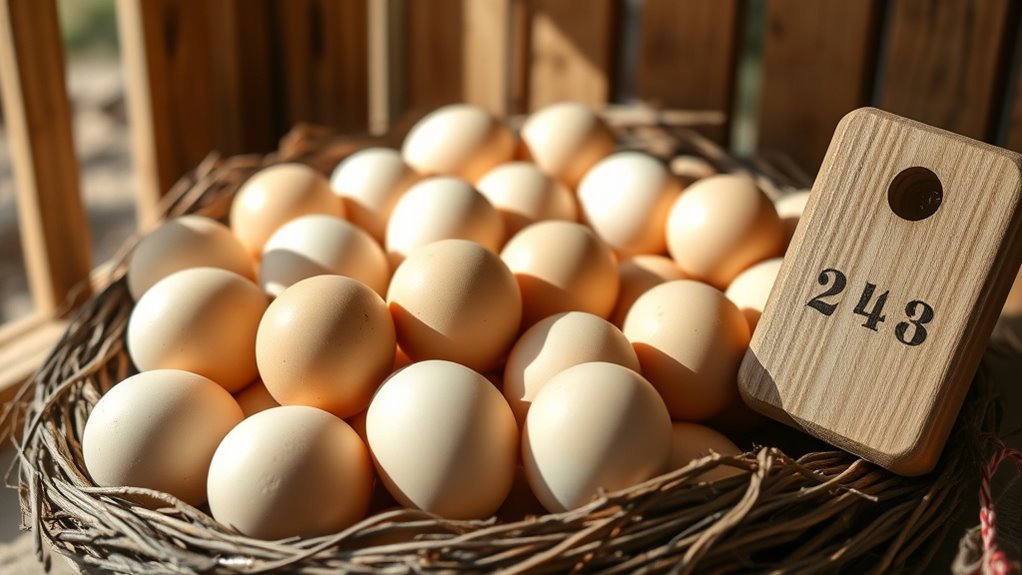
If you’re curious about the eggs Buff Orpingtons lay, you’ll find they produce large, light brown eggs that almost match their creamy plumage. Buff Orpington eggs are prized for their consistent egg size and warm color. You can expect:
- Egg size around 2.5 inches in diameter
- Light brown eggs with a creamy, pale hue
- Each egg weighs about 2 ounces
- A typical hen lays 4-5 eggs weekly at peak production
These light brown eggs are not only visually appealing but also reliable in size, making them perfect if you value uniformity. Whether you’re collecting eggs or simply admiring them, the Buff Orpington’s egg size and color stand out as a signature trait of this breed.
What Factors Affect Buff Orpington Egg Production?
While Buff Orpington hens are known for steady egg production, several key factors can influence how many eggs you’ll get each week. Hen age plays a major role—your hens usually peak around 26 weeks old, then their output gradually declines after two years.
Environmental factors like temperature, lighting, and coop conditions also impact egg production; consistent warmth and proper light encourage laying. Nutrition matters too—you’ll want to provide a balanced diet rich in protein and calcium to maintain steady eggs.
Stress from overcrowding, predators, or sudden flock changes can lower production, so keeping a calm, safe environment helps. By managing these factors well, you can maximize your Buff Orpington hens’ egg-laying potential throughout their prime years.
How Molting and Broodiness Affect Egg Laying
Managing factors like age, environment, and nutrition helps keep your Buff Orpingtons laying consistently, but natural behaviors like molting and broodiness will still affect egg production. When molting, hens divert energy to shedding and regrowing feathers, causing a temporary drop or halt in egg production.
Similarly, broody hens focus on incubating eggs, often stopping laying altogether or producing very few eggs. Understanding these impacts helps you anticipate changes in your flock’s output.
- Molting causes a pause in egg laying that lasts several weeks
- Broody hens sit on eggs, suppressing their laying cycle
- Egg production usually resumes once molting or broodiness ends
- Initial egg output after these phases is often lower than before
Recognizing these patterns lets you manage expectations and care effectively during these stages.
How to Track and Count Eggs Accurately
Tracking and counting eggs accurately lets you monitor your Buff Orpingtons’ laying patterns and overall flock health. Use designated nesting boxes to collect eggs daily without disturbing hens. Promptly removing eggs helps maintain their laying routine and prevents broodiness.
Keep detailed record keeping by noting each hen’s egg production, allowing you to spot individual productivity and trends over time. Maintain a log or chart to track weekly or monthly totals, making changes easy to identify.
| Task | Benefit |
|---|---|
| Use nesting boxes | Easy egg collection |
| Daily egg count | Accurate production data |
| Record keeping | Track trends & health |
Common Egg-Counting Mistakes and How to Avoid Them
Accurate egg counting requires more than just a daily tally. To avoid common egg-counting mistakes, you need to check more frequently and pay attention to details that can skew your records.
Here are key areas to focus on for accurate tallies:
- Don’t assume hens lay only in the morning; eggs can appear any time during the day.
- Open all nesting boxes regularly to find hidden or tucked-away eggs.
- Watch for broken or missed eggs that might be quickly removed, affecting your count.
- If you want precise data, track eggs by individual hens instead of lumping the flock together.
Tips to Encourage Consistent Egg Laying
Although Buff Orpingtons are known for their reliable laying, you can boost their consistency by providing a balanced diet rich in calcium and protein, maintaining a calm environment, and collecting eggs daily to prevent broodiness.
To encourage consistent egg laying in your back-yard flock, keep their coop well-lit and free from sudden disturbances, especially during shorter winter days. Minimizing stress helps maintain hen health, which directly impacts egg production.
Collecting eggs promptly not only prevents broodiness but also reinforces a steady laying routine. Monitor your hens regularly for signs of illness or stress, as healthy hens lay more consistently.
Using Egg Production Data to Plan Your Flock’s Supply and Care
When you count eggs daily, you gain valuable insights into each hen’s productivity and overall flock health. Tracking egg production helps you plan your flock’s care and manage your weekly eggs supply effectively. Use this data to improve flock management by noticing trends and addressing issues promptly.
For example:
- Monitor individual hens to spot laying drops or health concerns early
- Plan meals and share eggs based on consistent weekly eggs counts
- Adjust care routines seasonally to maintain steady egg production
- Prevent broody behavior through regular egg collection
Frequently Asked Questions
How Many Eggs a Day Does a Buff Orpington Lay?
You can expect a Buff Orpington to lay about half an egg daily, meaning roughly 3 to 4 eggs weekly.
Keep track by collecting eggs each morning and noting how many your hens produce regularly.
What Is the 90/10 Rule for Chicken?
Imagine a handful of hens laying most eggs—that’s the 90/10 rule: 90% of your eggs come from just 10% of your flock.
You’ll want to spot those star layers to boost your flock’s productivity.
What Determines How Many Eggs a Chicken Lays?
Genetics mainly determine how many eggs your chicken lays, but age, health, nutrition, light exposure, and environment also play big roles.
You’ll notice younger, well-cared-for hens laying more eggs under ideal conditions.
How Big Should Nesting Boxes Be for Buff Orpington Chickens?
Don’t put all your eggs in one basket—make nesting boxes for your Buff Orpingtons around 12 by 12 inches.
This cozy size gives them plenty of room to lay comfortably and keeps stress at bay.
Conclusion
Think of your Buff Orpingtons as a garden: each egg is a bloom that needs care, timing, and patience to flourish. By understanding their laying patterns, age, and needs, you tend this garden wisely, avoiding wilt and encouraging steady growth.
Counting eggs isn’t just a task—it’s nurturing the cycle of life and reward. Keep your garden nurtured, and you’ll harvest the golden fruits of their labor, season after season.
To make the most of your Buff Orpingtons’ laying potential, regularly monitor how many eggs they lay. This way, you can ensure a steady supply and maintain the health of your flock. Knowing how many eggs Buff Orpingtons lay helps you plan and enjoy the full benefits of these wonderful chickens.