How Many Eggs Do Ducks Lay Per Year?
You can expect your duck to lay between 150 and 300 eggs each year, depending on its breed, age, and care. Understanding how many eggs ducks lay per year is essential for managing your flock effectively.
Breeds like Khaki Campbells can lay up to 325 eggs annually, while others may produce fewer.
Egg production peaks in the first two years and slows after that. Seasonal changes and nutrition also play big roles in how many eggs you get.
Keep going to discover how to boost your ducks’ laying potential all year long.
How Many Eggs Do Ducks Lay Each Year?
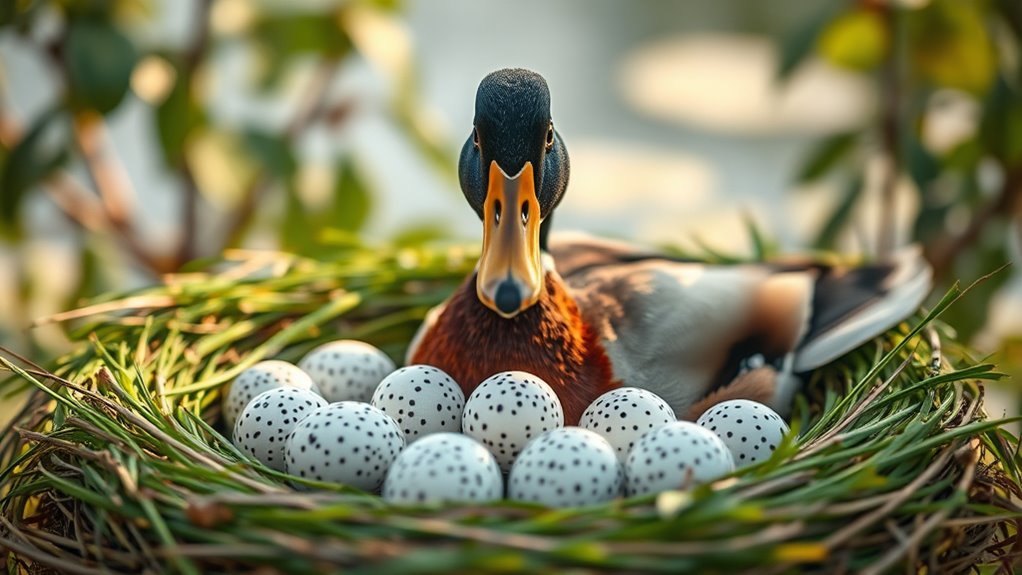
Although the number of eggs ducks lay each year varies by breed, most produce between 150 and 300 eggs annually. If you want to maximize egg production, you’ll want to choose the right laying breeds. For example, Khaki Campbells can lay up to 325 duck eggs per year, making them top performers among duck breeds.
Ducks typically start laying eggs around 6 to 7 months old, and their egg production peaks during the first two years. While some ducks continue laying for up to five years, the number of eggs usually declines as they age. Understanding how ducks lay eggs and the typical output of different duck breeds helps you plan for consistent egg production throughout the year.
Key Factors That Affect Duck Egg Laying Annually

Knowing how many eggs ducks lay each year gives you a baseline, but several factors can change those numbers considerably. The breed plays a huge role—Khaki Campbells can lay up to 325 eggs annually, while Pekins average around 200. Age also matters; most ducks start laying at about six months, with productivity peaking before gradually declining.
Light exposure profoundly impacts egg production, as longer daylight hours during spring and summer boost laying, while shorter days slow it down. Nutrition is vital, too; a balanced diet ensures ducks have the energy and nutrients needed for consistent egg laying. In the end, the season affects output—ducks usually lay more eggs in warmer months and less during molting or colder periods.
Managing these factors helps you maximize your ducks’ yearly egg production.
How Duck Egg Laying Changes Over a Duck’s Life

As ducks mature, their egg-laying patterns shift noticeably, with most reaching peak production between six months and two years old. During these prime laying years, you can expect your ducks to lay between 150 and 300 annual eggs, depending on breed and care.
However, as the age of ducks increases beyond three or four years, you’ll notice an egg production decline. Some ducks may reduce their laying frequency substantially or stop altogether.
Understanding how duck egg laying changes over a duck’s life helps you manage expectations and care routines effectively. Younger ducks consistently produce more eggs, so monitoring their age is key to maintaining steady annual eggs.
Adjust your management practices to support ducks as they transition through these life stages.
Which Duck Breeds Lay the Most Eggs Each Year?
If you’re looking for ducks that lay the most eggs each year, Khaki Campbells top the list with about 325 eggs annually. Welsh Harlequin and Indian Runner ducks follow closely, each producing around 300 eggs.
Comparing these breeds helps you choose the best layers for your needs.
Top Egg-Laying Breeds
When you want ducks that lay the most eggs each year, certain breeds stand out for their impressive productivity. The Khaki Campbell tops the list, known for exceptional egg production with about 325 large eggs annually.
If you’re looking at other top layers, Welsh Harlequin and Indian Runner ducks each lay close to 300 eggs per year, making them excellent choices among duck breeds. The Silver Appleyard also ranks high, producing around 270 eggs annually.
These breeds consistently deliver high annual eggs under ideal conditions, so if maximizing egg output is your goal, focusing on these duck breeds will serve you well. Their reliable laying habits make them favorites for anyone interested in steady egg production throughout the year.
Egg Production Comparisons
How do different duck breeds compare in egg production throughout the year? If you’re interested in maximizing egg production, Khaki Campbell ducks stand out, laying up to 325 large eggs annually. Welsh Harlequin and Indian Runner ducks both offer a strong annual egg yield of about 300 large eggs, with Indian Runners starting to lay earlier than five months.
Magpie ducks, despite their lighter build, also keep up well, producing between 250 and 300 eggs per year and beginning to lay at 25-30 weeks. Silver Appleyard ducks contribute around 270 large eggs yearly, with some starting as early as nine weeks old.
How Big Are Duck Eggs Compared to Chicken Eggs?
You’ll notice duck eggs are generally bigger than chicken eggs, often about one and a half times the size. Their thicker shells and larger yolks give them a richer flavor you might appreciate.
Let’s explore how their size and taste compare to what you’re used to with chicken eggs.
Duck Egg Size
Wondering just how big duck eggs are compared to chicken eggs? Duck eggs generally weigh around 2.5 ounces (75 grams), making them about 50% larger than standard chicken eggs. Their egg size can vary, ranging from similar to small chicken eggs up to twice the size of large chicken eggs.
Larger duck breeds typically lay bigger eggs, often exceeding 80 grams within their breed. These larger eggs aren’t just bigger—they also have thicker shells and membranes, which adds to their durability. When you consider egg production, duck eggs provide more edible content per egg, making them a substantial choice if you’re comparing yields.
Yolk And Flavor
Why does the size of a duck egg matter when it comes to flavor? Duck eggs are larger than chicken eggs, with a higher yolk proportion—around 56% of the total egg. This larger yolk means duck eggs have a richer, more intense flavor compared to chicken eggs.
The increased yolk content and fat contribute to this distinct taste, making duck eggs popular for baking and gourmet dishes. Here’s a clear comparison of duck eggs and chicken eggs by size, yolk proportion, and flavor intensity:
| Egg Type | Average Weight | Yolk Proportion | Flavor Intensity |
|---|---|---|---|
| Small Chicken | ~1.1 oz (31g) | ~30% | Mild |
| Large Chicken | ~2 oz (57g) | ~33% | Moderate |
| Duck | ~2.5 oz (75g) | ~56% | Rich, profound |
You’ll notice duck eggs’ larger yolk significantly boosts flavor.
How Do Seasonal Changes Affect Duck Egg Laying?
Although duck egg production varies throughout the year, you’ll notice they lay most eggs during spring and early summer when daylight hours increase. Seasonal changes greatly impact egg production; as days shorten in fall and winter, many ducks naturally reduce or stop laying eggs.
Molting, which usually happens in late summer or early fall, also temporarily halts their laying season. Understanding these patterns helps you anticipate when your ducks will be most productive. While some breeds continue laying with supplemental lighting, the natural cycle strongly influences their output.
Recognizing how seasonal shifts affect your ducks allows you to better manage their care and expectations during off-peak months without forcing unnatural production.
Tips to Maximize Your Ducks’ Egg Production Year-Round
To keep your ducks laying eggs consistently throughout the year, you need to focus on their diet, lighting, and environment. Providing a balanced diet rich in calcium and protein supports healthy laying. Make sure they get 14-16 hours of light daily to encourage year-round laying.
Minimize stress by maintaining a clean, predator-proof space and collect eggs regularly to prevent broody behavior. Different breeds of ducks respond uniquely, so select those known for high eggs per year when raising ducks.
| Factor | Tip |
|---|---|
| Diet | High calcium & protein |
| Lighting | 14-16 hours of natural/artificial |
| Environment | Clean, predator-proof, low stress |
| Egg Collection | Collect often to avoid broodiness |
These steps help maximize your ducks’ egg production efficiently.
Frequently Asked Questions
How Many Times Can a Duck Lay Eggs in a Year?
You can expect a duck to lay eggs multiple times a year, usually in several clutches with rest periods between. Typically, they lay eggs daily during peak seasons, resulting in numerous laying cycles annually.
These cycles can vary depending on the breed, environment, and diet of the duck. Generally, a healthy duck may produce eggs for about 5 to 6 months in a year.
During this period, they often lay eggs almost every day before taking a break to molt and rest. This pattern allows ducks to replenish their energy and prepare for the next clutch.
Is It Easier to Raise Ducks or Chickens?
You’ll find ducks easier to raise since they’re hardier, quieter, and need less feeding care.
However, managing their water and wetter housing can be tougher compared to chickens, who adapt better to small spaces.
What Duck Lays 300 Eggs a Year?
You might think ducks can’t lay that many eggs, but Welsh Harlequin and Indian Runner ducks each lay about 300 eggs a year.
With proper care, you’ll see impressive, consistent egg production from these breeds.
Do Ducks Sleep in the Same Place Every Night?
Yes, ducks usually sleep in the same place every night. You’ll notice they prefer a consistent roost or nesting spot where they feel safe and comfortable.
This is especially true if the spot offers protection from predators and harsh weather.
Conclusion
You might expect ducks to lay eggs steadily all year, but their production actually ebbs and flows with seasons, age, and breed. While some ducks can give you over 250 eggs annually, others lay far fewer, especially as they age or face changing conditions.
By understanding these contrasts and tweaking their environment, you can turn unpredictable layers into reliable producers. So, don’t just watch—they’re capable of much more than you might think when it comes to how many eggs ducks lay per year!