
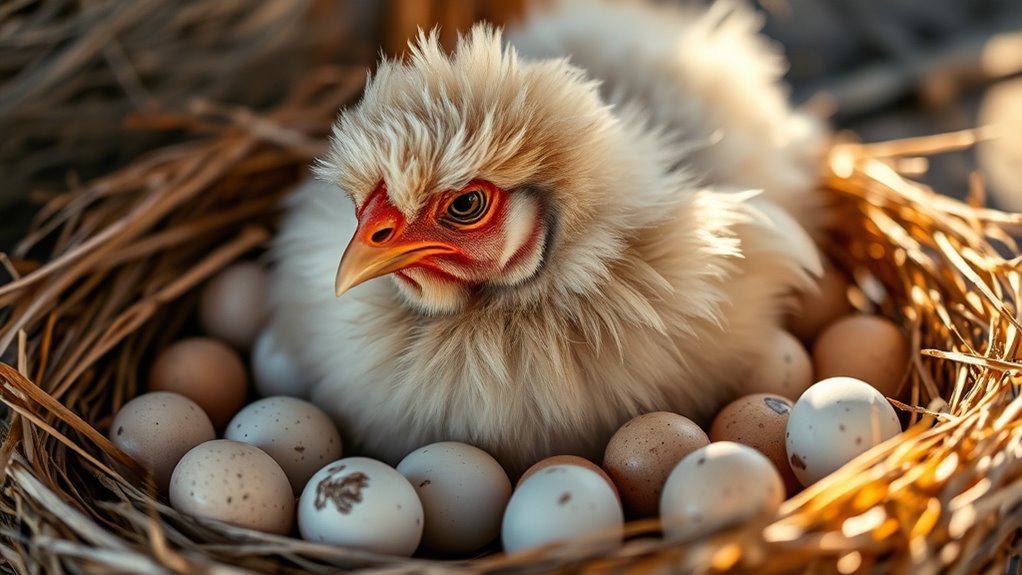
How Many Eggs Do Silkie Chickens Lay in a Year
You can expect your Silkie chickens to lay about 100 to 120 small eggs per year, averaging 2 to 3 eggs weekly. Silkie chickens are known for their unique appearance and gentle nature, but when it comes to egg production, they lay fewer eggs compared to other breeds.
They usually start laying between 7 and 9 months old, but may take up to a year.
Keep in mind, broody behavior and seasonal changes can affect their output. While Silkies won’t match high-producing breeds, proper care can help maximize their egg-laying potential.
If you want to optimize their productivity, there’s more to explore.
How Many Eggs Do Silkie Chickens Lay Annually?
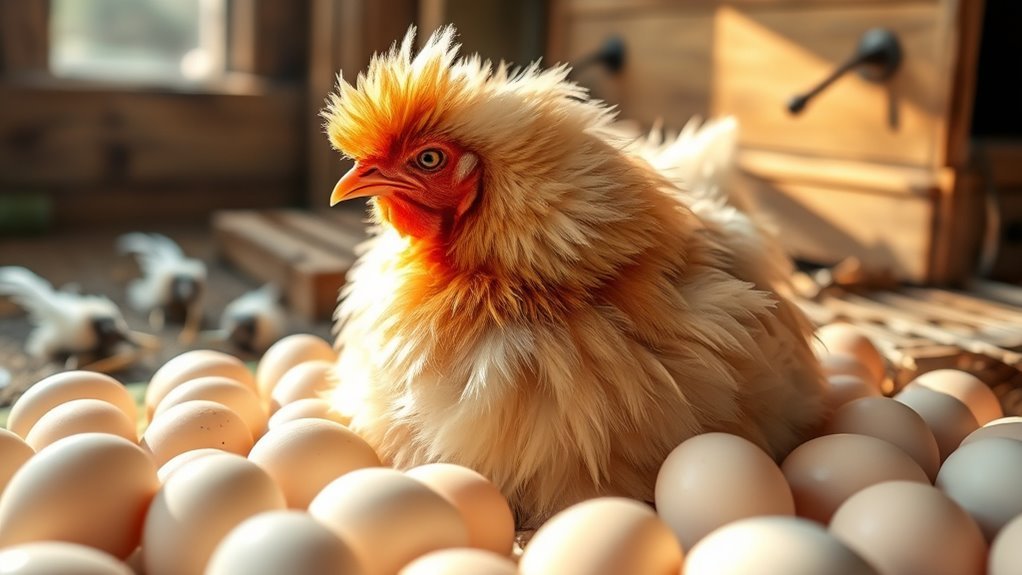
How many eggs can you expect from a Silkie chicken each year? On average, a Silkie hen lays about 100 to 120 small eggs annually. Their egg production typically ranges from 2 to 3 eggs per week.
However, keep in mind that Silkies are known for being broody hens, which means they often stop laying eggs when they want to hatch eggs. This broody behavior can lower the overall egg count you get each year.
While their eggs are smaller compared to other breeds, Silkies still provide a steady supply if you’re patient. If you want consistent laying, consider how frequently your broody hens go into brooding mode, as that directly impacts the annual egg production of your Silkie flock.
When Do Silkie Hens Start Laying Eggs?
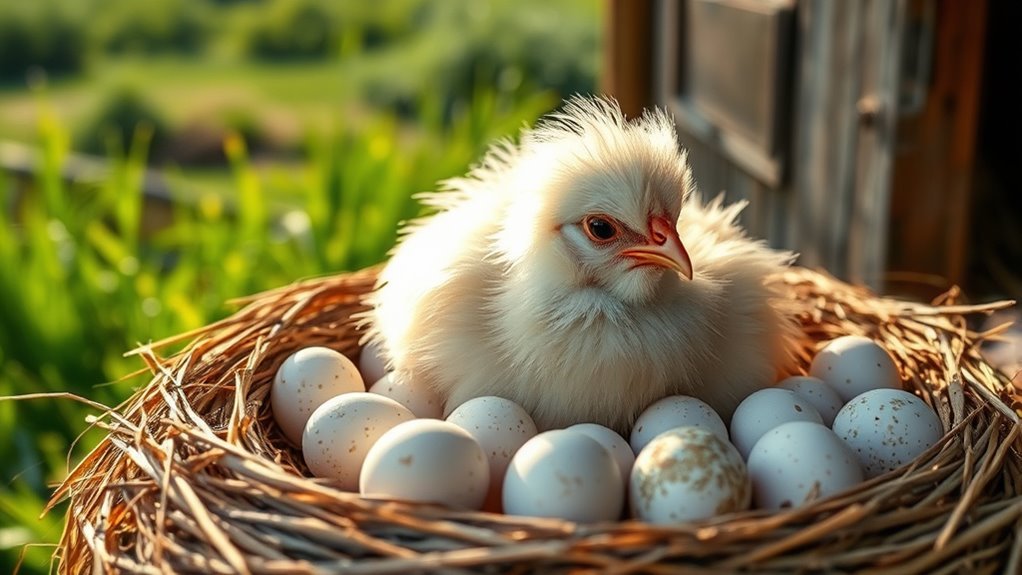
You’ll typically see Silkie hens start laying eggs between 7 and 9 months old, but some might take over a year depending on their health and environment.
Keep in mind that Silkies often begin later than other breeds, so don’t be alarmed if your hen isn’t an early layer. Understanding these factors helps you set the right expectations for when your Silkie will start producing eggs.
Typical Age Range
When do Silkie hens start laying eggs? Typically, Silkie hens begin their egg production between 7 and 9 months of age. However, some may take longer—sometimes more than a year—to lay their first egg, especially during their first season.
Initially, egg yield can be inconsistent, with regular laying often kicking in during their second year or after their second or third molt. Peak laying usually happens within the first two years, where yearly eggs are at their highest. After the third year, you’ll likely notice a decline in egg production as the hens age.
Understanding this typical laying age and egg production pattern helps you better anticipate the egg yield from your Silkies over time.
Factors Influencing Start
Although Silkie hens generally start laying eggs between 7 to 9 months, several factors can influence this timing. Your hen’s laying age can vary due to environmental factors like lighting and seasonal changes; shorter daylight hours or cold weather often delay egg production.
Proper nutrition plays a vital role, as a balanced diet supports a healthy egg laying cycle. If you provide a warm, stress-free environment, your Silkies are more likely to begin egg production on time.
Be aware that broody behavior and incubation instincts can also impact when hens start laying, sometimes causing delays. Hatchlings born late in the season may not lay until over a year old.
Understanding these factors helps you support your Silkie hens for ideal egg laying results.
Early Versus Late Layers
Since Silkie hens mature at different rates, you may notice some start laying eggs as early as 7 to 8 months, while others wait until 10 to 12 months or even longer. Understanding early versus late layers helps manage your flock’s egg production and annual egg count.
- Early layers begin around 7-8 months, contributing sooner to your egg supply.
- Late layers start between 10-12 months, often due to breed maturity or environmental factors.
- Silkie hens typically have later laying ages than many chicken breeds, affecting total egg output.
- Broody behavior and unique nesting habits also influence when Silkies begin laying and the quality of egg shells.
Recognizing these differences guarantees you set realistic expectations for your Silkie hens’ egg production.
What Factors Affect Silkie Egg Production?
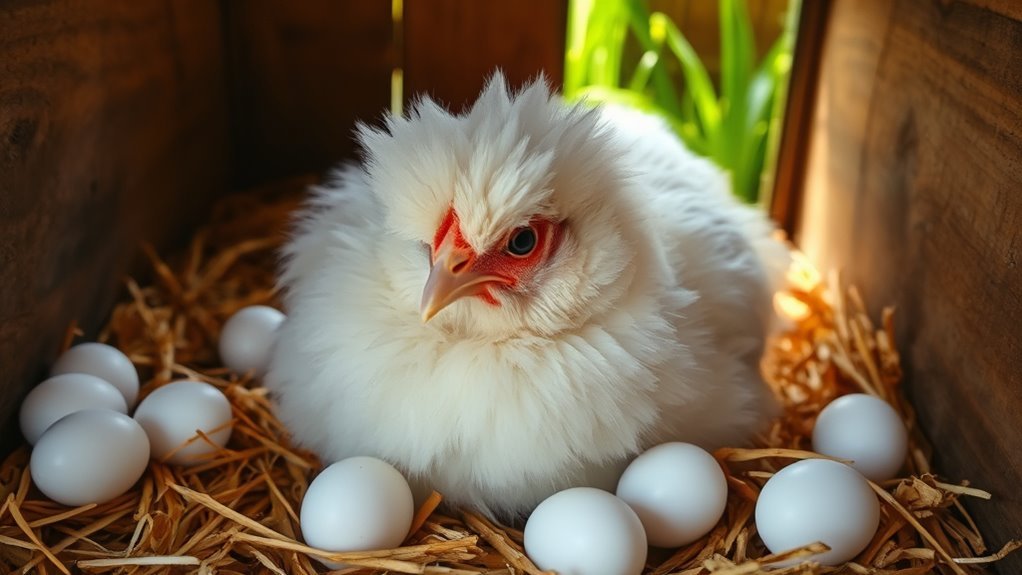
Because several factors influence Silkie egg production, understanding them can help you optimize your flock’s laying potential. Age and health play key roles; younger, healthy hens tend to lay more consistently. Nutrition is critical—ensure your Silkies get a balanced diet rich in calcium intake to support eggshell quality and overall production.
Light exposure and seasonal changes also affect laying; longer daylight hours encourage more eggs. Broodiness is a common behavior that temporarily pauses egg laying, so managing it carefully is important. Stress from predators or poor coop conditions can reduce egg output, so maintain a safe, comfortable environment to keep your hens productive.
How Brooding Affects Silkie Egg Laying
You’ll notice that when your Silkie hen goes broody, she often stops laying eggs for several weeks. This frequent broody behavior can markedly reduce her overall egg production each year.
To keep eggs coming consistently, you might need to manage her brooding by gently removing her from the nest.
Broodiness Impact On Laying
Although Silkie hens are known for their charming appearance, their frequent broodiness can seriously disrupt your egg collection. When broody, Silkie hens often refuse to lay eggs and focus on sitting in the nesting box to hatch eggs, causing a sharp egg decline.
Here’s how broodiness impacts your flock’s egg production:
- Broody behavior stops Silkie hens from laying eggs as they prioritize incubation over egg laying.
- The duration of broody periods varies, sometimes lasting weeks or even months.
- During these times, egg production often halts completely, affecting your overall yield.
- You can use distraction methods, like removing hens from the nesting box, to break the broody cycle and restore egg laying.
Understanding this helps you manage your Silkies’ egg production better.
Frequency Of Broody Periods
Silkies frequently enter broody periods, which can substantially disrupt your egg production. Silkie hens often become broody multiple times a year, sitting on a clutch for two to three weeks or longer. During these broody cycles, their laying frequency drops sharply or stops altogether, cutting into your annual eggs.
Because silkie chickens spend significant time broody, their total egg laying is less consistent compared to other breeds. Each broody period means fewer eggs laid, as hens focus on incubating rather than producing. While your Silkie hens will usually resume egg laying after broodiness ends, frequent broody periods reduce overall egg production.
Understanding how these cycles affect your flock helps set realistic expectations for how many eggs your Silkies will lay yearly.
Managing Broody Silkie Hens
How can you manage broody Silkie hens to minimize disruptions in egg production? Brooding behavior often halts egg-laying, impacting your Silkie chicken’s annual egg count. To keep the egg-laying cycle steady, try these nest management tips:
- Limit access to nesting boxes during broodiness to discourage prolonged sitting.
- Remove hatch eggs promptly to prevent triggering broody behavior.
- Distract broody Silkie hens with treats or walks outside their nest to break broodiness.
- Ensure the coop environment is comfortable but not too cozy, reducing the hen’s desire to stay brooding.
Silkie Egg Size and Color
When you collect Silkie eggs, you’ll notice they’re smaller than standard eggs, typically weighing between 35 to 70 grams. These tiny eggs fall into the extra-small to small egg size category, making them perfect for quick meals or children’s breakfasts.
Silkie eggs usually have off-white eggshells, though the exact egg color can vary slightly depending on the hen. Inside, the yolk color is a bright yellow, reflecting the hens’ free-range diet and richer flavor.
Despite their small egg weight, Silkie eggs boast impressive egg nutrition, packed with vitamins A, K, D, E, B-vitamins, and minerals like calcium and zinc. Their egg shell quality is good, protecting the nutrient-dense yolk and white.
Care Tips to Boost Silkie Egg Laying
The unique qualities of Silkie eggs come from more than just genetics; the care you provide plays a big role in how often your hens lay. To boost egg production and manage broody behavior, focus on these key tips:
- Feed your Silkies a balanced commercial layer feed to supply essential nutrients that support consistent egg laying.
- Always provide fresh water and oyster grit to promote strong eggshells and overall health.
- Minimize broody behavior by keeping nesting boxes clean and collecting eggs regularly, preventing hens from becoming broody hens.
- Maintain stable environmental conditions with consistent light and temperature to support steady egg laying frequency.
Nesting Boxes for Silkie Egg Laying
Although Silkies are gentle birds, providing enough well-maintained nesting boxes is essential to reduce competition and stress among your hens. You should offer one nesting box for every 3 to 4 Silkie hens to minimize egg competition.
Make sure the boxes are clean, well-ventilated, and filled with soft bedding like straw or wood shavings to help your hens feel comfortable. Place these nesting boxes in a quiet sheltered area of the coop, encouraging your Silkies to lay eggs calmly. Ensure each box has enough space for your hens to comfortably turn while laying eggs.
Regular cleaning and revitalizing of the bedding are critical to maintain hygiene, prevent disease, and discourage egg-eating. By setting up proper nesting boxes, you’ll support your Silkies’ natural egg laying behavior effectively.
Collecting and Storing Silkie Eggs
Since Silkie hens lay around 100 to 120 eggs annually, collecting them daily helps keep eggs clean and safe from predators. When collecting Silkie eggs, follow these steps to maintain egg freshness and prepare for incubation or consumption:
- Collect eggs at least once daily to prevent dirt and damage, ensuring gentle handling eggs to avoid cracks.
- Use clean containers with good ventilation for storing eggs, and mark eggs with the collection date.
- Store eggs in a cool environment, ideally between 45-55°F, to maintain egg storage temperature and freshness.
- Avoid stacking eggs too tightly to prevent breakage and facilitate easy inspection during egg collection frequency.
How Silkie Egg Production Compares to Other Breeds
If you’re comparing Silkie chickens to other breeds, you’ll notice they lay fewer eggs annually—about 100 to 120 small eggs—while high-production breeds like Leghorns can lay nearly twice as many. Silkie chickens are slow layers, producing roughly 2 to 3 eggs weekly, which lowers their overall egg yield per year compared to other breeds.
Their laying frequency also fluctuates due to broody behavior, which can temporarily halt egg production. Unlike commercial layers, Silkies take longer to start laying and don’t produce eggs daily.
Despite their modest egg output, these fluffy chickens are prized more for their unique appearance and strong brooding instincts than for high egg production. So, if you want frequent eggs, Silkies might not be the top choice, but they offer charm and personality that other breeds often lack.
Frequently Asked Questions
How Often Do Silkies Lay Eggs?
Silkies lay eggs about 2 to 3 times a week, but you’ll notice breaks, especially if they go broody.
Their laying isn’t as consistent as standard breeds, so expect some pauses throughout the year.
What Chicken Lays 364 Eggs a Year?
If you want an egg-laying machine, the White Leghorn’s your champion, laying about 364 eggs a year.
They practically lay eggs like clockwork, so keep their diet and lighting just right to keep up the pace.
What Is the Rarest Color Silkie?
The rarest Silkie color you’ll find is Lavender Silkie, known for its soft lavender-gray feathers. It’s highly prized, alongside Cuckoo and Splash Silkies, so you’ll need careful breeding to keep those unique colors pure.
What Color Eggs to Silkies Lay?
Silkies lay small eggs that are usually white or off-white. Sometimes, you might notice a slight pink or beige tint, depending on their diet and individual hen.
Their yolks often show a bright yellow color.
Conclusion
While Silkie chickens might not break any egg-laying records, they sure bring charm and warmth to your flock. You won’t be overwhelmed with dozens of eggs, but their gentle nature and unique appearance make every egg special.
With the right care and patience, you’ll enjoy their delightful, modest contribution to your coop. So, embrace their leisurely pace—it’s part of their endearing personality that makes raising Silkies a truly rewarding experience.
Understanding how many eggs do Silkie chickens lay in a year helps set realistic expectations. Their modest egg production is balanced by the joy and character they add to your backyard flock.