
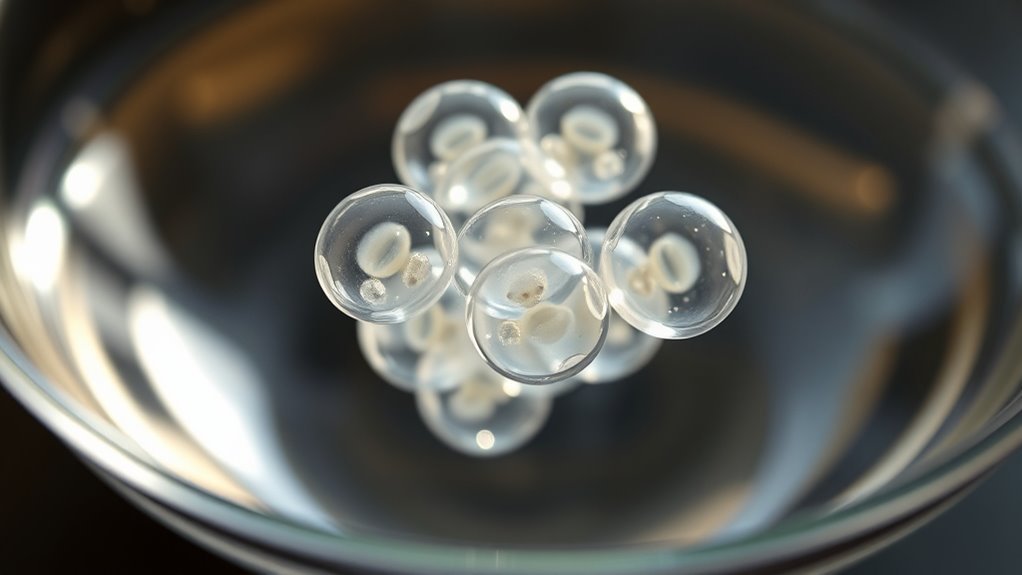
How Many Fertilized Eggs Make It to Day 5?
How Many Fertilized Eggs Make It to Day 5?
You can expect about 40 to 60 percent of your fertilized eggs to develop into blastocysts by Day 5.
However, this rate varies based on factors like age and egg quality.
Younger women with good ovarian reserve tend to have higher success rates.
Older age often means fewer embryos reach this stage.
Lab conditions and protocols also play a key role in embryo development.
Understanding these details can help you improve your chances and know what to expect next in your IVF journey.
Blastocyst: What It Is and Why It Matters in IVF
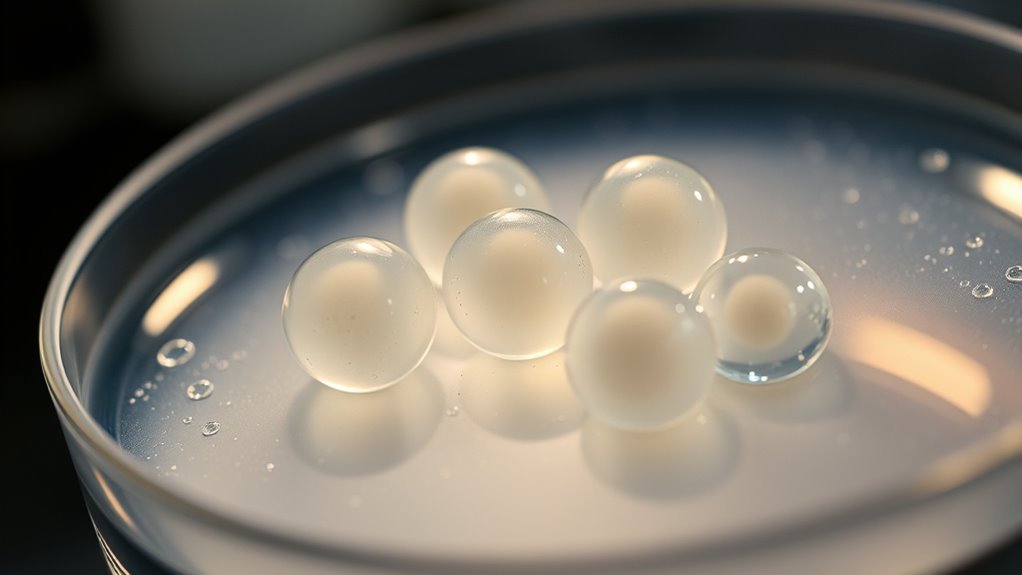
Although not every fertilized egg reaches this stage, by day 5, a healthy embryo develops into a blastocyst—a structure with a fluid-filled cavity and distinct cell groups. This stage marks a key point in embryo development, with the inner cell mass destined to become the fetus and the trophectoderm forming the placenta.
Reaching the blastocyst stage signals that the embryo has undergone important cell division and differentiation, indicating higher embryo viability. In an IVF cycle, this is essential because selecting embryos at this stage can improve the chances of successful embryo transfer and implantation.
Understanding blastocyst formation helps you appreciate why day 5 embryos are preferred for transfer and why not all fertilized eggs progress this far.
How Many Fertilized Eggs Develop Into Day 5 Blastocysts?
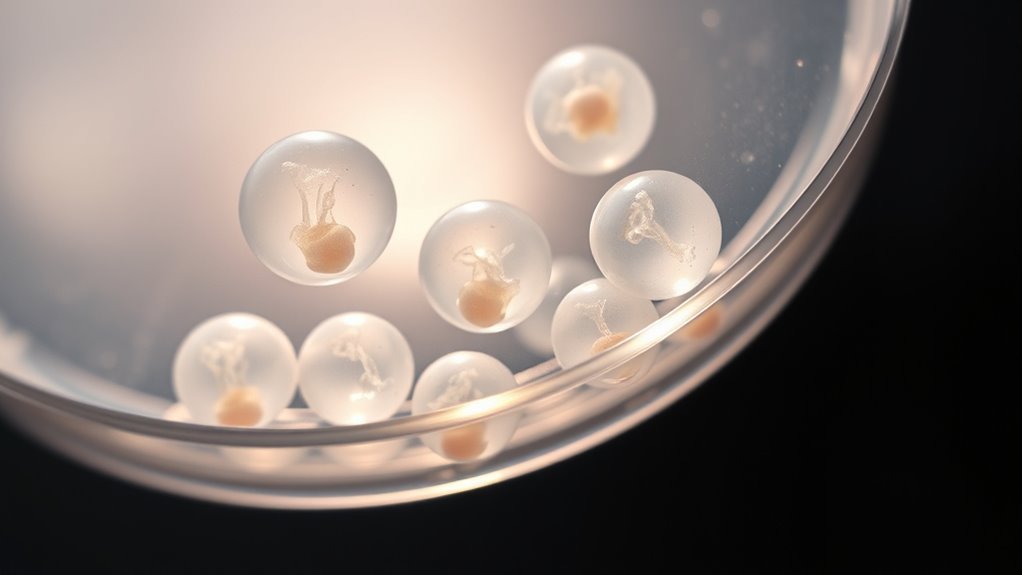
You can expect about 40-60% of fertilized eggs to develop into Day 5 blastocysts in a typical IVF cycle. Keep in mind that factors like your age, egg quality, and lab conditions play a big role in how many embryos survive.
Understanding these influences helps you set realistic expectations for blastocyst development.
Typical Blastocyst Development Rates
When you fertilize eggs during an IVF cycle, about 40 to 60 percent typically develop into blastocysts by day 5. This means that if you start with 10 fertilized eggs, roughly 4 to 6 will reach the blastocyst stage during embryo culture. The percentage varies depending on the development rate influenced by egg quality and the IVF process itself.
Younger women and advanced lab techniques can improve blastocyst development rates, increasing the odds that more fertilized eggs progress successfully. Overall, about 20 to 25 percent of all fertilized eggs will mature into healthy Day 5 blastocysts. Understanding these typical development rates helps you set realistic expectations for your IVF cycle and appreciate how embryo culture conditions impact your chances of success.
Factors Affecting Embryo Survival
Since many factors influence embryo survival, not all fertilized eggs will develop into healthy Day 5 blastocysts. Embryo development to the blastocyst stage depends heavily on egg quality and culture conditions. Even under ideal lab environments, chromosomal abnormalities and embryo arrest can halt progress.
You should know that improving embryo survival involves careful monitoring and advanced techniques.
Key factors affecting fertilized eggs reaching Day 5 include:
- Egg quality, which impacts the embryo’s ability to grow properly
- Culture conditions that support or hinder embryo development
- Chromosomal abnormalities causing developmental arrest
- Embryo arrest due to genetic or environmental stresses
Age Impact On Blastocyst
Although many factors influence embryo development, maternal age plays a crucial role in determining how many fertilized eggs reach the Day 5 blastocyst stage. If you’re under 35, about 60-70% of fertilized eggs typically develop into Day 5 blastocysts, thanks to better egg quality and ovarian reserve.
However, the age impact becomes clear as you get older; for women over 38, only 30-40% of fertilized eggs progress to blastocyst formation. This decline results from reduced egg quality and lower fertilization rates, which hamper embryo development.
Why Some Embryos Don’t Make It to Blastocyst Stage
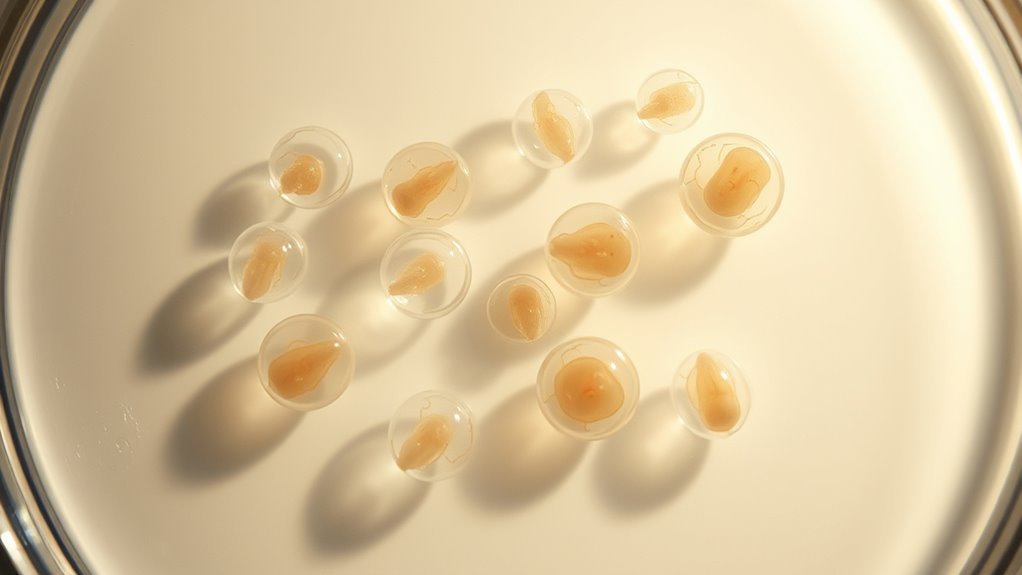
You’ll notice that not all embryos reach the blastocyst stage because some arrest early in development. Genetic abnormalities play a big role in this, causing many embryos to stop growing before Day 5.
Understanding these causes helps explain why only the healthiest embryos continue to develop.
Embryo Arrest Causes
When embryos stop developing before reaching the blastocyst stage, it’s often due to underlying issues that prevent their progress. Embryo arrest can happen for several reasons, affecting your chances of a successful blastocyst formation. Chromosomal abnormalities are a leading cause, disrupting normal embryo development and reducing fertilization rate.
Poor egg quality or sperm issues often contribute by providing inadequate genetic material. Additionally, cell division defects during early stages can halt growth. Even the best embryos can struggle if laboratory conditions aren’t *ideal*, as improper culture media or incubation can impair development.
Key causes of embryo arrest include:
- Chromosomal abnormalities causing developmental failure
- Poor egg quality affecting genetic integrity
- Cell division defects disrupting growth
- Subpar laboratory conditions impacting embryo development
Genetic Abnormalities Impact
Because genetic abnormalities disrupt normal cell division, many fertilized eggs never develop into blastocysts by day 5. Chromosomal abnormalities, especially aneuploidy, are a major cause of embryo failure during early embryo development. These genetic issues prevent embryos from dividing properly, halting progress before they reach the blastocyst stage.
You might notice that only about 30-50% of fertilized eggs make it this far due to these defects. Preimplantation genetic testing (PGT) helps identify embryos with such genetic abnormalities, giving insight into why some embryos don’t progress. Understanding embryo quality through PGT can improve selection, but if genetic abnormalities are high, fewer embryos will reach the blastocyst stage.
How Age and Egg Quality Affect Blastocyst Formation
Although age isn’t the only factor influencing blastocyst formation, it plays a crucial role by affecting egg quality. As you get older, egg quality declines, which markedly impacts the ability of fertilized eggs to reach the blastocyst stage by Day 5.
This age-related decline leads to an increase in chromosomal abnormalities, reducing embryo development potential and lowering IVF success rates. Younger women often see 60-70% of fertilized eggs develop into blastocysts, while this rate drops below 30% after age 40.
Key points to consider:
- Egg quality directly influences blastocyst formation success.
- Age-related chromosomal abnormalities hinder embryo development.
- Fertilized eggs from younger women have higher viability.
- High ovarian reserve correlates with increased blastocyst rates.
Understanding these factors helps you manage expectations during IVF.
How IVF Lab Conditions and Techniques Boost Blastocyst Rates
Even if egg quality and age play considerable roles, the conditions and techniques used in the IVF lab can dramatically boost your chances of reaching the blastocyst stage. Advanced incubator conditions with precise control of temperature, humidity, and gases optimize embryo culture, enhancing embryo development and increasing the blastocyst rate.
Time-lapse monitoring lets embryologists track development continuously, selecting embryos with the highest viability. Using high-quality culture media tailored for each stage further supports growth. Embryo vitrification preserves embryo viability during freezing, improving outcomes after thawing.
Additionally, preimplantation genetic testing helps identify chromosomally normal embryos, considerably raising the likelihood of successful progression to the blastocyst stage. Together, these lab innovations maximize your chances of healthy blastocyst formation and successful IVF outcomes.
Comparing Day 3 vs. Day 5 Blastocyst Transfers: Pros and Cons
Lab advancements have improved your chances of growing embryos to the blastocyst stage by Day 5, but deciding when to transfer those embryos remains a key choice. Transferring at Day 5 lets you select embryos with better development and higher implantation potential, boosting pregnancy success.
Day 3 transfers may be necessary if embryo numbers are low or immediate transfer is needed but carry a higher risk of arrest before blastocyst formation.
Consider these points when choosing between Day 3 and Day 5:
- Day 5 blastocysts offer improved embryo quality and higher implantation rates (50-60%).
- Day 3 transfers involve multiple embryos but lower pregnancy success per embryo.
- Day 3 may be preferred if embryo quantity is limited.
- Individual factors influence the suitable transfer day for your embryo development.
Tips to Improve Your Chances of Reaching the Blastocyst Stage
If you want to increase your chances of reaching the blastocyst stage, focusing on high-quality ovarian stimulation protocols and advanced embryo culture techniques can make a considerable difference. Improving egg quality and maximizing the number of fertilized eggs boosts your chances for successful blastocyst development.
Using optimized embryo culture media tailored for the stage of embryo development enhances the embryo survival rate to Day 5. Selecting eggs from younger women with good ovarian reserve typically yields higher success rates, around 60-70%.
Additionally, preimplantation genetic testing helps identify chromosomally normal embryos, further improving blastocyst formation. Maintaining strict lab conditions, such as controlled incubation and time-lapse monitoring, also supports embryo viability.
Frequently Asked Questions
How Many Fertilized Eggs Turn to Embryos?
You’ll find that about 70-80% of fertilized eggs turn into embryos under ideal conditions.
However, only 30-50% usually develop well enough to be considered for transfer or further testing.
Are Day 5 Embryos More Likely to Be Boys?
No, Day 5 embryos aren’t more likely to be boys. You’ll find gender doesn’t affect development speed considerably, so embryo quality and genetics matter more than whether it’s male or female.
Are Day 5 Embryos Good?
Day 5 embryos are like budding stars ready to shine—they’re good because they indicate strong development and higher implantation chances.
You’ll want to focus on these promising blastocysts for better IVF success and hopeful pregnancies.
How Many Follicles Should You Have on Day 5 of IVF?
You should aim for fewer follicles on Day 5 than retrieval day—usually several mature ones indicate good response.
Focus on quality over quantity, as viable blastocysts matter more than just follicle numbers at this stage.
Conclusion
Reaching the blastocyst stage isn’t guaranteed—typically, only about 40-50% of fertilized eggs make it to day 5. For example, Sarah, a 35-year-old undergoing IVF, started with 10 fertilized eggs but ended up with just 4 blastocysts to transfer. This shows how factors like age and embryo quality play a big role.
By optimizing lab conditions and following expert tips, you can improve your chances of getting more healthy blastocysts for transfer. Understanding how many fertilized eggs make it to day 5 helps set realistic expectations and guides better IVF outcomes. Focusing on embryo quality and blastocyst development is key to maximizing success rates in IVF treatment.