

How Much Protein Does Three Eggs Have?
You get about 19 grams of high-quality, complete protein from three large eggs, each containing roughly 6.3 grams.
Cooking methods like boiling, scrambling, or poaching don’t reduce protein but can improve digestibility. Eggs also provide essential vitamins and minerals that support your health.
Eating three eggs daily is generally safe and great for muscle building and weight management.
Keep exploring to find out how best to prepare and absorb egg protein for maximum benefits.
How Much Protein Is in Three Whole Eggs?

Although you might not realize it, three large eggs provide about 19 grams of complete protein, making them an excellent choice for muscle building and overall nutrition. Each large egg contains roughly 6.3 grams of protein, so when you eat three, you get close to 19 grams in total.
The protein in large eggs is complete, meaning it includes all the essential amino acids your body needs. This makes three large eggs a convenient and efficient way to meet your daily protein requirements.
Whether you’re looking to build muscle, recover after exercise, or simply maintain a balanced diet, the protein content in three large eggs supports your goals effectively and naturally.
Does Cooking Change the Protein Content in Eggs?

When you cook eggs, the total protein content stays nearly the same as in raw eggs, so you don’t lose protein by boiling, scrambling, or frying them. Cooking doesn’t reduce the actual amount of protein; a large egg contains about 6 grams whether raw or cooked.
What changes with cooking is protein digestibility and bioavailability—heat alters the protein’s structure, making it easier for your body to absorb and use. While excessive heat can cause some protein denaturation, it doesn’t decrease the protein quantity.
In fact, cooking eggs often enhances the nutritional benefit by revealing proteins your body can’t access in raw eggs. So, when you prepare eggs your way, you’re still getting the full protein content, just in a form your body can better utilize.
How Does Protein Compare in Scrambled, Boiled, Fried, and Poached Eggs?
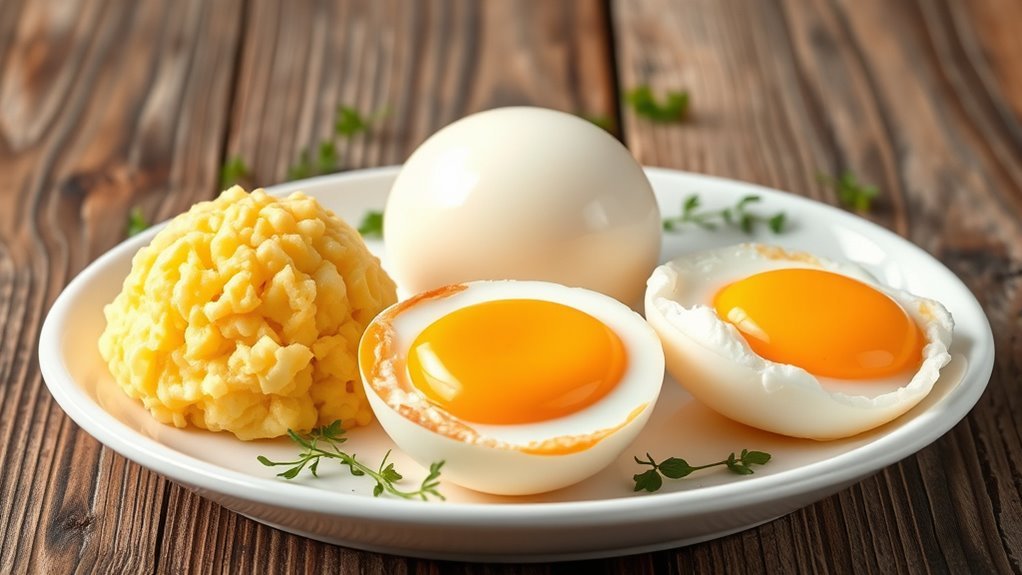
You’ll find that the protein content stays nearly the same whether your eggs are scrambled, boiled, fried, or poached. Cooking methods don’t change the total protein amount, but they do affect how easily your body absorbs it.
Keep in mind, adding ingredients like milk or cheese can slightly boost the protein in scrambled eggs.
Protein Content Consistency
Even though you might prepare eggs in various ways—scrambled, boiled, fried, or poached—their protein content stays consistent at about 6 to 7 grams per large egg. This means you can rely on eggs as a steady protein source, no matter how you cook them.
Here’s what you should know about protein content in eggs:
- Cooking method doesn’t markedly change the total protein amount.
- Protein in cooked eggs is more bioavailable, making it easier for your body to absorb.
- While frying may add calories due to oil, it won’t affect protein levels.
Impact Of Cooking Methods
Although the protein content in eggs stays about the same whether you scramble, boil, fry, or poach them, the way you cook eggs can affect how your body absorbs and uses that protein. The cooking method enhances protein digestibility and bioavailability, making cooked eggs easier for your body to utilize than raw ones.
For example, scrambled eggs often include milk or cheese, which can increase the overall protein content per serving. Fried eggs might have slightly more protein if cooked with added ingredients like oil, but the difference is minimal. Boiled and poached eggs maintain their natural protein content while offering high digestibility.
Key Vitamins and Minerals Accompanying Protein in Three Eggs
While three eggs provide nearly 19 grams of complete protein, they also deliver essential vitamins and minerals that support your overall health. These nutrients work alongside protein to boost your body’s functions and maintain well-being.
Here are three key vitamins and minerals in three eggs:
- Vitamin B12 (0.4 μg): Vital for nerve function and red blood cell formation.
- Phosphorus (99 mg): Supports bone health and energy production.
- Selenium (15 μg): Acts as an antioxidant, protecting cells from damage.
In addition to these, eggs contain vitamin A, vitamin D, zinc, and smaller amounts of vitamin E and K, all contributing to immune support, vision, and metabolic processes.
Including three eggs in your diet ensures you get a well-rounded mix of proteins, vitamins, and minerals essential for your health.
Is It Safe to Eat Three Eggs a Day?
If you’re wondering whether eating three eggs a day is safe, the good news is that for most healthy people, it’s perfectly fine and can help meet your protein needs. Three large eggs provide about 18.9 grams of high-quality protein, making them a convenient way to support your daily requirements.
Current research shows that consuming 2-3 eggs daily doesn’t pose health risks for most individuals and fits well within a balanced diet. However, if you have cardiovascular disease or diabetes, it’s wise to limit your intake to one egg per day or check with your healthcare provider.
While there’s no strict upper limit on egg consumption, moderation is key, and eggs remain a nutritious source of protein for many.
Can Eating Egg Protein Help You Build Muscle and Lose Weight?
You can build muscle and lose weight by including egg protein in your diet since it provides high-quality, complete protein that supports muscle growth. Eating three eggs gives you nearly 19 grams of protein, which helps with muscle repair and keeps you full longer.
Combining eggs with strength training maximizes their impact on your muscle strength and weight loss goals.
Muscle Growth Benefits
Because three large eggs provide about 18.9 grams of complete, high-quality protein, they can play a key role in muscle growth and weight management. This protein contains all essential amino acids, especially leucine, which directly stimulates muscle protein synthesis.
When you include eggs in your diet, you support efficient muscle repair and growth.
Here are three muscle growth benefits of eating egg protein:
- Eggs offer highly bioavailable protein, so your body absorbs and uses amino acids effectively.
- The rich leucine content in eggs triggers muscle protein synthesis, essential for building muscle.
- Regular egg protein intake combined with strength training enhances muscle strength and helps you develop a leaner physique.
Incorporating eggs supports your muscle growth goals by providing essential nutrients your muscles need.
Weight Loss Support
How does eating three eggs daily support both muscle building and weight loss? Three large eggs provide about 18.9 grams of high-quality protein, which is essential for muscle repair and growth. This protein contains all nine essential amino acids, making it perfect for supporting muscle synthesis even when you’re trying to lose weight.
Including eggs in your diet helps increase satiety, so you feel fuller longer, reducing overeating. Plus, the body efficiently absorbs egg protein, ensuring your muscles get the nutrients they need. By adding eggs to your weight loss plan, you boost protein intake without piling on calories, helping preserve lean muscle while promoting fat loss.
Protein Quality Impact
Building on how three eggs provide quality protein for muscle repair and weight loss, it’s important to understand the impact of egg protein’s quality on your fitness goals. Egg protein stands out due to its high protein quality and complete profile of essential amino acids that your body needs.
Here’s why egg protein matters:
- It delivers about 18.9 grams of complete protein, supplying all essential amino acids to boost muscle growth and repair.
- With an amino acid score near 77%, egg protein is highly digestible, enhancing muscle protein synthesis after workouts.
- Its low-calorie, nutrient-dense nature supports weight loss while preserving lean muscle mass effectively.
Incorporating eggs into your diet ensures you get superior protein quality that helps build muscle and aids in fat loss simultaneously.
How Can You Include Three Eggs Daily for Protein?
If you want to boost your protein intake, including three eggs in your daily meals is a simple and effective strategy. Three large eggs provide about 18.9 grams of high-quality protein, making them a great addition to your daily diet.
You can easily incorporate them by boiling, scrambling, or poaching without worrying about losing protein content. Try pairing your eggs with vegetables or whole-grain bread to create a balanced meal that supports muscle building and repair. Avoid adding excessive fats to keep your meals healthy while maximizing protein benefits.
What Are the Best Ways to Maximize Protein Absorption From Eggs?
Including three eggs daily provides a solid protein boost, but maximizing how your body absorbs that protein can make a real difference. To enhance protein absorption from eggs, consider these tips:
- Use gentle cooking methods like boiling or poaching. These preserve protein quality better than high-heat methods such as frying, ensuring your body can absorb more amino acids efficiently.
- Pair eggs with vitamin C-rich foods, like tomatoes or bell peppers. Vitamin C helps improve mineral absorption, which supports overall protein utilization.
- Combine eggs with healthy fats, such as avocado or olive oil. This boosts the absorption of fat-soluble vitamins alongside the protein, optimizing nutrient uptake.
Why Is Egg Protein Considered High Quality?
Because egg protein contains all nine essential amino acids in ideal proportions, it stands out as a high-quality protein source. When you eat eggs, you get a complete protein that your body can easily absorb and use, thanks to its high bioavailability. Each large egg offers about 6.3 grams of this high protein, making it an efficient way to meet your nutritional needs.
Egg protein scores highly on the Protein Digestibility Corrected Amino Acid Score (PDCAAS), which measures how well proteins are digested and utilized. This means when you consume eggs, your muscles get the essential building blocks they need for repair and growth.
In short, eggs provide a complete protein that supports muscle growth, weight management, and overall health effectively.
Frequently Asked Questions
Is 3 Eggs a Day Good Protein?
Yes, three eggs a day provide you with high-quality protein that supports muscle growth and repair. They’ll help you meet your daily protein needs, especially if you stay active and want a balanced, nutritious diet.
Can 3 Eggs Build Muscle?
Want to build muscle effectively? Yes, three eggs can help you do that. They provide complete protein your body absorbs easily, supporting muscle repair and growth, especially when combined with consistent resistance training and a balanced diet.
How Much Protein Is in 3 Full Eggs?
Three full eggs give you about 19 grams of protein. You’ll get high-quality, complete protein from both whites and yolks, helping your muscles recover and grow efficiently whenever you include them in your meals.
How Much Protein Is in 3 Over Hard Eggs?
You get about 19 grams of protein from three over hard eggs. Cooking them this way doesn’t change the protein much, and your body can easily absorb and use it for energy and muscle repair.
Conclusion
Now that you know three eggs pack a powerful protein punch, you might wonder—could they be your secret weapon for muscle gain and weight loss?
But before you rush to the kitchen, consider this: not all cooking methods preserve their full benefits. Want to access the true potential of egg protein and boost your health?
Keep exploring how to make every bite count—you might be closer to your fitness goals than you think. Incorporating three eggs into your diet can be a smart move for increasing your protein intake and supporting muscle growth.