How Much Protein Is in a Deviled Egg?
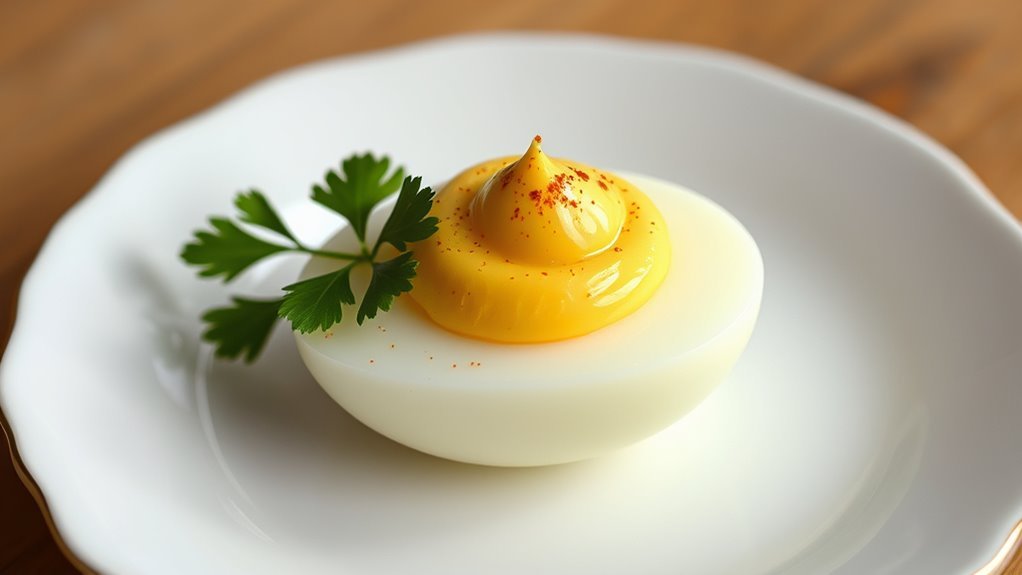
You’ll get about 3 grams of protein from one deviled egg half, mainly from the egg white, which holds the most protein. The yolk adds some too, along with healthy fats and nutrients.
How you prepare them won’t drastically change protein but can boost it if you add ingredients like Greek yogurt or chicken.
Deviled eggs make a handy protein-rich snack that fits well into high-protein diets. Keep exploring to discover easy ways to amp up their protein even more.
How Much Protein Is in a Deviled Egg?

Although deviled eggs might seem like a simple snack, they actually pack a decent amount of protein. Each half of a deviled egg contains about 3 grams of protein, meaning a whole egg delivers roughly 6 grams. This protein mainly comes from the egg white, which is rich in complete amino acids, making eggs an excellent protein source.
If you want to boost the protein even more, you can add ingredients like Greek yogurt or lean meats to the filling. Using multiple eggs or topping your deviled eggs with high-protein options can also increase the protein content per serving. So, whether you’re snacking or serving them at a party, deviled eggs offer a satisfying protein punch.
Which Part of the Egg Has the Most Protein?
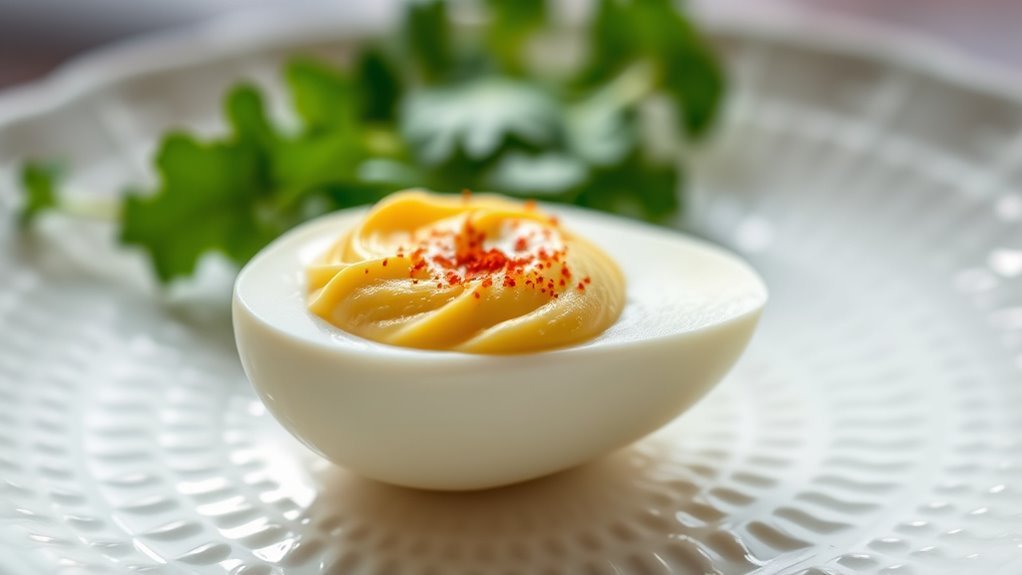
You’ll find most of the protein in an egg white, which packs about 3.6 grams and contains all essential amino acids. The yolk has less protein—around 2.7 grams—but it’s rich in healthy fats and other nutrients.
Understanding this protein distribution helps you appreciate what each part contributes to your deviled egg.
Egg White Protein Content
When you want to boost your protein intake from a deviled egg, focus on the egg white since it contains the highest protein amount. Egg whites pack approximately 3.6 grams of protein per large egg, making them the protein-richest part of the egg.
Here’s why egg whites stand out:
- Composed of about 90% water and 10% protein, mainly ovalbumin
- Provide nearly four times more protein per gram than yolks
- Contain minimal fat and calories
- Considered a complete protein with all nine essential amino acids
- Contribute about 3 grams of protein per half-egg in deviled egg servings
Nutrients In Egg Yolk
While egg whites contain more protein by weight, the yolk still packs a substantial 2.7 grams of protein per large egg, making it an essential source of nutrition. The egg yolk’s protein includes essential amino acids that support muscle repair and important bodily functions. Although the white offers about 3.6 grams of protein, the yolk contributes considerably to the egg’s overall protein content.
Beyond protein, the yolk is rich in vitamins and antioxidants like lutein and zeaxanthin, enhancing its nutritional value. Unlike the egg white, which is mostly water and low in fat, the yolk’s protein and nutrients make it a fundamental part of a balanced diet. So, don’t overlook the egg yolk when considering your protein intake.
Protein Distribution In Eggs
Understanding the protein spread between the egg white and yolk helps you make better choices about your intake. When you look at a whole egg, the egg white is the main protein powerhouse. Here’s how the protein breaks down:
- Egg white contains about 3.6 grams of protein
- Yolk provides roughly 2.7 grams of protein
- Total protein in a large egg is around 6 grams
Egg white protein is complete, with all nine essential amino acids. In deviled eggs, egg whites contribute most of the protein content.
How Does Preparation Affect Deviled Egg Protein?

How you prepare your deviled eggs can change their protein content quite a bit. Using whole eggs keeps protein levels higher, while swapping in ingredients like Greek yogurt or salmon boosts it further.
Plus, how you mix the filling affects texture but not the total protein you get.
Cooking Method Impact
Even when you boil or steam eggs, the protein content stays nearly the same because cooking methods don’t break down the protein itself. When you prepare deviled eggs, the protein remains stable since you mix cooked yolks and whites without losing any.
However, overcooking can denature proteins, changing their structure but not decreasing the total protein content. To maintain ideal protein levels, consider these points:
- Cooking methods like boiling or steaming preserve protein content
- Overcooking changes protein structure but not quantity
- Mixing yolks and whites doesn’t reduce protein
- Adding ingredients like mayonnaise or Greek yogurt can slightly boost protein
- Proper storage prevents protein degradation by bacteria or enzymes
Ingredient Variations
When you swap mayonnaise for Greek yogurt in your deviled egg filling, you add an extra 2-3 grams of protein per serving. Greek yogurt not only boosts the protein content but also adds a creamy texture without extra fat. You can further increase protein by mixing in ingredients like chopped smoked salmon, turkey, cottage cheese, or shredded chicken.
Choosing larger eggs also raises the protein amount, as extra-large eggs contain more protein than large ones. To maximize protein retention, mash the yolks thoroughly and blend in your protein-rich additions evenly.
Filling Texture Effects
Adjusting the ingredients in your deviled egg filling is just one way to boost protein; the way you prepare the filling also plays a significant role. The texture of the yolk mixture can influence the protein content and its availability. Here’s how preparation affects your deviled eggs:
- Whipping yolks thoroughly breaks down proteins, creating a smoother, cohesive filling.
- Adding protein-rich ingredients like Greek yogurt or whipped egg whites increases protein density.
- Mashing yolks versus whipping them affects protein distribution and bioavailability.
- Using a piping bag prevents loss of the yolk mixture, preserving protein content per serving.
- Avoid over-mixing, which can reduce protein effectiveness by altering structure.
How Does Deviled Egg Protein Compare to Other Snacks?
Although many popular snacks like chips and cookies might satisfy your cravings, deviled eggs provide a much higher protein content per serving. A single deviled egg half offers about 1.55 grams of protein, totaling roughly 3.1 grams per whole egg, which often surpasses typical snack options.
For example, granola bars usually contain around 2-4 grams of protein, sometimes less than a deviled egg. If you want to boost your protein intake, choosing Greek yogurt-based deviled eggs can be especially effective.
Incorporating deviled eggs into your snack lineup helps you meet daily protein needs more efficiently than many processed snacks. So, when you’re looking for a protein-rich snack, deviled eggs are a smart, tasty choice.
Where Do Deviled Eggs Fit in a High-Protein Diet?
If you’re looking to boost your protein intake, deviled eggs fit seamlessly into a high-protein diet. They offer a convenient, nutrient-rich option to help you meet your daily protein goals. Here’s why deviled eggs work well in such diets:
- Each half provides about 2.5 grams of high-quality protein.
- Two eggs deliver roughly 5 grams of complete protein with all essential amino acids.
- Protein in deviled eggs supports muscle repair and promotes fullness.
- They make a quick, portable snack or a meal addition.
Including deviled eggs helps efficiently reach your daily protein target without excess calories.
What Other Nutrients Do Deviled Eggs Provide?
While deviled eggs are well-known for their protein content, they also pack a variety of other essential nutrients that benefit your overall health. They provide vitamin B12, which supports energy production and brain function, making them more than just a protein source.
You’ll also get antioxidants like lutein and zeaxanthin, which help protect your eyes and reduce oxidative stress. Deviled eggs contain healthy fats that aid nutrient absorption and keep you feeling full longer.
Additionally, they supply folate and choline, important for cellular function and brain health. Small amounts of selenium and phosphorus contribute to immune support and bone strength.
How Much Does Protein Vary in Different Deviled Egg Recipes?
When you try different deviled egg recipes, you’ll notice the protein content can vary considerably based on the ingredients you choose. A standard deviled egg made with two large eggs provides about 12 grams of protein, mainly from the egg whites and yolks. However, variations can shift this amount:
- Using Greek yogurt instead of mayonnaise can boost protein.
- Adding salmon or chicken increases overall protein per serving.
- Mayonnaise substitutions with protein-rich ingredients slightly raise protein count.
- Recipes with just one large egg per serving lower protein to 5-8 grams.
- The balance between egg quantity and added fillings directly affects protein levels.
Easy Ways to Boost Protein in Your Deviled Eggs
You’ve seen how ingredient choices affect protein levels in deviled eggs, so now let’s explore simple ways to increase that protein even more. Start by mixing chopped cooked chicken, turkey, or ham into the yolks to add a solid protein boost.
Boost deviled eggs’ protein by mixing in chopped cooked chicken, turkey, or ham for a tasty upgrade.
Swap mayonnaise for Greek yogurt, which offers about 10 grams of protein per cup while keeping your filling creamy. Adding shredded cheddar or cottage cheese to the yolk mixture also amps up protein content effortlessly.
For an extra punch, top each deviled egg with smoked salmon or cooked shrimp. Finally, serve your deviled eggs alongside edamame or roasted chickpeas to complement your protein intake.
These easy tweaks make your deviled eggs a protein-packed snack or meal option.
Frequently Asked Questions
How Much Protein Is There in a Deviled Egg?
A deviled egg has about 3 grams of protein per half, so eating two halves gives you roughly 6 grams.
You’ll get high-quality protein that helps with muscle repair and keeps you feeling full longer.
Are Deviled Eggs Healthy for You?
Think of deviled eggs as little powerhouses; they’re healthy for you, packed with complete protein and essential amino acids. You’ll feel energized and satisfied, especially when you enjoy them in moderation as part of your balanced diet.
Are 2 Hard Boiled Eggs Enough Protein?
Two hard-boiled eggs give you about 12.4 grams of protein, covering roughly 25% of your daily needs.
They’re a solid start, but you’ll want to add more protein-rich foods throughout the day for balance.
Are Deviled Eggs Good for Building Muscle?
Yes, deviled eggs are great for building muscle. They provide high-quality protein with all essential amino acids, aiding muscle repair and growth.
You can enjoy them as a tasty, effective post-workout snack to boost your gains.
Conclusion
So next time you bite into a creamy deviled egg, imagine the protein power packed inside each tender bite—mostly from the yolk, ready to fuel your day. Whether you’re snacking or fueling a workout, deviled eggs offer a satisfying punch of nutrition.
With simple tweaks, you can boost that protein even more. Keep these little protein-packed gems in your kitchen—they’re a tasty, nutritious way to stay energized and satisfied.
In conclusion, deviled eggs are not only delicious but also a great source of protein. Incorporating deviled eggs into your diet can help you meet your daily protein needs while enjoying a flavorful snack.