How Old Is a Chicken Before It Starts Laying Eggs?
Your chicken will usually start laying eggs between 18 and 24 weeks old, depending on her breed and environment. Faster-maturing breeds like Leghorns lay earlier, while heavier or heritage breeds take a bit longer.
Daylight plays a big part—hens need around 14-16 hours of light daily to begin laying consistently.
Proper nutrition and a cozy coop with nesting boxes also help. Keep going to discover how you can encourage your hen to lay her first egg sooner.
When Do Chickens Typically Start Laying Eggs?
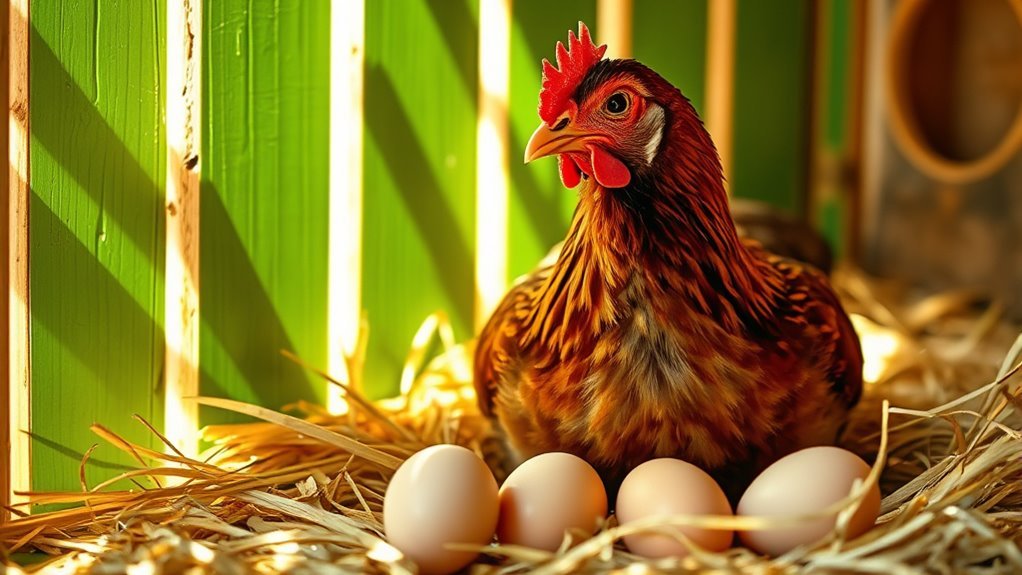
While the exact timing varies by breed, most chickens start laying eggs between 18 and 22 weeks old. At this age, you’ll notice signs of readiness like a red, swollen comb and nesting behavior. The breed plays a role, but your chicken’s health and environment matter just as much.
Proper nutrition and care help guarantee she’s ready to lay. Daylight hours also influence when chickens begin laying eggs; longer days trigger hormone changes that start egg production. If you want your chickens to start laying on time, make sure they get enough light and maintain good health.
Watching for those early signs will help you know when your hens are ready to begin their egg-laying journey.
How Your Hen’s Breed Affects When She Starts Laying
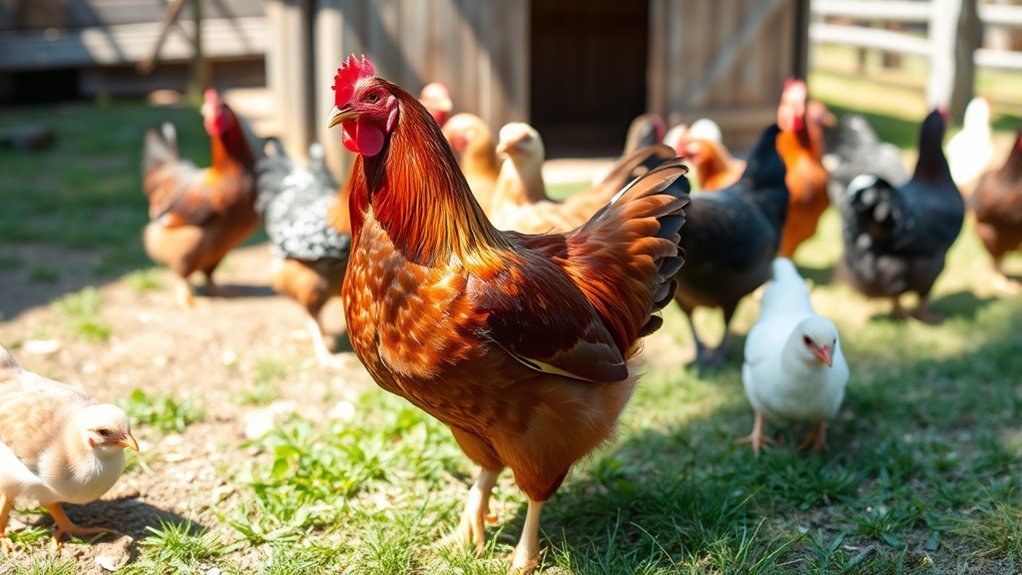
Because breed plays a key role in when your hen starts laying eggs, it’s important to know their typical maturation timelines. Chicken genetics largely determine the laying age, with fast-maturing breeds like Leghorns and Rhode Island Reds often producing their first egg around 18 to 20 weeks.
In contrast, heavy breeds such as Plymouth Rocks and Wyandottes usually begin egg production later, between 20 and 24 weeks. Heritage breeds, which mature more slowly, may not start laying until 22 to 24 weeks or even older.
Knowing your hen’s breed helps you set realistic expectations for her first egg and ongoing egg production. Understanding these differences guarantees you provide the right care and environment to support your hen’s development and optimize her laying potential.
How Daylight and the Environment Influence Egg Laying
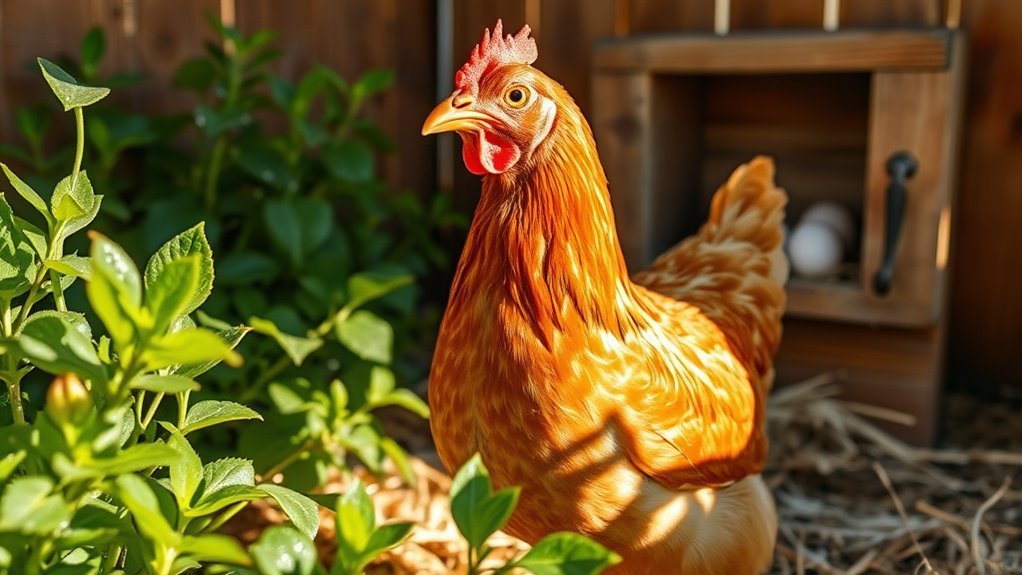
You’ll notice that the amount of daylight your hens get plays a big role in when they start laying eggs. Environmental factors like temperature and light exposure can either speed up or delay this process.
Understanding how these elements work together helps you create the best conditions for timely egg production.
Daylight Hours Impact
If hens don’t get at least 14 to 16 hours of light daily, they won’t start or keep up regular egg laying. Daylight hours directly influence egg production by triggering the hormones responsible for ovulation.
As hens reach the appropriate age and progress through their growth stages, adequate light exposure becomes essential to kick-start and maintain egg laying. During shorter days in fall and winter, natural light decreases, often causing hens to pause egg production.
To counter this, you can use artificial lighting in the coop to extend daylight hours, ensuring hens continue to lay eggs year-round. Managing light exposure effectively aligns with the hens’ natural biological rhythms, helping you maximize consistent egg production regardless of the season or the hen’s developmental stage.
Environmental Factors Affect
While hens naturally respond to changes in daylight, several environmental factors play a vital role in their egg-laying patterns. Chicken age and hen development set the stage for egg-laying onset, but consistent light exposure is crucial. Chickens need 14-16 hours of daylight hours to trigger and sustain egg production.
Seasonal effects, especially shorter days in fall and winter, can delay or reduce laying by disrupting hormonal cycles. Without enough natural light, many hens pause egg production until longer spring days arrive. You can counter this by using artificial lighting, like a 25-watt bulb, to extend daylight hours and maintain year-round laying.
Setting Up Nesting Boxes and Coop Lighting for Egg Laying
Although hens can lay eggs without perfect conditions, setting up proper nesting boxes and coop lighting considerably boosts their comfort and productivity. To support laying eggs as your hens reach the right age, focus on these coop setup essentials:
- Provide one 1-foot square nesting box for every four hens, lining them with soft bedding like straw or shavings to encourage use.
- Place nesting boxes in a dark, quiet corner to reduce stress and promote consistent egg laying by making hens feel secure.
- Use coop lighting to extend daylight hours to at least 16 daily with timers or supplemental lights, stimulating egg production.
This careful setup respects the natural rhythms tied to the age of hens and maximizes your flock’s laying potential.
How Nutrition Helps Your Hens Start Laying Eggs Early
You’ll want to provide a balanced layer feed rich in protein to support your hens’ early development and egg production.
Make sure they get enough calcium through oyster shells or limestone to build strong eggshells from the start. Proper nutrition sets the foundation for your hens to begin laying eggs sooner and stay healthy.
Balanced Layer Feed
Proper nutrition plays an essential role in helping your hens start laying eggs early and consistently. Switching to a balanced layer feed at about 18 weeks supports your laying hens as they approach laying age. This feed provides the right amount of protein and calcium, indispensable for strong early eggs and steady egg production.
To optimize results, focus on these key points in your feeding schedule:
- Introduce high-quality layer feed at 18 weeks to meet nutritional needs for egg production.
- Ensure the feed contains adequate protein and calcium to support shell quality and hen health.
- Limit treats to less than 10% of the diet to maintain a balanced nutrient intake.
Following this routine helps your hens develop strong eggshells and lay consistently from the start.
Protein And Calcium
A balanced intake of protein and calcium plays a vital role in helping your hens start laying eggs early and maintain consistent production. Protein, ideally 16-20% in their diet, supports early development and boosts egg production. Calcium, making up 3-4% of the layer diet, guarantees strong eggshell quality.
Without enough protein or calcium, nutritional deficiencies can delay laying age or cause weak shells.
| Nutrient | Importance |
|---|---|
| Protein | Supports early development |
| Calcium | Strengthens eggshell quality |
| Balanced Diet | Promotes consistent egg production |
| Deficiencies | Delay laying, weaken eggshells |
Providing a balanced diet rich in protein and calcium sets your hens up for earlier, healthier egg-laying.
What Signs Show Your Hen Is Ready to Lay Eggs
Although hens don’t announce their readiness outright, you can spot several clear signs that show they’re about to start laying eggs. As your hen approaches laying age, watch for changes in behavior and physical appearance.
Here are three key signs to look for:
- Nesting behavior increases—your hen will seek out quiet, private spots, preparing a safe place for her eggs.
- The hen’s abdomen appears fuller or rounder, indicating developing eggs inside.
- Her comb and wattles become brighter or more swollen, signaling reproductive readiness.
Additionally, hens often crouch or squat, showing they’re ready for laying. You might also notice increased vocalizing or restlessness.
These signs help you know when your hen is ready to begin laying eggs.
Frequently Asked Questions
What Is the 90/10 Rule for Chicken?
The 90/10 rule means 10% of your hens produce 90% of the eggs.
You’ll want to identify and focus on those top layers to maximize your flock’s productivity and overall egg yield efficiently.
How Can You Tell When a Chicken Is Ready to Lay Eggs?
You’ll know your hen’s ready because she’ll start nesting, crouching when you approach, and her comb and wattles will turn bright red.
Around 90% of hens show these signs right before laying their first egg.
Is a Rooster Necessary for Chickens to Lay Eggs?
No, you don’t need a rooster for hens to lay eggs. They’ll lay regularly without one, but if you want fertilized eggs to hatch chicks, then a rooster’s necessary for mating before the eggs form.
What Is the Earliest a Chicken Can Lay Eggs?
You can expect some chickens, especially fast-maturing breeds like Leghorns, to start laying eggs as early as 16 weeks.
Just remember, those first eggs might be small or irregular before consistent laying begins.
Conclusion
Now that you know when and how hens start laying, imagine the excitement as you spot the first egg glistening in the nesting box. It’s not just about age or breed—it’s the perfect mix of light, nutrition, and care that sets the stage.
You’ll soon hear that unmistakable cluck and see her steady walk, signaling the beginning of a rewarding journey. Get ready—your backyard is about to get a little more egg-citing!
Understanding how old a chicken is before it starts laying eggs helps you provide the best environment for your flock. With the right conditions, your hens will thrive and produce fresh eggs regularly, making your egg-collecting experience even more enjoyable.