Why Does Corned Beef Shrink So Much When Cooked?
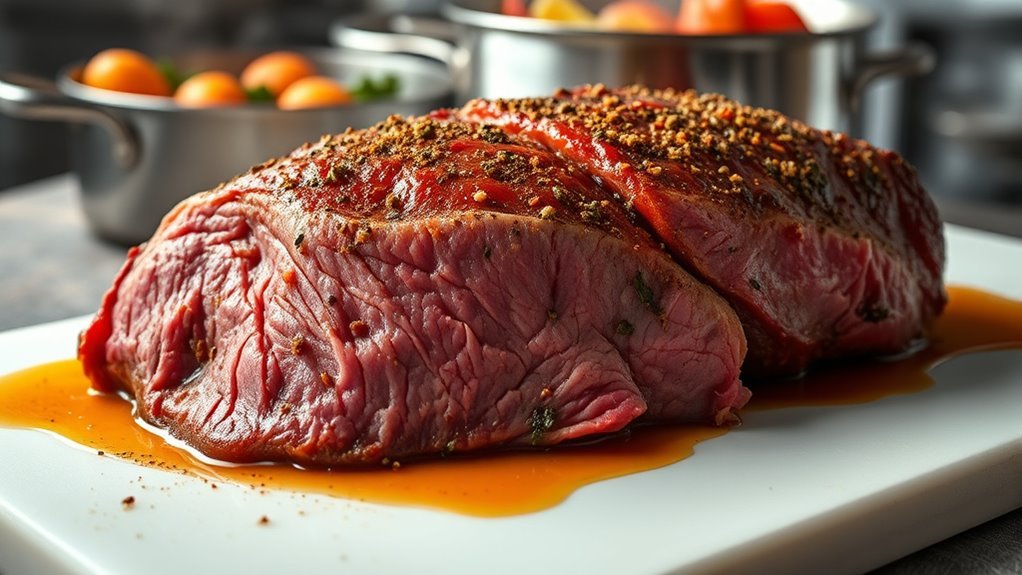
You’ll notice corned beef shrinks a lot when cooked because heat causes its muscle fibers to contract and push out the water absorbed during curing. This shrinkage is a common occurrence with corned beef, especially when prepared using traditional methods.
If your cut is lean or injected with watery brine, it’ll lose even more moisture, shrinking considerably. Cooking at high temperatures speeds this up, while gentle, low heat with enough cooking liquid helps keep it juicy.
Keep exploring to discover how your cut choice, cooking method, and liquid type all play a role in the final size and tenderness of your corned beef. Understanding these factors can help you achieve the perfect balance of flavor and texture.
Why Corned Beef Shrinks When Cooked
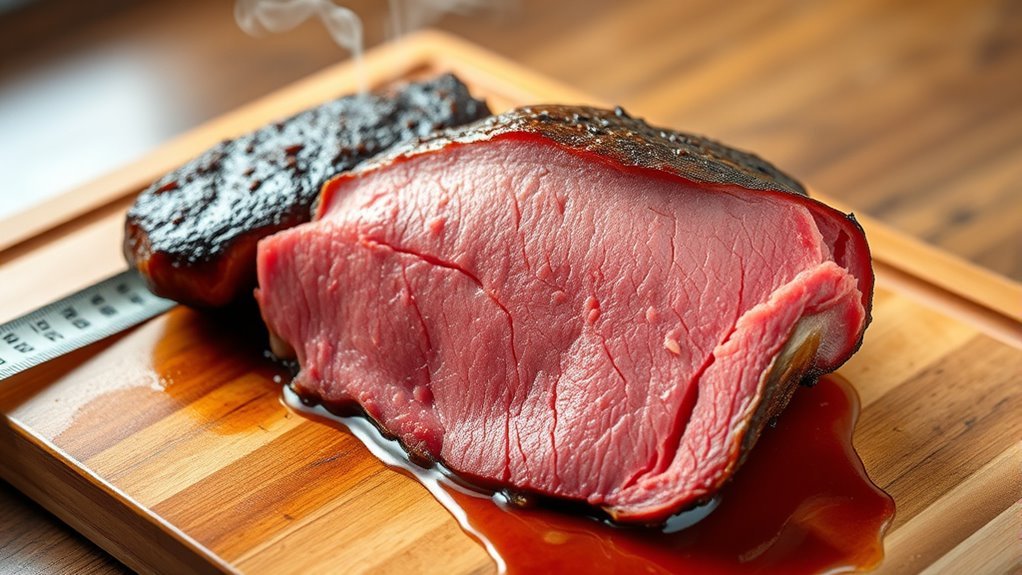
When you cook corned beef, you’ll notice it shrinks considerably because the heat forces the muscle fibers to contract and expel the water absorbed during curing. Corned beef is typically injected or soaked in a salty brine, which adds water and weight initially. However, when heated, this extra moisture escapes along with the meat’s natural juices.
The curing process causes the muscle fibers to hold a significant amount of water, but as cooking progresses, those fibers tighten, pushing out moisture. This loss can be as much as 40%, making the corned beef noticeably smaller. High temperatures and long cooking times accelerate this shrinkage, so the meat you start with often ends up much leaner and more compact by the time it’s ready to serve.
How Your Choice of Cut Affects Shrinkage
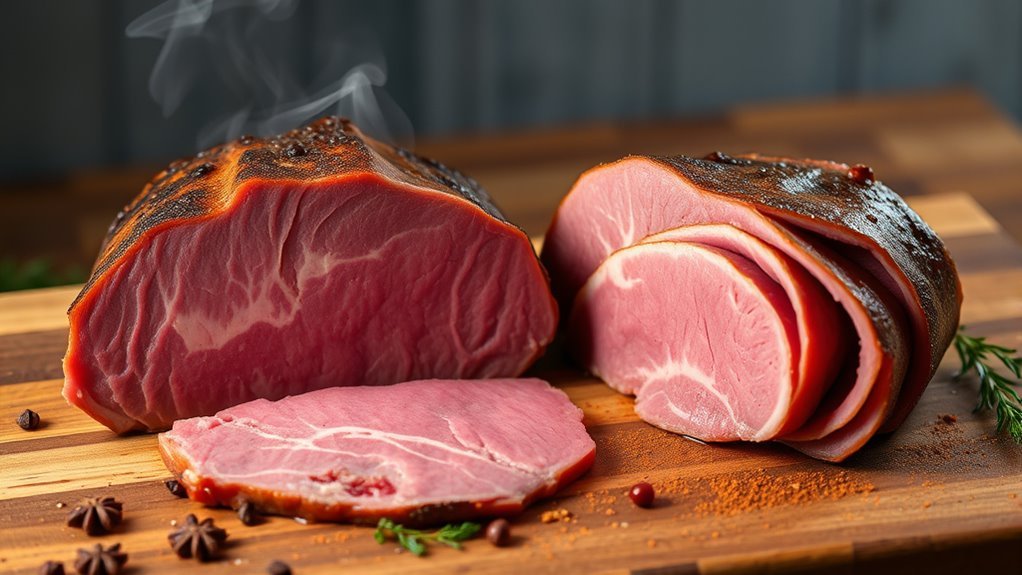
When choosing your corned beef, the fat content plays a big role in how much it shrinks during cooking. Cuts with more fat tend to hold moisture better and shrink less, while leaner cuts lose more water and shrink more noticeably.
Also, bigger, thicker pieces usually shrink more because they have more water and connective tissue breaking down.
Fat Content Impact
Although corned beef shrinkage depends on several factors, the fat content in your chosen cut plays a crucial role. When you pick a cut with a generous fat cap or good marbling, the fat melts during cooking, helping retain moisture and reducing shrinkage. Leaner cuts, with less fat, tend to lose more moisture, causing them to shrink noticeably more.
The intramuscular fat acts as a natural barrier, slowing moisture loss as your corned beef cooks. So, if you want your corned beef to hold its size better, opt for cuts with a solid fat cap or higher marbling. This simple choice can make a big difference in how much your meat shrinks and how juicy it stays after cooking.
Meat Size Considerations
Since the cut and size of your corned beef directly influence how much it shrinks, choosing wisely matters. When considering meat size considerations, larger cuts generally shrink 25-40% during cooking due to water loss and fat rendering.
Opting for a leaner, smaller piece might save space but increases shrinkage and risks running out of meat before serving. Tougher, fattier cuts like brisket hold moisture better and shrink less, thanks to the fat that keeps the meat tender and juicy.
Visible fat not only reduces shrinkage but also improves texture. So, picking a cut with enough fat and a good size ensures you get a satisfying final portion without surprise losses from cooking shrinkage. Keep meat size considerations top of mind for the best results.
How Water Injection During Processing Increases Shrinkage
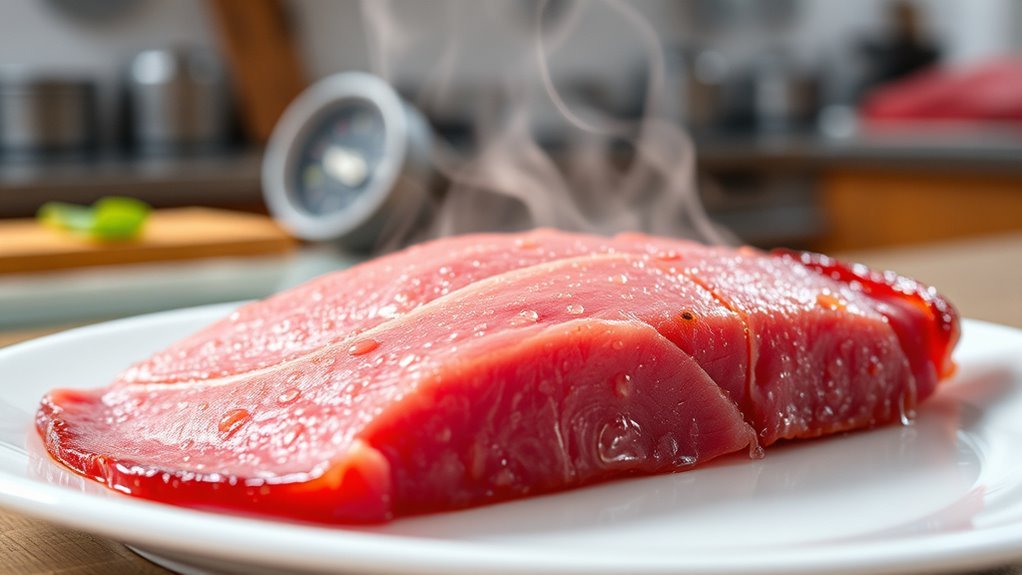
Because many commercial corned beef products are injected with a watery brine solution, you might notice more shrinkage during cooking than you expect. This water injection during processing adds weight and plumps up the meat, but as you cook it, much of that injected water escapes, causing the corned beef to shrink significantly.
The more solution injected—often 20-35%—the greater the shrinkage you’ll see.
| Aspect | Before Cooking | After Cooking |
|---|---|---|
| Water Content | High (added brine) | Low (water released) |
| Appearance | Plump, moist | Smaller, drier |
| Weight | Increased by injection | Reduced by water loss |
| Shrinkage | Minimal | Significant |
| Labeling | May show % water added | Reflects true meat weight |
Understanding water injection helps explain why corned beef shrinks so much.
How Cooking Temperature and Time Change Meat Size
When you cook corned beef at higher temperatures, such as around 180°F, it shrinks more due to rapid moisture loss. The higher temperature causes water inside the meat to evaporate quickly, increasing shrinkage.
On the other hand, cooking corned beef at a lower temperature, around 140°F, over a longer time helps retain moisture and reduces shrinkage. Extended cooking times, sometimes up to 48 hours at low heat, allow the meat to tenderize gently without losing as much water.
Controlling both temperature and time carefully helps maintain the corned beef’s size and juiciness. So, if you want less shrinkage, opt for a lower temperature and longer cooking time to keep moisture locked in and produce tender, flavorful meat.
How Cooking Liquid Affects Corned Beef Shrinkage
You’ll notice that using plenty of cooking liquid, whether water or broth, helps keep your corned beef moist and reduces shrinkage. Choosing broth or flavorful liquids over plain water can better maintain moisture and enhance taste.
Keeping the meat submerged and topping off the liquid during cooking also prevents it from drying out and shrinking too much.
Liquid Volume Impact
How much liquid you use during cooking plays an essential role in how much your corned beef shrinks. The liquid volume directly affects moisture retention, so managing it is key to minimizing shrinkage.
Here’s how liquid volume impacts your corned beef:
- More liquid volume helps the meat retain moisture, reducing shrinkage.
- Too little liquid volume leads to greater moisture loss and makes the beef shrink more.
- Maintaining adequate liquid levels throughout cooking prevents excessive dehydration, keeping your corned beef juicier and larger.
Broth Versus Water
Choosing the right cooking liquid plays a big role in controlling corned beef shrinkage. When you cook corned beef in broth instead of plain water, you add flavor and moisture that help reduce shrinkage by minimizing the loss of the meat’s internal liquids. Broth contains dissolved salts and proteins that penetrate the meat, helping it maintain its structure and size during cooking.
Using broth also improves tenderness and juiciness, offsetting some shrinkage effects. The natural salts and seasonings in broth enable the meat to hold onto water more effectively than plain water, which decreases overall weight loss. So, opting for broth rather than water is a smart way to keep your corned beef plump and flavorful.
Maintaining Moisture Levels
Although corned beef naturally loses moisture during cooking, maintaining adequate liquid levels can greatly reduce shrinkage. You can keep your corned beef moist by focusing on how you manage the cooking liquid.
Here are three essential tips for maintaining moisture:
- Fully submerge the corned beef in broth or water to ensure even heat and minimal moisture loss.
- Cover the pot with a lid to trap steam and prevent evaporation, preserving moisture inside.
- Regularly check and replenish the cooking liquid to maintain consistent moisture levels throughout cooking.
Easy Tips to Stop Corned Beef From Shrinking Too Much
If you want to keep your corned beef from shrinking too much, start by adding extra water or broth to the cooking liquid to maintain moisture. When preparing brisket for St. Patrick’s Day, remember the corning process involves pickling spices that add flavor but won’t prevent shrinkage alone.
Cook your corned beef at a lower temperature, around 140°F, for a longer time to minimize water loss and keep it tender. Avoid overcooking by checking tenderness early, as prolonged heat makes the meat lose more moisture. Covering your pot or sous vide bag with a lid or insulating material helps reduce evaporation.
Finally, choose high-quality meat with minimal processing to avoid injected water, which can lead to excessive shrinkage during cooking.
Frequently Asked Questions
What Happens if You Cook Corned Beef Too Long?
If you cook corned beef too long, it shrinks excessively, loses moisture, becomes dry and tough, and the connective tissues break down too much.
You’ll end up with less flavor and a mushy texture that’s hard to enjoy.
What Are the Common Mistakes in Cooking Corned Beef?
You can lose up to 40% of corned beef’s weight if you make common mistakes like using lean cuts, skipping the rinse, cooking too hot or too short, or buying low-quality, overly salty meat.
What Happens if You Don’t Rinse Corned Beef Before Cooking?
If you don’t rinse corned beef before cooking, you’ll end up with a much saltier dish. The excess brine on the surface will make the flavor overpowering, so rinsing helps balance the taste perfectly.
How to Stop Beef From Shrinking?
Think of cooking beef like squeezing a sponge—if you’re too rough, it shrinks.
You’ll stop beef from shrinking by cooking low and slow, using broth, and covering it to lock in moisture.
Conclusion
When cooking corned beef, you’ll want to watch how water weight, cooking time, and temperature tinker with your tender treat. Choosing cuts carefully and controlling your cooking conditions can curb the common shrinkage challenge.
Keep your corned beef juicy and just right by soaking it smartly and simmering slowly. These techniques help maintain moisture and prevent excessive shrinkage.
With these simple steps, you’ll savor a succulent, satisfying slice every single time—no more disappointing, dinky dinners! Proper cooking methods are key to reducing corned beef shrinkage and ensuring a delicious meal.