Why Is the Beef Industry Important to the Economy?
You rely on the beef industry more than you realize—it supports millions of jobs across farms, processing plants, and supply chains. The beef industry is a vital part of the economy, especially in rural areas where communities thrive on cattle production.
It pumps billions into the economy, providing income and stability to many families.
Beef exports boost trade and create even more employment opportunities, expanding the industry’s impact beyond domestic markets. Rising beef prices affect your grocery bill and contribute to inflation, influencing everyday expenses.
Additionally, disease outbreaks and trade rules impact supply and costs, causing fluctuations in the market.
Discover how these factors connect to the economy’s overall health and why the beef industry plays such an important role in sustaining economic growth nationwide.
How U.S. Cattle Production Drives Jobs and Revenue

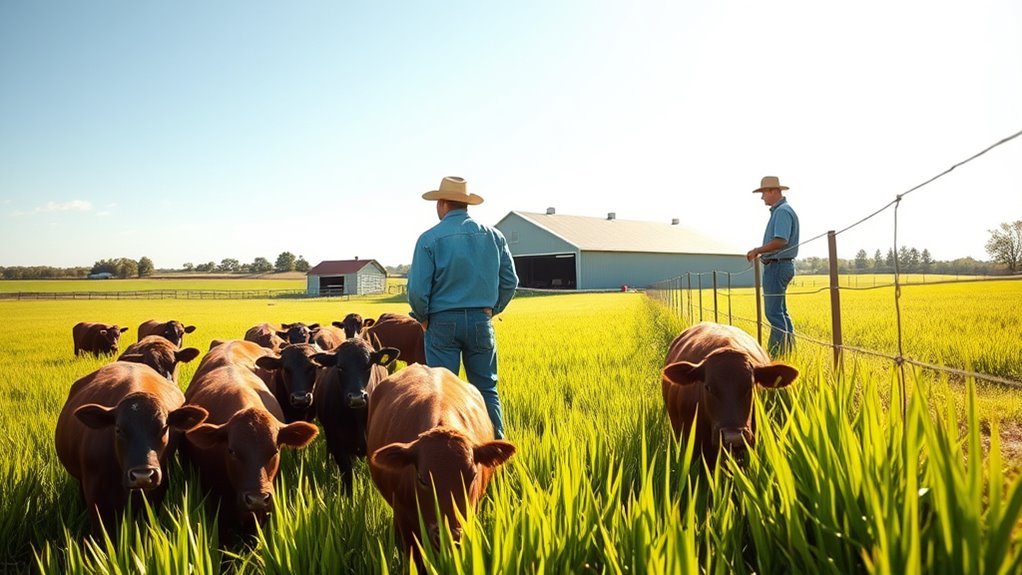
Because the U.S. beef industry pumps about $167 billion into the economy each year, it plays a essential role in creating jobs and driving revenue. When you look at cattle production, it’s clear how deeply it supports the U.S. economy.
From managing the cattle herd to processing beef, each stage generates thousands of jobs across farms, feedlots, and supply chain businesses. This integrated supply chain fuels regional economies, especially in major cattle states like Texas and Missouri.
You’ll also find that beef exports boost these local economies by increasing demand. Together, the beef industry sustains rural communities by providing steady employment and supporting local businesses.
How U.S. Beef Exports Support American Jobs and Trade
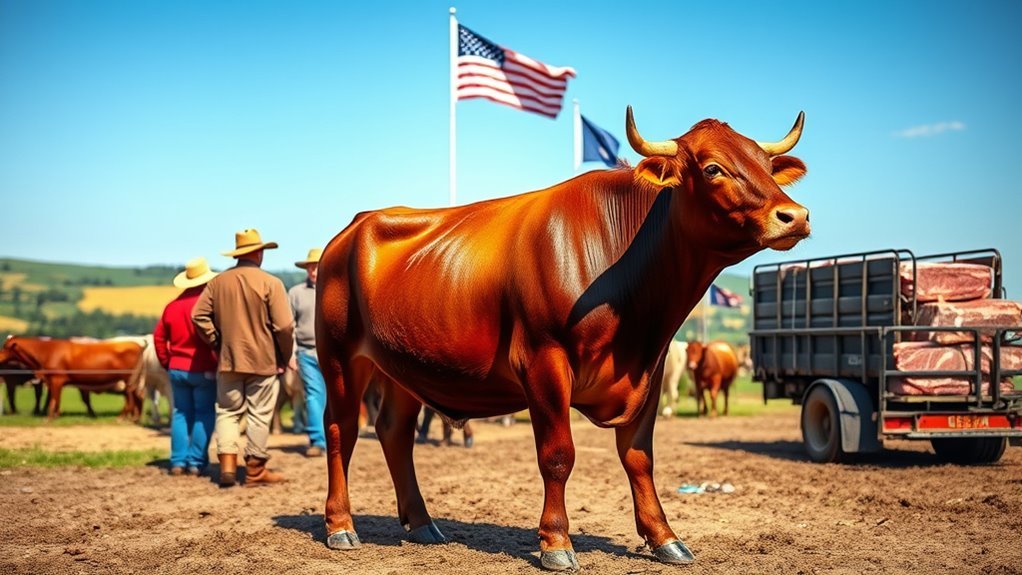
The U.S. beef industry doesn’t just create jobs at home—it also supports thousands of American workers through its robust export market. U.S. beef exports totaled over 3 billion pounds in 2024, fueling American jobs in processing, logistics, and agriculture.
By reaching major international markets like Japan, South Korea, and China, the beef industry strengthens essential trade relationships that enhance global trade. This high beef demand overseas generates nearly $10 billion in export revenue, helping producers diversify income and stabilize the economy.
When markets reopen after setbacks like disease outbreaks, trade relationships rebound, boosting both export volume and American jobs. So, your support of U.S. beef helps maintain a dynamic industry that drives export success and sustains livelihoods across multiple sectors in the economy.
How Rising Beef Prices Affect Producers, Consumers, and Inflation
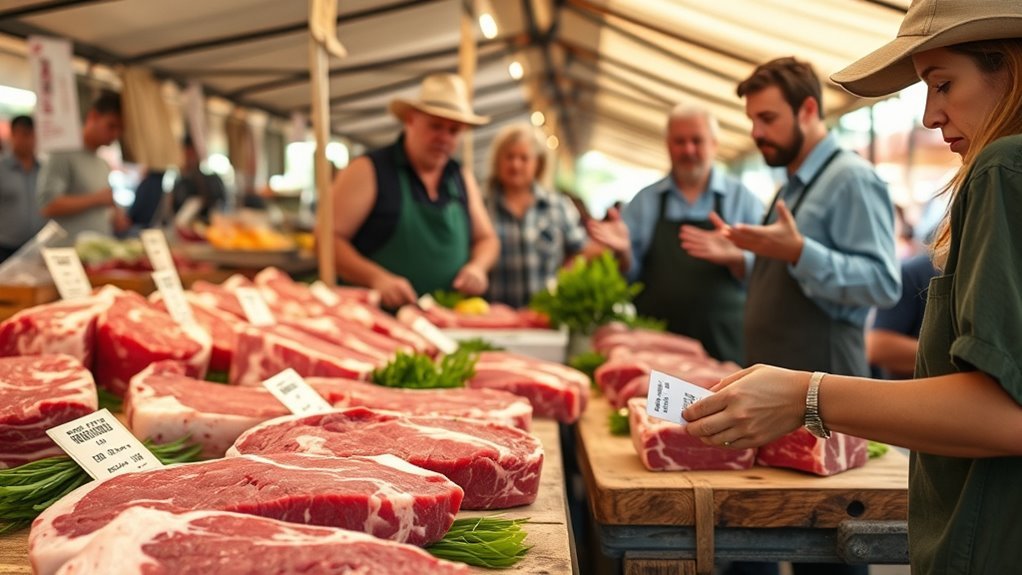
When beef prices rise, producers see higher revenues, but you and other consumers often face steeper costs at the grocery store. Herd contraction limits the food supply, tightening market dynamics in the cattle industry. This reduction in available beef pushes retail prices higher, directly increasing your consumer costs.
As beef prices climb, they feed into broader inflationary pressures, impacting overall food prices and your household budget. Persistent price hikes may even lead producers to hold back supplies, further sustaining inflation and limiting market relief. These inflation trends influence the consumer price index, showing how rising beef prices ripple through the economy.
Understanding these connections helps you see why shifts in beef prices affect both producer revenue and your daily expenses.
How the U.S. Beef Industry Sustains Rural Communities
While you might not always see it, the U.S. beef industry plays a crucial role in sustaining rural communities by providing millions of jobs—from farmworkers to truck drivers and meat processing staff. Cattle ranching boosts local economies through livestock sales, farm operations, and related services. Many small towns depend heavily on beef production as their main economic driver.
This industry also supports regional income by contributing to infrastructure development like roads and agricultural facilities, which are essential for rural livelihoods. Additionally, beef exports generate significant revenue that helps fund community projects and improve living standards in farming areas. When you support the beef industry, you’re also sustaining the backbone of many rural communities across the country.
How Disease and Trade Rules Affect U.S. Beef Supply and Prices
Because disease outbreaks like Bovine Spongiform Encephalopathy (BSE) and New World Screwworm (NWS) have triggered trade restrictions, you’ll often see sudden shifts in U.S. beef supply and prices. These disease outbreaks lead to import bans and restrictions that impact beef exports and cattle imports. USDA regulations aim to control disease spread, but trade restrictions still disrupt international trade and domestic beef supply.
When cattle imports drop, cattle prices and beef prices rise due to limited supply. Understanding how disease control influences trade helps you grasp market fluctuations.
| Factor | Impact on Beef Industry |
|---|---|
| Disease Outbreaks | Lead to trade restrictions |
| Trade Restrictions | Reduce beef exports & imports |
| USDA Regulations | Control disease, affect supply |
Frequently Asked Questions
How Does Beef Contribute to the Economy?
You benefit from beef’s contribution to the economy by enjoying job opportunities, supporting local businesses, and fueling trade. It drives billions in revenue and sustains rural communities,
keeping food supply chains strong and prosperous for everyone.
Why Is the Beef Industry Important?
Just like the engine powers a car, the beef industry drives your economy by creating jobs, supporting agriculture, and fueling exports.
You rely on it for quality protein, economic growth, and sustaining countless livelihoods nationwide.
Why Are Beef Cattle so Impactful to the World Economy?
You rely on beef cattle because they drive global trade, support millions of jobs, and influence prices worldwide. Their production and export shape economies, making them essential for food security and economic stability everywhere.
What Is the Economic Impact of the Cattle Industry?
You see the cattle industry boosts the economy by generating $167 billion yearly, supporting thousands of jobs, and contributing 22% to agricultural cash receipts.
Its exports bring in nearly $10 billion, strengthening both domestic and global markets.
Conclusion
So, why does the beef industry matter to you and the economy? Because it fuels jobs, supports trade, and sustains rural communities you might not often think about. When beef prices rise, it impacts your wallet and producers’ livelihoods alike.
Plus, disease outbreaks and trade rules can shift supply and costs in ways that affect us all. Understanding this helps you see just how essential beef is beyond the dinner plate.
In conclusion, the beef industry plays a vital role in economic growth, job creation, and trade balance. Its importance extends well beyond consumption, influencing both local and global markets.