
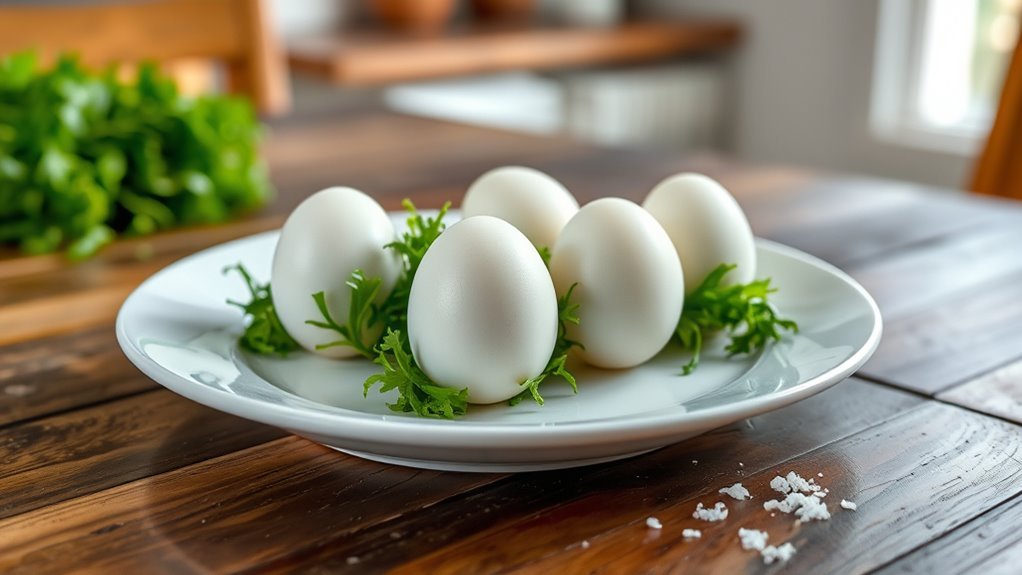
How Many Eggs Provide 20 Grams of Protein?
How Many Eggs Provide 20 Grams of Protein?
You’ll need about three large eggs to get close to 20 grams of protein since each egg has roughly 6.4 grams. Eggs provide complete, high-quality protein with all essential amino acids, making them a solid choice for your diet.
Cooking methods like boiling retain most protein, but keep an eye on added fats if you fry them.
If you want to explore how eggs compare to other protein sources or adjust portion sizes, there’s more to contemplate.
How Much Protein Does One Egg Contain?

Although the protein content varies with size, one medium egg typically contains about 6.4 grams of protein. When you look closely, most of that protein comes from the egg white, which packs a higher concentration of protein per volume compared to the yolk.
If you focus on grams of protein per egg, you’ll notice small eggs offer around 5.2 grams, while very large eggs can provide up to 8.7 grams. This means the size matters when you’re counting protein intake, but the egg white consistently remains the protein powerhouse.
Understanding this helps you make better choices depending on how much protein you want to consume from eggs, especially if you prioritize the egg white for its higher protein density.
How Many Eggs Provide 20 Grams of Protein?

Each large egg gives you about 6.4 grams of protein, so you’d need around three eggs to hit 20 grams. That means eating three eggs gets you nearly the protein target you’re aiming for.
Keep in mind, the exact number might change slightly depending on egg size, but three is a solid estimate.
Protein Content Per Egg
A medium egg provides about 6.4 grams of protein, so you’ll need around three eggs to reach 20 grams of protein. Understanding the protein content per egg helps you plan your meals better. Each egg offers roughly 6.4 grams of protein, split between the white and yolk.
The egg white protein is especially valuable, providing about 3.6 grams per white, making it a lean source of protein. Meanwhile, the yolk contains around 2.7 grams of protein, adding essential nutrients along with protein. By knowing the grams of protein per egg, you can easily calculate how many eggs to include in your diet to meet your protein goals without overestimating or underestimating your intake.
Egg Quantity For 20g
If you want to hit 20 grams of protein, you’ll need about three large eggs. Each large egg contains roughly 6.4 grams of protein per serving, so three eggs provide close to 19.2 grams—just shy of the 20 grams target. That makes three large eggs a practical and straightforward way to meet your protein needs without going overboard.
If you want to exceed 20 grams, eating four large eggs gives you approximately 25.6 grams of protein per serving. Keep in mind, the exact protein amount varies slightly with egg size, but generally, three large eggs reliably deliver nearly 20 grams of protein.
Why Egg Protein Is a Complete, High-Quality Source

Because egg protein contains all the essential amino acids your body needs, it stands out as a complete and high-quality source. This complete protein guarantees your body gets every amino acid required for muscle repair, enzyme production, and overall health.
Egg protein is also highly bioavailable, meaning your body absorbs and uses it efficiently. When you eat eggs, you’re fueling your body with a dense source of quality protein that supports various bodily functions.
- Provides all essential amino acids in ideal proportions
- Highly bioavailable, maximizing nutrient absorption
- Contains about 6.4 grams of protein per large egg
- Protein is distributed between whites and yolks, both valuable
- Supports muscle growth and repair effectively
Choosing eggs means you’re getting a reliable, complete protein source every time.
Nutritional Benefits of Getting Protein From Eggs
When you choose eggs, you’re fueling your body with a nutrient-dense protein source that delivers about 6.4 grams of high-quality protein per large egg. Eggs provide all nine essential amino acids, supporting muscle repair, immune health, and overall well-being. The protein in eggs is efficiently absorbed, making them a smart choice for meeting your dietary needs.
Beyond protein, eggs offer nutritional benefits like vitamins B12 and D, choline, and minerals such as selenium, contributing to brain function and antioxidant defense. Egg whites contain more protein by volume than yolks, giving you flexible options depending on your protein goals. By incorporating eggs into your diet, you tap into a versatile, nutrient-rich protein source that supports your health with every bite.
How Cooking Affects Protein Content in Eggs
You might wonder if cooking changes how much protein you get from eggs. While cooking methods like boiling or scrambling don’t add protein, they can make the protein easier for your body to absorb.
Understanding these variations helps you choose the best way to prepare eggs for your protein needs.
Cooking Methods Impact
Although cooking eggs causes slight protein denaturation, it doesn’t substantially change their total protein content. When considering cooking methods, how you prepare your eggs can influence their nutritional profile, but the protein content remains fairly consistent across different egg preparation styles.
Keep in mind these points about cooking methods and protein content:
- Boiled or poached eggs retain most protein without added fats or liquids.
- Frying adds calories and fat but doesn’t reduce protein amount.
- Scrambling may cause minor protein loss due to heat and agitation.
- Overcooking can lower protein digestibility, affecting absorption.
- Cooking methods impact texture and flavor more than total protein levels.
Protein Retention Variations
Since cooking exposes eggs to heat, you might wonder how much their protein content changes. Fortunately, protein retention in eggs remains high across various cooking methods. Whether you boil, scramble, or fry your eggs, the total protein content stays relatively stable, with minimal loss due to heat denaturation.
Egg whites, in particular, retain nearly 100% of their protein after cooking. While overcooking at high temperatures can slightly reduce amino acid availability, the overall protein quality and digestibility remain excellent. Frying adds fats and calories but doesn’t substantially affect protein content.
Easy Ways to Include Eggs in Your Daily Meals
When aiming for 20 grams of protein, including eggs in your daily meals is both simple and versatile. Since one large egg contains about 6 grams of protein, you can easily reach your target with 3 to 4 eggs or combine fewer eggs with other protein sources. Eggs maintain their protein content regardless of cooking method, so you have plenty of meal ideas to enjoy them.
Three to four eggs provide about 20 grams of protein, making them an easy, versatile meal addition.
- Scramble 3 eggs for a quick, high-protein breakfast
- Make an omelet with veggies and cheese to boost protein content
- Hard-boil eggs for easy snacks on the go
- Add chopped eggs to salads for extra protein
- Prepare a frittata with eggs and your favorite ingredients
These options keep your meals interesting while meeting your protein goals efficiently.
Comparing Protein From Eggs to Other Common Foods
If you want to hit 20 grams of protein, three large eggs get you close, but you can also choose Greek yogurt or salmon for similar or higher protein content. Comparing protein density helps you decide which foods fit your meal plans best.
You might find that combining eggs with cheese or nuts offers a tasty way to boost your protein even more.
Egg Protein Versus Alternatives
Although eggs are a convenient source of protein, you can find comparable or even higher amounts in other foods. When choosing protein sources, it helps to know how eggs stack up against other high-protein foods. For example, three eggs give you about 20 grams of protein, but some alternatives pack more punch in smaller servings.
- One cup of Greek yogurt offers around 22 grams of protein.
- A 3-ounce chicken breast delivers about 26 grams.
- Half a cup of cooked lentils provides 9 grams, requiring more to match eggs.
- Eggs contain all essential amino acids, similar to animal proteins.
- Plant-based options may need larger portions to equal egg protein.
Protein Density Comparison
Since you’re aiming for 20 grams of protein, consider that it takes about three large eggs to hit that mark, totaling roughly 210 calories. Eggs have a moderate protein density, providing about 6 grams of protein each.
If you compare this to other common foods, you’ll see some differences in efficiency. For example, a half-cup of cooked salmon delivers roughly 22 grams of protein, slightly surpassing eggs in protein density per serving. Similarly, a cup of Greek yogurt offers around 20 to 22 grams of protein, matching the grams of protein you get from three to four eggs.
Meanwhile, 3 ounces of cooked chicken breast packs about 26 grams of protein, giving you more protein density with fewer calories. So, while eggs are a solid source, other foods might offer more protein per serving.
Adjust Egg Portions to Meet Your Protein Needs
To meet your protein needs accurately, you’ll want to modify how many eggs you eat based on their size and your dietary goals. Since one large egg has about 6.4 grams of protein, roughly three eggs provide close to 20 grams. However, depending on egg portions and your total protein intake goals, you might tweak this amount.
- Three large eggs deliver approximately 19.2 grams of protein.
- Adding a small protein source like peanut butter helps reach 20 grams precisely.
- Two large eggs plus a small egg can also meet protein needs.
- Consider egg size variations when counting protein.
- Adjust portions to balance calories and fat while meeting protein needs.
This approach ensures you meet protein needs efficiently without overeating.
Alternatives to Eggs for 20 Grams of Protein
If you want to hit 20 grams of protein without relying solely on eggs, you have plenty of tasty options. For instance, a 3-ounce serving of cooked salmon is an excellent source of protein, offering about 22 grams—perfect for your protein per day goal.
Greek yogurt is another great egg alternative, providing roughly 20 grams of protein per cup, making it convenient and versatile. You can also combine half a cup of cooked lentils, which contains about 9 grams of protein, with an egg to easily reach 20 grams.
These egg alternatives give you variety while meeting your protein needs effectively, especially if you’re looking to diversify your diet or accommodate dietary restrictions without sacrificing your daily protein targets.
Balancing Protein Needs With Calorie and Fat Intake From Eggs
While eggs provide a convenient way to reach your protein goals, you’ll want to balance their calorie and fat content to fit your overall diet. Eating three whole eggs delivers about 20 grams of protein but also adds roughly 210 calories and 19.2 grams of fat.
To manage calorie and fat intake, consider these tips:
- Use egg whites to lower fat while still boosting protein.
- Pair eggs with lean proteins like Greek yogurt.
- Opt for cooking methods like boiling or poaching to avoid extra calories.
- Monitor your total daily calorie and fat limits when including eggs.
- Combine eggs with vegetables for nutrient balance and satiety.
Frequently Asked Questions
How Many Eggs Are 20 Grams of Protein?
You’ll need about 3 large eggs to get close to 20 grams of protein.
Since each egg has roughly 6.4 grams, three eggs provide around 19.2 grams, which is nearly your target amount.
What Do 20 Grams of Protein Look Like?
You’d think 20 grams of protein looks like a mountain, but it’s just about three eggs or a cup of Greek yogurt.
How Many Grams of Protein Are 2 Eggs per Day?
Two eggs provide you about 12.8 grams of protein daily. While that’s a good start, you’ll need more protein sources or extra eggs to hit your 20-gram protein target each day.
How to Get 20G of Protein Fast?
You can get 20 grams of protein fast by eating three large eggs or combining two eggs with a tablespoon of peanut butter.
Adding Greek yogurt or lean meats speeds up reaching your protein goal quickly.
Conclusion
If you’re aiming for 20 grams of protein, you’ll need about three large eggs, since each contains roughly 6 to 7 grams. That’s a simple way to power your day with a complete, high-quality protein.
Notably, egg protein boasts a perfect amino acid profile, making it as effective as many animal proteins. So, whether you’re building muscle or just staying healthy, eggs are a smart, nutrient-packed choice you can easily adjust to fit your needs.
In conclusion, incorporating eggs into your diet is an excellent strategy to meet your protein goals, especially when you want foods rich in complete proteins.