How Many Eggs Will a Chicken Lay in Its Lifetime?
You can expect your hen to start laying eggs around 18-24 weeks and keep going strong for 3 to 5 years.
At peak, she may lay 250-300 eggs each year, but this slows with age. Over her lifetime, that adds up to about 500-1,000 eggs depending on her breed, nutrition, environment, and care.
Seasonal changes and molting will also affect output.
If you want to boost your hen’s production and understand what influences her laying cycle, keep exploring.
When Do Chickens Start Laying Eggs?
Although the exact age varies by breed and environment, most hens start laying eggs between 18 and 22 weeks. From the moment of hatching, your chicken’s age is ticking toward its first egg.
Most hens begin laying eggs between 18 and 22 weeks, depending on breed and environment.
Hybrid breeds often begin laying closer to 18 weeks, while pure breeds might take until around 24 weeks. To encourage timely laying, you’ll need to provide 14-16 hours of daylight and proper nutrition.
Environmental factors such as temperature and housing also play a role in when your hen will start laying. By the time she reaches her first year, she should already be well into her laying phase, hitting peak production near 30 weeks.
Understanding this timeline helps you manage expectations about when to expect that exciting first egg.
How Long Do Hens Lay Eggs?
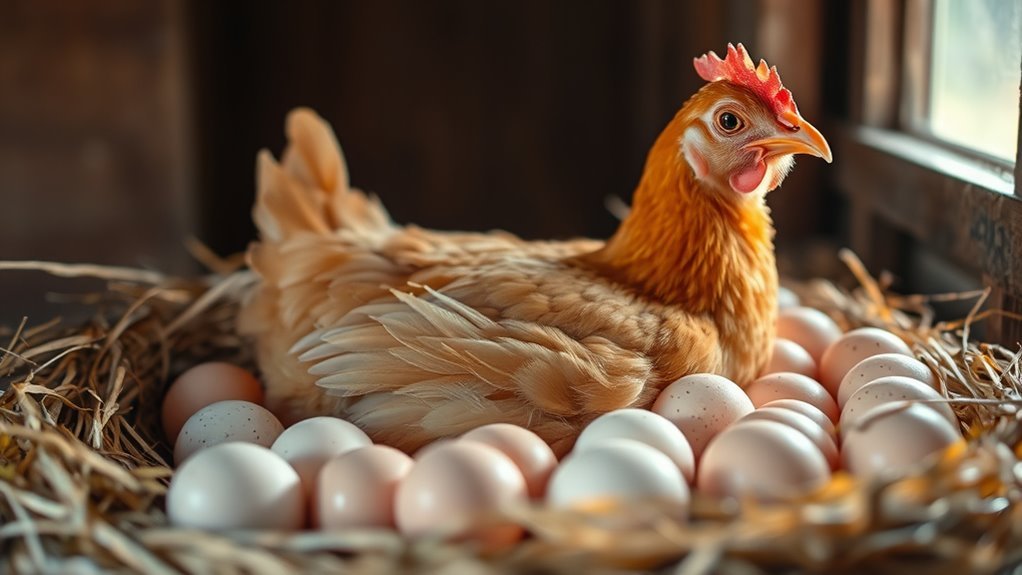
Once your hen starts laying, you can expect her egg production to peak around 30 weeks of age and then gradually decline over time. Most hens begin laying between 18 and 24 weeks, with peak productivity lasting about 1 to 3 years. Commercial laying hens usually maintain high egg production for 2 to 3 years before it drops markedly.
In contrast, backyard hens often lay eggs for 5 to 8 years, and some even reach 12 years or more. Overall, a hen’s egg-laying lifespan typically spans 3 to 5 years, influenced by breed, care, and environment. Understanding how long hens lay eggs helps you plan for egg supply and manage your flock effectively throughout their productive years.
How Many Eggs Does a Hen Lay Per Year at Peak Production?
A healthy hen can lay between 250 and 300 eggs per year during her peak production phase. During this time, which usually starts around 30 weeks of age, your hen reaches her most productive egg-laying period.
Commercial hybrid hens often exceed this, producing up to 350 eggs annually under ideal conditions. Keep in mind that factors like daylight hours and nutrition directly affect how many eggs your hen lays each year at peak production.
After one to two years, egg output naturally declines, but during peak production, your hen is at her most prolific. Understanding this helps you gauge what to expect when raising hens for eggs and ensures you provide the right environment for maximum yearly egg production.
How Different Breeds Affect Lifetime Egg Production
When you choose a chicken breed, you directly influence how many eggs it will lay over its lifetime. Hybrid breeds like ISA Browns excel in egg production, laying 320-350 eggs annually and reaching over 1,000 eggs in their peak years.
Pure breeds such as Leghorns start laying earlier and maintain steady output, averaging 250-300 eggs per year for 3-4 years. Bantam and ornamental breeds, focused less on egg production, produce fewer eggs—around 120-180 over their lifetime.
You’ll notice that lifetime egg production varies widely by breed, with hybrids generally offering the highest totals, sometimes over 600 eggs in total lifespan. Understanding these breed differences helps you select hens that align with your egg-laying goals efficiently.
How Do Seasonal Changes Affect Egg Production?
You’ll notice that shorter daylight hours in winter cause hens to lay fewer eggs. This natural drop can reduce egg production by up to half during fall and winter months.
However, using artificial lighting to extend daylight to 14-16 hours helps maintain steady egg laying all year round.
Impact Of Daylight
Although hens naturally reduce egg production as daylight hours shorten in fall and winter, you can encourage consistent laying by providing 14-16 hours of light daily. Seasonal changes in daylight directly impact egg production, with shorter days causing hens to slow down.
To keep your hens laying steadily, consider these tips:
- Use artificial lighting to extend hours of light during darker months
- Install timers to maintain consistent light schedules
- Monitor daylight exposure to adjust lighting as seasons shift
- Remember that egg production rebounds naturally as daylight increases in spring
Winter Egg Laying
Since hens depend on 14-16 hours of light to lay eggs, shorter winter days naturally reduce their production. During winter egg laying, you’ll notice hens often stop laying altogether as they enter molting, shedding and regrowing feathers—a process lasting 4-5 weeks. This pause conserves energy during harsh conditions.
| Factor | Effect on Egg Production |
|---|---|
| Daylight Hours | Less daylight = less laying |
| Molting | Temporary laying halt |
| Winter Season | Natural decline in output |
Without enough daylight hours, egg production can drop markedly or stop. But as days lengthen in spring, hens resume laying, often producing higher-quality eggs. Understanding these seasonal changes helps you manage expectations for winter egg laying.
Artificial Lighting Benefits
When shorter winter days cause hens to slow or stop laying, you can use artificial lighting to keep their egg production steady. As days get shorter, hens naturally reduce egg production, but artificial lighting tricks their bodies into thinking it’s longer daylight.
This helps hens maintain steady laying even in winter. Here’s how artificial lighting benefits you and your flock:
- Extends the laying season by providing 14-16 hours of light daily
- Maintains consistent egg production despite natural daylight reductions
- Simulates natural sunlight using timers and a 60-watt bulb for early morning or evening light
- Can boost winter egg output by 20-30%, depending on breed and care
The Role of Molting in Egg-Laying Cycles
You’ll notice that during molting, your hen’s egg production slows or stops for about 4 to 6 weeks as she sheds and regrows feathers. This pause lets her recover and renew, so when she starts laying again, the eggs often come with better quality and stronger shells.
Understanding this cycle helps you predict and manage your flock’s productivity throughout the year.
Molting’s Impact On Production
Although molting temporarily halts egg production, it plays a crucial role in a hen’s overall laying cycle. When your hen molts, she stops laying eggs to focus energy on shedding and regrowing feathers, which is essential for her health and longevity. This pause impacts her egg production but benefits her over the hen lifespan by improving shell quality and reproductive health afterward.
Keep in mind molting’s influence on production:
- Molting usually lasts 4-8 weeks, causing a temporary stop in laying eggs
- It redirects energy from egg production to feather regrowth
- Resumption of egg-laying often comes with stronger shells and healthier hens
- Factors like daylight, age, and nutrition can trigger molting cycles
Understanding this helps you manage your flock’s egg supply realistically.
Duration Of Molt Period
Since molting usually lasts between four to eight weeks, you can expect your hens to pause egg production during this time. The molt is a natural phase where hens stop laying eggs to shed and regrow feathers. This pause conserves energy, allowing them to focus on renewing their plumage.
Seasonal changes, like shorter days in fall, often trigger this process. Understanding the duration of the molt helps you anticipate when egg production will temporarily stop and plan accordingly.
| Aspect | Details |
|---|---|
| Molt Duration | 4 to 8 weeks |
| Egg Production | Temporarily stops |
| Feather Changes | Shedding and regrowth |
| Triggers | Age, season, reproductive cycle |
| Energy Use | Conserved by halting egg laying |
Post-Molt Egg Resumption
When hens finish molting, they usually resume laying eggs, often with stronger shells and renewed energy. The molt temporarily halts egg production, allowing your hen to focus on feather regrowth. Once the new feathers are in, her laying cycle restarts, though egg frequency might be lower at first.
Over time, productivity picks up again, benefiting from the energy conserved during the molt.
Here’s what you can expect post-molt:
- Eggshells tend to be thicker and more robust
- Initial egg production may decrease temporarily
- Feather regrowth signals the end of the molt phase
- Laying cycle gradually normalizes with improved vigor
Understanding this helps you anticipate changes in your hen’s egg-laying patterns after each molt.
What Environmental and Management Factors Affect Egg Laying?
To maximize a hen’s egg production, you need to control several key environmental and management factors. Proper lighting—about 14 to 16 hours daily—boosts vitamin D synthesis, aiding calcium metabolism essential for eggshell formation. You must also provide balanced nutrition with enough protein, calcium, and vitamins to support laying throughout her life.
Managing stress is essential; avoid overcrowding, parasites, and extreme temperatures between 13°C and 24°C to keep hens healthy and productive. As hens age, their laying naturally decreases, so maintaining ideal conditions helps prolong peak output. Ensuring clean shelter, good ventilation, and sufficient space further reduces stress and disease risks, helping you get the most eggs from each hen over time.
How Nutrition Supports Maximum Egg Output Over a Hen’s Life
Although many factors influence egg production, nutrition plays a critical role in maximizing your hen’s output throughout her life. Providing the right balance of nutrients guarantees she lays consistently and produces strong eggs. Focus on these key nutrition elements:
- Feed 16-18% protein to support egg formation and overall health.
- Include calcium sources like oyster shells or crushed limestone for durable eggshells.
- Supply essential vitamins, especially vitamin D and phosphorus, to enhance calcium absorption.
- Always offer fresh, clean water to maintain health and egg-laying capacity.
Proper nutrition early in your hen’s laying years extends her productive life and boosts total lifetime egg count. By prioritizing these nutritional needs, you’ll see maximum egg production and healthier hens over time.
Frequently Asked Questions
How Many Eggs Can Chicken Lay in Lifetime?
You can expect a chicken to lay between 1,200 and 2,400 eggs over its lifetime, depending on breed, health, and care.
Some hens might lay fewer, especially in commercial settings, while others can exceed 3,000.
What Is the 90/10 Rule for Chickens?
You’ll find the 90/10 rule means 90% of a hen’s eggs come in her first three years, with only 10% laid afterward.
This helps you focus on maximizing egg production early in her life.
Can You Eat Eggs Right After They Are Laid?
Yes, you can eat eggs right after they’re laid because they have a natural protective coating.
Just make sure to wash them if needed and refrigerate within a few hours to keep them fresh and safe.
At What Age Do Chickens Typically Stop Laying Eggs?
Imagine a clock winding down—chickens usually stop laying eggs around 5 to 6 years old.
You’ll notice their output slows after 1.5 to 3 years, like a fading song before it finally ends.
Conclusion
Think of a hen’s lifetime egg production as a garden blooming through seasons—starting strong, peaking vibrantly, then gently slowing as time passes. With the right breed, care, and nutrition, you can keep this garden flourishing longer, harvesting more golden treasures.
While no hen lays forever, understanding her cycles helps you nurture her best, turning each egg into a shining gem in your backyard bounty. So, tend well, and watch your flock’s legacy grow bright.
By knowing how many eggs a chicken will lay in its lifetime, you can better plan for optimal care and maximize your egg production. This insight ensures your hens remain healthy and productive, making your backyard egg harvest a rewarding experience.