How Old Are Chickens When They Start to Lay Eggs?
You’ll usually see your chickens start laying eggs between 16 and 24 weeks old, depending on their breed and size—lighter breeds tend to start earlier, heavier ones later.
Daylight length and nutrition also play big roles; hens need about 14 hours of light and good calcium to begin producing.
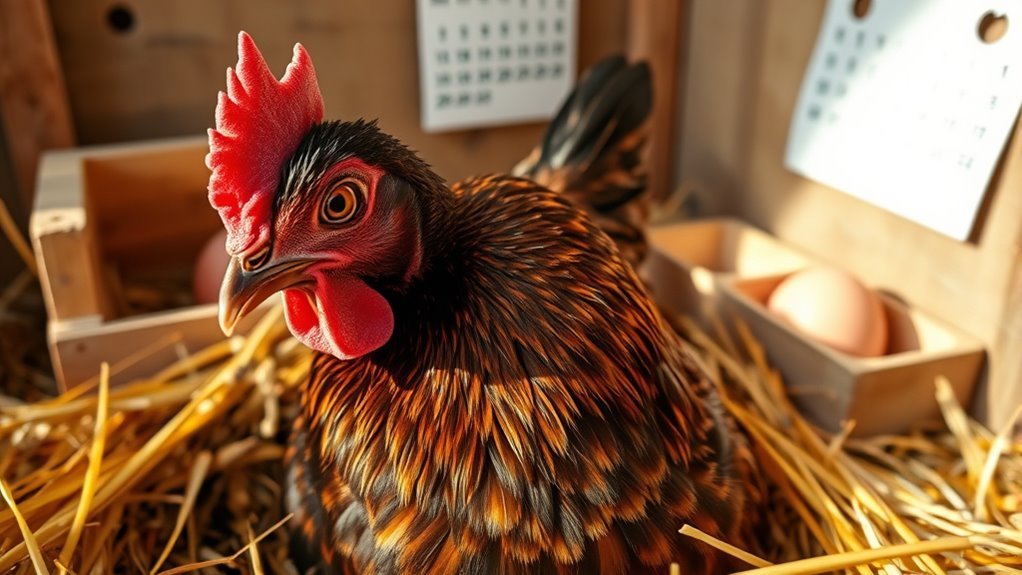
Watch for physical signs like bigger combs and nesting behavior as clues they’re ready.
If you want to know how to encourage timely laying and solve any delays, keep exploring these details.
At What Age Do Chickens Start Laying Eggs?

Although the exact age varies, most chickens start laying eggs between 18 and 22 weeks old. When you notice signs of maturity like enlarged wattles, comb development, and increased nesting behavior, that’s a good indication your chickens are nearing their first egg.
The age at first egg depends on several factors, including breed influence and environmental conditions. While lighter breeds tend to have an earlier laying age, factors such as proper light exposure and nutrition play vital roles in egg production timing.
If you want to encourage your chickens to start laying sooner, make sure they receive adequate daylight and a balanced diet. By paying attention to these signs and conditions, you’ll better understand when your chickens start to lay and can support them through their early egg-laying phase.
How Breed and Size Affect When Chickens Start Laying Eggs
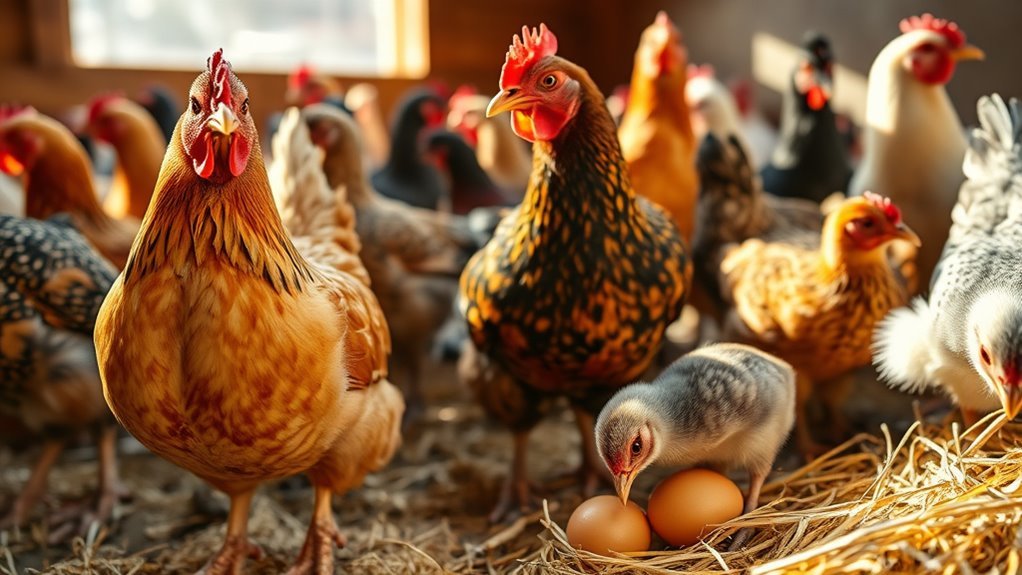
Since breed and size directly influence a chicken’s development, you’ll notice that lighter breeds like Leghorns start laying eggs earlier than heavier breeds such as Orpingtons. Early layers from smaller or standard-sized breeds often start to lay eggs between 16-18 weeks, reaching maturity faster and kicking off egg production sooner.
In contrast, heavy breeds like Orpingtons and Wyandottes usually mature later, around 20-24 weeks, delaying their egg-laying onset. The breed and size interplay affects the maturity age, with genetics playing a key role in when your chickens begin producing eggs.
Understanding these differences helps you predict when your flock will start to lay, allowing you to manage their care and nutritional needs effectively for ideal egg production.
How Daylight and Seasons Influence When Chickens Start Laying Eggs
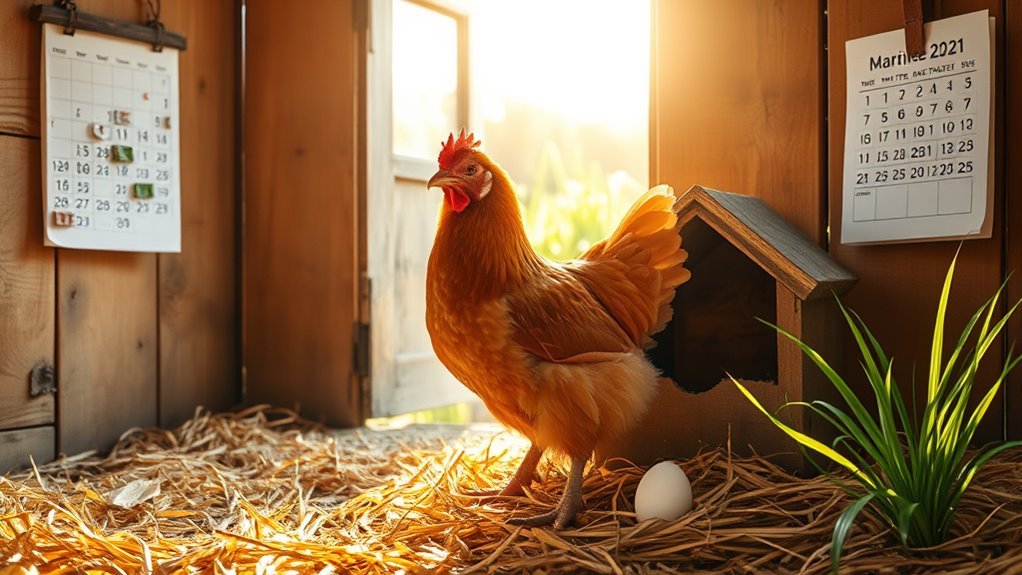
You’ll notice chickens usually start laying eggs once daylight hits about 14 hours a day, with longer summer days boosting production.
When days get shorter in fall and winter, hens may stop or slow down laying altogether. Using artificial light can help keep egg production steady even when natural daylight fades.
Daylight Hours Impact
When chickens experience at least 14 hours of daylight each day, their bodies trigger the hormonal changes needed to start laying eggs. The hens’ hormonal cycle depends heavily on natural daylight, influencing egg production timing and the egg-laying onset related to chickens’ age.
If daylight hours drop, egg-laying slows or stops, but you can use artificial light to maintain or extend light exposure. This keeps hens laying eggs consistently despite natural daylight changes.
| Daylight Hours | Effect on Chickens |
|---|---|
| < 12 hours | Egg-laying delayed/stops |
| 12-14 hours | Hormonal changes begin |
| 14+ hours | Start to lay eggs |
| 14-16 hours | Ideal egg production timing |
| 16+ hours | Artificial light boosts laying |
You can control egg-laying onset by managing daylight hours.
Seasonal Laying Patterns
Although chickens rely on reaching about 14 hours of daylight to start laying eggs, you’ll notice this naturally happens in spring and summer. Seasonal laying patterns depend heavily on daylight hours, which increase during these seasons, signaling hens to begin or ramp up egg production.
As daylight decreases in fall and winter, many hens reduce or stop laying altogether. During the seasonal progression, factors like molt and stress can also disrupt egg production. Without adequate light exposure, hens tend to pause laying in winter.
While artificial lighting can extend daylight hours to maintain egg production year-round, natural seasonal laying aligns closely with changing daylight. Understanding these patterns helps you anticipate when your hens will start or slow down their egg-laying cycle.
Artificial Light Benefits
Since natural daylight limits egg production during fall and winter, many chicken keepers turn to artificial lighting to keep hens laying consistently. By supplementing daylight hours with coop lighting, you can overcome seasonal laying declines.
Here’s how artificial lighting benefits egg production:
- Extends daylight hours to 16-18 hours, stimulating hens to lay more eggs.
- Uses energy-efficient bulbs or LEDs to minimize energy costs.
- Employs a timed light schedule to maintain consistent egg laying year-round.
- Encourages earlier onset of laying by mimicking longer days in spring.
How Diet and Nutrition Impact Egg-Laying Onset
You’ll want to provide your pullets with a high-protein starter-grower feed to support their growth before they start laying.
As they approach laying age, shifting to a balanced layer feed guarantees they get the nutrients needed for healthy eggs.
Meeting these nutritional needs helps them begin laying on time and maintain consistent production.
Nutritional Needs Before Laying
When you provide proper nutrition with enough protein and calcium, your hens develop their reproductive organs faster, which helps them start laying eggs sooner. Feeding a high-quality starter-grower feed until 17-18 weeks delivers essential nutrients for ideal egg production.
As they approach laying age, proper nutrition ensures strong eggshell quality. Here’s what to focus on before your hens start laying:
- Provide balanced protein levels to support growth and reproductive development.
- Ensure adequate calcium intake to prepare for eggshell formation.
- Use starter-grower feed to supply essential nutrients early on.
- Avoid nutritional imbalances, which can delay laying or reduce egg quality.
Meeting these nutritional needs sets the stage for healthy, consistent egg-laying once your hens mature.
Transition To Layer Feed
Although hens typically begin laying around 18 weeks, you should start shifting their diet to a complete layer feed to support their changing nutritional needs. The changeover to layer feed is vital as it contains higher calcium levels essential for strong egg shells and overall layer nutrition.
To avoid digestive upset, make a gradual transition over a week from starter-grower to layer feed. Proper nutrition at this stage directly impacts egg production and helps hens maintain health while starting to lay.
Using a specialized layer feed, like Purina Oyster Strong System, ensures your hens get balanced nutrients that promote consistent laying and strong egg shells. By carefully managing the changeover to layer feed around 18 weeks, you set your flock up for successful, productive egg-laying.
What Physical Signs Show Hens Are Ready to Lay
As hens near laying age, their combs and wattles swell and turn a bright red, signaling hormonal changes that prepare them for egg production. You’ll notice several physical signs showing their readiness:
- The comb and wattles become enlarged, bright red, and more vibrant.
- Hens display increased interest in nesting areas, often inspecting or sitting in nest boxes.
- Their abdomen grows plumper and more prominent as they develop physically.
- Feathers appear smoother and shinier, indicating overall health and maturity.
These signs are clear indicators that your hens are ready to lay eggs soon. Paying attention to these physical changes helps you anticipate and support their *progression* into egg production effectively.
How to Set Up Nesting Boxes to Encourage Early Laying
Noticing your hens’ physical signs of readiness is just the start; creating an inviting nesting area encourages them to begin laying eggs promptly. To encourage early laying, place nesting boxes in quiet, dark corners of the coop where hens feel secure. Use one nesting box for every four hens and line each with soft bedding like straw or shavings to enhance the comfort of hens.
The design of nesting boxes matters—position them higher than roosts to prevent hens from sleeping there and to promote proper use as a laying area. Keep nesting boxes clean and free of debris, as cleanliness influences hen behavior positively. Adding fake eggs or golf balls can stimulate hens to use the nesting boxes, helping them settle into a regular laying routine quickly.
Troubleshooting Why Hens Don’t Lay and How to Fix It
When your hens stop laying eggs, it’s usually due to factors like insufficient light, stress, diet issues, or health problems. To troubleshoot, consider these key areas:
- Lighting: Ensure your hens get 14-16 hours of light daily, especially in winter, to stimulate laying.
- Diet: Provide a balanced diet rich in calcium, like oyster shells, to support consistent egg production.
- Stress: Minimize stress by protecting hens from predators, loud noises, and sudden environmental changes.
- Hen Age and Health Issues: Check if hens are too young or old for laying or if health problems affect them; some chicken breeds have different laying patterns.
Frequently Asked Questions
Can You Eat the First Eggs Laid by Chickens?
Yes, you can eat the first eggs your chickens lay. They might be smaller, have softer shells, or look unusual, but they’re safe.
Expect some inconsistencies until your hens fully mature and produce regular eggs.
How Do You Know Chickens Are Ready to Lay Eggs?
When your hens’ combs blush like dawn and they nestle enthusiastically, you know they’re ready to lay eggs. Listen for their egg song, watch for squatting, and notice their shiny vents—these signs tell you it’s egg time!
Do 4 Month Old Chickens Lay Eggs?
Four-month-old chickens rarely lay eggs consistently, but some early-maturing breeds might start around this age.
You’ll likely see small or irregular eggs if they do, so don’t expect regular laying just yet.
How Old Is a Chicken When It Lays Its First Egg?
Your chicken usually lays its first egg between 16 and 22 weeks old. Early breeds start closer to 16 weeks, while heavier breeds take a bit longer.
Proper care helps your hen begin laying sooner.
Conclusion
Now that you know when chickens start laying eggs, you can confidently care for your coop. By considering breed, daylight, diet, and signs of readiness, you’ll smoothly support your hens’ egg-laying journey.
Setting up snug nesting spots and solving setbacks swiftly will spark success. Stay sharp, stay supportive, and soon you’ll see steady streams of fresh, fabulous eggs.
With patience and proper planning, your poultry will proudly perform their perfect, productive purpose! Remember, understanding how old chickens are when they start to lay eggs is key to maximizing your flock’s egg production.