

10 Tips to Clean Eggs Without Removing the Bloom
To clean eggs without removing the bloom, it’s essential to follow proper egg cleaning tips that preserve their natural protective coating. Only clean eggs when they are visibly dirty, and use a dry cloth or soft brush to gently remove dirt.
When spot-cleaning, use warm water instead of cold to avoid shrinking the pores of the eggshell. Always dry eggs immediately after cleaning, then refrigerate them to maintain freshness.
Keep nesting areas clean to reduce dirt buildup and test egg freshness before cleaning. These simple steps help protect your eggs’ natural coating and extend their shelf life.
You can discover more detailed tips on preserving egg freshness below.
What Is the Egg Bloom and Why Should You Care?
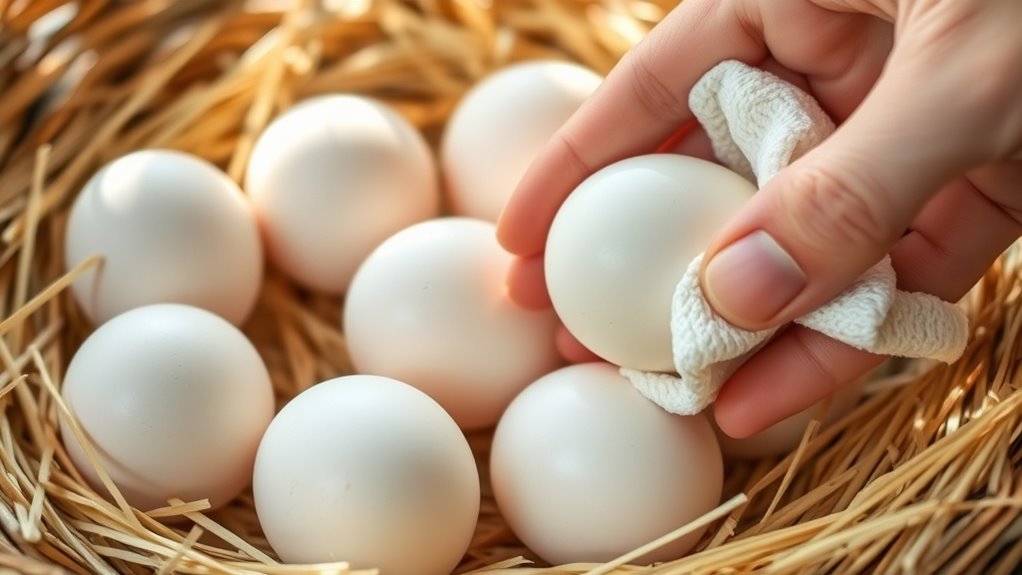
Although you might not notice it, the egg bloom—a natural coating on the eggshell—plays a crucial role in keeping your eggs fresh and safe. This nearly invisible layer seals the eggshell’s pores, preventing moisture loss and blocking harmful bacteria from entering.
When you wash eggs without care, you risk removing this protective bloom, which can lead to quicker spoilage and contamination. That’s why the way you clean eggs matters so much. If you decide to wash eggs, you need to be gentle to avoid damaging the bloom.
Preserving this natural barrier means you can store eggs at room temperature longer without worrying about freshness. Understanding the egg bloom helps you appreciate the importance of careful cleaning to keep your eggs safe and tasty.
Decide When to Clean Eggs or Preserve the Bloom

Because the egg bloom protects your eggs from bacteria and moisture loss, you should only clean eggs when they’re visibly dirty or soiled. This natural, protective coating helps keep eggs fresh longer, so preserving the bloom is key to maintaining quality.
If eggs look clean, leave them unwashed to retain this important barrier. When you do clean eggs, do it right before use to avoid compromising the bloom’s effectiveness. Remember, cleaning removes the bloom, which can increase contamination risk if done too early.
Gently Wipe Eggs With Dry Cloth or Soft Brush

When you need to clean eggs without harming their natural protection, gently wiping them with a dry cloth or a soft brush works best. Use a clean, lint-free dry cloth or soft-bristled brush to remove surface dirt with minimal pressure. This gentle cleaning preserves the natural bloom, preventing contamination and extending shelf life.
Avoid water or solutions, as they can remove the bloom or introduce bacteria. Regularly sanitize your cleaning tools to keep conditions hygienic.
| Tool Type | Best For | Maintenance Tip |
|---|---|---|
| Dry Cloth | Light surface dirt | Wash and air dry regularly |
| Soft Brush | Stubborn dirt | Clean bristles after each use |
| Lint-free Cloth | Sensitive bloom | Replace when worn |
| Both | Gentle cleaning | Store in a clean, dry place |
Safely Spot-Clean Eggs With Warm Water When Needed
If dry wiping doesn’t remove all the dirt, you can safely spot-clean eggs using warm water. Use warm water between 90-120°F to gently wipe away dirt without stripping the egg’s protective coating. Make sure the water is warmer than the egg to prevent bacteria from entering through the shell.
Avoid soaking eggs; instead, dampen a cloth or soft brush and carefully spot-clean only the dirty areas. Handle eggs gently to avoid cracks, as damaged shells can let contaminants in. After cleaning, dry the eggs thoroughly to preserve their natural bloom and protective layer.
Only spot-clean when necessary, and if you notice the bloom has been compromised, store eggs promptly in the refrigerator to maintain freshness and safety.
Avoid Using Cold Water When Cleaning Eggs
When you wash eggs with cold water, the shell’s pores can contract and pull bacteria inside, increasing contamination risks.
Using warm or room temperature water helps keep the protective bloom intact and pushes dirt away safely.
Always match the water temperature to the egg’s temperature to protect your eggs better.
Risks Of Cold Water
Because cold water causes eggshells to contract, washing your eggs with it can pull bacteria through the pores and increase contamination risk. When you rinse eggs in cold water, the shell contracts, creating a vacuum effect that draws bacteria inward. This not only raises the chance of contamination but also damages the protective bloom—the natural coating that shields the egg from harmful microbes.
Cold water makes the bloom brittle, reducing its effectiveness and shortening the egg’s shelf life. To protect the shell and keep your eggs safe, avoid using cold water when cleaning. Instead, stick to methods that preserve the bloom and prevent bacteria from entering, ensuring your eggs stay fresh and safe to consume longer.
Benefits Of Warm Water
Although cold water can draw bacteria into eggshell pores, using warm water between 90°F and 120°F helps you clean eggs safely by preventing this risk. Warm water softens dirt and loosens debris, making it easier to clean eggs gently without damaging their shells.
When you rinse eggs with water warmer than their temperature, you reduce the chance of creating a vacuum that could pull bacteria inside. This careful temperature control helps maintain the egg’s protective layer, known as the bloom, which guards against contamination.
Don’t Scrub Eggs to Protect the Bloom
To keep your eggs fresh longer, don’t scrub them with abrasive brushes or harsh scrubbers, as this can damage the delicate cuticle known as the bloom. This natural coating acts as a protective barrier, keeping bacteria out and preserving freshness.
Instead, focus on gentle cleaning methods. Use a soft cloth or sponge to dry clean the eggs, applying only light pressure to remove visible dirt without harming the bloom. Avoid water or harsh cleaning agents whenever possible, since dry cleaning is the safest way to maintain the egg’s natural barrier.
Dry Cleaned Eggs Thoroughly Right After Cleaning
Protecting the bloom means you’ll want to dry clean your eggs right after collecting them. This method helps remove dirt and debris without harming the egg’s natural protective bloom. Use a soft-bristled brush, sponge, or dry paper towel to gently wipe the egg shells, making sure no moisture touches them.
Clean immediately while the eggs are still warm or at room temperature to reduce bacteria risk entering through shell pores. Avoid water or cleaning solutions during dry cleaning to preserve the protective bloom that keeps eggs fresh longer.
Refrigerate Washed Eggs Immediately
Once you’ve washed your eggs, you need to refrigerate them right away to keep bacteria from multiplying. Cooling them quickly helps make up for the protective layer lost during cleaning.
Always store them in a clean container in the coldest part of your fridge for best freshness and safety.
Importance Of Immediate Cooling
Because washing eggs removes their natural protective bloom, you should refrigerate them immediately to slow bacterial growth and keep them fresh. Immediate cooling by refrigerating washed eggs at or below 40°F prevents bacteria from entering through the now unsealed shell pores. This step is essential because without the bloom, eggs become more vulnerable to contamination.
Food safety experts recommend not leaving washed eggs at room temperature for more than two hours. Refrigerating promptly extends the eggs’ shelf life considerably—studies show washed eggs last over four months in the fridge compared to just two to three months at room temperature.
To maintain freshness and safety, make immediate cooling a habit right after cleaning your eggs. It’s the best way to protect your eggs and your health.
Preventing Bacterial Growth
If you want to keep your washed eggs safe and fresh, refrigerate them immediately at 40°F or below. When you clean eggs, you remove dirt but can also expose them to bacteria. Prompt refrigeration slows bacterial growth, which can otherwise double every 20 minutes at room temperature.
Keeping your eggs cold preserves the protective barrier left after washing, reducing spoilage risks. Always store washed eggs in a sealed container to prevent cross-contamination and maintain consistent refrigeration. Studies show that refrigeration considerably extends the shelf life of clean eggs compared to room temperature storage.
Keep Nesting Boxes Clean for Cleaner Eggs
Keeping nesting boxes clean plays a vital role in ensuring your eggs stay free from dirt and bacteria. By regularly changing fresh bedding and removing droppings, you reduce the chances of dirty eggs. Use clean straw or shavings without manure or wet spots to create a healthy laying environment.
Place nesting boxes lower than roosting bars to encourage hens to lay eggs in designated areas, which helps prevent contamination from droppings. Inspect nesting boxes often and promptly remove soiled eggs to stop dirt and bacteria from spreading to fresh eggs.
Test Egg Freshness Before Cleaning
Before you start cleaning, test your eggs’ freshness by placing them in warm water. Use the float test to check whether your eggs sink or float without removing the protective bloom. If the egg sinks and lies flat on the bottom, it’s very fresh, and the bloom remains intact, helping keep the egg clean longer.
Eggs that sink but stand upright are still good but older, so handle them promptly. If an egg floats, it’s likely no longer fresh and should be discarded or tested further. By performing this simple float test, you avoid unnecessary cleaning that might strip away the bloom, preserving your eggs’ natural protection.
Always handle eggs gently during the test to prevent cracks and maintain accuracy in evaluating freshness.
Frequently Asked Questions
How to Clean Fresh Eggs Without Removing Blooms?
You gently wipe fresh eggs with a warm, damp cloth or use a dry brush to clean dirt. Avoid soaking or cold water, and clean only soiled spots right before use to keep the bloom intact.
Do You Have to Wash the Bloom off Eggs Before Cooking?
You don’t have to wash the bloom off eggs before cooking. You don’t have to strip away nature’s shield.
You can cook them as is, keeping freshness and safety intact without extra steps or fuss.
How to Store Fresh Eggs With Bloom?
Store fresh eggs with the bloom by keeping them pointy side down in a ventilated container. Place them in a cool, dark spot away from sunlight and temperature changes, so they stay fresh longer without refrigeration.
How Long Will Eggs Last With the Bloom on Them?
Think of the bloom as a shield guarding your eggs—when it’s on, your eggs can last 2-3 months at room temperature or over 4 months in the fridge.
Keep that shield intact to preserve freshness longer.
Conclusion
By treating your eggs with a gentle touch and mindful care, you’re helping maintain their natural shield—the bloom—that keeps them fresh and protected. Instead of rushing to scrub every speck, consider when a little spot-cleaning will do.
With these simple habits, you’ll keep your eggs looking their best and lasting longer, all while honoring the delicate balance nature intended. It’s a subtle art that pays off with every delicious breakfast.
Remember, adopting these 10 tips to clean eggs without removing the bloom ensures your eggs stay fresh, safe, and flavorful for longer. Embrace these practices to protect the bloom and enjoy the best quality eggs every time.