How to Prevent Chickens From Eating Eggs Step by Step
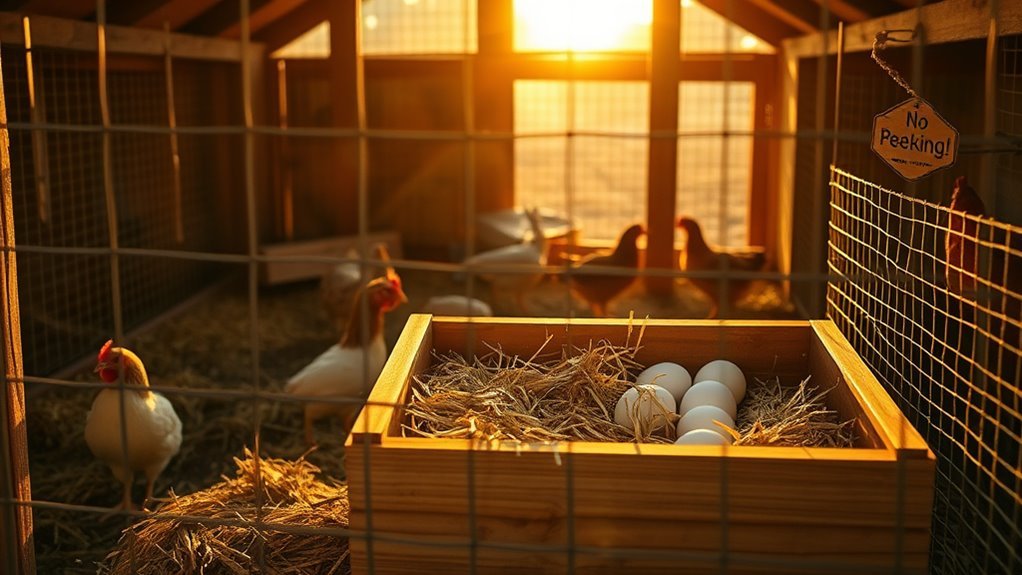
You can stop your chickens from eating eggs by collecting eggs frequently—at least twice a day—and removing any broken ones.
Feeding them a high-protein diet with added calcium like oyster shells helps meet their nutritional needs and reduces egg-eating behavior.
Providing clean, private nesting boxes with soft bedding minimizes stress and limits egg access.
Use fake eggs with spicy fillings to deter pecking and keep hens busy with toys and treats to distract them from eggs.
Regularly monitoring your flock and maintaining good coop hygiene also play important roles in preventing egg eating.
Keep going to find out more ways to protect your flock’s eggs.
Why Do Chickens Start Eating Eggs?
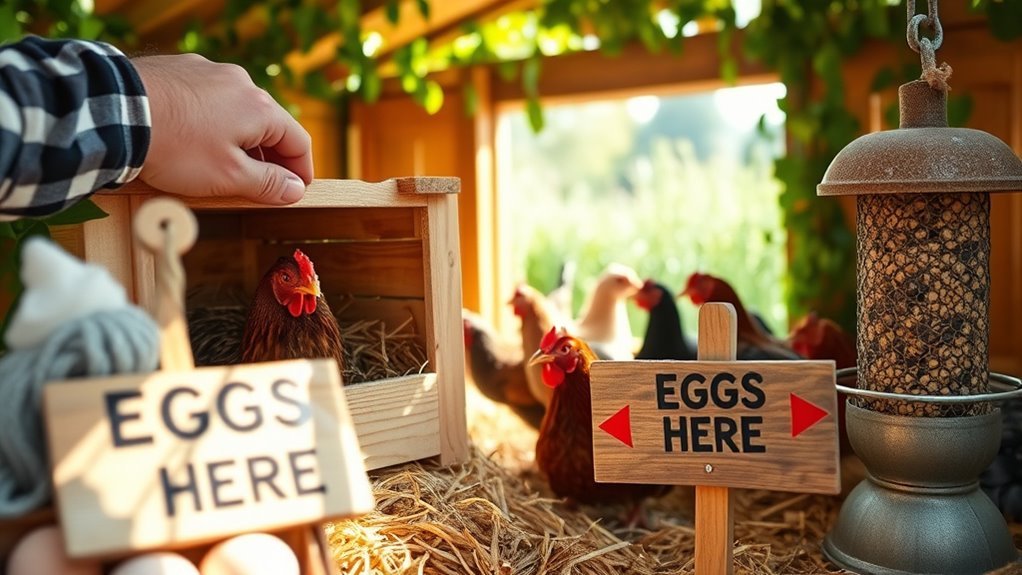
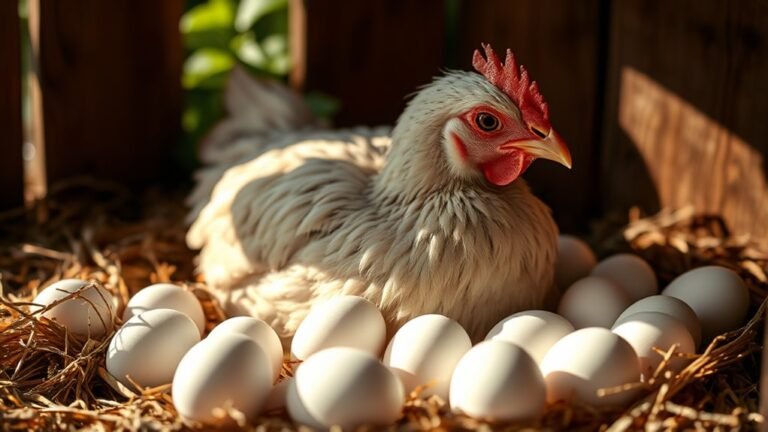
If you’ve noticed your hens starting to eat eggs, it’s often because they’re missing key nutrients like calcium or protein. Egg-eating hens frequently develop this habit due to calcium deficiency, which makes them seek out egg shells to fulfill their dietary needs. Broken eggs in nesting boxes only encourage pecking at eggs, as hens are attracted to the smell and easy access.
Nutritional deficiencies aren’t the only cause; boredom and lack of enrichment can also lead to egg breakage and subsequent egg consumption out of curiosity or frustration. Poor nesting conditions and overcrowding add stress, increasing the likelihood of this behavior.
Collect and Handle Eggs Frequently to Stop Pecking
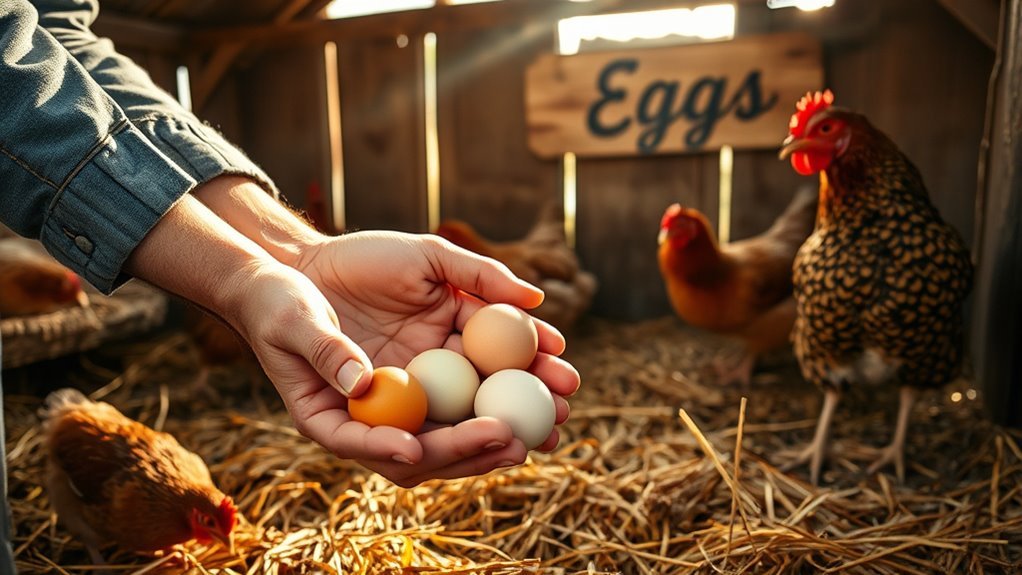
Addressing egg-eating starts with reducing opportunities for hens to peck at eggs. To prevent pecking, collect eggs frequently—ideally 2-3 times a day—especially during peak laying times before noon. This daily collection limits hens’ access to eggs, making it less likely they’ll develop egg-eating behavior.
When you gather eggs, handle eggs gently to avoid cracked eggs, which can attract hens to peck at shells. Always remove broken eggs promptly from nesting boxes, as they encourage egg-eating habits. Keeping nesting boxes clean and free of old eggs also discourages pecking.
Regularly monitor hens and their egg-laying areas to ensure you gather eggs quickly and maintain a tidy environment. By consistently collecting and handling eggs with care, you effectively reduce the chance of egg-eating behavior in your flock.
Improve Nutrition to Prevent Egg Eating
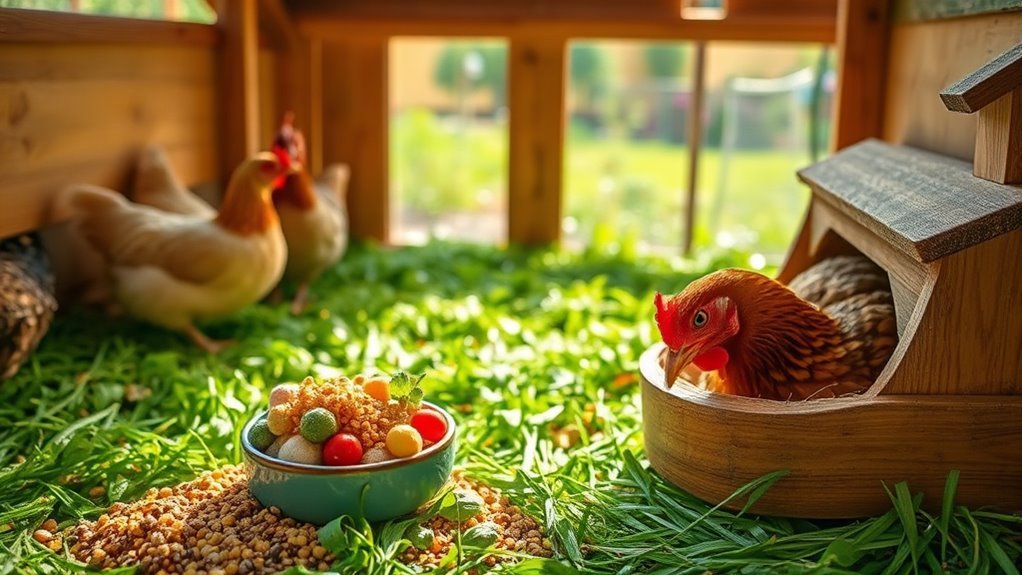
Ensuring your hens get proper nutrition plays a critical role in preventing egg-eating behavior. Start by providing a layer feed with at least 16% protein to reduce egg pecking caused by nutritional deficiencies. Supplement their diet with high-protein treats like dried mealworms or sunflower seeds to keep them satisfied.
Calcium is essential for egg shell strength, so offer sources like oyster shells or crushed eggshells regularly. This helps prevent weak eggshells that break easily, triggering egg-eating. Always avoid feeding raw eggs, as this encourages hens to develop a taste for eggs.
Regularly assess and adjust your flock’s balanced diet to meet their nutritional needs fully. With proper nutrition, you’ll reduce egg pecking and protect your hens’ eggs effectively.
Create Safe Nesting Boxes to Protect Eggs
Proper nutrition helps reduce egg-eating, but protecting your eggs starts with the right nesting boxes. Use roll-away nests with sloped bottoms to keep eggs out of hens’ reach, preventing pecking. Install a front sill to avoid egg breakage.
Provide secure nests—one per 3-5 hens—to reduce competition and promote safe laying. Add curtains for privacy, helping hens feel secure and less likely to disturb eggs.
Use soft nesting material like straw or shredded paper, keep nests clean, and place them off the ground.
| Feature | Purpose | Benefit |
|---|---|---|
| Roll-away nest | Eggs roll away | Prevent egg eating |
| Front sill | Stops egg roll-out | Reduces egg breakage |
| Curtains | Adds privacy | Secure nests, less stress |
| Soft bedding | Comfort & cleanliness | Safe laying environment |
Use Fake and Spicy Eggs as Behavioral Deterrents
Although it may take some trial and error, using fake and spicy eggs can effectively discourage your hens from pecking at real eggs. Place ceramic or wooden fake eggs in nesting boxes as visual deterrents to teach egg-eating chickens to avoid actual eggs.
Fill old or fake eggs with hot sauce or mustard to create spicy eggs that deliver an unpleasant taste, deterring egg pecking. Regularly replace or rotate fake eggs to maintain their effectiveness as behavioral deterrents. Some fake eggs even have loud popping mechanisms to startle hens when pecked.
Combine these methods with frequent egg collection and proper chicken management to prevent egg eating. By integrating fake and spicy eggs into your nesting boxes routine, you create a strong, multi-layered strategy to protect your flock’s eggs.
Keep Chickens Busy to Reduce Egg Eating Behavior
To keep your chickens from eating eggs, provide engaging activities like perches, toys, and foraging materials that hold their attention. Rotate enrichment items regularly and encourage outdoor foraging to stimulate natural behaviors.
These steps help prevent boredom and reduce egg pecking effectively.
Provide Engaging Activities
When you keep your hens mentally and physically engaged, they’re less likely to develop the habit of pecking at eggs. Provide perches and pecking toys as enrichment to stimulate their curiosity and reduce boredom. Allowing free-range access encourages natural exploration and foraging, which distracts them from eggs.
Incorporate treats like chopped vegetables or high-protein snacks to serve as diversions and motivate activity. A varied environment with physical activity opportunities and social interaction lowers stress and keeps hens focused on positive behaviors. By offering these engaging activities, you create a stimulating environment that minimizes frustration and the risk of egg eating.
Keeping your flock busy with perches, toys, treats, and outdoor exploration ensures they stay active and content, reducing harmful habits effectively.
Rotate Enrichment Items
Keeping your chickens engaged means changing up their environment regularly. Rotate enrichment items like coop toys, perches, and foraging materials every few weeks to maintain boredom prevention and boost mental stimulation.
Introducing a variety of textures—such as hanging greens, mirrors, or treat balls—encourages natural pecking behavior that diverts their attention from eggs. This coop enrichment keeps your flock curious and active, reducing their interest in eggs and lowering egg pecking.
If you don’t mix things up, chickens can get used to the same items, losing interest and potentially reverting to unwanted pecking behavior. Consistent rotation of enrichment items is key for effective pecking reduction.
Encourage Outdoor Foraging
Although egg eating can become a frustrating habit, you can diminish it by encouraging your chickens to forage outdoors daily. Outdoor foraging offers natural entertainment and boredom reduction, key to preventing egg eating. Keep your hens engaged by providing varied foraging materials and safe spaces so they feel secure, which also aids stress reduction.
To maximize benefits, try these tips:
- Rotate foraging spots regularly with portable fencing to encourage exploration and keep chickens interested.
- Offer diverse foraging materials like grasses, insects, and worms to stimulate their natural behaviors.
- Ensure outdoor areas are predator-proof to provide a safe environment for relaxed foraging.
Frequently Asked Questions
How Do I Stop My Chickens From Eating Their Own Eggs?
You can stop your chickens from eating eggs by collecting eggs frequently, providing fake eggs, improving nesting conditions, ensuring a balanced diet with enough protein and calcium, and isolating any hens that start this behavior to prevent it spreading.
Collect eggs multiple times a day to reduce temptation. Place fake eggs in the nest to discourage hens from breaking real ones.
Make sure the nesting area is clean and comfortable to reduce stress. Provide a diet rich in protein and calcium to meet their nutritional needs.
If a hen starts eating eggs, isolate her temporarily to prevent the habit from spreading to others.
How Do I Break the Egg Eating Habit?
You’ll shatter the egg-eating cycle by swapping real eggs for fiery fakes, collecting often, and cloaking nests in shadows.
Catch the culprit early, then fill their days with play to break boredom’s chain.
Is Egg Eating a Learned Behavior in Chickens?
Yes, egg eating is a learned behavior in chickens. When you catch hens pecking eggs, they often imitate it, making the habit spread.
You’ll want to interrupt this early to keep it from becoming a problem.
Does Mustard Stop Chickens From Eating Eggs?
Yes, mustard stops chickens from eating eggs by deterring taste, by deterring smell, and by deterring habit.
If you fill fake eggs with mustard and place them in nests, hens quickly learn to avoid real eggs.
Conclusion
By staying attentive and making a few thoughtful changes, you can gently guide your chickens away from their curious nibbling habit. Remember, a little extra care with nutrition, cozy nesting spots, and clever distractions can transform their behavior without fuss.
With patience and consistency, you’ll keep your eggs safe and your flock happily engaged. This approach helps prevent chickens from eating eggs, turning a tricky situation into a smooth and peaceful routine everyone can enjoy.