How to Tell If Farm Eggs Are Still Good
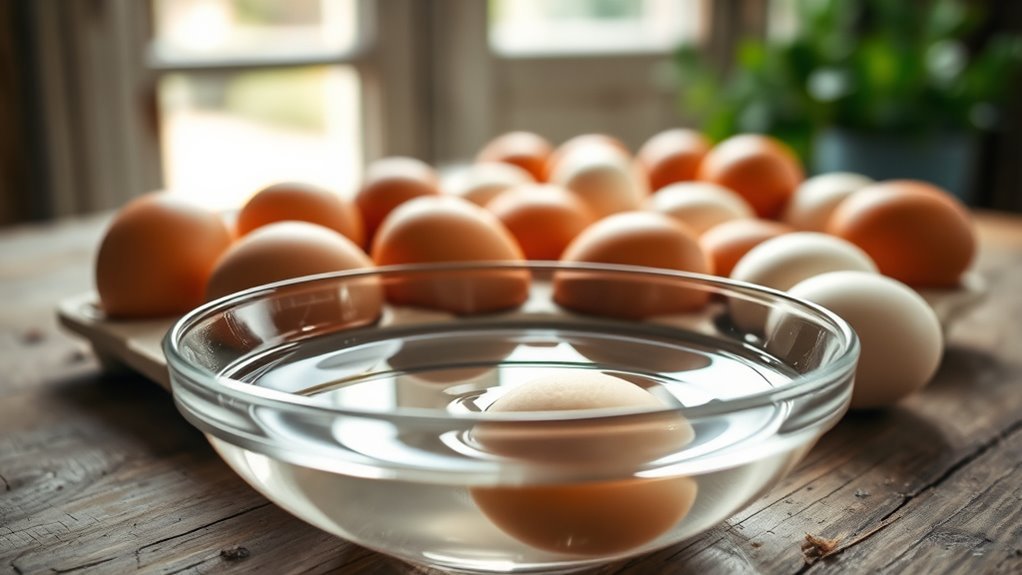
To tell if your farm eggs are still good, try the float test: place eggs in cold water—if they sink flat, they’re fresh; if they stand, they’re older but okay; if they float, toss them. This simple method helps you quickly assess egg freshness.
When cracking the eggs, check for a firm yolk and thick whites with no bad smell or discoloration. These signs indicate the eggs are safe to eat.
Proper storage, like refrigeration, keeps them fresh longer. Handling cracked eggs carefully is key for safety.
Keep these tips in mind, and you’ll also find out more on keeping your eggs safe and fresh.
How to Use the Float Test for Egg Freshness
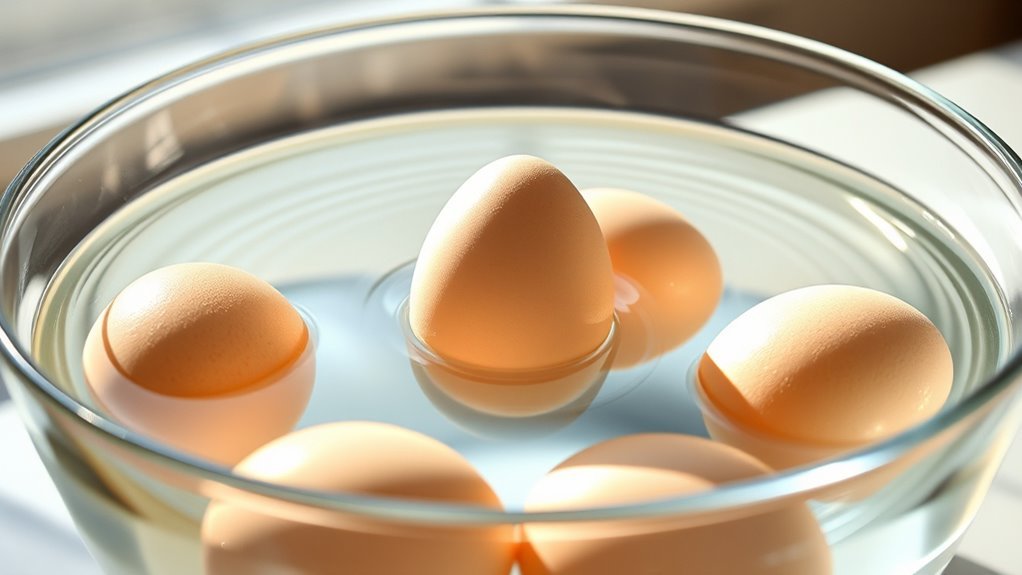
Wondering if your farm eggs are still fresh? The float test is a simple way to check egg freshness. Fill a container with about four inches of cold water and gently place the egg in it.
If the egg sinks and lies flat on the bottom, it’s very fresh. Eggs that stand upright on the bottom are still good but less fresh, showing they’re older. However, if the egg floats to the surface, it’s likely too old and should be discarded due to increased air space inside.
Keep in mind, the float test measures age based on buoyancy, not safety, so always crack the egg open and inspect it before eating. Combining the float test with visual and smell checks gives you the most accurate sense of egg freshness.
What to Look for When Cracking an Egg
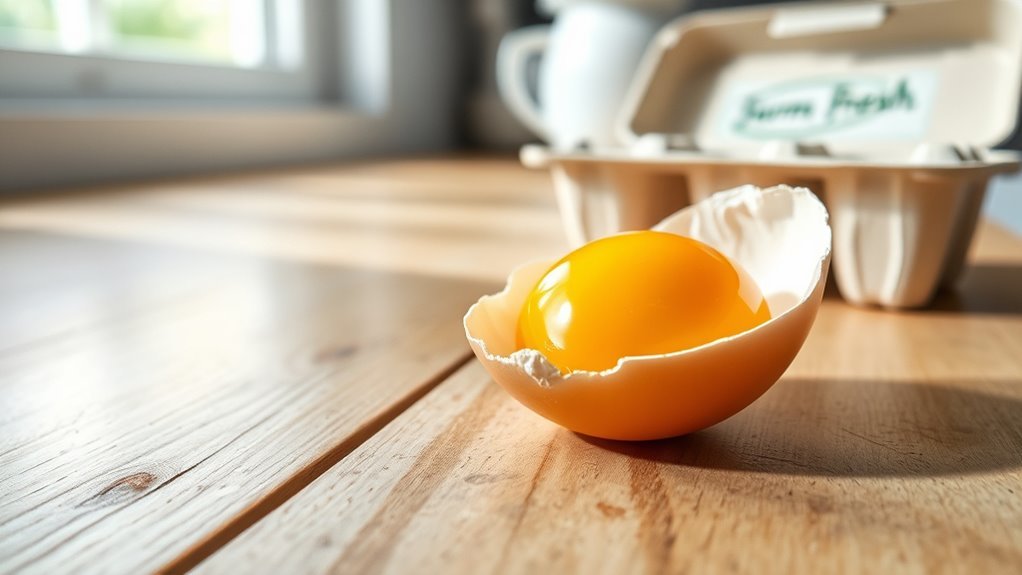
When you crack an egg, pay close attention to its appearance and smell to determine freshness. A fresh egg will have a firm, rounded egg yolk and thick, slightly cloudy egg white that stays close to the yolk without spreading too much.
If the egg yolk is flat or breaks easily, and the egg white is watery or spreads thinly, the egg is likely older and less fresh. Watch out for any discoloration like pink, black, or brown spots inside the shell or within the egg white, as these can indicate spoilage or mold.
While smell is important, here focus on the visual cues of the egg yolk and egg white to judge if your farm eggs are still good to use.
How Smell Reveals if an Egg Has Gone Bad
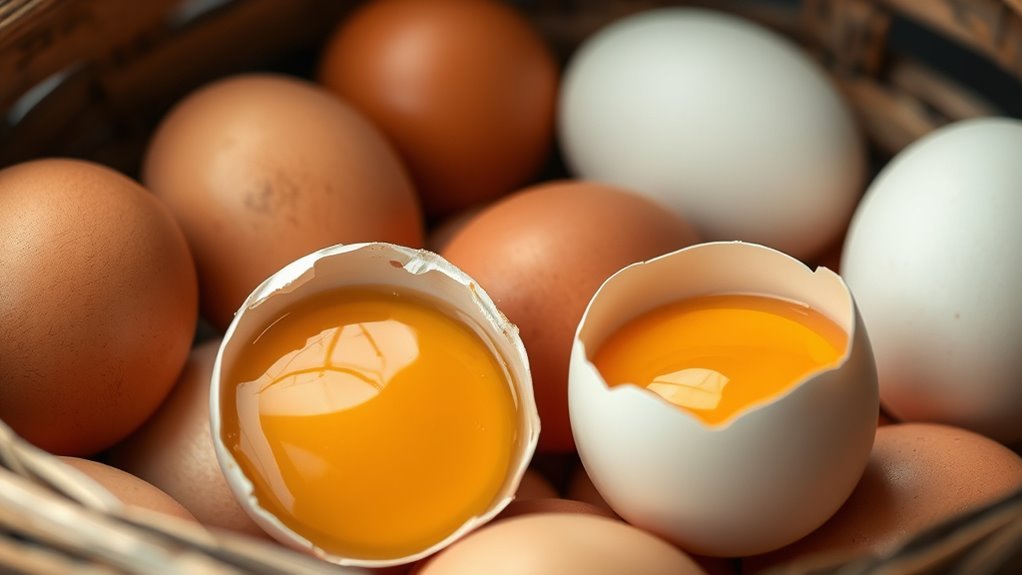
When you crack open a farm egg, pay close attention to any foul or sulfur-like smells—that’s a clear sign the egg has gone bad. Fresh eggs usually don’t have much odor, so using your nose is a reliable way to check for spoilage.
Trusting your sense of smell can help you avoid eating contaminated eggs, even when they look fine.
Detecting Spoiled Egg Odor
Although farm eggs can look fine on the outside, you should always rely on your sense of smell to check their freshness. When you crack open an egg, pay close attention to any odor. Fresh eggs usually have little to no smell, so a strong sulfurous or rotten odor signals spoilage.
This foul smell is caused by bacteria growing inside the egg as it goes bad. If you detect this unpleasant odor, it’s a clear sign the egg isn’t safe to eat and should be discarded immediately. Trusting your nose is vital because the odor is one of the most reliable indicators of spoilage, even if the egg looks normal or passes other tests.
Don’t risk it—when in doubt, throw it out.
Smell Test Reliability
Your sense of smell offers one of the most reliable ways to determine if a farm egg has gone bad. When you crack open an egg, a foul or rotten smell immediately signals spoilage. Fresh eggs usually have little to no odor, so the smell test makes it easy to detect if bacteria have developed inside.
These bacteria produce sulfur compounds, causing that distinct, unpleasant rotten smell. Relying on smell is more dependable than just looking at the egg since bacterial growth might not be visible through the shell or even in the egg white and yolk.
Always trust your nose—if the egg emits any off-putting odor after cracking, discard it right away to avoid any risk.
What Egg Appearance and White Consistency Tell You
When you crack open a farm egg, pay close attention to the yolk’s firmness and color—fresh yolks stand tall and bright. Check the egg white’s texture; thick and viscous means freshness, while thin and watery suggests age.
Also, watch for unusual colors or spots, which can signal spoilage and mean you should toss the egg.
Yolk Firmness And Color
If you crack open a fresh farm egg, you’ll notice a bright, firm yolk that sits high and a thick, viscous white that holds it in place. Yolk firmness is a key freshness indicator—fresh eggs have a rounded yolk that resists spreading. The egg white is clear and thick, not watery or runny.
As eggs age, the yolk flattens and dulls in color, while the white thins and spreads out more easily.
| Yolk Firmness | Egg White Appearance |
|---|---|
| Firm and rounded | Thick, viscous |
| Slightly flattened | Somewhat watery |
| Flat and runny | Thin and spread out |
| Dull in color | Discolored or off-odor |
Check these signs to ensure your farm eggs are fresh and safe to eat.
Egg White Texture
How can you tell an egg’s freshness just by looking at its white? When you crack a fresh egg, the egg white is thick and gel-like, holding its shape well. This thickness indicates high freshness and quality.
As the egg ages, the white becomes watery and spreads out more, showing a decline in freshness. You might also notice cloudy or discolored whites, which could suggest spoilage or bacterial growth inside the egg.
While thinner whites make eggs easier to blend or pour, they signal that the egg isn’t as fresh. Always check the egg white’s texture carefully; if it’s unusually watery or has an off odor, it’s best to discard the egg to avoid any health risks.
Signs Of Spoilage
Although eggs may look fine on the outside, certain signs like watery whites, flat yolks, or unusual colors can reveal spoilage. To keep yourself safe, watch for these key indicators:
- Discolored or dark spots inside the shell or on the yolk often mean bacterial growth or mold—don’t take chances with these eggs.
- A foul or rotten smell when you crack an egg is a clear warning that it’s spoiled and must be discarded immediately.
- Watery, thin whites and flat yolks that spread instead of sitting high indicate an egg that’s past its prime and may not be safe to eat.
Trust your senses; these signs can save you from consuming harmful eggs.
How Storage Affects Egg Freshness and Safety
Because storage conditions directly influence egg longevity, you should store farm eggs properly to keep them fresh and safe. Proper refrigeration between 32-40°F slows down aging and limits bacterial growth, preserving egg freshness for weeks. If eggs are unwashed, you can store them at room temperature for several weeks thanks to their natural protective bloom.
However, as eggs age, their air cell enlarges, causing them to float in water—a key sign of reduced freshness. Extended storage also thins the egg white and flattens the yolk, indicators of lower quality but not spoilage. Consistent cold storage is your best bet to maintain both freshness and safety, so avoid fluctuating temperatures to keep your farm eggs in ideal condition.
Why Washed Eggs Need Different Storage
Since washing strips away the egg’s natural protective bloom, you need to refrigerate washed eggs to prevent bacterial contamination. Unlike unwashed eggs that can stay fresh at room temperature, washed eggs lose this natural barrier, making proper storage essential to keep them safe and tasty.
Remember these key points for storing washed eggs:
Key tips for storing washed eggs include refrigeration, using warm water for washing, and airtight storage.
- Always refrigerate washed eggs immediately to slow bacterial growth and extend their shelf life.
- Use water warmer than the egg’s surface when washing to avoid pushing bacteria inside through the pores.
- Store washed eggs in airtight containers to maintain quality and prevent moisture loss.
Following these storage tips ensures your washed eggs stay fresh, safe, and delicious for up to 3-5 weeks.
How to Identify and Handle Cracked or Damaged Eggs
When you spot a cracked or damaged egg, you need to act quickly to prevent contamination. Inspect cracked eggs carefully for hairline or jagged cracks, mold, or unusual discoloration, all signs of damage or spoilage. If the crack is large or bacteria could have entered, discard the egg immediately.
Gently sniff the egg; a foul or sour smell indicates bacterial growth and spoilage. When cracking eggs, watch for unusual discoloration, slimy texture, or black and brown spots inside the shell—these suggest contamination. Always wash your hands thoroughly after handling cracked or damaged eggs to avoid spreading bacteria.
Best Practices for Collecting and Storing Farm Eggs
Although collecting eggs multiple times a day may seem tedious, doing so at least two to three times guarantees they stay fresh and reduces the chance of damage or spoilage.
To make certain your farm eggs last and are still safe to eat, follow these best practices:
- Store unwashed eggs in a cool, dry place or refrigerator to keep their natural protective bloom intact and extend freshness.
- Label each batch with the collection date, so you use older eggs first and reduce waste.
- Avoid washing eggs unless necessary, as this removes their protective coating and shortens shelf life.
Frequently Asked Questions
How Do You Know When Farm Eggs Go Bad?
You’ll know farm eggs go bad if they float in water, smell foul when cracked, or show discoloration and sliminess inside.
Trust your senses—if anything seems off, don’t risk eating those eggs.
Can You Still Eat Eggs That Float?
You might hesitate, but yes, you can eat eggs that float—if you crack them open and they don’t smell foul or look weird.
Always trust your senses over the float test alone before cooking or eating.
When Should You Not Eat a Farm Fresh Egg?
You shouldn’t eat farm fresh eggs if they float, smell bad, have cracks, mold, or discoloration, or if the yolk and whites look unusual.
Also, avoid eggs stored beyond 3-4 weeks to stay safe.
Is the Egg Float Test Actually Accurate?
The float test isn’t foolproof, like guessing a book’s quality by its cover. You can’t rely on it alone; combine it with smell and visual checks to truly know if your farm eggs are still good.
Conclusion
So, you’ve learned how to float eggs, sniff them, and inspect their whites like a pro. Funny how something as simple as an egg can turn into a science experiment, right?
But here’s the irony: despite all these tests, the best way to know if farm eggs are still good is to store them properly from the start. Because no amount of sniffing will save you if you treat them like yesterday’s leftovers.
Handle with care, or don’t complain! Proper storage is key when it comes to determining how to tell if farm eggs are still good.