Is It Ok to Eat a Frozen Egg?
You can eat a frozen egg safely if its shell stays intact and you thaw it properly, like in the fridge or cold water. Avoid eggs with cracks because freezing can cause hidden damage, letting bacteria in.
The yolk texture will be firmer, so use it cooked rather than raw.
Make sure to cook the egg thoroughly after thawing and use it quickly.
If you want to know how to handle and freeze eggs best, there’s more to discover.
Are Frozen Eggs Safe to Eat? What You Need to Know

Wondering if frozen eggs are safe to eat? You’ll be relieved to know that frozen eggs are generally safe to eat if handled properly. The key to food safety lies in ensuring the eggs’ shells remain intact after thawing.
Cracked eggs can harbor bacteria, so avoid consuming any with broken shells. When thawing frozen eggs, do it in the refrigerator or submerge them in cold water—never at room temperature or in a microwave, as this encourages bacterial growth.
How Does Freezing Affect Egg Texture?
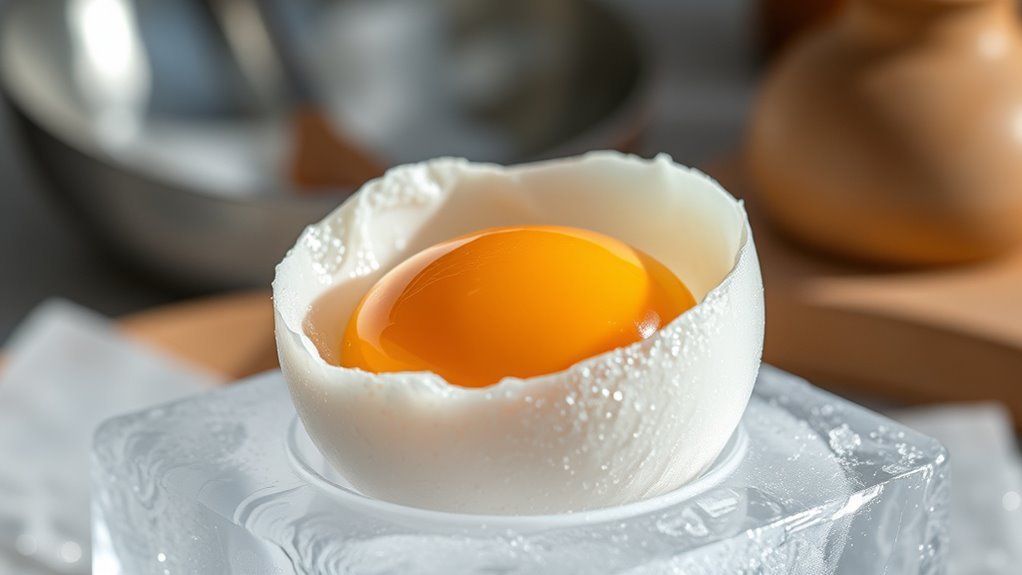
Although freezing preserves eggs for longer periods, it noticeably changes their texture, especially the yolks. When you freeze an egg, the yolk tends to become gel-like and solidify, making it firmer and sometimes rubbery once thawed. This change can affect how well the yolk blends in recipes or performs in dishes like scrambled eggs or baking.
On the other hand, egg whites generally hold up better, retaining much of their original consistency after freezing. Still, the overall texture change in frozen eggs means you might find them less suitable for raw use or recipes needing a smooth mixture.
How to Check If Your Frozen Egg Is Safe to Use
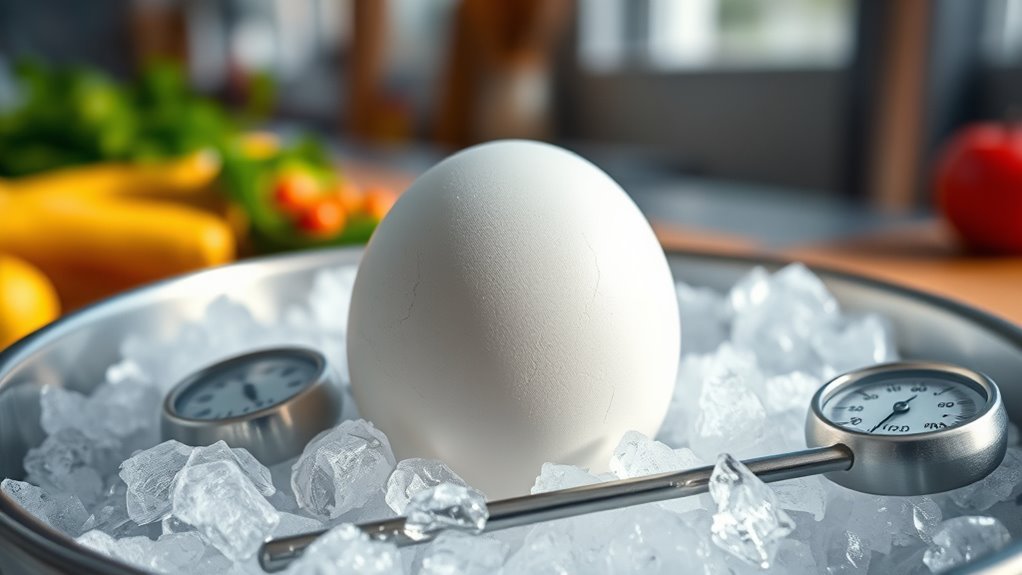
Before you thaw a frozen egg, make sure its shell is completely intact, as any cracks can allow bacteria to enter and spoil the egg. Eggs with cracked shells shouldn’t be thawed or used since contamination risk increases markedly. Once you’ve thawed egg properly, inspect it again for any damage that might have occurred during freezing or thawing.
If the shell is compromised at any point, discard the egg to avoid foodborne illness. A thawed egg with an intact shell is generally safe to use but should be cooked thoroughly and used promptly. Careful visual checks for cracked shells before and after thawing are essential steps to ensure your frozen egg is safe to eat and won’t pose health risks.
How to Safely Thaw Frozen Eggs
Once you’ve confirmed your frozen egg’s shell is intact, the next step is thawing it safely to prevent bacterial growth. You should thaw eggs gradually in the refrigerator at 40°F (4°C) for several hours or overnight.
Alternatively, submerge sealed eggs in cold water, changing the water every 30 minutes until fully thawed. Avoid thawing eggs at room temperature or using warm water, as this encourages bacteria. Never microwave frozen eggs to thaw, as uneven heating can partially cook them.
| Method | Temperature | Time Required |
|---|---|---|
| Refrigerator | 40°F (4°C) | Several hours/overnight |
| Cold Water Bath | Cold, changed every 30 mins | 1-2 hours |
| Room Temperature | Not Recommended | N/A |
| Warm Water | Not Recommended | N/A |
| Microwave | Not Recommended | N/A |
Use thawed eggs within 1-2 days; cook thoroughly to keep them Safe To Eat.
Can You Cook or Bake With Frozen Eggs?
If you plan to cook or bake with frozen eggs, you’ll need to thaw them properly first, either in the refrigerator or a cold water bath. When you freeze eggs, the yolks tend to gel and become firmer, which can change the texture in recipes that rely on raw eggs or delicate custards.
However, egg whites freeze and thaw well, keeping their ability to whip into meringue or be used in cooking without issue. You can confidently use thawed eggs in baked goods, scrambled eggs, or casseroles, but avoid recipes requiring raw eggs unless fully cooked for safety.
Why You Should Never Use Cracked Frozen Eggs
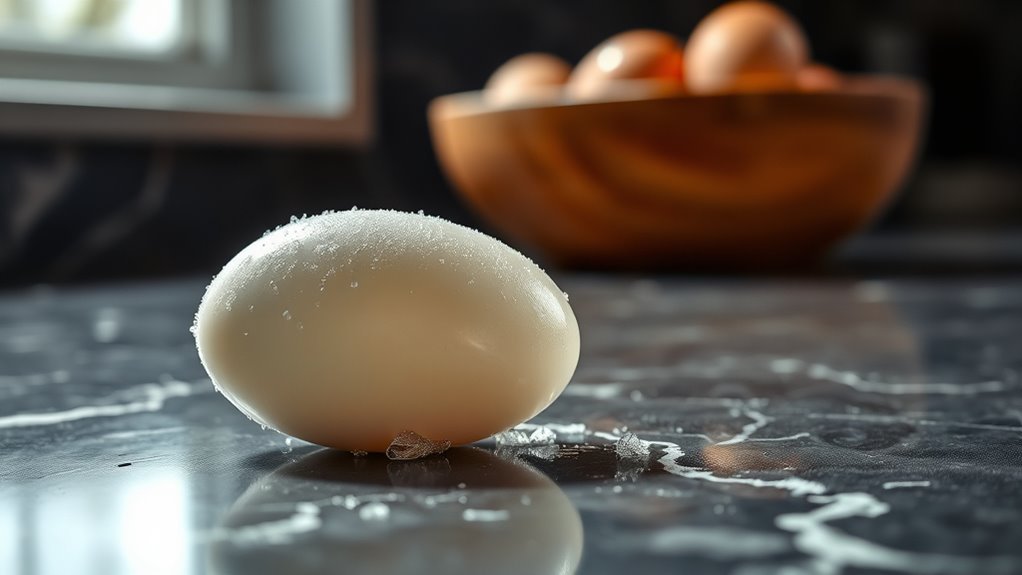
You should never use cracked frozen eggs because the cracks let bacteria and contaminants inside, making them unsafe to eat. When eggs freeze, their insides expand, which often causes the shell to crack without you noticing.
Using only eggs with intact shells helps protect you from foodborne illnesses.
Risks Of Shell Cracks
Because cracks in an eggshell can let bacteria and contaminants inside, you should never use frozen eggs with damaged shells. These cracks break the egg’s natural barrier, allowing harmful substances to enter.
Even if cracks aren’t visible, freezing can cause microscopic fissures, creating hidden risks. Using eggs with cracks increases your chance of contamination from bacteria on the shell’s surface.
| Risk Type | Cause | Potential Outcome |
|---|---|---|
| Bacterial Entry | Shell cracks | Foodborne illness |
| Microscopic Fissures | Freezing process | Hidden contamination risks |
| Environmental Bacteria | Damaged shell | Cross-contamination |
Always inspect eggs for cracks after freezing. If you spot any, discard the eggs to stay safe.
Bacterial Contamination Risks
Cracks in frozen eggshells create direct pathways for bacteria to enter, increasing the risk of contamination. When eggs freeze, any existing bacteria don’t die—they just wait. Once thawed, if conditions are right, these bacteria can multiply quickly.
Using cracked frozen eggs puts you at risk of foodborne illnesses like Salmonella, especially if you don’t cook them thoroughly. The shell’s integrity is vital; cracks mean bacteria can slip inside easily. If you notice any cracks after thawing, it’s safest to discard those eggs.
Proper handling and storage help prevent cracks, so you avoid this risk altogether. Remember, never use cracked frozen eggs in raw or lightly cooked dishes, as this raises your chances of getting sick. Always prioritize safety over saving a questionable egg.
How to Freeze Eggs Properly for Later Use
When freezing eggs for later use, start by cracking them into a bowl and beating them until well blended. Avoid freezing eggs in their shells because the expansion during freezing can cause cracks and spoilage.
Add a pinch of salt or sugar to the beaten eggs depending on how you plan to use them. Next, transfer the mixture into airtight freezer containers or ice cube trays. Don’t forget to label each container with the date and quantity to keep track.
Freeze eggs at 0°F (-18°C) or below, and they’ll stay safe and fresh for up to a year. When you’re ready to use them, thaw the eggs gradually in the refrigerator or under cold running water. Never refreeze eggs after thawing to maintain quality and safety.
How to Prevent Eggs From Freezing in Your Coop
To keep your eggs from freezing in cold weather, you need to take proactive steps inside and outside the coop. Regularly collecting eggs every 3-4 hours prevents freezing eggs from accumulating. Insulate nesting boxes with straw or aspen fiber pads to keep eggs warm.
Seal cracks and gaps to block drafts, and use straw bales and tarps outside to shield from wind while maintaining ventilation. In extreme cold, consider a radiant heat panel to protect hens and eggs.
| Action | Purpose | Frequency |
|---|---|---|
| Collect eggs | Prevent freezing eggs buildup | Every 3-4 hours |
| Insulate nesting boxes | Keep eggs warm | Seasonal |
| Seal coop cracks | Maintain stable temperature | Annually/As needed |
Frequently Asked Questions
What to Do if Eggs Freeze in the Fridge?
If your eggs freeze in the fridge, move them to the main compartment to thaw slowly for 12-24 hours.
Check for cracks or odd texture before using, and discard any damaged eggs to stay safe.
Can You Thaw a Frozen Egg and Use It?
Yes, you can thaw a frozen egg safely by refrigerating or using cold water. Just avoid microwaving. Use it promptly in cooked dishes, as texture changes, and never refreeze once thawed to keep it safe.
What if I Accidentally Froze My Eggs?
Don’t cry over spilled milk—if your eggs froze accidentally, check for cracks. If uncracked, thaw them slowly in the fridge and use soon, preferably cooked.
Discard any with cracks or odd smells to stay safe.
What Happens if You Get Your Eggs Frozen?
If your eggs freeze, their shells might crack, risking bacteria. The yolk gels, changing texture, but whites stay similar.
You should only eat them if shells stayed intact and you cook them thoroughly after thawing.
Conclusion
Yes, you can eat frozen eggs safely as long as you thaw and cook them properly. You might worry that freezing ruins the texture, but while it changes slightly, it won’t affect the taste or safety when cooked thoroughly. Just avoid using cracked frozen eggs to prevent contamination.
By following simple freezing and thawing tips, you can enjoy your eggs without worry—even if they accidentally freeze in your coop or freezer. Proper handling ensures that eating frozen eggs remains safe and delicious. Remember, frozen eggs can be a convenient option when stored and prepared correctly.