

Is It Okay to Eat Fertilized Chicken Eggs Safely?
You can safely eat fertilized chicken eggs as long as you store and handle them properly to prevent embryo growth. Proper storage and handling are key to enjoying fertilized eggs without any concerns.
Keep them refrigerated promptly at or below 40°F and use them within a few weeks to maintain freshness and safety.
Fertilized eggs don’t differ nutritionally from regular eggs and pose no health risk when fresh.
Appearance alone won’t tell you if an egg is fertilized, so don’t rely on looks to determine this.
If you want to know how to identify, store, and use fertilized eggs safely, there’s more to explore. Understanding these details can help you enjoy fertilized chicken eggs with confidence.
What Are Fertilized Chicken Eggs? How Are They Different From Unfertilized Eggs?
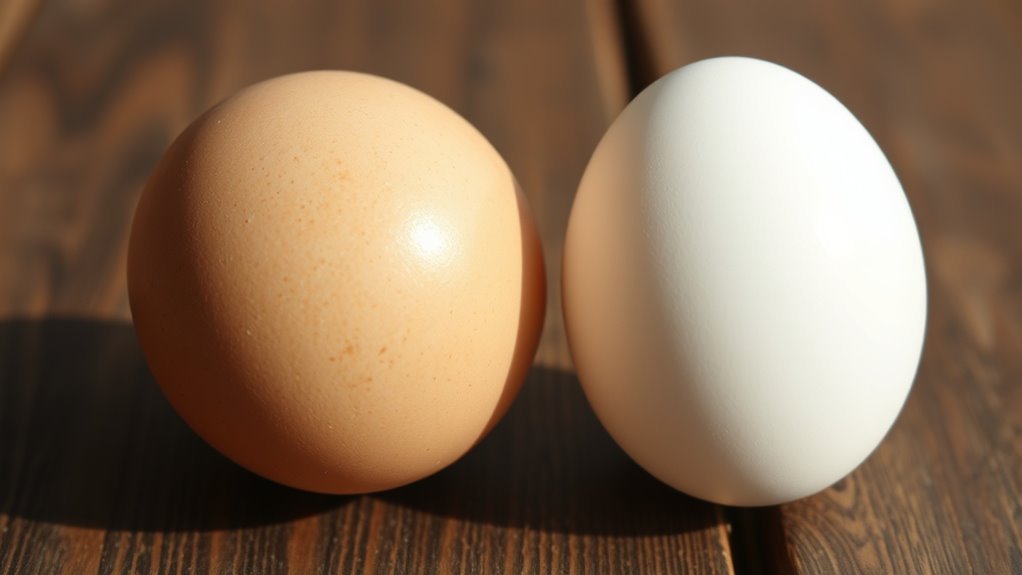
Although fertilized chicken eggs contain the potential to develop into chicks because a rooster has inseminated the hen, you can still safely eat them if they haven’t been incubated. Fertilized eggs differ from unfertilized ones mainly by this insemination process.
Inside fertilized eggs, you’ll find a small white spot on the yolk called the germinal disc or blastodisc, which marks where an embryo could start developing. Unfertilized eggs lack this feature since they come from hens that haven’t mated with a rooster.
Externally, both types of eggs look the same, so you can’t tell them apart just by looking. Fertilized eggs only begin developing if kept warm for several days, meaning without incubation, they remain safe and edible just like unfertilized eggs.
Are Fertilized Eggs Safe To Eat?
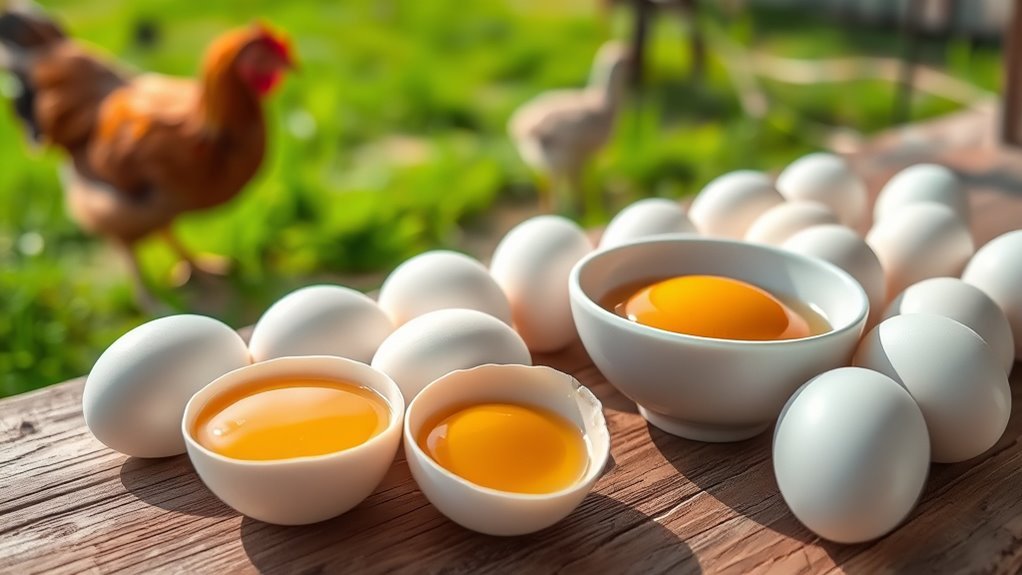
Since fertilized eggs don’t develop into embryos without incubation, you can safely eat them just like unfertilized eggs. Fertile eggs pose no health risks when properly stored and handled. There’s no difference in taste, nutrition, or safety between fertilized and unfertilized eggs.
As long as fertile eggs aren’t kept at warm temperatures for several days, embryo development won’t start. Regularly collecting eggs ensures they stay safe to consume by preventing any growth. Even though you can’t easily tell if an egg is fertile just by looking, it doesn’t affect whether you can eat it.
Can You Identify Fertilized Eggs By Appearance?
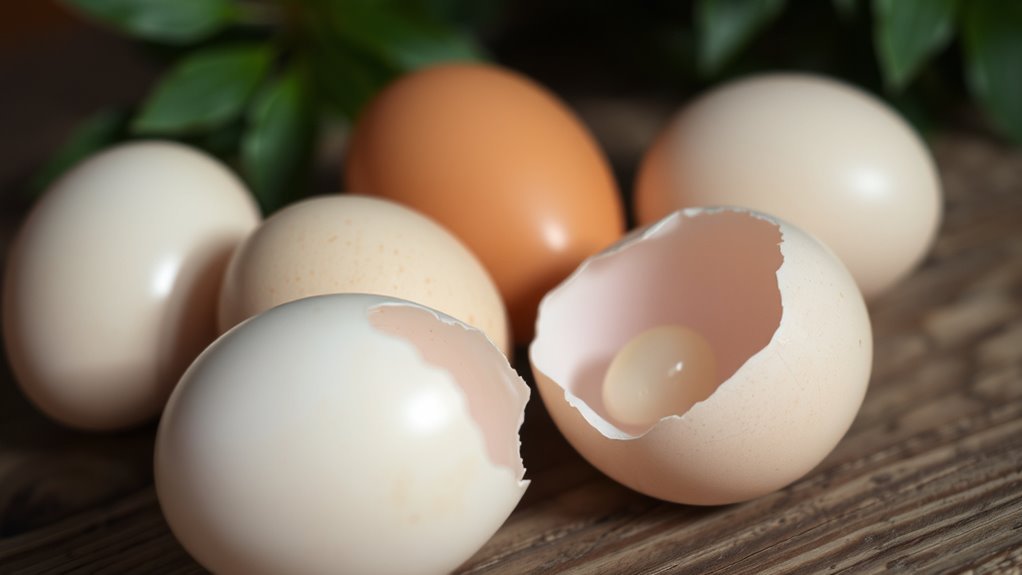
You might try spotting a small white spot called the germinal disc on the yolk to identify fertilized eggs. However, these visual signs are subtle and often look like faint bullseyes, making it tough to tell just by appearance.
Without special techniques like candling, you can’t reliably distinguish fertilized eggs from unfertilized ones.
Visual Signs Of Fertility
When inspecting eggs, you might notice a small white spot on the yolk’s surface called the germinal disc or blastodisc. In fertilized eggs, this germinal disc often shows a faint bullseye pattern—a white center with a surrounding ring. Infertile eggs usually have an irregular or no visible white spot, making it tricky to identify fertility just by looking.
The germinal disc remains tiny and sometimes hard to spot without tools like candling. Here’s a quick comparison:
| Egg Type | Germinal Disc Appearance | Visibility |
|---|---|---|
| Fertilized | Bullseye pattern, white center | Small, faint |
| Infertile | Irregular or missing spot | Often unclear |
| Size | Very small | Difficult to see |
| Identification | Requires candling/incubation | Not definitive |
| Reliability | Visual signs suggest fertility | Needs confirmation |
Germinal Disc Characteristics
Although identifying fertilized eggs by appearance alone can be challenging, the germinal disc offers some clues. You’ll find the germinal disc as a small, white, circular spot on the yolk. Fertilized eggs typically have a larger, more defined germinal disc compared to unfertilized ones.
If you candle the egg in a dark room, you might spot a faint bullseye pattern around the germinal disc. However, spotting this detail without candling or close inspection is tough. Keep in mind, that white spot doesn’t mean the egg contains a developing embryo unless it’s been incubated for several days.
Limitations Of Appearance
Because fertilized eggs look nearly identical to unfertilized ones, you can’t reliably tell them apart just by appearance. The visual differences between these eggs are minimal and often too subtle to detect without special tools like magnification or candling.
While you might spot a small white spot called the germinal disc on the yolk, this “bloom” or “bullseye” doesn’t confirm embryo development by itself. External factors such as shell color, size, or shape offer no useful clues either.
What Happens When Fertilized Eggs Are Incubated Or Left Uncollected?
If you leave fertilized eggs uncollected in a nest or on the coop floor, they can start developing embryos after about 7 to 10 days once exposed to consistent warmth. When fertilized eggs are incubated or left in warm conditions, embryo development begins, making them unsuitable for eating. You want to avoid this by collecting eggs regularly.
Here’s what happens:
- Fertilized eggs need stable warmth for several days to start embryo growth.
- If left uncollected, embryos can develop inside the eggs, altering their safety and quality.
- Candling helps spot embryo development by shining light through the shell.
How Should You Store Fertilized Eggs To Keep Them Safe?
You should refrigerate fertilized eggs promptly after they’re laid to prevent embryo development. Keeping them at a consistent temperature at or below 40°F (4°C) is vital to maintaining their safety.
This helps ensure the eggs stay fresh and reduces any risk before you use them.
Refrigerate Promptly After Laying
When fertilized eggs are laid, refrigerate them within two hours to stop embryo development and keep them safe. Prompt refrigeration is vital because it slows down any potential growth and preserves the egg’s freshness.
To store fertilized eggs properly, make sure you:
- Refrigerate eggs at or below 40°F (4°C) to maintain safety and quality.
- Keep eggs in their original carton on a refrigerator shelf to prevent moisture loss and absorption of odors.
- Avoid leaving fertilized eggs out at room temperature for more than a week, as warmer conditions can encourage embryo growth.
Prevent Embryo Development
Although fertilized eggs can develop embryos if left at warm temperatures, proper storage inhibits this process and keeps them safe to eat. To prevent embryo development, store your fertilized eggs in the refrigerator at or below 40°F (4°C). Collect eggs daily so they don’t sit long enough to start growing embryos.
Keep the eggs in their original carton with the pointed end down; this helps maintain freshness and minimizes air cell movement. Don’t leave fertilized eggs at room temperature for more than a week, as that increases the risk of embryo growth. Handle eggs gently and refrigerate them promptly after collection to ensure safety and effectively prevent embryo development.
Following these steps helps keep your fertilized eggs safe and fresh for consumption.
Maintain Consistent Cool Temperature
Proper storage plays a key role in preventing embryo development and keeping fertilized eggs safe to eat. To maintain a consistent cool temperature, store your fertilized eggs in the refrigerator at or below 40°F (4°C). This slows embryo growth and reduces bacterial risk.
Keep them in their original carton to shield against temperature fluctuations and physical damage. Avoid placing eggs in the door, where temperature changes are frequent. Follow these tips to ensure your eggs stay safe to eat:
- Store eggs on a middle or lower shelf, not the door
- Don’t wash eggs before storing; wash only before use
- Consume fertilized eggs within 3 to 5 weeks for freshness and safety
Are Fertilized Eggs Healthier Or More Nutritious Than Regular Eggs?
Why would fertilized eggs be any healthier or more nutritious than regular eggs? The truth is, there’s no scientific evidence to back that up. Whether an egg is fertilized or not, its nutritional content—protein, vitamins, minerals—remains the same.
You won’t get extra health benefits from fertilized eggs, even though some cultures believe they’re superior. The fertilization process simply doesn’t change the egg’s nutritional value. So, when you’re choosing eggs for your meals, you can focus on freshness and quality rather than fertilization status.
Both fertilized and unfertilized eggs offer the same essential nutrients and health benefits as part of a balanced diet. In short, fertilized eggs aren’t healthier or more nutritious than regular eggs.
How Are Fertilized Eggs Used In Cultural Foods?
You might not find fertilized eggs offering extra nutrition, but they do play a unique role in various cultural dishes around the world. In the Philippines, for example, fertile eggs are used to make balut, a delicacy featuring partially developed embryos, usually duck eggs but sometimes chicken eggs at home. This tradition is culturally accepted and safe when prepared correctly.
To guarantee safety, fertilized eggs are refrigerated soon after laying to halt embryo growth.
Key points about fertilized eggs in cultural foods include:
- Balut is considered a high-protein snack tied to cultural celebrations.
- Fertile eggs must be handled carefully to prevent unwanted development.
- The use of fertilized eggs highlights unique culinary practices rather than nutritional benefits.
Frequently Asked Questions
Is It Safe to Eat Backyard Eggs Right Now?
Yes, you can safely eat backyard eggs right now if you’ve collected them daily and refrigerated them promptly.
This prevents any embryo development, keeping your eggs fresh and safe to consume without worry.
Why Do You Not Put Farm Fresh Eggs in the Refrigerator?
You don’t put farm fresh eggs in the refrigerator because their natural coating protects them from bacteria, keeping them fresh at room temperature.
Refrigeration is only needed if eggs are washed or have lost this protective layer.
What Country Eats Fertilized Chicken Eggs?
They say, “When in Rome, do as the Romans do.” In countries like the Philippines, Vietnam, and Thailand, you’ll find people enjoying fertilized chicken eggs as a traditional delicacy, embracing local culture and flavors.
Can You Eat a Chicken Egg Right After It’s Laid?
Yes, you can eat a chicken egg right after it’s laid, as long as it’s clean and uncracked.
Just make sure to handle it properly and store it correctly to keep it safe and fresh.
Conclusion
So, if you’re wondering whether fertilized chicken eggs are safe to eat, the answer is yes—you can enjoy them just like regular eggs. They won’t hatch into chicks unless incubated, so no worries about omelets turning into tiny dinosaurs from Jurassic times! Just store them properly and cook them well.
Whether you’re curious or adventurous, fertilized eggs offer no extra risk and can even add a unique touch to your meals. Eating fertilized chicken eggs safely is perfectly fine as long as you handle and prepare them correctly. In conclusion, fertilized chicken eggs are safe to eat and can be part of your diet without concern.