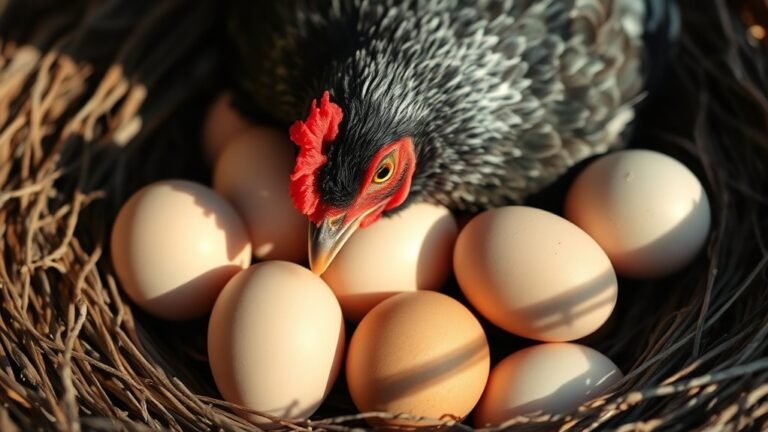

Why Is It Painful When a Chicken Lays an Egg?
When your hen lays an egg, it can be painful because passing even a normal-sized egg stretches her reproductive tract and demands strong muscle contractions. This process of egg laying involves significant physical effort from the hen.
Larger or irregular eggs increase this strain, making the experience even more uncomfortable. Younger hens often feel more discomfort due to less flexible tissues in their reproductive systems.
Sometimes, an egg can get stuck, causing severe pain known as egg binding. If you notice signs of distress, it’s vital to understand the causes and ways you can help your hen lay more comfortably.
How Does a Chicken Lay an Egg Normally?

Although you might not see it, a chicken’s egg-laying process is a complex journey that starts when the yolk is released from the ovary into the oviduct. As the egg moves along, it may get fertilized in the infundibulum if sperm are present. Then, layers of albumen, membranes, and the hard shell form as the egg travels through the magnum, isthmus, and uterus.
Muscular contractions push the fully formed egg toward the vent, ready for laying. This entire process usually takes about 24 to 26 hours in a healthy hen. While laying eggs is natural, the physical effort involved can sometimes cause discomfort or pain.
Understanding the normal laying process helps you appreciate what’s happening inside during egg production.
Why Does Egg Laying Cause Pain in Some Hens?
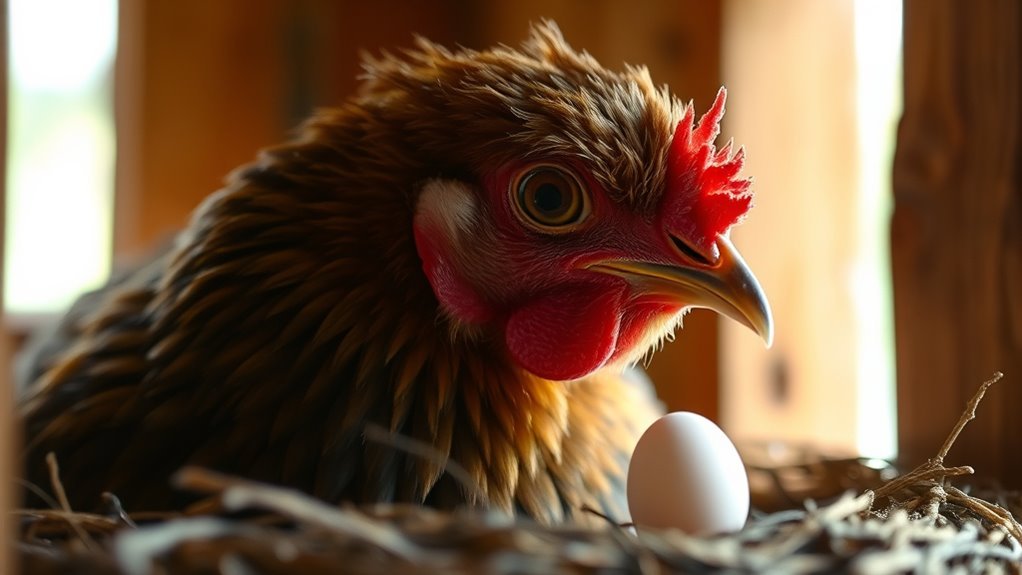
When a hen lays an egg, the size and shape of the egg can put significant strain on her reproductive tissues, causing pain. You might notice some hens struggle due to several factors:
- Large eggs stretch the vent and reproductive tract more, increasing pain during egg laying.
- Egg binding occurs when an egg gets stuck, creating internal pressure and inflammation, which is very painful.
- The muscular contractions needed to push a big or awkward egg through the vent can be strenuous and uncomfortable.
Young or sensitive hens often feel this pain more sharply. If you hear squeaking or see gasping, it’s a sign the hen is in distress.
Understanding these causes helps you better care for hens experiencing discomfort during egg laying.
How Egg Size and Age Affect Discomfort
You’ll notice that larger eggs make laying tougher because they demand more effort and stretch from the hen’s body. Younger hens feel more pain since their tissues aren’t as flexible yet.
As hens get older, their bodies adjust, making egg-laying less uncomfortable over time.
Egg Size Impact
Since larger eggs demand more muscular effort to pass, hens often experience increased discomfort during laying. You should understand how egg size directly influences laying pain:
- Large eggs require more forceful contractions, making the passage of the egg harder and more painful.
- Jumbo eggs can cause internal pressure or even egg binding, considerably increasing discomfort.
- Eggs that exceed the hen’s usual size stretch the reproductive tract more, amplifying pain during laying.
When you consider egg size, it’s clear that bigger eggs aren’t just a challenge—they’re a source of real pain. The passage of the egg becomes tougher as size increases, which explains why hens sometimes struggle more with laying large eggs.
This relationship between egg size and laying pain plays a key role in understanding the overall discomfort during egg production.
Age and Discomfort
Although egg size plays a major role in laying discomfort, a hen’s age considerably affects how much pain she feels during egg production. When a hen is young, her vent and reproductive organs are less stretched and more sensitive, so she experiences greater discomfort and pain as larger eggs put pressure on her system.
As she ages, her vent and oviduct become more flexible, making the process smoother and reducing pain. However, extremely large eggs can still cause significant strain, especially in younger or smaller hens.
Understanding how age influences discomfort helps explain why some hens struggle more with laying. You can see that both age and egg size work together to determine how much pain a hen endures during egg-laying.
What Causes Egg Binding and Pain?
You’ll want to watch for signs of egg binding, which happens when an egg gets stuck inside your hen, causing serious pain.
Factors like large or oddly shaped eggs and low calcium levels can lead to this condition. If you notice your hen straining or showing distress, it’s vital to act quickly to prevent severe risks.
Causes Of Egg Binding
When an egg gets stuck in a hen’s oviduct or cloaca, it causes severe pain known as egg binding. This condition leads to intense pain when laying and requires your attention.
Here are the main causes you should know:
- Large or irregular eggs – Oversized or oddly shaped eggs can get lodged, making passage difficult.
- Calcium deficiency – Without enough calcium, a hen’s muscles weaken, impairing her ability to push the egg out.
- Additional factors – Stress, cold weather, or holding in eggs can also disrupt normal laying.
Recognizing these causes helps you prevent egg binding and reduce your hen’s pain when laying. Addressing nutrition and environment is key to keeping her healthy.
Symptoms And Risks
If a hen experiences egg binding, you’ll notice clear symptoms like abdominal swelling, straining, and lethargy that signal she’s in pain. Egg binding happens when an egg gets stuck in her reproductive tract, causing severe discomfort and distress. You might even see the egg visibly stuck at the vent.
This condition is serious—delaying treatment can lead to shock, infections, or even death because of internal pressure and tissue damage. Factors like calcium deficiency, poor nutrition, or large eggs often cause egg binding.
To protect your hen, guarantee she gets proper nutrition and calcium supplements. Early recognition and intervention are vital to relieving her pain and preventing dangerous complications linked to egg binding.
Signs Your Hen Is in Pain or Struggling With Egg Laying
Although hens often hide discomfort, you can spot signs of pain or struggle during egg laying by paying close attention to their behavior and physical condition.
If your hen is struggling, here are three key signs to watch for:
- Vocalizations: Loud screeches or squeals indicate pain or difficulty passing an egg.
- Physical signs: Tail bobbing, panting, puffed-up feathers, or swelling around the vent suggest she’s in distress.
- Behavior changes: Reluctance to move, sitting quietly in the nest, or visible discomfort are clear signs she’s struggling.
Also, check the vent for any visible blood or abnormal droppings.
Recognizing these signs early helps you understand when your hen is in pain or having trouble laying eggs.
How Can You Help Your Hen Lay Eggs More Comfortably?
Since egg laying can be taxing on your hen’s body, you can help her by creating a quiet, comfortable nesting space with soft bedding that reduces stress and eases discomfort. You should provide proper nutrition and calcium supplements to support the egg laying process and strong muscle contractions.
Minimize disturbances during laying times to let her lay eggs naturally. To help relax her muscles, use warm water soaks and gentle massages, which facilitate easier egg passage.
| What to Do | Why It Helps |
|---|---|
| Quiet, soft nesting | Reduces stress, eases discomfort |
| Balanced layer feed | Prevents egg binding, supports laying |
| Calcium supplements | Strengthens muscle contractions |
| Warm water and massage | Helps relax muscles, eases egg laying |
Frequently Asked Questions
Is It Painful When a Chicken Lays an Egg?
Yes, it can be painful when a chicken lays an egg, especially if the egg is large or stuck. You’ll notice discomfort signs like squeaking or panting, but gentle care helps ease their natural strain during laying.
Why Do Chickens Scream When They Lay Eggs?
You hear chickens scream when they lay eggs because they’re exerting effort and might feel discomfort. Their vocalizations also signal vulnerability or alert other hens.
Sometimes, loud calls are just part of their natural behavior.
Do Chickens Feel Pain When Passing an Egg?
Yes, you can tell chickens feel pain passing eggs because they often squawk sharply and struggle. The stretching and squeezing strain their sensitive tissues, especially with bigger eggs, making the process uncomfortable for them.
Do Chickens Have Contractions When Laying Eggs?
Yes, chickens have contractions when laying eggs. You’ll notice their muscles tighten to push the egg through, controlled by hormones.
These contractions can vary in strength, helping the egg pass safely through their reproductive tract.
Conclusion
So, now you know that while egg laying is natural, it can still be painful for some hens due to factors like egg size, age, or complications like egg binding.
Isn’t it worth paying attention to your hen’s comfort and health? By recognizing the signs of pain and offering proper care, you can help her lay eggs more comfortably and keep her happy.
After all, understanding why it is painful when a chicken lays an egg can guide you in providing better support. A healthy hen means a happier home for you both!