7 Uses You Can Try for Egg Yolks
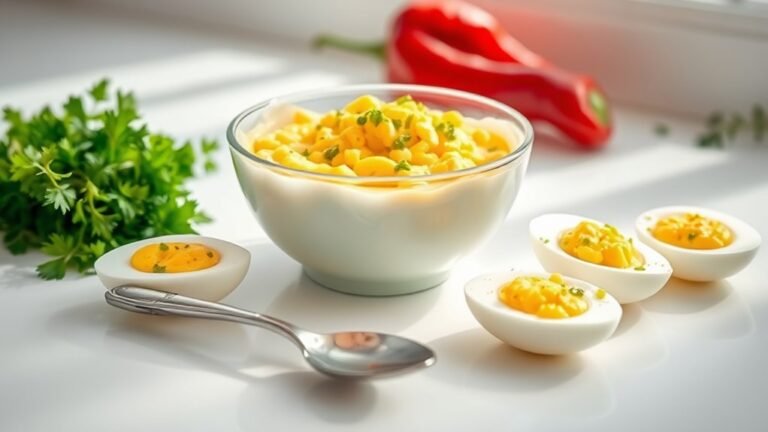
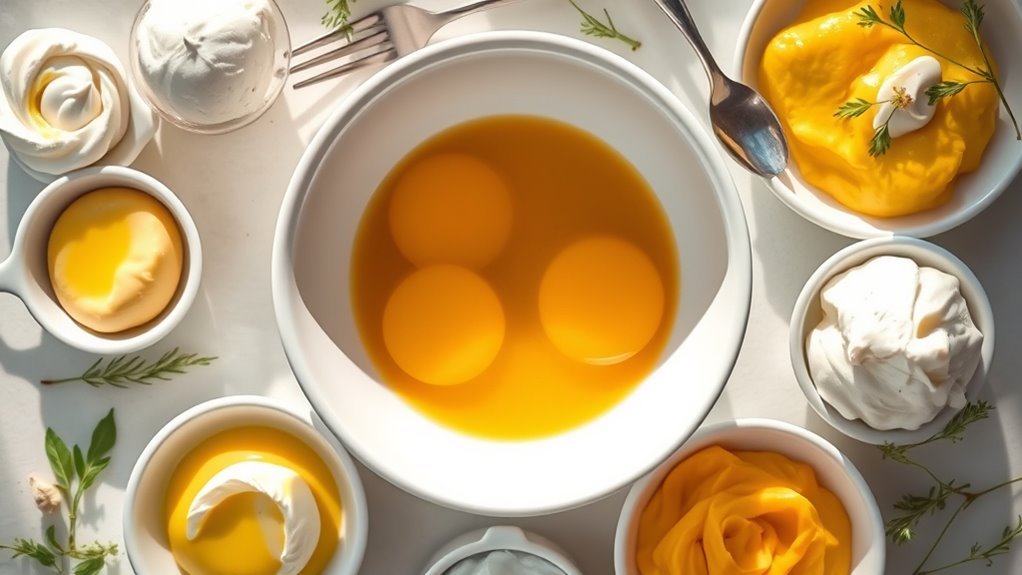
You can store leftover egg yolks airtight in your fridge or freeze them with a bit of sugar or salt to keep them fresh. Egg yolks are incredibly versatile and can be used in a variety of delicious ways to elevate your dishes.
Use yolks to whip up rich sauces like Hollandaise or Carbonara, bake creamy custards, pies, and tarts, or apply an egg wash for golden, glossy baked goods.
They also boost moisture in cookies and cakes, enrich savory dishes, and create smooth homemade ice cream. Keep exploring to discover even more ways to elevate your cooking with egg yolks.
Store and Freeze Leftover Egg Yolks Safely
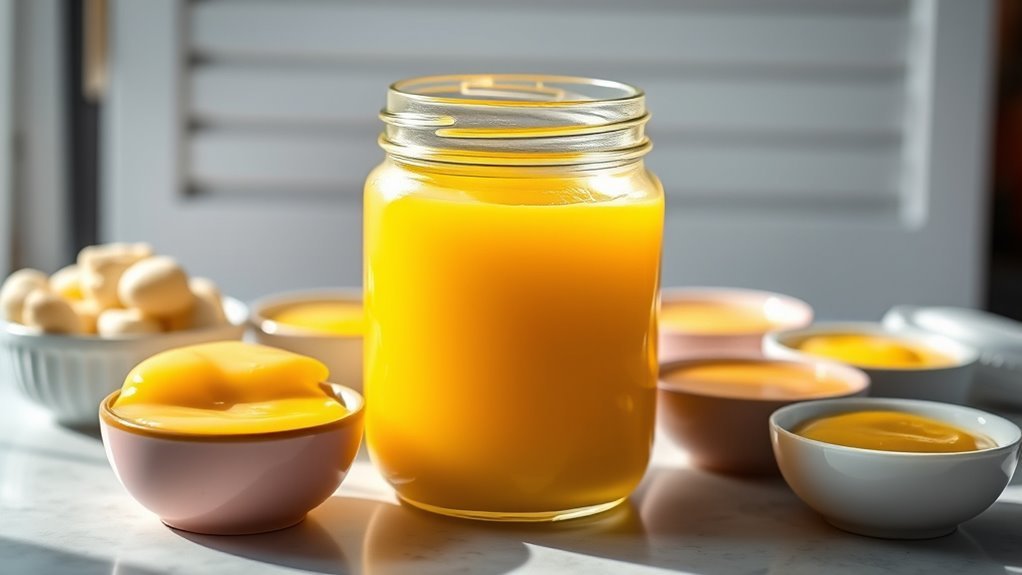
When you have leftover egg yolks, store them in an airtight container in the fridge and use them within 2 to 4 days to keep them safe.
If you want to freeze yolks, beat them first with a pinch of salt or sugar depending on how you’ll use them. Then, transfer the mixture to ice cube trays or freezer-safe bags, freezing each yolk as an individual ice cube for easy portioning.
Label the container with the date and whether the yolks are raw or beaten to avoid confusion. When you’re ready to use them, thaw the frozen yolks overnight in the refrigerator. This method helps preserve the yolks’ texture and flavor, ensuring your leftover egg yolks remain safe and ready for your next recipe.
Make Rich Sauces Like Hollandaise and Carbonara With Egg Yolks
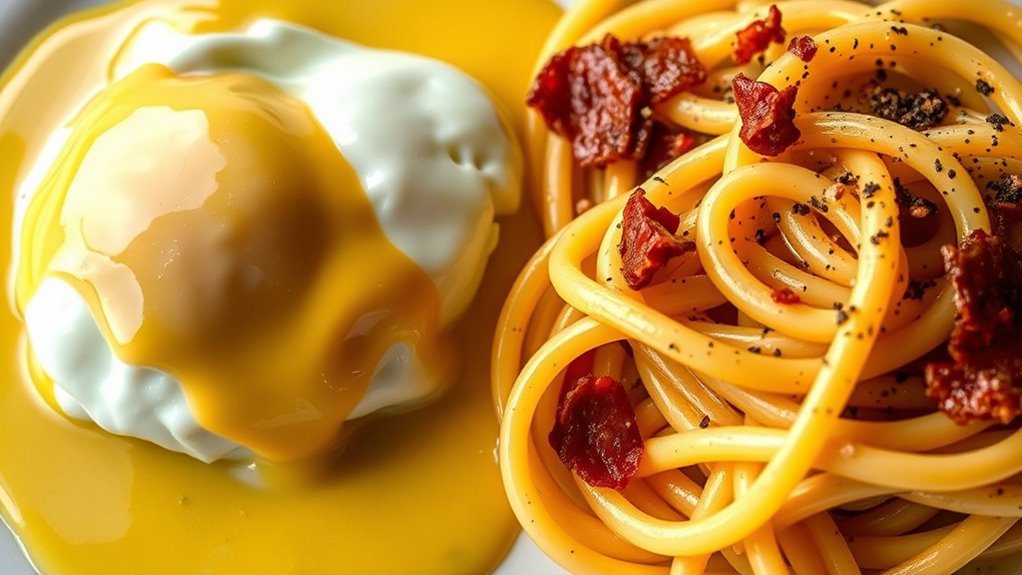
You can create a classic hollandaise sauce by gently whisking egg yolks with melted butter over low heat to achieve a smooth, rich texture. For a creamy carbonara, combine egg yolks with cheese to coat your pasta luxuriously without using cream.
Mastering these techniques lets you elevate simple dishes with the silky richness that only egg yolks provide.
Classic Hollandaise Preparation
Although preparing classic hollandaise sauce requires careful temperature control, you can achieve a smooth, rich emulsion by whisking egg yolks with melted butter and lemon juice over gentle heat. The lecithin in egg yolks acts as an emulsifier, binding the melted butter and lemon juice into a creamy sauce.
You need to whisk constantly and monitor the temperature closely to avoid curdling. Using pasteurized egg yolks can also help reduce health risks.
| Step | Key Ingredient | Important Tip |
|---|---|---|
| Whisk yolks | Egg yolks | Constant whisking |
| Add fat | Melted butter | Gradual addition |
| Flavor adjust | Lemon juice | Control acidity and taste |
Mastering this technique elevates dishes like Eggs Benedict and steamed vegetables.
Creamy Carbonara Essentials
Mastering the technique of emulsifying egg yolks in hollandaise opens the door to other rich, velvety sauces like carbonara. In carbonara, egg yolks are the secret to creating that creamy, emulsified sauce without adding cream. You’ll whisk fresh, high-quality yolks with cheese and a bit of pasta water, gently tossing it with hot pasta to achieve a silky texture.
The natural thickening power of egg yolks gives carbonara its signature richness and depth of flavor. To avoid curdling, keep the heat low and stir constantly. Once you’ve nailed hollandaise, you’ll find making a luscious carbonara sauce just as rewarding—both rely on the magic of egg yolks to transform simple ingredients into an indulgent, creamy delight.
Bake Creamy Egg Yolk Custards, Pies, and Tarts
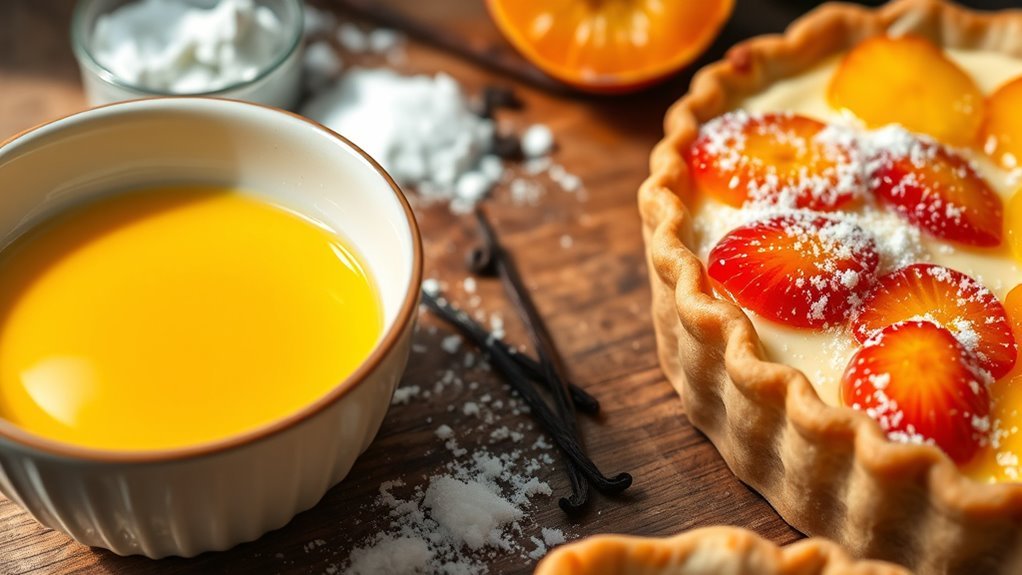
You’ll find egg yolks are key to making classic custards like crème brûlée and silky pie fillings that hold their shape beautifully. When you use them in tarts, they help create a rich, smooth texture that’s hard to beat.
Mastering these techniques will elevate your desserts with both flavor and elegance.
Classic Custard Recipes
Many classic custard recipes rely on 3 to 6 egg yolks to create a rich, velvety texture that sets them apart. When you use egg yolks, you reveal smoothness and depth in custard recipes, perfect for a variety of tart desserts.
Here are three popular ways you can try them:
- Crème brûlée: Use about 5 egg yolks per cup of cream to achieve that silky, creamy finish.
- Pastry creams: Typically call for 2-3 egg yolks, giving you a thick, luscious filling ideal for tarts.
- Key lime pie: Combines 3-4 egg yolks with condensed milk and lime juice for a tangy, creamy treat.
Tart Filling Techniques
When preparing tart fillings with egg yolks, whisk them together with sugar and cream before baking to achieve a creamy, slightly jiggly custard. To stabilize the filling, add a small amount of cornstarch or flour, which helps prevent cracking.
For a smooth, velvety texture, strain the custard mixture through a fine sieve before pouring it into the tart shell. Bake your tart in a water bath at around 325°F (160°C) to ensure even, gentle heat that avoids curdling.
Keep a close eye on the baking process; once set but still slightly jiggly, remove the tart to retain its silky consistency. By mastering these tart filling techniques, you’ll create luscious custards that showcase the richness of egg yolks perfectly every time.
Silky Pie Preparations
Although egg whites get a lot of attention, egg yolks play a crucial role in creating silky pie fillings and custards. Their richness transforms simple ingredients into creamy, smooth desserts.
Here’s how you can use egg yolks for silky pie preparations:
- Whisk egg yolks with sugar and cream before baking to create a velvety pie filling that stays smooth and cohesive without curdling.
- Temper egg yolks with hot liquids when making custard to prevent scrambling and ensure a uniform, silky texture.
- Incorporate egg yolks into tart crusts with butter and flour to add richness and achieve a tender, flaky base.
Use Egg Yolks for a Golden Egg Wash and Moist Baked Goods
If you want your baked goods to have a shiny, golden crust that catches the eye, brushing them with a mixture of egg yolks and a bit of water or milk is the way to go. This golden egg wash enhances browning, giving pastries, pies, and bread a professional, glossy finish.
When you apply an egg yolk wash before baking, it not only boosts the color but also helps develop a crisp exterior while keeping the inside moist. The richness of egg yolks adds depth and warmth to the crust, making your baked goods more appealing and appetizing.
Using this simple technique improves both the look and texture, ensuring your creations stand out with a beautiful shiny crust and perfectly moist interior.
Add Extra Egg Yolks to Cookies and Cakes for Moisture and Richness
Adding extra egg yolks to your cookie or cake batter boosts moisture and richness, giving your baked goods a tender, chewy texture that stands out. When you add yolks, you:
- Enhance moisture and silkiness, making every bite softer and more enjoyable.
- Increase richness and depth of flavor, creating a more decadent dessert experience.
- Improve the crust’s browning, producing a golden, appealing surface with a slight custard-like density.
Since egg yolks contain fats and proteins, they help build a moist crumb and a tender texture that’s perfect for cookies and cakes.
Just remember, adding yolks may make your treats a little denser, but that’s what gives them that irresistible richness you’ll love.
Incorporate Egg Yolks Into Savory and Breakfast Dishes for Flavor
When you fold extra egg yolks into savory or breakfast dishes, you instantly boost their creaminess and flavor depth. Adding egg yolks to scrambled eggs or quiche gives them a richer taste and a luscious texture. In breakfast dishes like eggs Benedict, incorporating yolks into hollandaise sauce creates a velvety finish and a beautiful golden color that elevates the meal.
You can also enrich savory sauces, such as aioli or mashed potatoes, by blending in yolks to add silkiness and complexity. Whether you’re whipping up scrambled eggs or perfecting a savory pie topping, egg yolks enhance both flavor and appearance, making your dishes more satisfying and visually appealing.
Don’t hesitate to experiment with yolks—they’re a simple way to transform everyday savory and breakfast dishes.
Whip Up Homemade Ice Cream and Frozen Desserts With Egg Yolks
Although making homemade ice cream might seem intimidating, using egg yolks can simplify the process by adding richness and stability to your frozen desserts. Egg yolks create a smooth, velvety texture that’s hard to beat.
To get started, follow these tips:
- Use 2 to 3 egg yolks per quart of homemade ice cream to achieve the perfect creaminess without over-thickening your custard base.
- Gently heat the mixture to 170°F (77°C) while stirring constantly, preferably over a double boiler, to prevent curdling and ensure even cooking.
- Freeze any leftover egg yolks with sugar or salt to preserve their texture and prevent gelatinization.
Frequently Asked Questions
What Can I Do With Remaining Egg Yolks?
You can whip up creamy custards, enrich pasta dough, or boost baked goods’ moisture with leftover egg yolks. Freeze them beaten with salt or sugar for future use, or craft smooth sauces like hollandaise or aioli.
How Do You Not Waste Egg Yolks?
You don’t waste egg yolks by storing them airtight in the fridge for up to four days or freezing them mixed with sugar or salt.
Use them quickly in recipes or freeze in portions for future cooking.
How to Save Unused Egg Yolks?
Don’t let those egg yolks become a relic like a rotary phone! Whisk them with salt or sugar, freeze in ice cube trays, label with dates, and thaw overnight in the fridge to keep them fresh and ready to use.
How Long Will Egg Yolks Keep in the Fridge?
You can keep egg yolks in the fridge for up to four days, but it’s best to use them within two to three days for freshness.
Store them airtight and always check for any spoilage before use.
Conclusion
Next time you have leftover egg yolks, don’t toss them—get creative! Imagine Sarah, who usually wastes yolks after baking. She started freezing them and using them to whip up rich Hollandaise for brunch or creamy custards for dessert.
You can do the same, turning what seems like scraps into delicious dishes. Whether it’s adding moisture to cakes or making silky ice cream, egg yolks are a kitchen secret worth exploring.
Give it a try! Discover the many uses you can try for egg yolks and elevate your cooking with these versatile ingredients.