
How Do Aquatic Snail Eggs Look Like
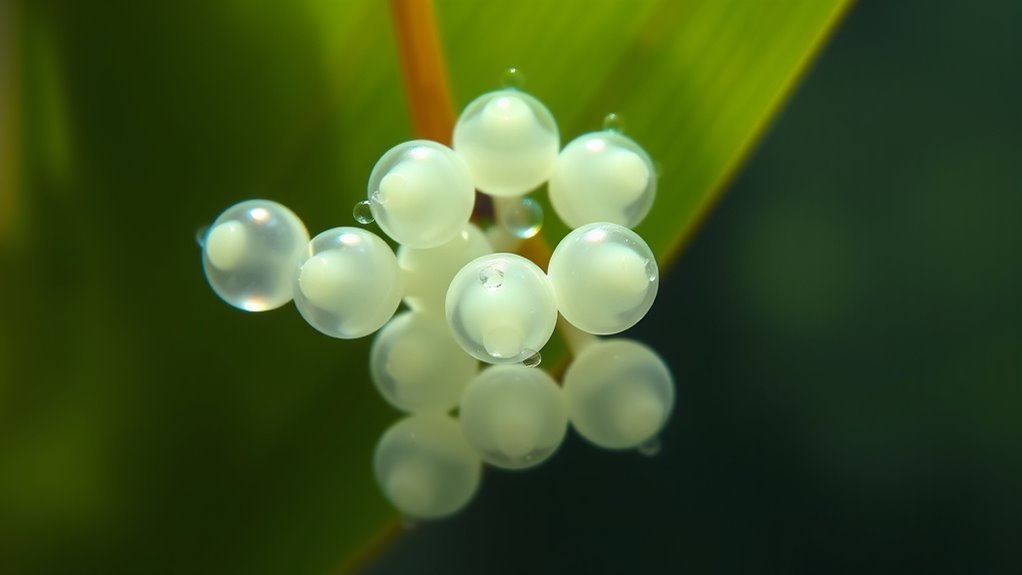
You’ll spot aquatic snail eggs as small clusters attached to surfaces like glass, plants, or decorations in your tank.
Their size and color vary by species: Mystery snail eggs are large and bright pink or red, often laid above the waterline, while Nerite snail eggs are tiny, white, and sticky, scattered on submerged surfaces.
Fertilized eggs develop dark spots over time.
Curious about where snails prefer laying eggs and how to manage them? Keep exploring for more details.
How To Identify Aquatic Snail Eggs In Your Aquarium
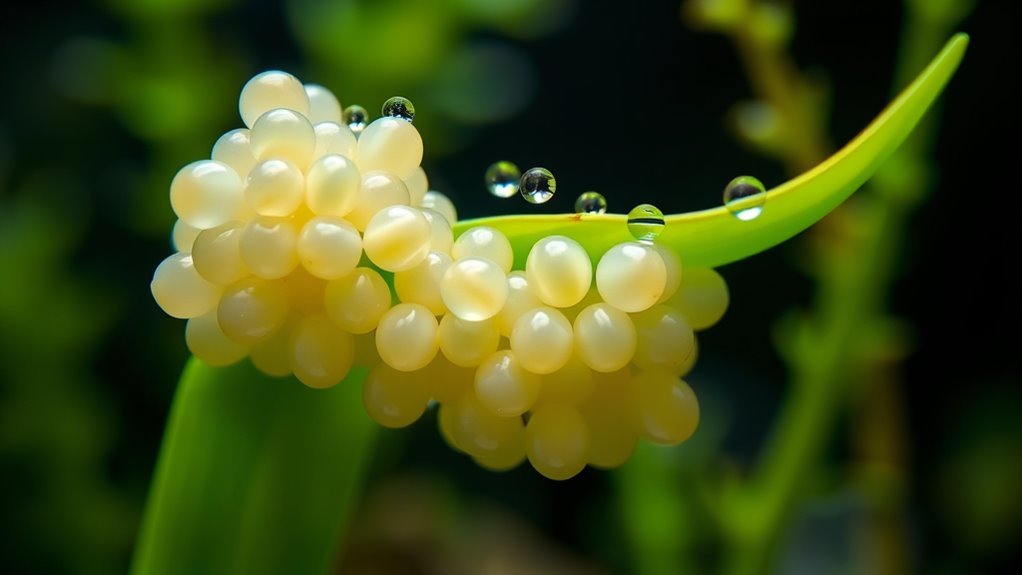
Although aquatic snail eggs can vary widely in appearance depending on the species, you can usually spot them as small clusters attached to surfaces like glass, plants, or decorations in your aquarium. Snails lay eggs in different forms: mystery snail eggs are large, bright pink or red, resembling blackberry clusters and often appear above the waterline.
Nerite snail eggs, on the other hand, are tiny, white, and sticky, scattered across driftwood, rocks, or glass. Fertilized eggs typically develop dark spots over time, while unfertilized ones might emit a rotten egg smell after weeks. Some snail eggs come in gelatinous masses or hard shells, and others are buried individually in substrate.
Identifying these eggs helps you understand your aquarium’s ecosystem better.
Where Snails Lay Their Eggs And Why It Matters
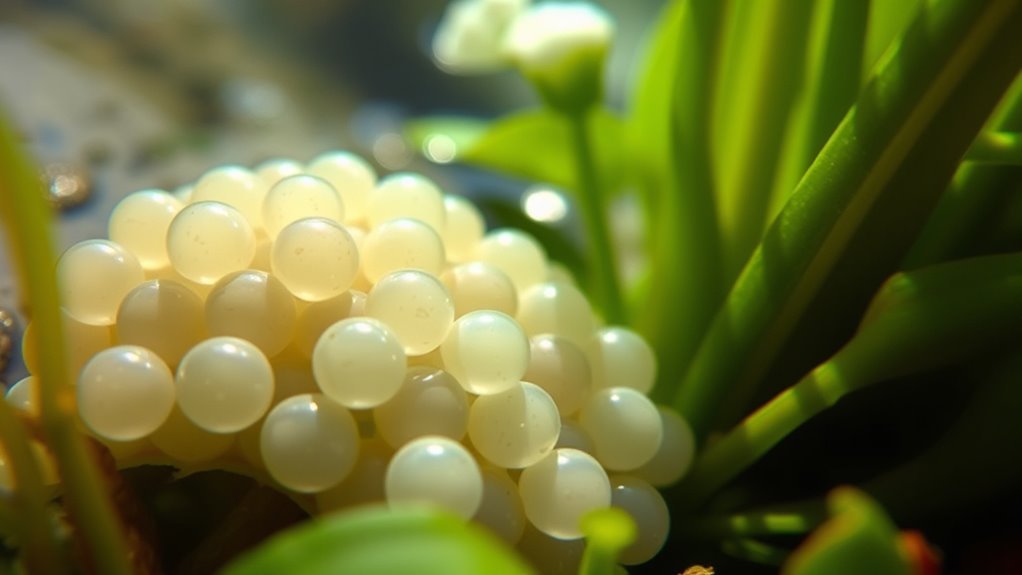
You’ll often find snail eggs on glass, plants, or decorations in your aquarium, depending on the species.
Where they lay their eggs affects how well the eggs hatch and how you manage your tank’s environment. Knowing these spots helps you control snail populations and keep your aquarium healthy.
Common Egg Laying Sites
When snails choose where to lay their eggs, they look for surfaces that offer protection from water movement and predators. Common egg laying sites include glass, plants, decor, and rocks, providing stability and safety. Many freshwater snails prefer sites above the waterline, like tank lids or plant leaves, improving hatching success.
Water conditions also play a key role; for example, Nerite snail eggs need brackish water to hatch. Understanding these sites helps you manage snail populations effectively.
| Egg Laying Site | Reason for Selection |
|---|---|
| Plants & Leaves | Protection, humidity control |
| Rocks & Decor | Stability, concealment |
| Above Waterline Areas | Better oxygen, less water movement |
Egg Placement Importance
Understanding where snails place their eggs helps you grasp how they safeguard their offspring and guarantee successful hatching. Egg placement is vital because it directly affects the eggs’ survival rate and development.
For example, Mystery Snails lay their eggs above the waterline to prevent drowning and predation, while other snails choose submerged surfaces. Here’s why egg placement matters:
- Protection from water currents and predators enhances egg survival.
- Placement on suitable surfaces ensures the right moisture and oxygen levels.
- Species-specific locations, like Mystery Snails’ above-water clusters, align with their hatching needs.
Impact On Aquarium Care
Since snails lay their eggs on various surfaces inside your aquarium, knowing where they deposit them helps you maintain a healthy environment. Snail eggs often appear on glass, plants, decorations, or substrate, depending on the species. Some lay eggs above the waterline, while others prefer submerged spots, usually in protected areas to avoid predators and disturbances.
Understanding these preferences allows you to monitor and manage snail populations effectively. If left unchecked, excessive snail eggs can lead to overcrowding, impacting the overall health of your aquarium. By regularly inspecting common egg sites, you can control hatching rates and maintain balance.
Paying attention to where snail eggs develop guarantees your aquatic ecosystem stays stable and thriving, making your aquarium care more efficient and rewarding.
Mystery Snail Vs. Nerite Snail Eggs: What’s The Difference?
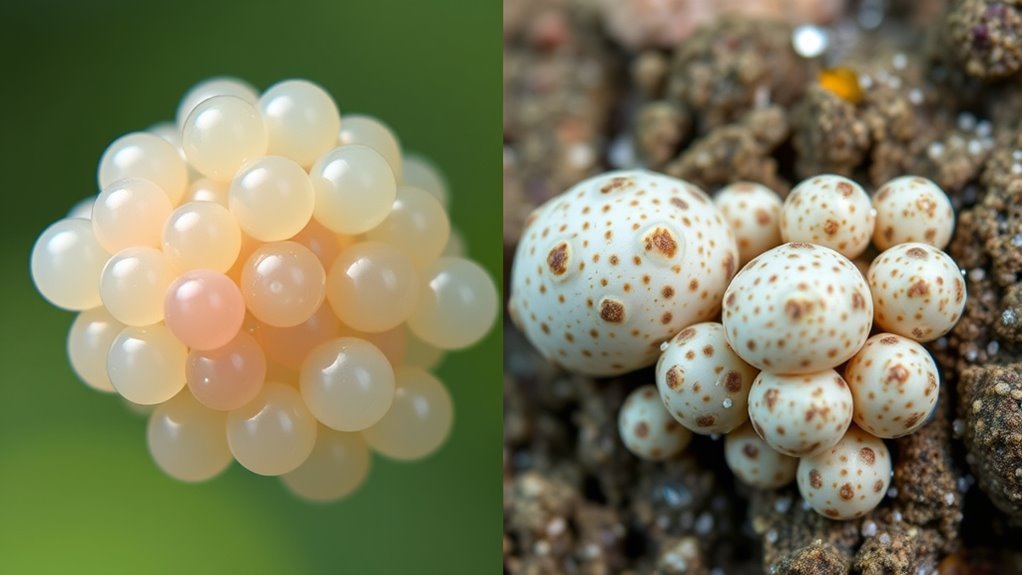
How can you tell the difference between Mystery snail and Nerite snail eggs in your aquarium? Here’s what to look for:
- Appearance: Mystery snail eggs form large, bright pink or red clusters above the waterline, resembling blackberries. Nerite snail eggs are tiny, white, and sticky, scattered on surfaces like rocks and plants.
- Visibility: Mystery snail eggs are easy to spot due to their size and color. Nerite snail eggs are subtle and often go unnoticed.
- Hatching Conditions: Mystery snail eggs hatch in 1–4 weeks in freshwater, while Nerite eggs require brackish water and rarely hatch in freshwater tanks.
Knowing these differences helps you manage your tank better. Removing Mystery snail egg clutches prevents hatching, while Nerite eggs usually get cleaned off since they don’t hatch in freshwater.
How Fertilized Snail Eggs Develop And Change Over Time
You’ll notice fertilized snail eggs start out clear or slightly cloudy and gradually darken as the embryo develops inside. Dark spots appear within the eggs, marking different stages of growth.
Watching these color changes helps you track the progress from fertilization to hatching.
Color Changes In Eggs
When you observe aquatic snail eggs, you’ll notice that fertilized ones start off transparent or slightly cloudy but gradually develop dark spots or rich colors as the embryos grow. These color changes in fertilized eggs signal healthy development and successful fertilization. You can monitor these changes to assess egg viability:
- Fertilized eggs shift from clear or pale to shades of pink, red, or dark brown.
- Dark spots appear inside, showing the growing embryos.
- Unfertilized eggs stay transparent or white and may emit a foul smell after weeks.
Embryo Development Stages
Noticing color changes in snail eggs gives you clues about their development, but understanding the specific stages reveals what’s happening inside each egg. Fertilized eggs start as small, transparent spheres where embryo development begins. Early on, you’ll see dark spots or tiny lines moving inside, showing the embryo growing.
As time passes, the eggs shift from clear to opaque, sometimes displaying streaks or patterns signaling progress. Near hatching, the eggs swell, and the embryo matures, preparing to emerge as a juvenile snail. This entire process usually takes 1 to 4 weeks, depending on the species and temperature.
How To Spot Snail Eggs On Plants, Glass, And Decorations
Although snail eggs can be tiny and easy to miss, you can spot them by regularly inspecting your aquarium’s plants, glass, and decorations. Snail eggs often appear as small, round clusters or dots, varying by species.
Regular inspection of aquarium plants, glass, and decor helps spot tiny, clustered snail eggs by species.
Here’s how to spot them effectively:
- Check plants closely for tiny, white, sticky dots or jelly-like bubbles, which many snail eggs resemble.
- Inspect glass surfaces, especially just above the waterline, for bright pink or red clusters typical of mystery snail eggs.
- Examine decorations like driftwood and rocks for scattered, translucent or opaque spheres that could be nerite snail eggs.
Signs Snail Eggs Are Unfertilized Or Dead
If snail eggs stay translucent without developing dark spots or embryos, they’re likely unfertilized and won’t hatch. Unfertilized eggs often remain clear, don’t change color, and may emit a rotten egg smell after weeks.
Dead eggs, on the other hand, typically turn brown or black, become shriveled or moldy, and give off a foul odor as they decay. You might also notice that dead eggs dry out or harden, indicating they’re no longer viable.
Mold or algae growth on egg clusters is another sign that the eggs are dead or unfertilized. Recognizing these signs helps you understand which eggs won’t develop, so you can monitor your tank’s health effectively.
How To Remove And Manage Snail Eggs In Your Tank
When you spot snail eggs in your tank, act quickly to prevent an overpopulation problem. Since snails lay egg clutches on various surfaces, regular checks are essential. Here’s how to remove and manage these eggs effectively:
- Inspect aquarium surfaces like glass, plants, and decorations for clusters of egg clutches regularly.
- Remove egg clutches manually using a soft brush, sponge, or tweezers before they hatch.
- Use a magnetic scraper or algae pad to gently detach eggs from hard surfaces such as glass or rocks.
Additionally, vacuum the substrate frequently to clear buried eggs and juvenile snails. Managing water quality and avoiding overfeeding also helps reduce nutrient levels that encourage snails to lay eggs, keeping your tank balanced and healthy.
Tips For Preventing Snail Overpopulation Through Egg Control
To keep snail populations in check, you should regularly inspect your tank and promptly remove any eggs you find on surfaces like glass, plants, and decorations. Snails often lay eggs in clusters, so using the right tools—magnetic scrapers for Nerite eggs and manual removal for Mystery snail clutches—makes this easier.
Maintaining good water quality and avoiding overfeeding reduce nutrients that encourage snails to lay eggs. Consistent tank cleaning and regular water changes limit egg-laying sites and make the environment less favorable for overpopulation.
Additionally, introducing natural predators such as certain fish or snails can help keep snail populations under control naturally. By combining these strategies, you’ll effectively prevent excessive snail growth through proper egg control.
Frequently Asked Questions
How to Identify Aquarium Snail Eggs?
You can identify aquarium snail eggs by looking for small, round clusters attached to surfaces. Mystery snail eggs are bright pink, while nerite eggs are tiny white spots.
Fertilized eggs darken and unfertilized ones may smell bad.
What Do Aquarium Pest Snail Eggs Look Like?
Aquarium pest snail eggs look like small, white or translucent clusters stuck to glass, plants, or decorations. You’ll notice they’re sticky and subtle, often leaving a faint white film, making them tricky to spot at first glance.
What Do Baby Water Snail Eggs Look Like?
You’ll see baby water snail eggs as tiny, translucent or white dots clustered on aquarium surfaces. They’re less than 1 millimeter, often clear or slightly opaque, and hatch into tiny, soft-shelled snails after a few weeks.
Where Do Water Snails Lay Their Eggs?
You’ll find water snails laying eggs on surfaces like glass, plants, or rocks inside the aquarium. Some lay clusters above the waterline, while others bury eggs in the substrate, depending on their species and habits.
Conclusion
So, now that you know what aquatic snail eggs look like and where they hide, you might start seeing them everywhere—your plants, glass, decorations—like uninvited little guests. Ironically, those tiny jelly blobs, which you might have ignored, hold the key to either a thriving ecosystem or a snail apocalypse.
But don’t worry, with a bit of egg-spotting skill and some quick action, you can keep your tank snail-friendly without turning it into a snail nursery! Recognizing aquatic snail eggs is the first step to managing their population effectively and maintaining a balanced aquarium environment.