
What Does a Termite Egg Look Like
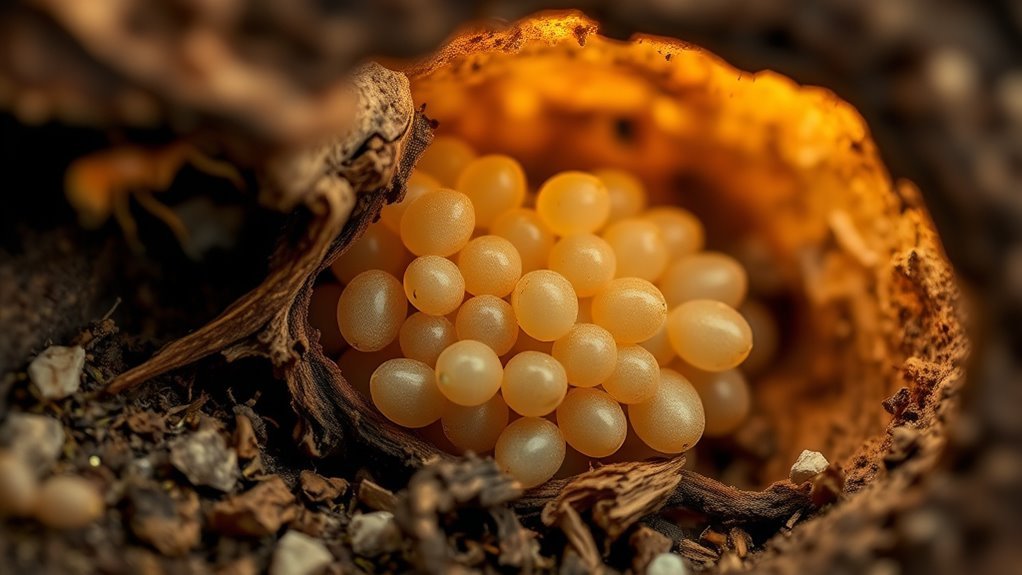
You’ll find termite eggs as tiny, smooth, oval shapes, usually about 1 to 2 millimeters long. Termite eggs are pale white or translucent, almost like little grains of rice or tiny pearls, making them easy to miss.
These eggs cluster in groups that can contain dozens or even hundreds of eggs.
They are often hidden deep inside nests or wood. If you want to uncover more about where termites lay their eggs, how long they take to hatch, and what they look like afterward, there’s plenty to explore.
Understanding what termite eggs look like is the first step in identifying a termite infestation.
What Are Termite Eggs and Why They Matter?
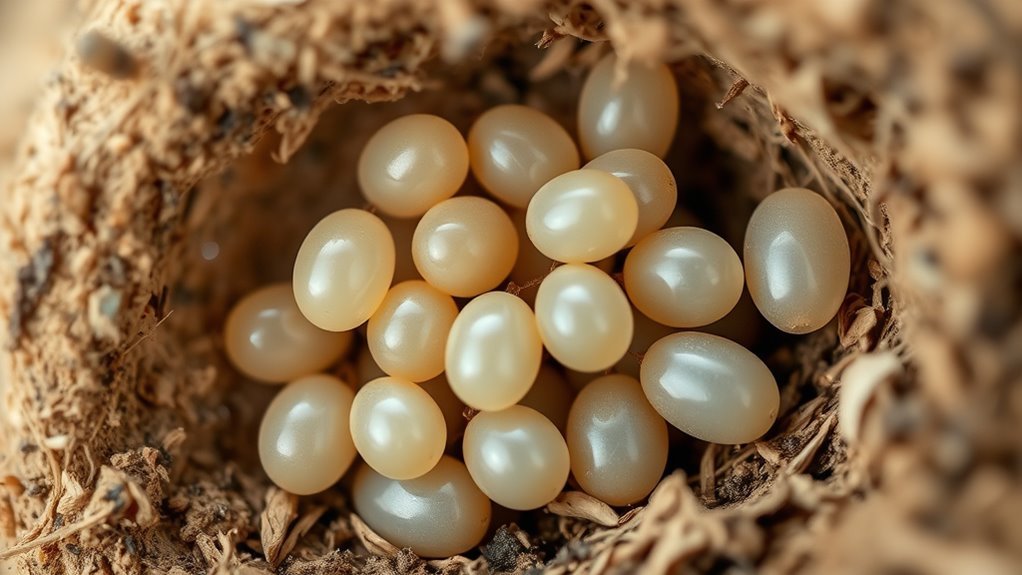
What makes termite eggs so important? These tiny, oval-shaped termite eggs are the foundation of entire colonies. Laid by the queen termite, they come in egg clusters, often hidden inside walls or deep within wood structures, making early detection tough.
When these eggs hatch, they release larvae that grow into workers, soldiers, or reproductives, continuing the colony’s life cycle. Since a queen termite can lay thousands of eggs daily, spotting termite eggs or other signs of termite activity early can save you from costly damage.
Because these eggs are small and translucent, you won’t easily notice them without close inspection. Understanding termite eggs helps you recognize the hidden threat and take action before the infestation worsens.
What Do Termite Eggs Look and Feel Like?
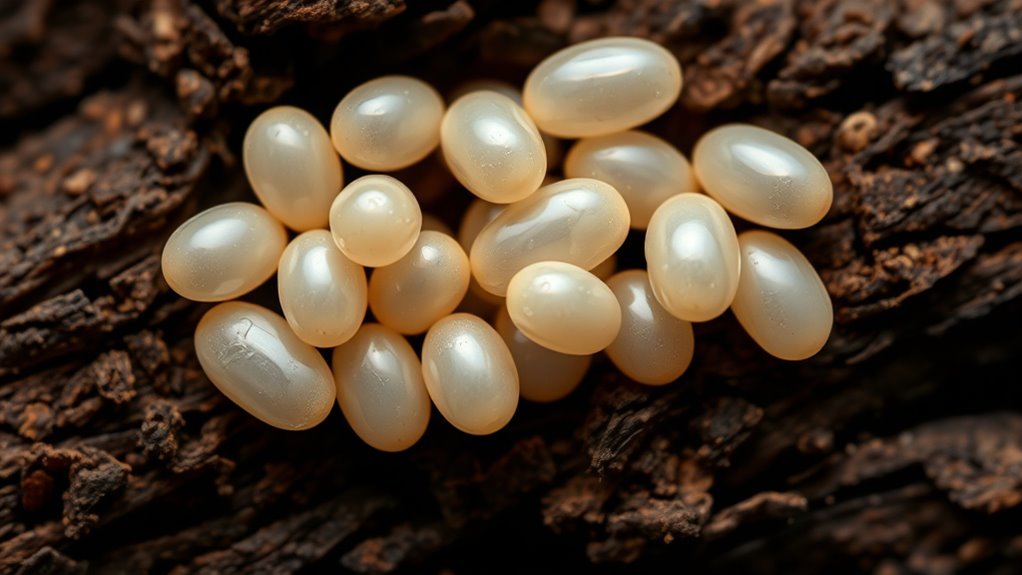
Termite eggs measure just 1 to 2 millimeters long and have a tiny, oval shape with a smooth, shiny surface. You’ll notice their pale white or sometimes translucent color makes them tricky to spot. These eggs form clusters that look like tiny pearls or grains of rice, often hidden deep within the nest.
When you touch them—if you can—they feel smooth and firm, thanks to their hard, glossy shells protecting the developing termites.
| Feature | Description | Notes |
|---|---|---|
| Size | 1-2 millimeters | Extremely tiny, barely visible |
| Appearance | Oval, smooth, shiny | Pale white or translucent |
| Texture | Firm, glossy | Protects eggs during incubation |
How Big Are Termite Eggs and Their Clusters?
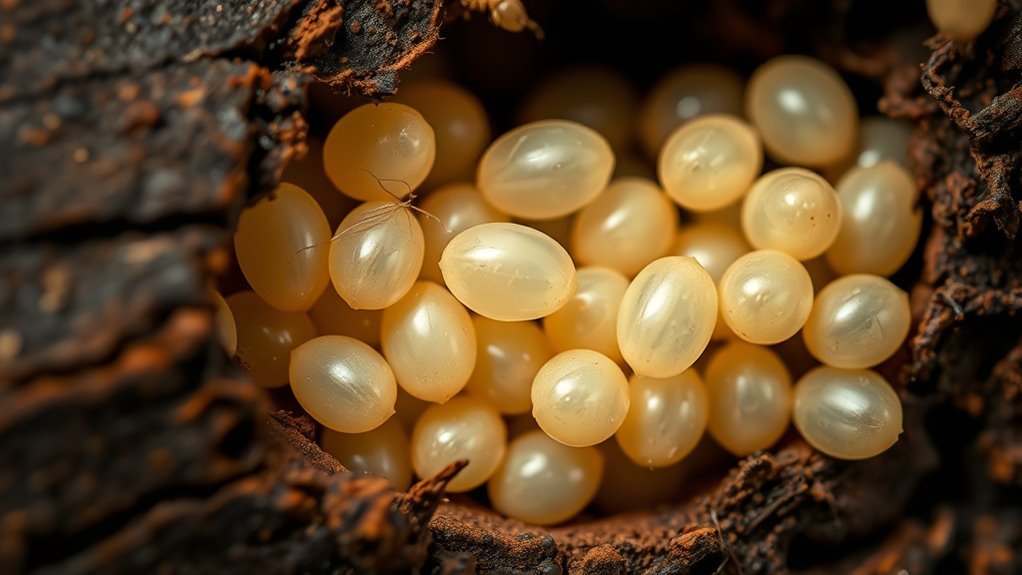
Although individual eggs are tiny—measuring just 1 to 2 millimeters long—the clusters they form can be surprisingly large. Termite eggs are oval-shaped eggs that start at about 0.25 millimeters and grow as part of egg development. You’ll notice their pale white or yellowish eggs appearance within colonies, often hidden for protection.
Termite eggs, tiny and oval, start at 0.25 mm and grow within protected colonies.
Here’s what to know about termite eggs and their clusters size:
- Tiny eggs measure roughly 1–2 mm individually.
- Egg clusters resemble grains of rice or caviar.
- Each cluster can contain dozens to hundreds of eggs.
- Egg clusters size varies with the queen’s reproductive rate.
Recognizing these egg clusters is an early sign of active termite colonies.
Where Do Termites Lay Their Eggs?
Since their survival depends on protection, termites lay their eggs deep within the nest or hidden chambers where they stay safe from predators and environmental hazards. You’ll find termite eggs laid deep within the colony, often in sheltered areas that promote ideal egg development.
Subterranean termite eggs are typically laid 4 to 18 inches below the soil surface, well-guarded by workers and the queen. Drywood termite eggs, on the other hand, are found inside wood, hidden from plain sight in furniture, tree limbs, or wooden beams.
The location of egg deposition varies by species and habitat, but all eggs share the need to be concealed to guarantee colony survival.
| Termite Type | Egg Location |
|---|---|
| Subterranean | Below soil surface |
| Drywood | Inside wood structures |
| Colony Chambers | Deep within nest |
| Protected Areas | Hidden from plain sight |
How Many Termite Eggs Does a Queen Lay Daily?
A queen can lay thousands of eggs each day once her colony is well established. The exact number varies by species and colony size, but queen termites are prolific in egg production. Here’s what you should know about how many eggs a queen lays daily:
- In mature colonies, the queen can lay over 1,000 eggs every day.
- Egg production increases as the colony grows, peaking during its prime.
- Queen termites may live up to 25 years, continuously laying hundreds of thousands of eggs annually.
- The laid eggs eventually hatch into larvae, supporting the colony’s expansion.
How Long Do Termite Eggs Take to Hatch?
After laying thousands of eggs daily, the queen termite relies on specific conditions for those eggs to hatch successfully. The termite eggs hatch within a few weeks to about one month, depending on the incubation period influenced by environmental conditions like moisture and temperature. Typically, temperatures between 75°F and 95°F, combined with consistent humidity, speed up the hatching time.
These ideal conditions support quicker colony development by allowing the eggs to progress smoothly from their egg appearance to the larval stage. Geographic location also plays a role; warmer climates tend to shorten the incubation period. As the eggs hatch, reproductive termites guarantee the colony’s growth and survival, making this phase vital.
Understanding these factors helps you grasp how sensitive termite egg development truly is.
What Do Baby Termites Look Like After Hatching?
When termite eggs hatch, you’ll find tiny, white or translucent nymphs that look like miniature adults. These baby termites are soft-bodied and pale, measuring just 1mm to 2mm in size. Their appearance includes two straight antennae and a broad waist, setting them apart from other insects.
Here’s what you should know about their development:
- Baby termites hatch as translucent or white nymphs, barely visible to the naked eye.
- They rely on worker termites for feeding and grooming during early development.
- As nymphs grow, they darken in color and increase in size.
- Mature termites assume specific roles within the colony, ensuring its survival.
Understanding their early appearance helps you identify termite activity accurately.
Frequently Asked Questions
How to Identify Termite Eggs?
You can identify termite eggs by looking for tiny, shiny, oval clusters hidden deep inside wood or soil.
They’re smooth, pale, and almost translucent, so you’ll need a magnifying glass to spot them clearly.
Are Termite Eggs Visible?
You won’t see termite eggs with the naked eye—they’re like hidden whispers in the wood. You’ll need patience, a keen eye, and maybe magnification to catch those tiny translucent specks before they multiply.
Can Termites Cause Rashes?
Termites don’t usually cause rashes directly, but if you’re sensitive, their saliva or exposure to mold from infestations might irritate your skin.
What Do Hatched Termite Eggs Look Like?
Hatched termite eggs look like tiny, soft-bodied larvae that are pale white or translucent. You’ll find them about 2 mm long, with straight antennae and a broad waist.
They are hidden deep inside nests or wood.
Conclusion
Now that you know termite eggs are tiny, pearly white gems clustered like delicate grains of rice, you can better spot the hidden beginnings of a termite colony. Imagine holding a fragile, smooth bead no bigger than a pinhead—this is where the next generation starts.
Keeping an eye out for these subtle signs helps you protect your home before those tiny invaders hatch and swarm. Stay vigilant, and you’ll catch them early. Understanding what does a termite egg look like is key to early detection and prevention.