
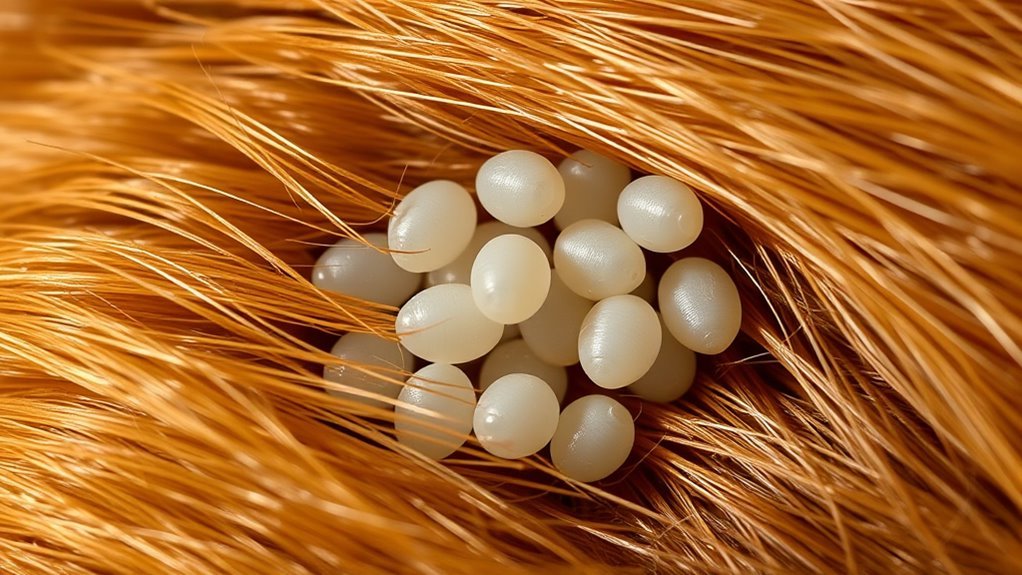
What Do Flea Eggs Look Like on a Dog?
You’ll notice flea eggs on your dog as tiny, white, oval specks about the size of a grain of salt. These flea eggs are smooth and shiny, making them distinguishable from other debris on your pet. Since they don’t stick to fur, they often fall off easily and can look like small bits of dirt.
Typically, you’ll find flea eggs in warm, shaded spots like the base of the tail or around the neck area. These locations provide the ideal environment for flea eggs to develop.
If you want to know how to spot and safely remove these pests, keep exploring these helpful tips. Understanding what flea eggs look like on a dog is the first step in effective flea control.
What Do Flea Eggs Look Like on Dogs?
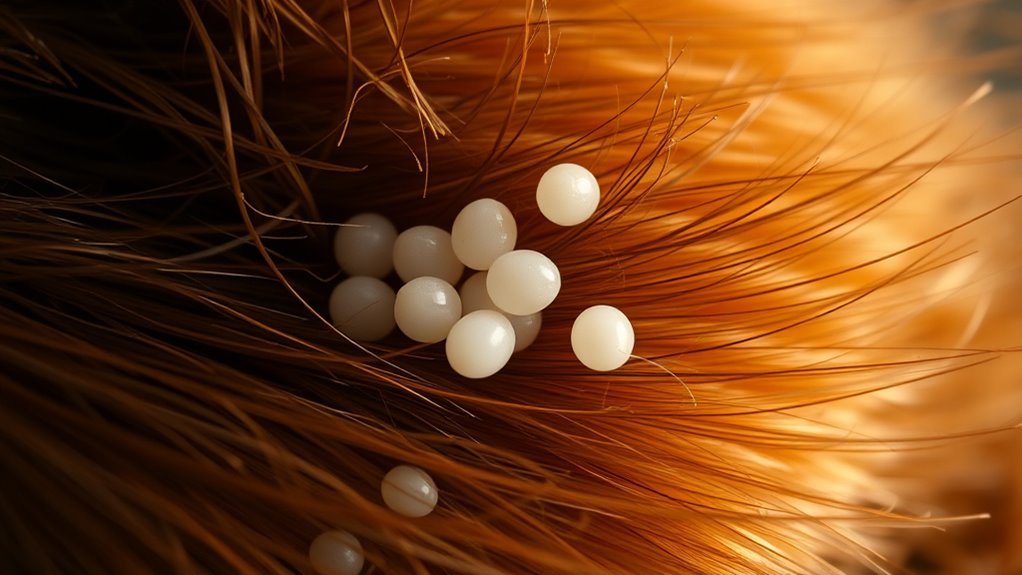
Flea eggs on dogs look like tiny, oval-shaped white specks about 0.5 mm in size, similar to grains of salt or rice. When you examine your dog’s fur closely, especially in less dense areas like the belly or inner thighs, you’ll notice these white specks.
Flea eggs have a smooth, shiny appearance and don’t stick to the hair shaft, so they can easily fall off onto bedding or carpets. Because they don’t move or cling tightly, spotting them requires patience and a good flea comb.
Recognizing the appearance of flea eggs helps you understand the extent of an infestation and is essential for effective flea control. By identifying these eggs early, you can take prompt action to protect your dog and home.
Where Do Fleas Lay Their Eggs on Dogs?

Where exactly do these tiny pests lay their eggs on your dog? Fleas typically lay their eggs on dogs’ skin, focusing on warm, shaded spots like the base of the tail, neck, and lower back. You’ll often find flea eggs nestled in thick fur patches or under collars where fleas prefer to hide.
Because the eggs aren’t sticky, many fall off your dog’s skin and end up in bedding, carpets, or furniture. This means you might spot eggs not just on your dog but also around the places they rest. Understanding where flea eggs accumulate helps you target cleaning efforts and prevent infestations.
How Can You Tell If Your Dog Has Flea Eggs?
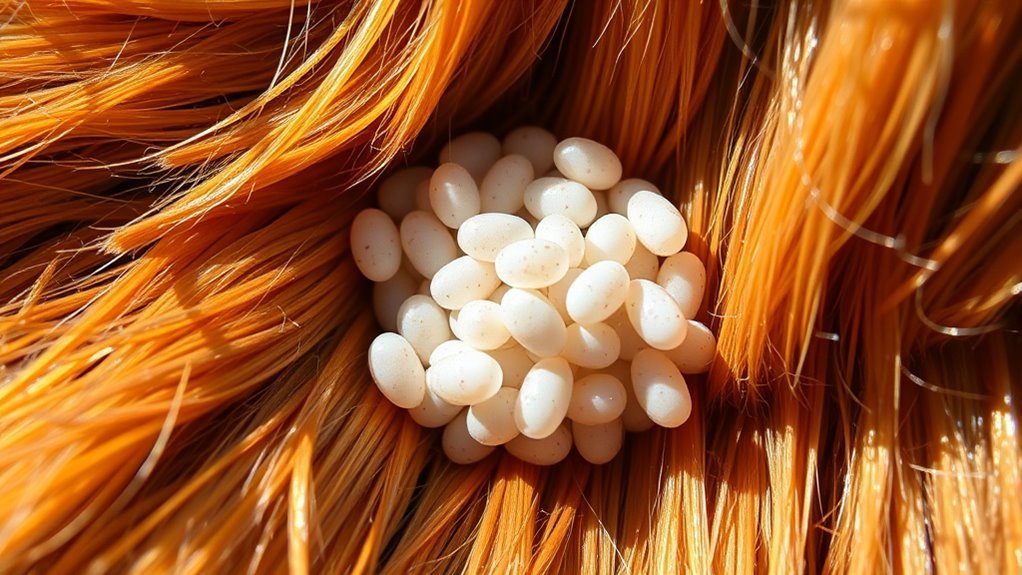
Now that you know where these tiny eggs tend to gather on your dog, the next step is learning how to spot them. Flea eggs are tiny, off-white, and oval-shaped, often mistaken for grains of salt. To inspect, part your dog’s fur in areas like the belly, inner thighs, and base of the tail.
Using a flea comb helps catch these tiny eggs along with flea dirt. Flea eggs don’t stick to fur and usually fall off easily, so check the comb carefully. To differentiate flea eggs from flea dirt, place debris on a moist white tissue; flea dirt stains reddish-brown, while flea eggs remain white.
This simple method helps you confirm if your dog has flea eggs and requires attention.
How to Safely Remove Flea Eggs From Your Dog’s Fur
You’ll want to use a fine-toothed flea comb to gently brush through your dog’s fur, especially around spots fleas love to hide.
Dip the comb in soapy water frequently to trap and kill flea eggs, and wipe off any debris between passes.
Always handle your dog’s skin carefully to avoid irritation while keeping your tools clean to prevent re-infestation.
Gentle Combing Techniques
Although flea eggs can hide deep within your dog’s fur, using a fine-tooth flea comb allows you to safely and effectively remove them. Start by gently parting the fur in small sections, working from the neck down to the tail. Use slow, methodical combing techniques, pressing the flea comb teeth close to the skin to dislodge eggs without irritating your dog.
Focus on common hotspots like the base of the tail, inner thighs, and belly where flea eggs tend to cluster. Regularly dip your flea comb into warm, soapy water to rinse off collected eggs and prevent them from falling back onto your dog’s fur. Incorporating this into your regular grooming routine helps keep flea populations under control and your dog comfortable.
Safe Cleaning Practices
When you want to safely remove flea eggs from your dog’s fur, using a fine-tooth flea comb is essential for gently lifting and capturing eggs, especially around the neck, tail base, and inner thighs. These flea combs help you spot what flea eggs look like—tiny, white, and oval-shaped.
After combing, bathe your dog with a veterinarian-recommended flea shampoo that’s gentle and moisturizing to loosen eggs without irritating skin. Avoid hazardous chemicals or human shampoos, as they can harm your dog and reduce cleaning effectiveness.
Once dry, comb again to remove any remaining eggs. Don’t forget to wash your dog bedding, blankets, and nearby fabrics regularly in hot water to kill eggs and prevent re-infestation. Following these cleaning practices keeps your dog comfortable and flea-free.
Home Remedies and Products to Remove Flea Eggs
You can tackle flea eggs using natural treatments like neem oil sprays or diatomaceous earth to keep your dog and home safe. Effective products with insect growth regulators also stop eggs from hatching and help control infestations.
Don’t forget to clean your dog’s bedding and vacuum regularly to remove eggs from their environment.
Natural Flea Egg Treatments
If you’re looking to tackle flea eggs naturally, several effective home remedies and products can help you remove and repel them without harsh chemicals. Sprinkling diatomaceous earth on your dog’s coat and bedding dehydrates and kills flea eggs on contact.
You can also spray a 1:1 mixture of apple cider vinegar and water on your dog’s fur; while it won’t kill eggs, it helps repel fleas and prevents eggs from hatching. Applying coconut oil coats the fur, soothing skin and loosening flea eggs for easier removal during grooming.
Regular baths with plant-based shampoos and using herbal sprays containing lemon or tea tree oil improve environmental conditions, reducing flea egg presence. These natural flea treatments work together to protect your dog while maintaining a safe, chemical-free environment.
Effective Flea Removal Products
Although tackling flea eggs can feel overwhelming, using effective removal products makes the process much easier. Medicated shampoos with insect growth regulators (IGRs) target flea eggs and larvae, disrupting their development. Topical flea treatments like Frontline or Advantage kill adult fleas and prevent egg production, offering reliable flea prevention.
Oral medications such as NexGard or Bravecto provide systemic protection by eliminating fleas before they lay eggs, controlling infestations efficiently. Regular grooming with a flea comb physically removes flea eggs from your dog’s fur, especially when you notice the flea eggs appearance—tiny, white, oval specks. Combining these methods ensures effective flea removal.
Environmental Cleaning Tips
Keeping your dog free of flea eggs is only part of the solution; tackling the environment where these eggs develop plays a big role in stopping infestations. Start by vacuuming carpets, furniture, and crevices regularly to remove flea eggs and disrupt the flea lifecycle.
Wash your pet’s bedding, blankets, and linens weekly in hot water (at least 130°F) to kill any remaining eggs. For effective environmental cleaning, use natural remedies like diatomaceous earth or flea-specific sprays on carpets and upholstery.
Don’t forget outdoor pest control: apply flea granules or sprays in shaded yard areas where eggs might hatch. Maintaining consistent cleaning routines and steam cleaning helps eradicate flea eggs and prevents re-infestation, keeping your home and dog protected.
Preventing Flea Eggs Through Grooming and Home Hygiene
Since flea eggs can quickly lead to a full-blown infestation, you need to tackle them early through consistent grooming and thorough home cleaning. Use a fine-toothed flea comb during grooming to remove flea eggs from your dog’s coat. Bathing with medicated flea shampoo also helps wash away eggs stuck in fur.
For home hygiene, regularly vacuum carpets, furniture, and clean your dog’s bedding to remove eggs and larvae from the environment. Incorporate flea treatment products like insect growth regulators to stop eggs from developing into adult fleas. Here’s a quick guide:
| Task | Purpose |
|---|---|
| Flea comb grooming | Physically removes flea eggs |
| Medicated flea shampoo | Washes away eggs from fur |
| Vacuuming & cleaning | Removes eggs/larvae from environment |
| Flea treatment products | Prevent egg development |
Stay consistent to keep flea eggs under control.
When Should You See a Vet for Flea Egg Problems?
Regular grooming and home cleaning can keep flea eggs under control, but sometimes these efforts aren’t enough. If you notice persistent flea eggs despite consistent flea treatments, it’s time to see a vet. You should also consult a vet if your dog shows severe itching, skin irritation, or hair loss linked to flea eggs.
When flea eggs appear in your dog’s environment but you can’t find them on your pet, professional advice is important. If allergic reactions or skin infections develop and don’t improve with home care, get veterinary help promptly.
Understanding the Flea Egg Lifecycle on Dogs
Although flea eggs are tiny and often overlooked, understanding their lifecycle is key to controlling infestations on your dog. Flea eggs are small, glossy, and oval-shaped, falling easily from your dog’s coat onto bedding or carpets.
Depending on environmental conditions like temperature and humidity, these flea eggs hatch into larvae within 2 days to several weeks. The larvae then develop into pupae, which eventually emerge as adult fleas.
This entire lifecycle—from egg to adult flea—can take about 2 to 3 weeks under ideal conditions. Knowing how flea eggs hatch and progress through these stages helps you anticipate when new fleas will appear and informs the best timing to interrupt the lifecycle before it advances, protecting your dog from ongoing infestations.
How to Manage Flea Eggs and Keep Your Dog Comfortable
If you want to keep flea eggs from taking over your dog’s environment, you need to tackle both your pet and their surroundings. Use a flea comb regularly to remove flea eggs and adult fleas from your dog’s coat. Wash dog bedding and pet accessories in hot water to kill eggs hiding there.
Vacuuming carpets, furniture, and cracks helps disrupt the flea life cycle by removing eggs and larvae. Applying veterinarian-recommended flea treatment stops adult fleas from laying new eggs, breaking the cycle for good.
| Action | Purpose |
|---|---|
| Flea comb | Remove eggs and fleas from fur |
| Wash dog bedding | Kill eggs in fabric |
| Vacuuming | Eliminate eggs in environment |
| Flea treatment | Kill adult fleas, prevent eggs |
Frequently Asked Questions
What Kills Flea Eggs on Dogs Instantly?
You can instantly kill flea eggs on dogs using flea shampoos with pyrethrin or permethrin, topical spot-on treatments like selamectin, oral meds such as nitenpyram, or environmental sprays containing insect growth regulators.
These products work quickly to disrupt the flea life cycle and prevent eggs from hatching. Flea shampoos provide immediate relief by killing fleas and their eggs on contact.
Topical spot-on treatments and oral medications offer longer-lasting protection by targeting fleas at different life stages. Environmental sprays help eliminate eggs and larvae in your pet’s surroundings, reducing the risk of re-infestation.
How Do I Tell if My Dog Has Flea Eggs?
Wondering if your dog’s hiding tiny invaders? Part their fur and use a flea comb—if you spot small, shiny white specks or reddish stains when dampened, you’ve likely found flea eggs.
Act quickly to protect them!
Are Flea Eggs White or Black?
Flea eggs are white or off-white, not black. If you see black specks, those are likely flea dirt, not eggs.
You’ll want to focus on light-colored, tiny, oval shapes when checking your dog for eggs.
Can Fleas Cause Skin Rash?
Yes, fleas can cause skin rashes on your dog. Their bites often trigger itching, redness, and allergic reactions, which may lead to scabs, hair loss, or infections if your dog scratches excessively.
Keep fleas under control to prevent this.
Conclusion
If you spot tiny white specks like grains of salt on your dog’s fur, those could be flea eggs—just like Max’s owner did last summer. By acting quickly with proper grooming and safe treatments, Max’s flea problem was under control in no time.
You can keep your dog comfortable and flea-free too, just stay vigilant and maintain regular cleaning. Don’t wait—early action makes all the difference for your furry friend’s health.
Remember, recognizing what flea eggs look like on a dog is the first step to effective flea control. Regular checks and timely treatment help ensure your pet stays happy and healthy.