What Does Eggs Do to Improve Cake Texture and Structure?
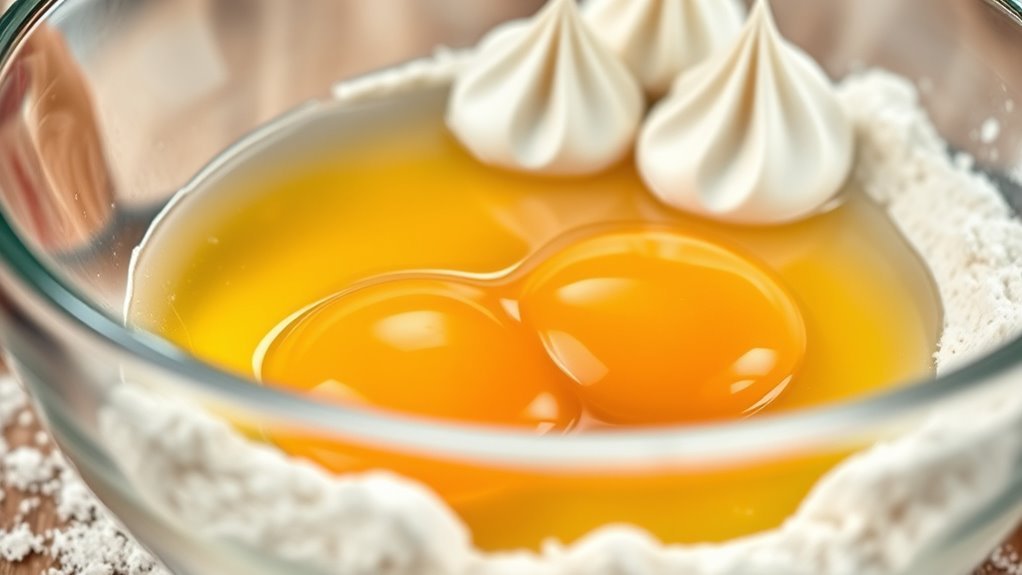
Eggs play a key role in improving your cake’s texture and structure by contributing essential proteins and moisture. The proteins in eggs coagulate when heated, forming a stable network that supports the cake’s crumb. This process enhances the overall firmness and chewiness of the cake, making it more enjoyable to eat.
Egg yolks add moisture, richness, and tenderness to the cake, enriching its flavor and mouthfeel.
Meanwhile, egg whites help trap air, providing lightness and lift. Balancing the use of yolks and whites lets you customize the cake’s softness and fluffiness to your preference.
If you want to master how eggs interact with other ingredients and avoid common pitfalls, there’s plenty more to explore. Understanding these interactions can help you achieve the perfect cake texture every time.
How Egg Proteins Build the Foundation of Cake Structure
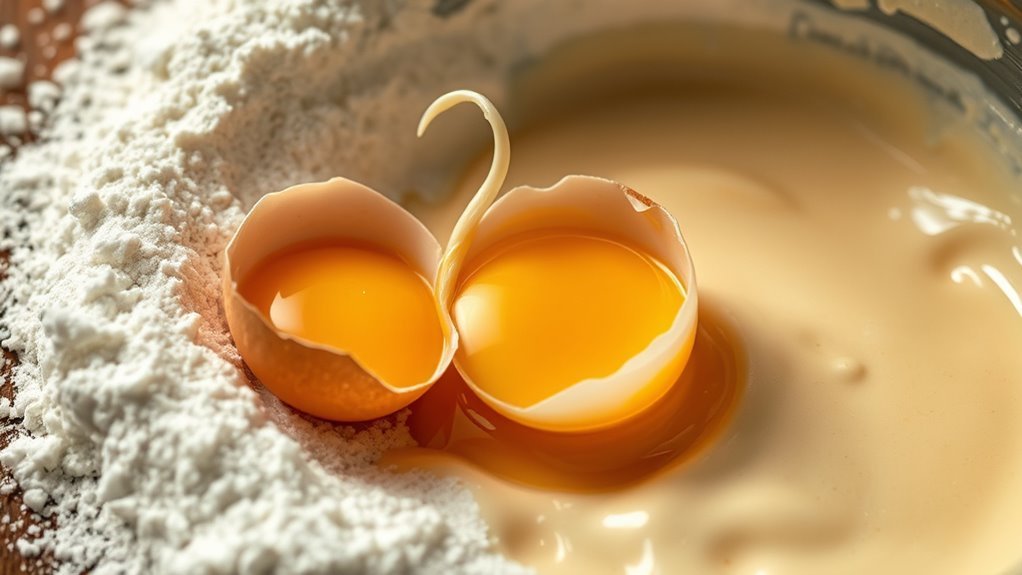
When you bake a cake, egg proteins unfold and coagulate, forming a stable network that supports the cake’s structure. This coagulation begins around 140°F (60°C), setting the cake’s framework as it heats.
As egg proteins bond, they create a matrix that traps air and moisture, which is crucial for the cake’s crumb. You’ll notice that this network works hand in hand with the flour starch gel, resulting in the delicate, spongy texture you expect from a well-made cake.
Without properly coagulated egg proteins, your cake might collapse or turn out dense. So, the role of egg proteins in coagulation is essential—they build the foundation that gives your cake its resilience and tender crumb.
What Egg Yolks Add to Cake Texture and Moisture
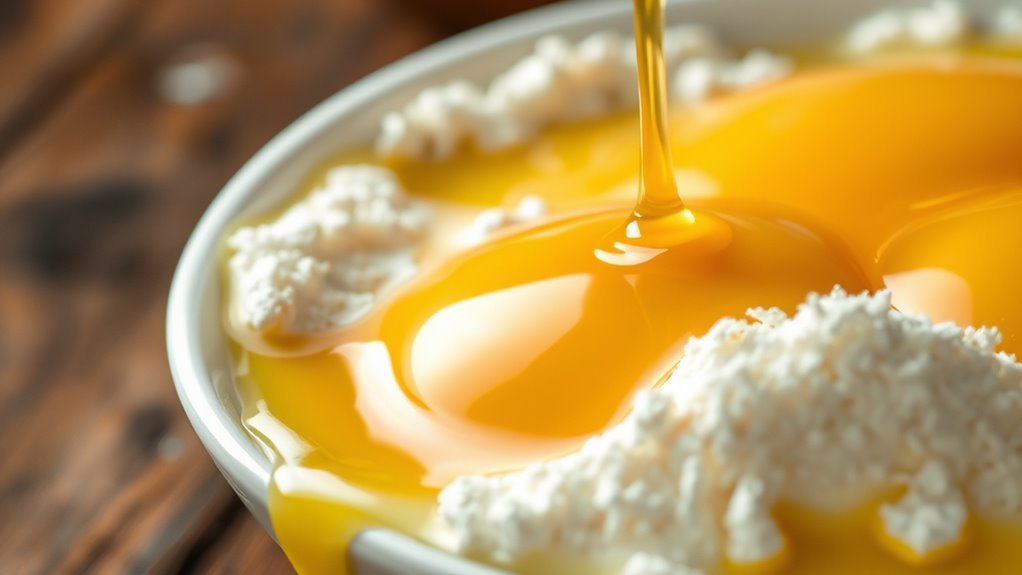
Although egg whites build the cake’s structure, egg yolks play an essential role in enhancing texture and moisture. Egg yolks contain fats and emulsifiers like lecithin that help you create a smooth, stable batter, improving moisture retention throughout baking. The high fat content in egg yolks contributes to a tender, velvety crumb, making your cake texture richer and more luxurious.
Yolks also add natural flavor and richness, boosting the overall moistness of your cake. Additionally, the proteins in egg yolks provide some structural support, strengthening the crumb without sacrificing softness. If you want to increase moisture and softness, incorporating extra egg yolks will give your cake a more velvety, tender texture that feels indulgent with every bite.
How Egg Whites Lighten and Leaven Cakes
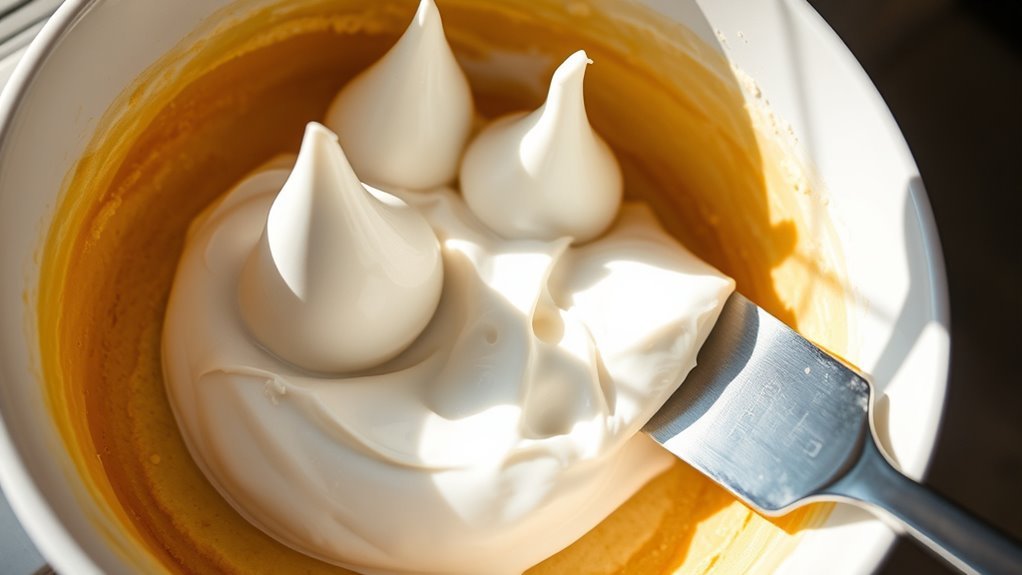
How exactly do egg whites lighten and leaven cakes? When you whip egg whites, they trap air bubbles, creating a foam that expands in the oven. This foam provides essential leavening, making your cake rise.
The proteins in egg whites coagulate during baking, setting the airy structure and increasing lightness. Incorporating this foam into the batter adds volume, resulting in a softer crumb. Proper whipping and gradual sugar addition improve foam elasticity, maximizing leavening.
| Process | Effect on Cake | Key Factor |
|---|---|---|
| Whipping egg whites | Traps air bubbles | Foam formation |
| Baking | Sets foam structure | Protein coagulation |
| Mixing batter | Adds volume | Foam incorporation |
| Technique | Enhances foam stability | Sugar addition |
This synergy ensures a delicate, airy cake texture you’ll love.
Balancing Egg Yolks and Whites for Ideal Cake Texture
Striking the right balance between egg yolks and whites plays a crucial role in achieving your cake’s ideal texture. Egg yolks add moisture, richness, and tenderness by contributing fats and emulsifiers that enhance cake structure and flavor. On the other hand, incorporating whipped egg whites introduces air, giving your cake a lighter, softer crumb with greater rise.
If you use too many yolks, your cake might turn out dense and overly moist, while too many whites can make it dry and fragile. By adjusting the ratio of egg yolks to egg whites, you can control the cake’s texture to suit your preferences—whether you want it richer and tender or airy and light. Finding that perfect balance ensures your cake has both excellent structure and delightful softness.
The Science of Protein Coagulation in Cake Baking
When you heat eggs in a cake batter, the proteins unfold and bond to form a strong network. This network traps air and moisture, giving your cake structure and a tender crumb.
Understanding how heat causes these bonds helps you control the cake’s texture and stability.
Egg Protein Network
Although you might not notice it, egg proteins play an essential role in shaping your cake’s texture by unfolding and coagulating as they heat. This coagulation forms a stable egg protein network that supports the cake structure, trapping air and moisture within the matrix.
As a result, your cake develops its characteristic crumb, balancing firmness and elasticity. You’ll find that this network works hand in hand with flour starches to create that delicate, tender bite you expect from a well-baked cake.
Controlling the baking temperature is critical because it guarantees the egg proteins coagulate just right—too little, and the cake won’t set; too much, and it becomes tough. Understanding this helps you bake cakes with perfect structure and texture every time.
Heat-Induced Bonding
How exactly does heat transform your cake batter into a tender, structured delight? When you bake, heat causes egg proteins to unfold and bond—a process called coagulation. This starts around 140°F (60°C) and finishes by 160-180°F (71-82°C), setting the cake’s crumb.
The resulting protein network traps air and moisture, giving your cake its light, tender texture and preventing it from collapsing. Here’s a quick look at how heat impacts egg proteins during baking:
| Temperature Range | Process | Effect on Cake |
|---|---|---|
| 140°F (60°C) | Coagulation begins | Batter starts to set |
| 160-180°F (71-82°C) | Coagulation completes | Crumb structure solidifies |
| Above 180°F (82°C) | Protein network stable | Moisture retained, elasticity |
Controlling heat guarantees ideal coagulation and a perfectly structured cake.
How Eggs, Flour, and Sugar Shape Cake Crumb
If you want a cake with a soft, elastic crumb that holds its shape, you need to understand how eggs, flour, and sugar work together. When you bake, egg proteins unfold and bond, forming a protein network that traps air and moisture, giving your cake a spongy texture. Flour’s starches gel alongside this network, adding firmness and stability to the crumb structure.
Sugar helps by tenderizing the mixture, slowing protein bonding just enough to create a fine, uniform crumb grain. Together, these ingredients build a delicate yet stable crumb that slices cleanly without crumbling. By controlling how egg proteins and flour interact, you shape the cake’s texture, ensuring it’s soft but resilient—exactly what you want for an enjoyable bite every time.
Tips for Adjusting Egg Ratios to Customize Cake Texture
You can boost moisture and softness by adding extra yolks to your batter, while folding in whipped egg whites helps your cake rise and stay light.
Finding the right balance between yolks and whites lets you customize the texture, whether you want a tender crumb or a fluffier bite. Experiment with these ratios to match your ideal cake feel every time.
Yolks For Moisture
Why does tweaking the number of egg yolks make such a difference in cake texture? Yolks contain about 50% water, which boosts your cake’s moisture. Plus, the fats and emulsifiers like lecithin in yolks stabilize the batter, creating a tender, moist crumb.
When you add extra yolks, you increase fat and protein, making the cake richer, softer, and more velvety. Adjusting the yolk-to-white ratio gives you control over moisture levels, so you can customize cake texture to be denser or lighter based on your preference.
If your recipe has drier ingredients or more sugar, adding yolks helps maintain ideal moisture. In short, yolks are your secret weapon for achieving the perfect moist, tender cake texture every time.
Whipped Whites Lift
While egg yolks add richness and moisture, whipped egg whites bring a different kind of magic to your cake’s texture. When you whip egg whites, you create a stable foam full of tiny air bubbles. These bubbles expand during baking, providing essential leavening that lifts your cake.
By folding whipped whites gently into your batter, you introduce extra air, resulting in a lighter, more open crumb. Properly whipped whites should form stiff peaks, which trap even more air and maximize lift. Adjusting the ratio of whipped whites lets you customize how light, fluffy, and tall your cake turns out.
Balancing Texture Effects
Although egg whites and yolks each contribute unique qualities, balancing their ratios lets you fine-tune your cake’s texture to match your vision. Using more egg whites enhances leavening and creates a finer, lighter cake crumb, while increasing yolks adds moisture and richness but softens structure.
Whipping whites separately boosts lift, giving an airy texture. Adjusting these ratios lets you control tenderness, moisture, and crumb density precisely.
| Egg Ratio | Texture Effect | Cake Crumb Characteristic |
|---|---|---|
| More egg whites | Greater leavening | Fine, delicate, light |
| More yolks | Increased moisture | Dense, rich, tender |
| Equal whites & yolks | Balanced lift and moisture | Moderate density, tender |
| Whipped whites | Enhanced volume | Open, airy |
| Extra yolks | Rich flavor | Soft, less structured |
Common Egg Mistakes in Cake Baking and How to Fix Them
If you want your cake to have the perfect texture, you need to pay close attention to how you handle eggs. One common mistake is not properly beating egg whites before folding them in, which reduces lift and results in a denser crumb. Another frequent error is overmixing the batter after adding eggs; this deflates the whipped egg whites and breaks down the egg-protein network, weakening the cake structure and making it less tender.
Using cold eggs straight from the fridge can also hinder emulsification and aeration, affecting cake volume. To fix these issues, use room-temperature eggs, gently fold in well-beaten egg whites, and avoid overmixing once eggs are incorporated. Also, measure eggs accurately, as too few or too many can throw off your cake’s texture and structure.
Frequently Asked Questions
What Does Egg Do for a Cake?
Eggs give your cake structure by coagulating proteins during baking, trap air to lighten it, add moisture and richness, and help emulsify ingredients.
They make your cake tender, spongy, and perfectly firm.
What Are the Benefits of Eggs in Cake?
Eggs boost your cake’s structure by setting the crumb and trapping air for fluffiness. They emulsify ingredients for smooth batter, retain moisture, and add tenderness, making your cake light, stable, and deliciously soft.
How Do Eggs Contribute to the Structure and Consistency of a Cake Batter?
You’ll find eggs build structure and boost consistency by trapping air, blending fats, and setting proteins. They whip lightness, bind ingredients, and firm the crumb, making your cake tender yet sturdy, smooth yet fluffy.
How Do Eggs Add Texture?
Eggs add texture by trapping air when whipped, creating lightness, and by coagulating during baking, setting a tender, moist crumb.
They also add richness, making your cake soft, elastic, and delightfully smooth to eat.
Conclusion
Eggs aren’t just ingredients—they’re the secret architects of your cake’s texture and structure. From the rich moisture of yolks to the airy lift of whites, they work together like a symphony, balancing strength and softness.
Next time you bake, remember: mastering eggs means mastering your cake’s crumb and rise. So, why settle for ordinary when you can crack open the extraordinary?
Your perfect cake texture and structure is just an egg away.