What Time of Year Do Ducks Lay Eggs?
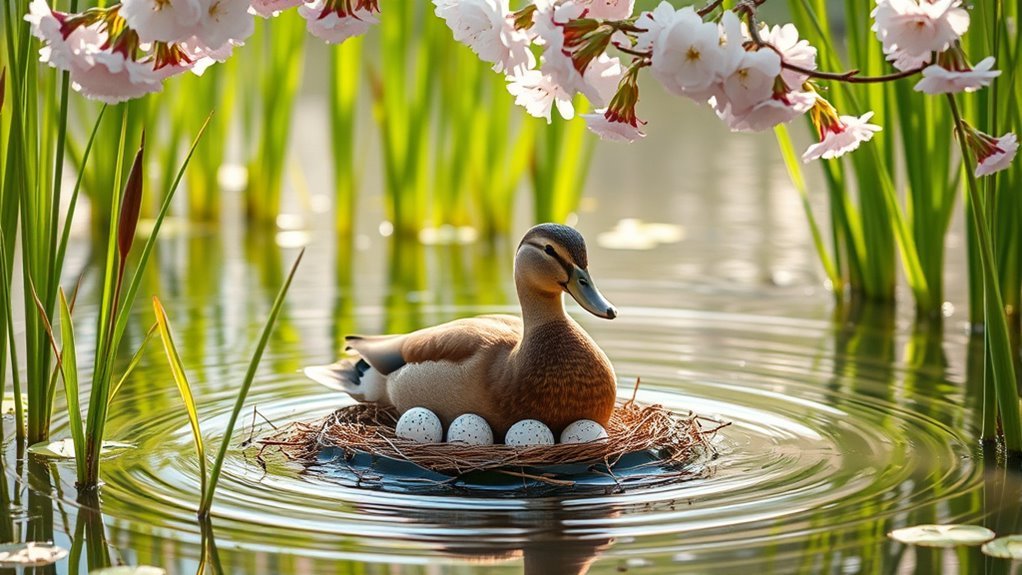
You’ll notice your ducks typically start laying eggs in early spring when longer daylight and warmer temperatures naturally trigger their breeding cycle. Knowing what time of year ducks lay eggs helps you anticipate and support their needs during this period.
Most ducks begin between 5 to 8 months old, with lighter breeds sometimes starting earlier.
Seasonal light changes and environmental factors like temperature play big roles in egg production. To maximize egg production, you’ll want to understand breed differences and how to create the best conditions for your ducks.
There’s more to discover about supporting them through this cycle.
When Do Ducks Start Laying Eggs?
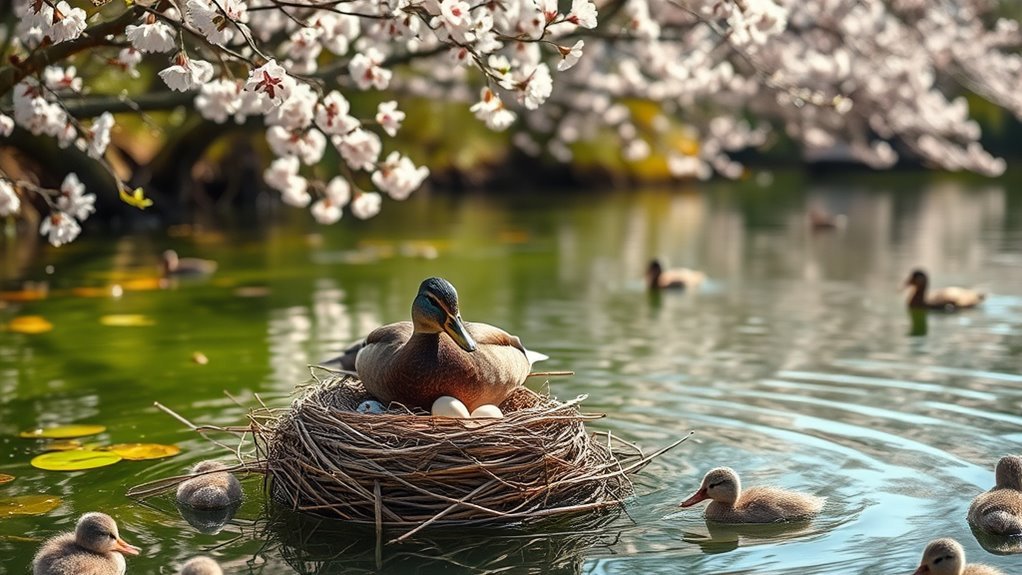
Although the exact timing varies by breed and environment, most ducks start laying eggs between 5 to 8 months old. When you raise ducks, you’ll notice that lighter breeds may begin laying eggs as early as 4 months, while heavier breeds usually wait until 6 to 8 months.
Egg laying depends largely on the female’s maturity, so drakes don’t affect when this starts. Factors like body development, daylight length, and temperature play a role in triggering egg laying. Typically, you’ll see the first eggs appear in spring or early summer when conditions are favorable.
Understanding when ducks start laying helps you prepare their environment to encourage a healthy egg-laying cycle and ensure your ducks are comfortable and productive.
How Seasonal Changes Affect Duck Egg Laying
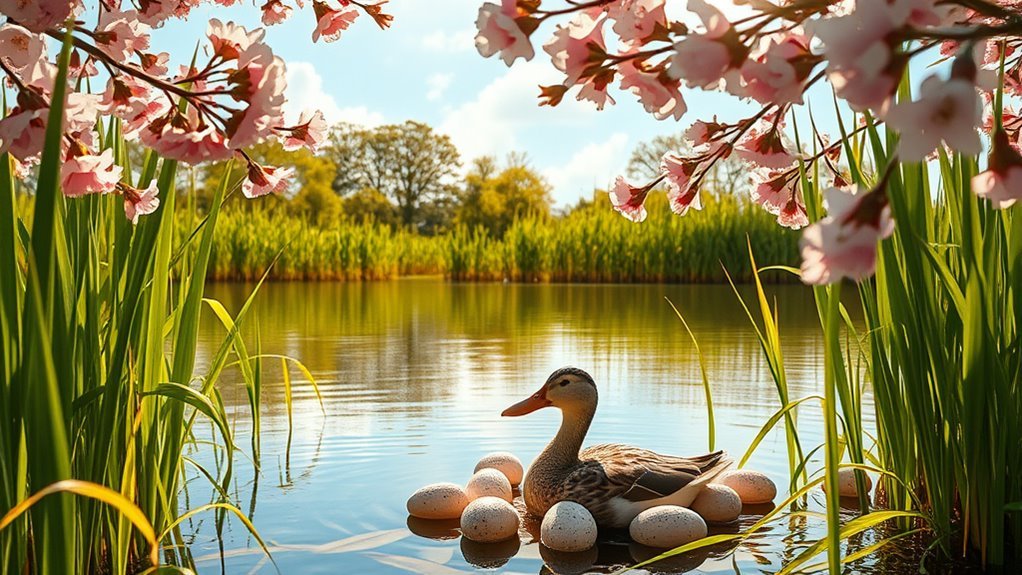
When daylight hours lengthen in early spring, ducks respond by ramping up egg production. You’ll notice that these seasonal changes, especially longer daylight hours and warmer temperatures, stimulate hormonal shifts that trigger egg laying.
As the days grow shorter in late summer and fall, ducks naturally reduce or stop laying eggs to prepare for molting or migration. In winter, shorter daylight hours and colder conditions usually halt egg laying altogether.
However, if you keep ducks indoors with artificial lighting that mimics longer days, you can encourage them to lay eggs year-round. Understanding how seasonal changes and daylight hours influence egg laying helps you manage and predict your ducks’ reproductive cycles more effectively.
Which Duck Breeds Lay Eggs Early or Late?
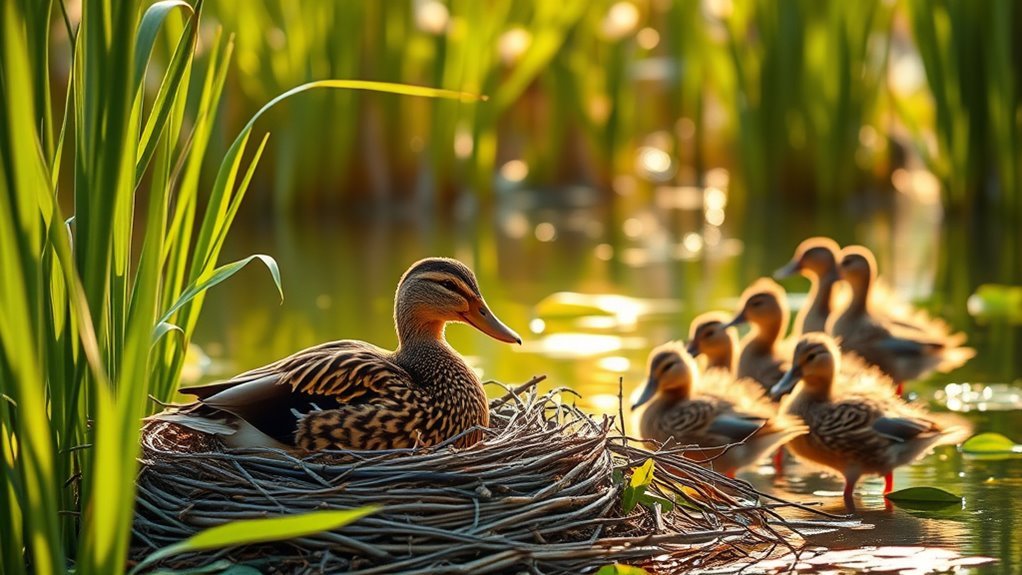
How early your ducks start laying eggs depends largely on their breed. Some breeds, like Khaki Campbells and Indian Runner Ducks, begin to lay as early as 4 to 5 months old, often producing eggs in the early morning. These breeds have a quicker breed timing, giving you eggs sooner in the year.
On the other hand, heavier breeds such as Pekins and Rouens usually start laying later, around 6 to 8 months old. When ducks lay eggs can vary within a breed due to individual health and development, but understanding breed timing helps you anticipate their egg-laying schedule.
Knowing which breeds lay early or late lets you plan your flock’s productivity effectively throughout the seasons.
Environmental Factors That Influence When Ducks Lay Eggs
Because ducks respond strongly to changes in their environment, factors like daylight length and temperature play a crucial role in triggering their egg-laying cycle. Seasonal cues such as increasing daylight hours and warmer temperatures stimulate hormonal changes that encourage egg production.
You’ll notice ducks usually start laying eggs between February and May when these environmental factors align. Short winter days and cold can delay laying unless extra light or heat is added. Availability of food and good nesting conditions also impact timing.
| Environmental Factor | Effect on Egg Laying | Typical Timeframe |
|---|---|---|
| Daylight Hours | Stimulates hormone release | Spring (Feb-May) |
| Temperature | Warmer temps encourage laying | Spring to early summer |
| Seasonal Cues | Trigger laying onset | Increasing day length |
| Food Availability | Supports consistent laying | Year-round |
| Nesting Conditions | Influence timing and success | Spring |
How to Support Your Ducks During Egg-Laying Season
To keep your ducks healthy and productive during egg-laying season, you’ll need to provide proper nutrition, lighting, and care. Feed your ducks a high-protein, calcium-rich layer feed to support egg production and maintain duck health. Guarantee they get at least 13 hours of natural or artificial light daily to stimulate laying season activity.
Maintain consistent temperature, good ventilation, and clean bedding to promote comfort and egg quality. Always offer fresh, clean water so ducks stay hydrated and avoid respiratory issues. Collect eggs multiple times a day to prevent cracking and broodiness, ensuring a steady supply.
Frequently Asked Questions
What Month Do Ducks Start Laying Eggs?
Ducks usually start laying eggs in March, but it can vary. If you keep them indoors or in warmer climates, they might begin as early as February.
Watch for increasing daylight and warmer temperatures to know when.
Do Ducks Lay All Year Round?
No, ducks don’t lay all year round naturally. You’ll see them stop in late summer or fall.
But if you control lighting indoors, you can help domestic ducks lay eggs throughout the year.
What to Do When a Duck Lays an Egg in Your Yard?
Stay calm, stay quiet, and stay distant when a duck lays an egg in your yard. Don’t touch the egg, provide water and cover, and call wildlife experts if the nest faces danger or disturbance.
Can Ducks Have Babies in the Fall?
Yes, ducks can have babies in the fall if conditions are right. You’ll notice some ducks nesting later, with ducklings hatching as temperatures drop.
Just guarantee they find food and shelter to survive winter.
Conclusion
You’ll notice ducks start laying eggs just as spring awakens, and isn’t it curious how the lengthening days and warming weather work together to encourage this? Just as the seasons shift, so do your ducks’ habits—early layers and late bloomers alike respond to nature’s cues.
By understanding these rhythms and supporting your ducks with proper care, you’ll find egg-laying season not only predictable but perfectly timed, coinciding with the world coming back to life.
Knowing what time of year ducks lay eggs helps you prepare for this natural cycle and ensures your ducks stay healthy and productive throughout the season.