When Do Brahma Chickens Start Laying Eggs How To Guide
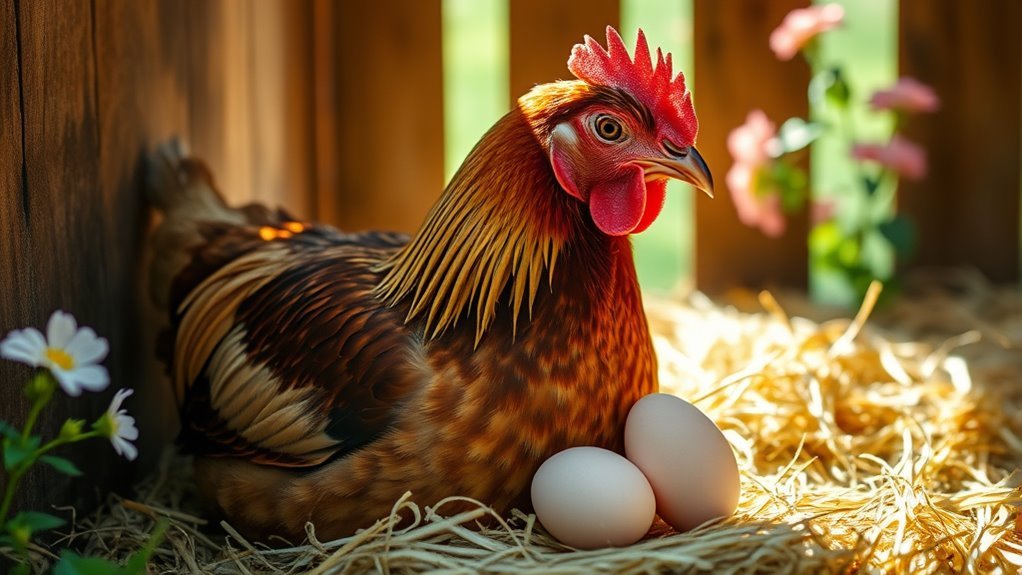
You can expect your Brahma chickens to start laying eggs between 22 weeks and 9 months. Brahma hens mature slower due to their large size and dense feathers, which affects when they begin to lay.
Look for signs like a moist, swollen vent and squatting behavior to know when they’re ready to start laying eggs. These indicators help you track their development accurately.
Keep their coop comfortable by controlling temperature and providing clean bedding. Offer high-quality layer feed rich in calcium, and ensure consistent lighting to encourage steady egg production.
If you want tips on boosting laying performance and handling any delays, there’s more helpful guidance ahead in this how-to guide.
When Do Brahma Chickens Typically Start Laying Eggs?
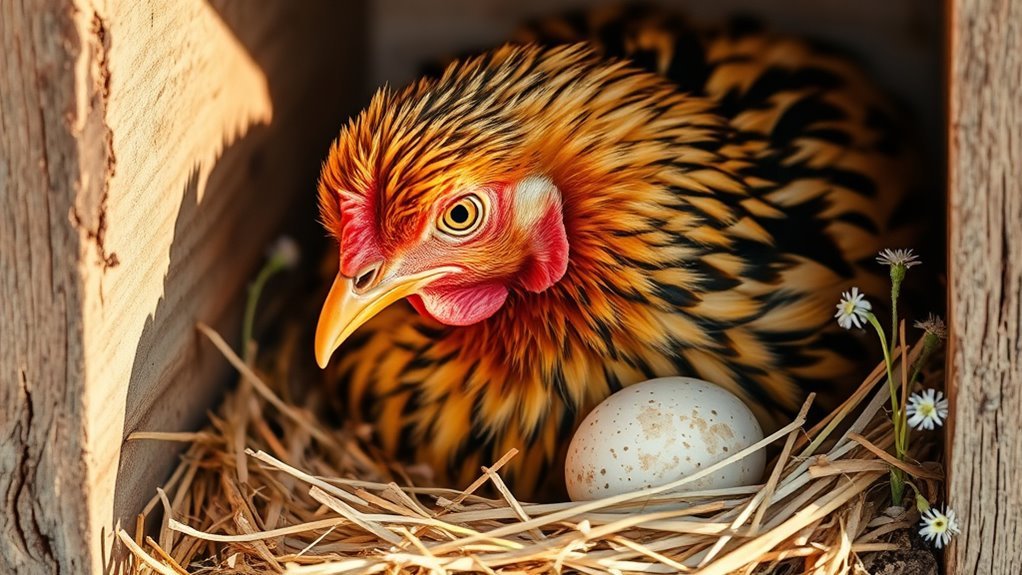
Although Brahma chickens can start laying eggs as early as 22 to 24 weeks, most hens typically begin between 8 to 9 months old. If you’re raising Brahma chickens, you’ll notice some variation in when they start laying. Hatchery-bred birds often lay later, sometimes waiting until 19 weeks or even up to 9.5 months.
When your Brahma hen does start laying, expect her first eggs to be small and light-colored. As she matures, the eggs will grow in size. Full egg-laying maturity usually happens after the first year, so don’t be surprised if production ramps up gradually.
Understanding this timeline helps you manage your flock’s expectations and care effectively as your Brahma chickens begin to lay.
Why Do Brahmas Lay Eggs Later Than Other Breeds?
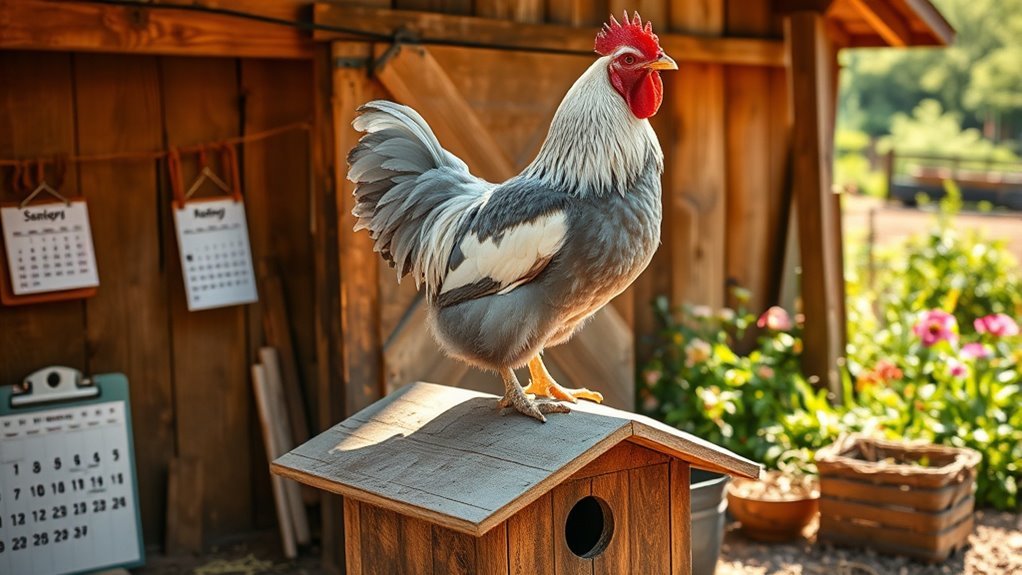
Because Brahma chickens grow larger and have denser feathers than many other breeds, they take longer to reach reproductive maturity. Their large size means their bodies focus on growth and developing strong muscles and dense plumage before shifting energy toward egg production. This delayed maturity is a genetic trait unique to Brahmas, prioritizing size over early laying.
You’ll notice that compared to faster-maturing breeds, Brahmas often start laying eggs around 8 to 9 months of age. Environmental factors and hatchery conditions can also impact when your Brahma hen begins to lay, but the primary reason is their naturally slow development. Understanding this helps set realistic expectations for your flock’s egg-laying timeline.
How To Recognize When Your Brahma Hen Is Ready To Lay?
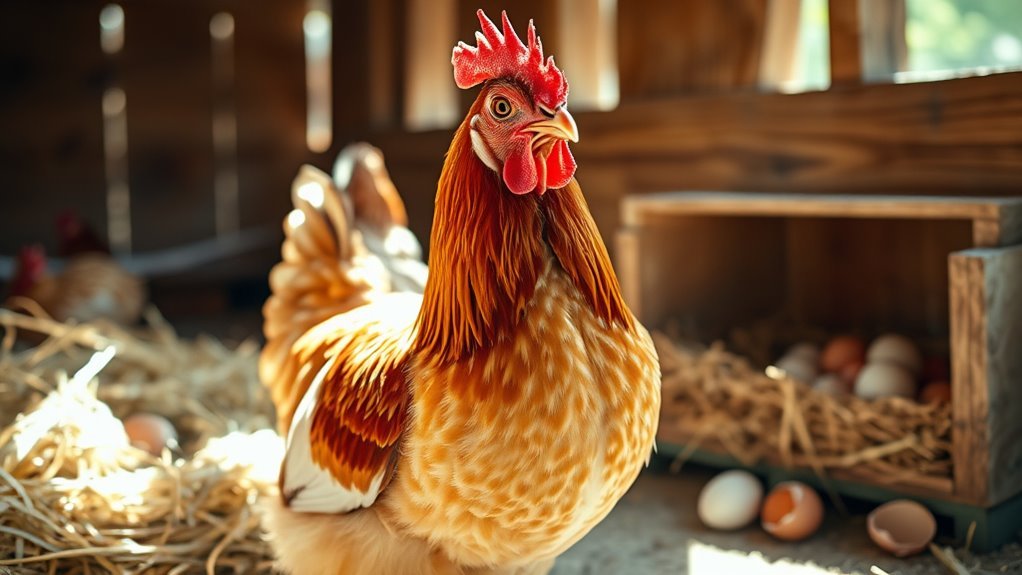
You’ll notice your Brahma hen is ready to lay when her vent becomes soft, small, and slightly swollen.
She’ll start squatting when you approach and may become more vocal and restless around the nesting area.
Watch for these physical and behavioral signs to know when egg-laying is about to begin.
Physical Signs Of Maturity
When you notice your Brahma hen developing a small, pink comb and wattles around 20 weeks old, she’s likely getting ready to lay eggs. These physical signs are key indicators of her reproductive maturity. Look for a moist, slightly enlarged vent area, along with increased redness and swelling around the cloaca—both signal that egg-laying is imminent.
Your hen may also begin to squat when you approach, another sign she’s preparing to lay. Additionally, you might observe a decrease in her activity or restlessness as her body focuses on egg production.
Paying attention to these physical signs helps you recognize when your Brahma hen is ready to start laying, enabling you to provide the right care and nesting environment at the right time.
Behavioral Indicators Of Laying
Noticing changes in your Brahma hen’s behavior can give you clear clues that she’s ready to lay her first egg. Key behavioral indicators include squatting when approached or seeking out quiet, secluded spots for nesting, often starting around 19 to 22 weeks of age.
You might also hear increased vocalization, like more frequent or louder clucking, signaling she’s preparing for laying. Restlessness during early mornings or late afternoons is another sign, alongside a slight drop in appetite.
How Does Environment Affect Brahma Egg Laying?
Although Brahma chickens are hardy, environmental factors play a significant role in their egg-laying patterns. The environment you provide directly affects their egg production. Cooler temperatures and seasonal shifts can delay when they start laying, while extreme weather stresses them, causing temporary stops in egg production.
To support consistent laying, focus on keeping their coop secure and spacious to reduce stress. Provide shade, ventilation, and clean water during hot weather. Avoid wet or muddy conditions that lead to health issues.
What To Feed Brahma Pullets To Support Egg Laying?
To support your Brahma pullets as they prepare to lay eggs, you’ll want to provide a balanced diet rich in protein and calcium. Feeding a quality layer feed guarantees they get essential nutrients, while supplements and treats can boost their health without throwing off their balance.
Keep an eye on their intake to prevent overfeeding and promote steady growth and egg production.
Nutritional Needs Overview
Because Brahma pullets need specific nutrients to start laying strong, healthy eggs, you should provide a high-quality layer feed rich in calcium and protein. This supports eggshell strength and overall health. Alongside layer feed, consider these key nutritional points:
- Supplement with oyster shell or crushed limestone to boost calcium for proper shell development.
- Ensure a balanced diet with essential vitamins and minerals to encourage early, consistent egg production.
- Shift gradually from chick starter to layer feed around 16-20 weeks to meet their evolving nutritional needs.
Don’t forget, fresh, clean water is vital to help digestion and optimize egg laying. Meeting these nutritional needs will set your Brahma pullets up for success in their laying phase.
Layer Feed Essentials
Meeting your Brahma pullets’ nutritional needs sets the stage for choosing the right layer feed to support their egg-laying journey. Since Brahmas mature slowly and typically start laying around 8 to 9 months, you’ll want a high-quality layer feed with 16-18% protein, balanced calcium, and essential vitamins. This guarantees they get enough energy to support their large size and growing bodies.
To boost egg production and strong eggshells, include supplemental calcium sources like oyster shell or crushed eggshells once laying begins. As your hens mature, regularly adjust their feed to maintain health and consistent egg-laying performance. Paying close attention to these layer feed essentials will help your Brahma pullets thrive and produce well.
Supplementary Treats Benefits
Although Brahma pullets get most of their nutrients from a balanced layer feed, adding supplementary treats can give their egg production a helpful boost. You can support healthy egg laying by including calcium-rich treats and protein-rich foods in their diet. These help develop strong eggshells and promote reproductive health.
Consider offering:
- Crushed oyster shells or eggshells as calcium-rich treats for shell strength.
- Mealworms or cooked eggs as protein-rich foods to enhance egg formation.
- Fresh greens like spinach or kale for essential vitamins boosting overall health.
What Challenges Delay Brahma Egg Laying : And How To Fix Them?
If you notice your Brahma hens aren’t laying eggs on time, several factors might be causing the delay. Challenges like poor nutrition, environmental stress, and health issues can all impact egg production.
Fixing these involves improving diet, stabilizing the environment, and addressing health concerns promptly.
| Challenge | Solution |
|---|---|
| Nutritional Deficiency | Provide balanced feed rich in calcium and protein |
| Environmental Stress | Maintain stable temperature and proper lighting |
| Health Issues | Treat parasites and infections early |
How Can You Encourage Egg Production In Slow-Maturing Brahmas?
Since Brahma hens mature slowly, you can encourage egg production by providing a balanced diet rich in calcium and protein, which supports their development and readiness to lay. To boost egg production in slow-maturing Brahmas, focus on creating ideal conditions that promote health and stimulate laying.
- Ensure they get plenty of natural light or use artificial lighting during shorter winter days to mimic longer daylight hours.
- Maintain a calm, clean environment to reduce stress, which can delay egg-laying.
- Stick to consistent feeding schedules and avoid sudden diet changes that might disrupt their maturation process.
Caring For Brahma Hens In Their First Laying Season
When your Brahma hens enter their first laying season, you’ll want to provide a balanced, high-quality layer feed to support their growth and egg production. Keep their coop clean, well-ventilated, and secure from predators to ensure a safe, comfortable space for laying eggs.
Maintain consistent lighting—ideally 14 to 16 hours daily—to encourage regular laying behavior. Remember, Brahma hens are slow growers, so be patient as they start laying smaller eggs.
Over time, as they mature past 20 weeks, you’ll notice the egg size increase. By focusing on proper nutrition, environment, and lighting, you’ll help your Brahma hens lay eggs steadily and healthily during their first season.
Frequently Asked Questions
How Long Does It Take Brahma Chickens to Start Laying Eggs?
You can expect Brahma chickens to start laying eggs around 8 to 9 months old. Some might begin earlier, but their slow growth means they usually take longer to reach maturity and lay full-sized eggs.
How Do You Tell When Your Chickens Are Ready to Start Laying Eggs?
You’ll know your chickens are ready to lay when their combs and wattles turn pink and grow. They act restless near nests and squat when approached.
You might also start finding small eggs in their nesting boxes consistently. These signs together indicate that your hens have reached laying maturity.
How Big Should Nesting Boxes Be for Brahma Chickens?
You’ll want nesting boxes about 12 inches wide, deep, and 12-15 inches high to fit your Brahma hens comfortably.
Give one box per 3-4 hens, filled with soft bedding, so they feel right at home.
How Long Does It Take a Brahma to Reach Full Size?
It takes your Brahma chicken about 10 to 12 months to reach full size. They grow slowly, so you’ll need to provide proper nutrition and space to support their gradual development and large, fluffy feathers.
Conclusion
Now that you know when Brahma chickens typically start laying and how to support them, are you ready to help your hens thrive? Remember, patience is key since Brahmas mature slower than other breeds.
By providing the right environment, nutrition, and care, you’ll encourage healthy egg production. Keep an eye on their behavior and adjust as needed—your attentive care will make all the difference in their first laying season.
Understanding when do Brahma chickens start laying eggs allows you to plan better for their needs. With proper guidance and care, your Brahma chickens will become consistent layers, rewarding you with fresh eggs and a happy flock.