When Do Chickens Start Laying Eggs After Winter How To Guide
When do chickens start laying eggs after winter? You’ll usually see your hens start laying again between late winter and early spring as longer daylight naturally wakes up their laying cycle.
Watch for bright red combs and nesting interest—that means they’re getting ready.
Make sure to provide clean nesting boxes and switch them to a calcium-rich layer feed to support egg production.
Increasing light to about 16 hours a day can help if they’re slow to return.
Keep their environment calm and healthy, and you’ll encourage a smoother progression back to laying.
If you want to fine-tune their routine and fix common setbacks, there’s more to explore.
When Do Hens Start Laying Again After Winter?
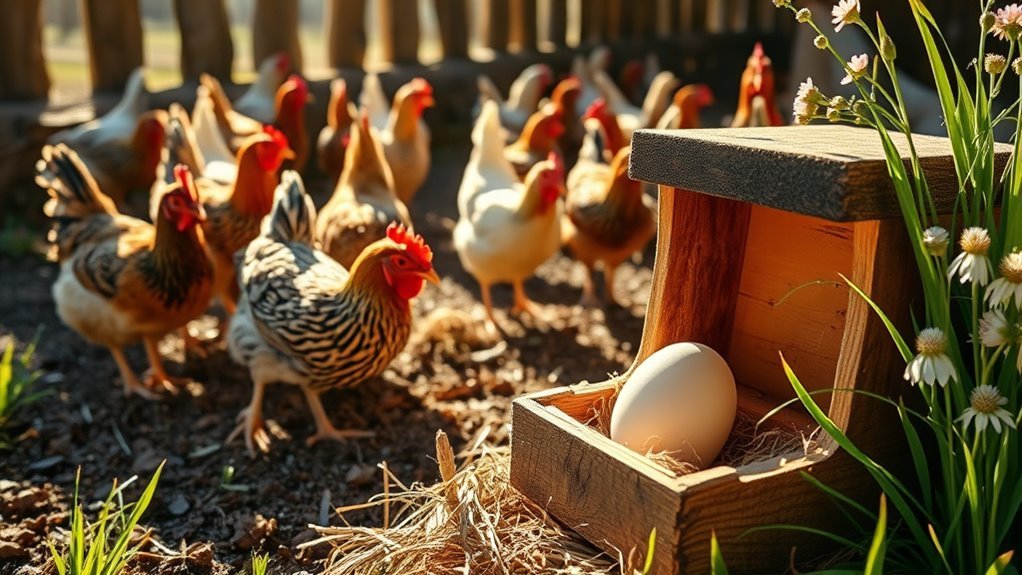
Although hens usually pause egg production during winter, you’ll notice most start laying again between February and April as daylight increases. The timing when hens begin laying their first egg depends on factors like breed, age, and whether they’ve finished molting. Molting often causes hens to stop laying for 6 to 18 weeks, typically ending by late winter or early spring.
You might see signs that hens are ready to lay again, such as their combs turning a brighter red, increased interest in nesting areas, and more curious behavior. If you want to encourage hens to resume laying earlier, supplemental lighting can help, but naturally, the hens will usually start producing eggs again as the days get longer in early spring.
How Daylight and Lighting Trigger Post-Winter Egg Laying
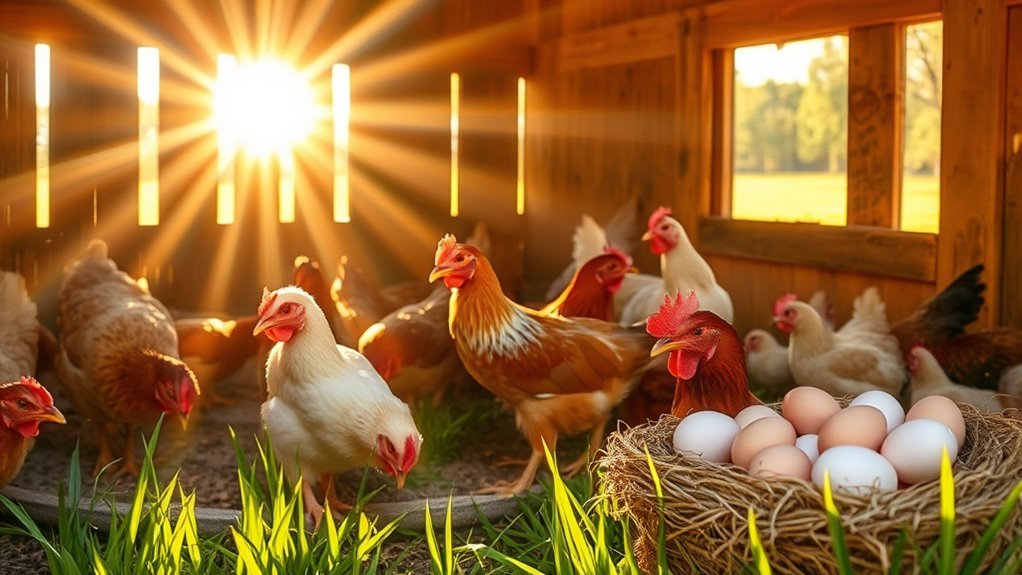
Because hens rely heavily on light to regulate their reproductive cycles, the increasing daylight in spring naturally signals them to start laying eggs again. When daylight extends to 12-14 hours daily, hens’ hormones kick in, resuming egg laying.
You can also use supplemental lighting to extend daylight, encouraging earlier laying.
| Daylight Hours | Lighting Type |
|---|---|
| Less than 12 | Natural winter light |
| 12-14 | Natural spring light |
| 14-16 | Supplemental lighting |
| 16-18 | Extended lighting |
| 18+ | Maximum stimulation |
How to Tell If Your Hens Are Ready to Lay
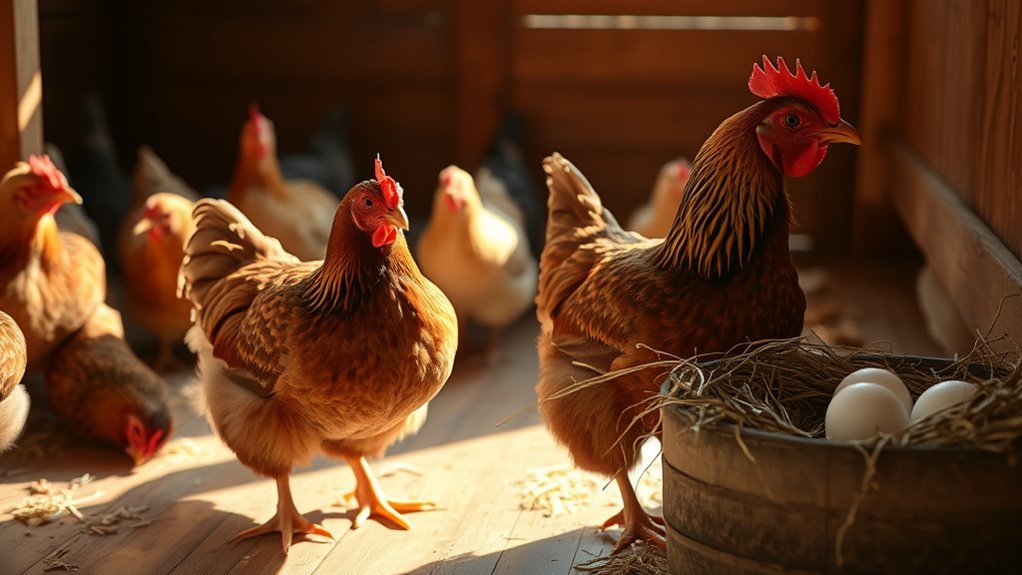
You’ll notice your hens showing clear physical signs when they’re ready to lay, like bright red combs and a fuller body shape. Their behavior changes too—they might squat, make soft calls, or spend more time in nesting boxes.
Paying attention to these cues, along with their environment, helps you know when egg-laying is about to start.
Physical Readiness Signs
When your hens develop fully grown, dark red, and swollen combs and wattles, they’re signaling that they’re physically ready to lay eggs. These changes usually appear between 16 to 20 weeks old, depending on the breed. You’ll also notice hens showing interest in nesting areas—rooting around or quietly sitting in nesting boxes means they’re preparing to lay.
Pay attention to any squatting or “laying poses” when you approach or pet them, another sign of readiness. While these physical cues are strong indicators, the comb and wattles’ size and color remain the most reliable signs. Watching for these physical readiness signs helps you know exactly when your hens will start producing eggs again after winter.
Behavioral Changes Noted
Although physical signs give clear hints, observing your hens’ behavior offers equally important clues that they’re ready to lay. Watch for specific behavior changes like squatting or performing an “egg-laying” dance—these are classic hen’s signs of reproductive readiness.
You might notice increased nesting activity: hens rooting in nesting boxes or quietly sitting in dark corners, signaling they’re preparing to lay eggs. Listen for changes in vocalizations, such as a distinct “bock-bock” call, which often precedes egg-laying.
Additionally, behaviors like raising their tail, tucking the head, or gentle head-bobbing indicate hormonal shifts linked to laying readiness. By recognizing these behavior changes, you can confidently tell when your hens are ready to lay, helping you anticipate the first eggs after winter.
Environmental Influences
Behavioral cues give you valuable hints, but environmental factors play a big role in signaling when your hens are ready to lay. Providing proper nesting boxes filled with straw or bedding around 18-20 weeks encourages natural nesting behavior. When hens begin to show interest in these boxes and sit quietly, it’s a strong sign they’re preparing to lay.
Environmental influences like lighting and comfortable nesting areas trigger hormonal changes, evident as increased redness and swelling of the comb and wattles. You’ll also notice hens squat or perform a “wing dance” when approached, indicating readiness. Consistent rooting or sitting in nesting spots usually comes just before the first eggs appear.
Preparing Nesting Boxes for Post-Winter Laying
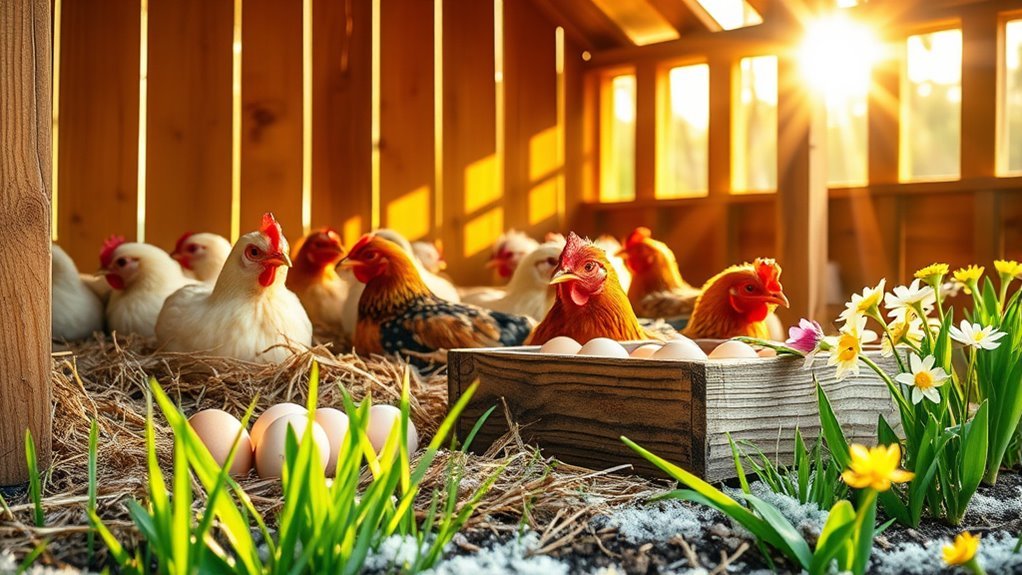
Since hens prefer a comfortable and secure spot to lay their eggs, you should prepare clean nesting boxes with soft bedding like straw or shredded paper. Provide one nesting box for every four hens to minimize competition and stress, making the boxes more inviting.
Position the nesting boxes in a quiet, dark corner of the coop to encourage consistent laying eggs behavior. Keep these areas free from disturbances and maintain their location so your hens develop a reliable routine.
Make sure the nesting boxes are easily accessible, and check them regularly for eggs to reinforce their use. By carefully preparing nesting boxes this way, you create an environment that supports your hens’ post-winter laying, helping them progression smoothly back into their egg production cycle.
Switching Your Hens to Layer Feed After Winter
When your hens start laying again after winter, you’ll want to switch them to a complete layer feed like Purina Oyster Strong System to meet their nutritional needs. Begin shifting gradually over a week from starter or grower feed to avoid digestive upset.
This layer feed provides essential calcium and micronutrients that support strong eggshell formation and overall health as your hens start laying. Keep a consistent feeding schedule and always offer fresh water to encourage ideal intake and egg production.
Remember to limit treats and supplements to less than 10% of their diet to maintain nutritional balance and prevent any disruptions in laying. By carefully changing your hens to the right layer feed after winter, you’ll help ensure a smooth and productive laying season.
Fixing Common Delays in Post-Winter Egg Laying
If your hens aren’t laying after winter, adjusting their lighting to provide at least 16 hours a day can kickstart their reproductive cycle. You’ll also want to improve their diet with plenty of calcium and protein to help them recover from molting.
Finally, reduce stress by ensuring they have enough space and feel safe, which makes a big difference in getting eggs again.
Lighting Adjustments
Although natural daylight fades during winter, you can jumpstart your hens’ egg production by providing 16-18 hours of supplemental lighting daily. Consistent lighting encourages hens to resume laying sooner, so use energy-efficient LED or fluorescent lights with a timer to maintain steady light exposure. Position lights to mimic natural sunrise and sunset patterns, which helps reduce stress and promotes regular laying behavior.
Avoid sudden changes in lighting schedules; instead, adjust gradually to support your hens’ biological readiness. Also, ensure the coop is well-insulated and free from drafts, so your hens respond positively to the increased light and temperature. By managing lighting carefully, you’ll fix common delays in post-winter egg production and get your flock laying consistently again.
Nutritional Improvements
Since hens rely heavily on nutrition to jumpstart their egg production after winter, you’ll want to provide a balanced layer feed rich in calcium and essential micronutrients. This supports their reproductive systems and helps resume laying after delays. Gradually shifting your flock to a complete layer feed around 18 weeks optimizes their readiness for egg production.
Adding calcium sources like oyster shell or crushed eggshells improves eggshell quality and encourages consistent laying during recovery. Supplement their diet with high-protein treats such as insects or mealworms to boost health and energy levels. Don’t forget to confirm fresh water is always available, as proper hydration combined with nutrition prevents stress-related delays.
Health And Stress
When you manage your flock’s health and reduce stress, you can prevent common delays in egg laying after winter. Stress from changes in environment, predator threats, or excessive handling disrupts hens’ hormonal cycles, delaying their return to laying.
Illnesses, parasites, or nutritional deficiencies also suppress egg production, so promptly addressing any signs of illness is vital. Molting during winter naturally halts laying, and hens need proper nutrition and time to recover afterward.
To help your hens bounce back quickly, maintain consistent, balanced nutrition and minimize stressors like sudden temperature or light changes. By focusing on these factors, you’ll support your flock’s health, reduce stress, and get them laying eggs reliably once winter ends.
Frequently Asked Questions
How to Get Chickens to Lay Eggs After Winter?
You can get chickens to lay eggs after winter by providing 14-16 hours of light, offering a balanced diet, reducing stress, keeping their environment clean, and gradually increasing daylight to stimulate their natural laying cycle.
Providing adequate light helps to mimic longer days and encourages hens to resume laying.
A balanced diet rich in protein and calcium supports egg production.
Reducing stress by minimizing noise and predators, along with maintaining a clean coop, keeps chickens healthy and comfortable.
Gradually increasing daylight exposure helps their bodies adjust naturally to the changing season, promoting consistent egg laying.
How Do You Tell When Your Chickens Are Ready to Start Laying Eggs?
You’ll know your hens are ready to lay when their combs turn bright red and swollen, and they start squatting like they’re playing a secret game.
Watch for nesting box curiosity and calm, quiet behavior too.
What Is the 90/10 Rule for Chicken?
The 90/10 rule means you feed your chickens 90% balanced feed and only 10% treats. This keeps their nutrition steady, supports egg production, and prevents issues like obesity or poor shell quality.
Stick to it!
How to Stimulate Hens to Lay Eggs?
Oh sure, just wave a magic wand! Actually, you’ll stimulate hens by giving them 14-16 hours of light, a balanced diet, cozy nesting boxes, and keeping stress low.
They’ll thank you with steady eggs soon enough!
Conclusion
Getting your hens back to laying after winter is like coaxing flowers to bloom in early spring—it takes the right light, care, and patience. By adjusting their daylight exposure, preparing cozy nesting boxes, and switching to layer feed, you’ll see those eggs rolling in again before you know it.
Keep an eye out for delays, and you’ll help your flock shake off winter’s chill and get back to their productive best in no time. Understanding when do chickens start laying eggs after winter is key to managing your flock effectively and ensuring a steady supply of fresh eggs.