

When Does a Chicken Egg Get Fertilized?
A chicken egg gets fertilized inside the hen’s oviduct, usually within 15 minutes after ovulation, when sperm meets the ovum before the shell forms. Fertilization is a critical process in chicken reproduction that occurs shortly after the egg is released.
During mating, a rooster transfers sperm through a brief cloacal contact. Hens can store viable sperm for weeks, allowing them to fertilize multiple eggs from a single mating session.
Eggs laid immediately after mating might not be fertilized, but those laid days later have a higher chance of being fertilized.
If you want to uncover how timing, storage, and fertilization success all play roles, keep exploring.
When Does Fertilization Actually Happen Inside a Hen?
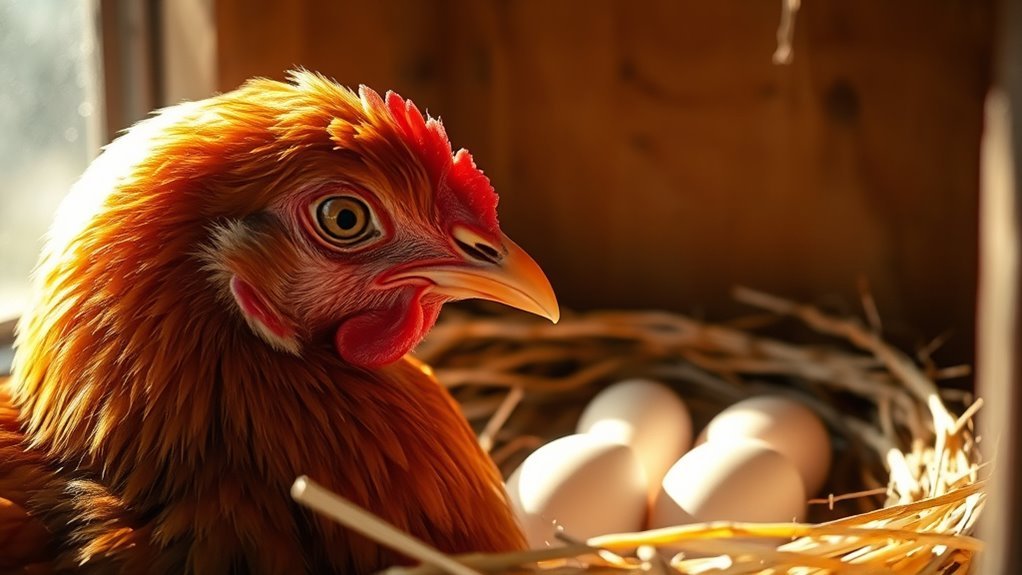
Although you might think fertilization happens outside the hen, it actually takes place inside her oviduct, specifically in the infundibulum. Once the hen ovulates and releases the yolk, fertilization occurs within about 15 minutes. The sperm, which entered the hen’s body during mating, travels through her cloaca to reach the oviduct.
There, it meets and penetrates the ovum before the eggshell forms around it. The sperm can survive inside the hen for up to two weeks, so fertilization can happen for several eggs laid during this time. Understanding that fertilization happens inside the hen’s oviduct helps you appreciate the precise timing and environment required for successful egg fertilization in chickens.
How Do Roosters Transfer Sperm to Hens During Mating?
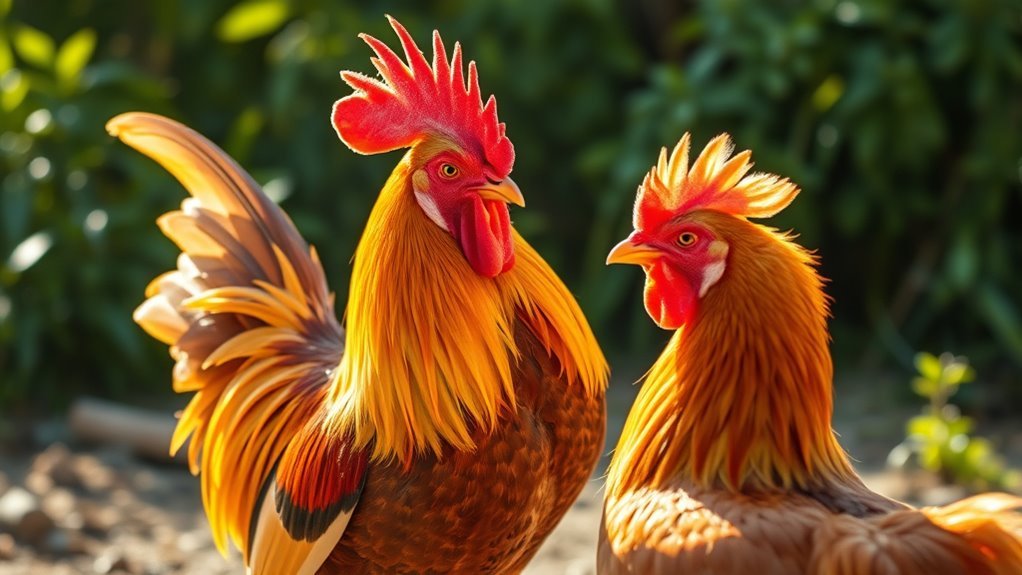
Now that you know fertilization happens inside the hen’s oviduct, it’s important to understand how sperm gets there in the first place. During mating, the rooster and hen briefly press their cloacas together in a process called cloacal contact. This quick “cloacal kiss” allows the rooster to transfer sperm directly into the hen’s reproductive tract.
The entire sperm transfer lasts only a few seconds to a minute, but it’s enough for sperm to move inside. Once inside the reproductive tract, sperm can be stored in specialized glands within the hen, ready to fertilize eggs as they form. This efficient transfer guarantees that fertilization can occur multiple times from just one mating event.
How Long Can Hens Store Sperm to Fertilize Eggs?

Because hens have specialized sperm storage tubules in their oviducts, they can keep sperm viable for up to 3 to 4 weeks after a single mating. This sperm storage allows hens to fertilize eggs over several days without needing to mate again.
During this period, you’ll notice hens can lay eggs that are fertilized with about a 60% success rate. The stored sperm stays ready to fertilize eggs as the hen continues to lay eggs daily.
| Time After Mating | Sperm Viability | Fertilized Egg Rate |
|---|---|---|
| 1 Week | High | ~60% |
| 2 Weeks | Moderate | ~50% |
| 3-4 Weeks | Lower | ~40% |
This ability guarantees continuous production of fertilized eggs from a single mating event.
When Does Egg Formation Occur: And Why It Matters for Fertilization
When the hen’s ovum, or yolk, leaves the ovary and enters the oviduct, egg formation kicks off. The ovum travels into the infundibulum, the first part of the oviduct, where fertilization typically happens within 15 minutes of ovulation. This timing is vital because fertilization must occur before the egg’s shell starts forming further down the oviduct.
If you want a fertilized egg, the sperm needs to meet the ovum quickly in the infundibulum. Since sperm can survive there for up to two weeks, fertilization can happen even if mating occurred earlier.
Understanding when egg formation occurs helps you grasp why fertilization timing matters, ensuring the egg develops properly before the protective shell forms around it.
Why Eggs Laid Right After Mating May Not Be Fertilized
Although mating introduces sperm into the hen’s oviduct, eggs laid immediately afterward often aren’t fertilized because fertilization must occur early in egg formation—typically within 15 minutes of ovulation. The timing is vital since fertilization happens inside the hen’s oviduct shortly after ovulation begins.
Eggs laid right after mating may have started developing before sperm arrival, so they remain unfertilized. Additionally, sperm storage in the oviduct means later eggs are more likely fertilized.
| Timing of Mating | Likelihood Egg is Fertilized |
|---|---|
| Just Before Ovulation | High |
| Immediately After Ovulation | Low |
| Days After Mating (Sperm Stored) | Moderate to High |
Understanding this timing helps explain why not all eggs laid immediately after mating are fertilized.
How Often Do Hens Lay Fertilized Eggs After Mating?
If you want to know how often hens lay fertilized eggs after mating, it’s important to realize that hens can produce fertilized eggs for about two weeks thanks to sperm stored in their oviducts. During this period of fertilization, you can expect most hens to lay fertile eggs regularly.
Hens can lay fertilized eggs regularly for about two weeks after mating due to stored sperm.
Here’s what you should keep in mind:
- Fertilization occurs within the first 15 minutes of egg formation.
- The period of fertilization typically lasts 9 to 14 days post-mating.
- Fertility gradually decreases after the first 10 to 14 days.
- Continuous mating or introducing a new rooster can extend the time hens lay fertile eggs.
What Factors Affect Fertilization Success in Chickens?
Since successful fertilization depends on multiple factors, you need to contemplate both the rooster’s and hen’s health, timing, and environment. The rooster’s fertility plays a vital role—his health and readiness to mate directly impact sperm quality. You also have to consider the hen’s reproductive cycle; mating timed closely to her ovulation vastly improves fertilization chances.
Remember, sperm can be stored in the hen’s oviduct for up to three weeks, so fertilization success isn’t limited to immediate mating. Stress, nutrition, age, and environmental conditions affect both birds, influencing the hen’s reproductive cycle and the rooster’s fertility.
How Fertilization Leads to Embryo Development During Incubation
You’ll find that fertilization happens quickly after mating, with sperm joining the egg inside the hen’s oviduct. Once the egg is laid, incubation at the right temperature triggers the embryo to start developing from the fertilized germinal disc.
Understanding this timing helps you see how proper warmth and care during incubation are vital for growth.
Fertilization Timing Explained
Although fertilization happens quickly after mating—usually within 15 minutes inside the hen’s oviduct—you’ll find that the timing greatly influences embryo development during incubation. Fertilization occurs near the infundibulum shortly after ovulation, kickstarting embryo growth. Here’s what you need to know:
- Sperm can be stored in the hen’s oviduct for 2-3 weeks, fertilizing multiple eggs.
- The egg forms over 24-26 hours, with fertilization early in this process.
- Eggs laid immediately after mating are less likely to be fertilized.
- Proper timing guarantees the embryo develops fully during incubation.
Incubation Triggers Development
When the rooster’s sperm fertilizes the hen’s egg during mating, the egg contains a germinal disc ready to develop into an embryo—but this development only starts once the hen begins incubating the egg.
Incubation provides the warmth, humidity, and turning necessary for the fertilized egg to awaken from dormancy and begin embryo growth. Without proper incubation, the fertilized egg remains inactive, never transforming into a chick.
| Incubation Factor | Role in Embryo Development |
|---|---|
| Temperature | Maintains 99.5°F for growth |
| Humidity | Prevents drying of the egg |
| Turning | Ensures even embryo growth |
| Time | Typically 21 days to hatch |
How to Tell If an Egg Has Been Fertilized Early On
You can often tell if an egg has been fertilized early on by looking for specific signs. Hold the egg up to a light source to spot a “bullseye” or dark spot in the yolk, which indicates fertilization.
As incubation progresses, candling reveals veins and embryo development, confirming the egg’s fertilized status.
Identifying Fertilized Eggs
If you want to identify fertilized eggs early on, you’ll need to look beyond the shell’s surface. Fertilized eggs show distinct features inside, especially when using candling. Here’s what you should check for:
- A small white spot called the germinal disc on the yolk, which appears more defined in fertilized eggs.
- A “bullseye” or ring around the germinal disc indicating fertilization.
- Spider-like veins and a darker area inside the egg, visible during candling, signaling early embryo development.
- Blood spots aren’t signs of fertilization; they result from ruptured blood vessels in the hen’s reproductive tract.
Early Fertilization Signs
Although fertilization happens within the first 15 minutes after mating, you can spot early signs by carefully examining the egg. When you candle fertilized eggs, look for the germinal disc—a small white spot on the yolk.
In fertilized eggs, this disc often appears as a bullseye or ring, indicating early embryo development. With candling or under a microscope, you might also notice tiny veins spreading from the germinal disc, which signal the start of growth.
Busting Common Myths About Chicken Egg Fertilization
Since fertilization doesn’t happen at ovulation but during cloacal contact with a rooster, many common beliefs about chicken egg fertilization are inaccurate. You might think a red or blood spot inside an egg means it’s fertilized, but that’s just a meat spot, not an embryo.
Also, don’t judge fertilized eggs by their shell; you need to check internal signs like a bullseye on the yolk. Even store-bought eggs can sometimes be fertilized if hens had access to roosters.
Here are some myths busted:
- Fertilization occurs minutes after mating, not at ovulation.
- Blood spots don’t indicate fertilization.
- Egg appearance can’t confirm fertilization.
- Fertilized eggs can appear in commercial supplies.
Knowing these facts helps you understand how fertilization truly works.
Frequently Asked Questions
Do Chicken Eggs Get Fertilized Before or After They Are Laid?
Chicken eggs get fertilized before they’re laid. The rooster’s sperm meets the egg inside the hen’s reproductive tract, and fertilization happens early, well before the shell forms and the egg is laid outside the hen.
How Can You Tell if a Chicken Egg Is Fertilized?
Like spotting a tiny miracle, you can tell if a chicken egg’s fertilized by candling it for spider-like veins or a dark embryo, or by breaking it open to see the germinal disc—a hidden sign of life inside.
Are Grocery Store Eggs Fertilized?
Most grocery store eggs aren’t fertilized because roosters usually aren’t kept with hens. You’ll rarely find fertilized eggs there, and even if you did, refrigeration stops embryo growth, so the eggs remain safe to eat.
How Long Will a Chicken Lay Fertile Eggs After Mating?
Think of fertilized eggs as a fleeting bloom—after mating, your hen will lay fertile eggs for about two weeks.
Without fresh visits from the rooster, that window closes, and fertility fades like a sunset’s last glow.
Conclusion
You might think fertilization happens the moment a rooster mates with a hen, but actually, it occurs inside her oviduct before the egg forms its shell. While sperm can linger for days, ready to fertilize multiple eggs, not every egg laid right after mating is fertilized.
Understanding this hidden timing helps you see that what looks simple on the outside is a complex dance inside—a fascinating mystery behind every chicken egg you find. Knowing when a chicken egg gets fertilized reveals the intricate process that ensures life begins well before the eggshell appears.