Where Does an Egg Come From in a Chicken?
When you see an egg, it actually started deep inside the hen’s ovary as a tiny yolk that grows over about 10 days. This is where the egg begins its journey as part of the chicken’s reproductive system. The yolk matures and prepares for the next stage of egg formation.
Once mature, the yolk is released into the oviduct where layers of egg white and protective membranes form around it. These layers provide nutrition and safety for the developing embryo inside the egg.
Next, the shell develops over 20 hours in the shell gland.
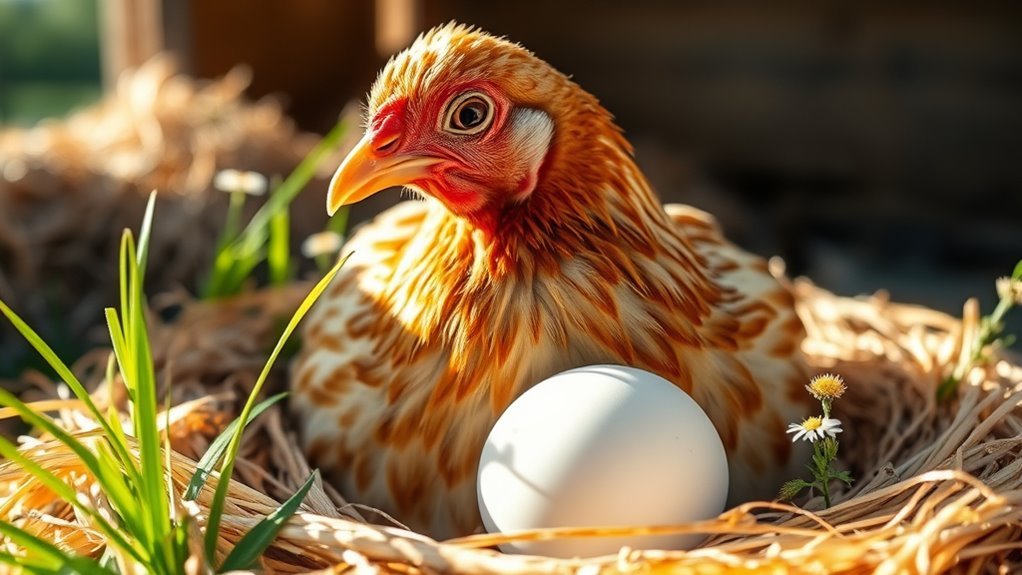
Finally, the hen lays the egg, completing the process. If you keep exploring, you’ll understand how each part of this process shapes the egg you know. This careful development explains why eggs have their unique structure and strength.
How the Ovary Develops and Releases the Egg Yolk
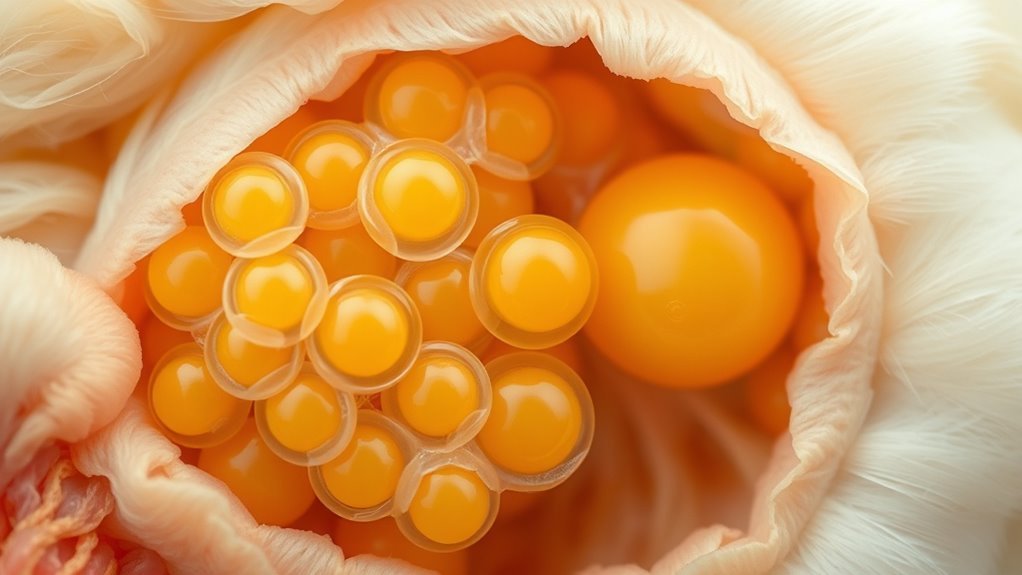
Have you ever wondered how a hen’s ovary prepares the egg yolk? Inside the ovary, thousands of immature yolks sit at various stages of yolk development. Once the hen hits sexual maturity, hormone changes kickstart the growth and maturation of these yolks.
Over about 10 days, each yolk grows until it’s roughly 1 inch in diameter. When it’s fully developed, the hen’s body triggers ovulation, releasing the mature yolk from the ovary. This yolk then begins the next phase of egg formation.
This entire cycle happens continuously, so every time a yolk is ovulated, it sets the stage for a new egg to form. Understanding this process helps you see the ovary’s vital role in egg production.
The Yolk’s Journey Through the Oviduct
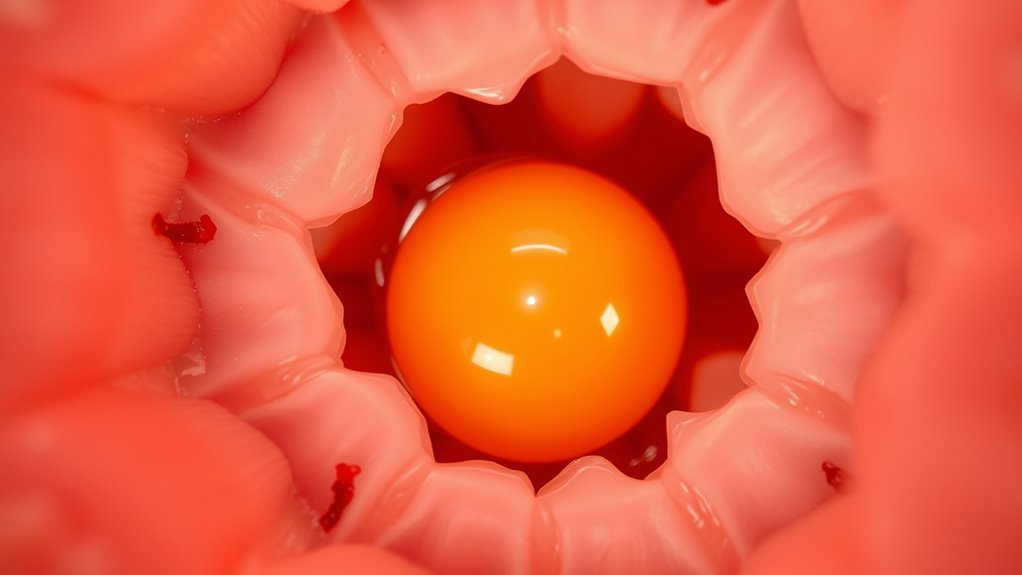
Once the yolk is released from the hen’s ovary, you’ll notice it quickly moves into the oviduct, starting its journey. It spends about 30 minutes traveling to the magnum, where layers of albumen begin to form around it.
You’ll see the yolk remains there for roughly three hours as these protective egg white layers build up.
Yolk Release Timing
How does the yolk begin its journey inside a hen? It all starts with ovulation, when the yolk is released from the hen’s ovary. This release typically happens about every 25 hours, guided by hormonal signals controlling the hen’s reproductive cycle.
Once the yolk leaves the ovary, it drops into the infundibulum, the first part of the oviduct. Here, fertilization can occur if sperm is present. As the yolk enters the infundibulum, it’s enclosed by the vitelline membrane, which forms during release.
The yolk remains in this section for roughly 30 minutes before moving on to the next stage of egg formation. Understanding this precise timing helps you appreciate how the hen’s body coordinates each step in creating an egg.
Albumen Layer Formation
As the yolk moves into the magnum, the hen’s body starts adding layers of albumen, or egg white, around it over the course of about three hours. During albumen layer formation, the hen deposits both thick and thin albumen in distinct layers, with thick albumen close to the yolk and thin albumen forming the outer layers.
This layering cushions and nourishes the developing embryo. The egg white contains proteins like ovalbumin, giving it a gel-like texture and essential nutrients. Meanwhile, the chalazae spin around the yolk, anchoring it securely in the center of the egg.
This carefully timed process completes before the yolk moves to the shell gland, ensuring the yolk is well-protected and supported by the albumen as it continues its journey through the oviduct.
How the Egg White and Membranes Wrap the Yolk
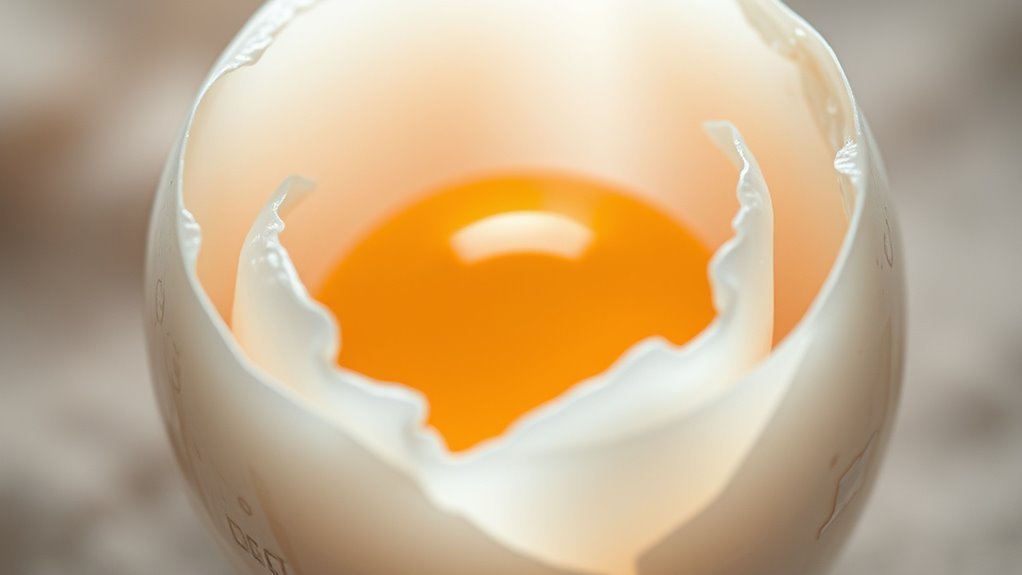
Once the yolk leaves the ovary, you’ll see layers of egg white form around it in the magnum over a few hours. Then, membranes develop in the isthmus to wrap the yolk tightly.
These processes work together to protect and support the yolk before the shell forms.
Albumen Formation Process
While the yolk moves through the hen’s oviduct, layers of albumen start forming around it in the magnum, taking about three hours to build up the egg white. This albumen formation process creates multiple layers that protect and nourish the yolk. Here’s how it happens:
- Thick and thin layers of egg white are spun around the yolk, ensuring a balanced structure.
- These layers act as cushioning to keep the yolk safe during movement.
- Spiral protein bands called chalazae anchor the yolk within the egg white, keeping it centered and stable.
This careful layering and formation of albumen in the oviduct is essential for the egg’s development and quality, creating the familiar egg white you see when cracking an egg.
Membrane Development Stages
Although the yolk gains its protective albumen layers in the magnum, your egg’s security truly strengthens as it moves into the isthmus, where the inner and outer shell membranes form within 1 to 2 hours. These membranes wrap tightly around the developing egg, creating an essential protective coating that shields the yolk and egg white.
The membranes act as a barrier, preventing bacteria from entering and maintaining the egg’s structural integrity. While the egg white provides cushioning and nutrition, the membranes ensure everything stays securely in place.
This formation stage is pivotal, as it reinforces the egg’s defenses before it reaches the shell gland. Understanding the membranes’ role shows how your egg’s layers work together to protect and preserve the yolk and egg white inside.
Yolk Encapsulation Mechanics
As the yolk moves through the magnum, layers of thick and thin albumen wrap around it, creating a secure and nourishing envelope. After ovulation, this process takes about three hours, ensuring the yolk is well protected.
Next, in the isthmus, the inner and outer shell membranes form, further encasing the yolk and albumen. This layering is essential before shell formation begins.
Here’s how it happens:
- The chalazae develop, anchoring the yolk centrally within the albumen.
- Protein layers of albumen are carefully deposited, creating a cushion.
- Membranes form around the albumen and yolk, preparing for the hard shell.
You see, this precise encapsulation safeguards the yolk and sets the stage for a strong, healthy egg shell.
The Process of Eggshell Formation in the Shell Gland
Because the eggshell forms over about 20 hours in the shell gland, also called the uterus, you can appreciate the careful buildup of calcium carbonate crystals that give the shell its strength and structure. The egg first passes the vitelline membrane and outer shell membranes before the shell forms.
Calcium carbonate deposits harden the shell, which may be pigmented depending on the breed. Just before the hen lays the egg, a protective cuticle seals the shell pores.
| Stage | Description |
|---|---|
| Vitelline Membrane | Surrounds the yolk |
| Outer Shell Membranes | Provide initial egg protection |
| Calcium Carbonate | Builds the hard shell structure |
| Pigmentation | Adds color to the shell (if applicable) |
| Cuticle | Seals pores, protects from bacteria |
How the Egg Is Laid and Protected
When the egg moves through the hen’s cloaca, a natural lubricant coats it to guarantee it passes safely without damaging the shell. The egg is oriented pointed end first and gently expelled during oviposition, a process taking about 30 minutes.
As the egg forms in the shell gland, pigmentation is added, but its protection continues after laying.
Here’s how the egg is laid and protected:
- The egg passes through the cloaca, aided by lubricant to prevent shell damage.
- The cuticle (or bloom) is applied, sealing the eggshell’s pores to block bacteria.
- This cuticle preserves freshness and acts as the egg’s first defense outside the hen.
You’ll see how these steps ensure the egg stays safe and intact.
Why Eggshell Color and Coating Matter
You’ve seen how the cuticle protects the egg after it’s laid, but the eggshell’s color and coating play a big role in its defense too. During the last hours of shell formation in the shell gland, pigmentation occurs, depositing pigments like protoporphyrin for brown eggs and biliverdin for blue eggs. This pigmentation affects only the exterior shell color, not the egg’s interior quality.
The cuticle, a natural coating applied as the egg is laid, seals the shell’s pores, preventing bacteria from entering and preserving freshness. While brown egg pigments stay mostly on the outside, blue pigments can seep slightly inside the shell. Together, pigmentation and the cuticle enhance the shell’s strength and protective function, making eggs safer and more resilient.
Frequently Asked Questions
Where Does the Egg Come From in a Chicken?
The egg comes from inside the hen’s body, starting with a yolk released from her ovary. It then travels through her oviduct, where layers form.
Finally, she lays the fully formed egg through her cloaca.
Is a Rooster Necessary for Chickens to Lay Eggs?
You might think a rooster’s needed, but it isn’t. Hens lay eggs without one because egg production depends on hormones, not mating.
Roosters matter only if you want fertilized eggs that hatch into chicks.
How Does an Egg Get Into a Chicken?
An egg doesn’t get into a chicken; it actually forms inside her. You’ll see it develop from yolk to shell within her body before she lays it outside, ready for you to collect.
Is It Okay to Eat Fairy Eggs?
Yes, you can eat fairy eggs since they’re safe, but they’re tiny and usually lack shells or whites.
Most people discard them because they’re not very practical for cooking or eating regularly.
Conclusion
So, you’ve followed the egg’s amazing journey from the ovary, where it all begins, through the oviduct, and finally to the shell gland where its hard shell forms—just in time for it to be laid and protected.
It’s funny how something as simple as an egg carries such a complex story inside you might never notice.
Next time you crack one open, remember: that shell’s color and coating aren’t just random—they’re nature’s perfect finishing touch. Understanding where an egg comes from in a chicken reveals the fascinating process behind every egg we enjoy.