
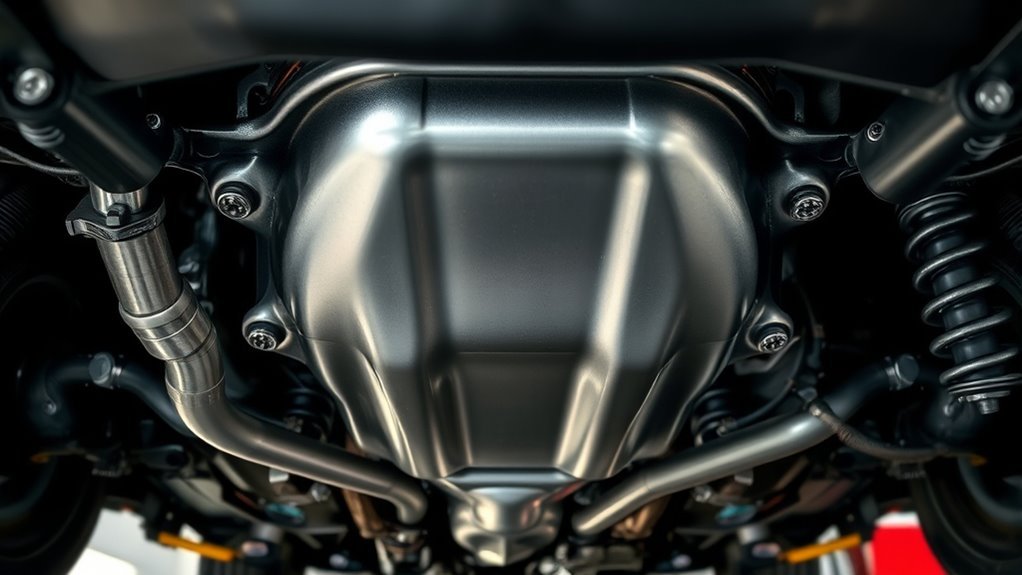
How to Locate the Oil Pan on Your Car
You’ll find the oil pan attached to the bottom of your engine block, usually accessible from underneath your vehicle. The oil pan is a crucial component for engine lubrication and maintenance. Look for a shallow metal pan with a hexagonal drain plug at its lowest point.
Depending on your car’s drive type, the exact position may vary, but it’s almost always beneath the engine. Make sure your engine is cool and use proper support before checking it.
Keep going, and you’ll discover how to inspect and maintain it properly.
Where to Find the Oil Pan on Different Vehicles
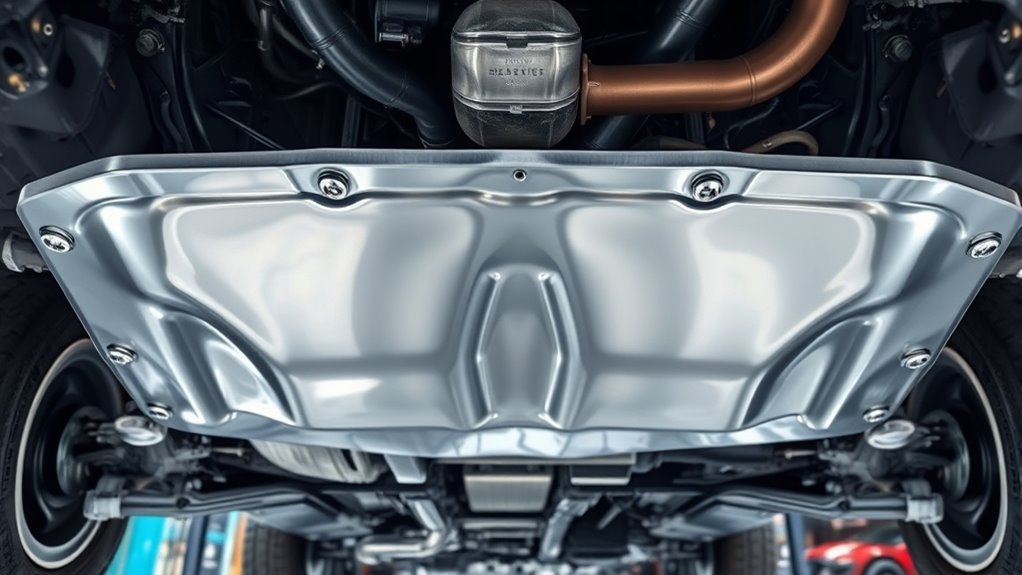
Although the exact location of the oil pan can vary between vehicle makes and models, you’ll typically find it attached directly to the bottom of the engine block. This shallow metal pan holds the engine oil and usually features a drain plug at its lowest point.
Depending on your vehicle’s design—front-wheel or rear-wheel drive—the oil pan’s position might shift slightly, but it remains accessible from underneath. To reach it, you’ll often need to lift the vehicle or use ramps. The drain plug allows you to easily drain old oil during maintenance.
Identifying the Oil Drain Plug and Oil Pan Components
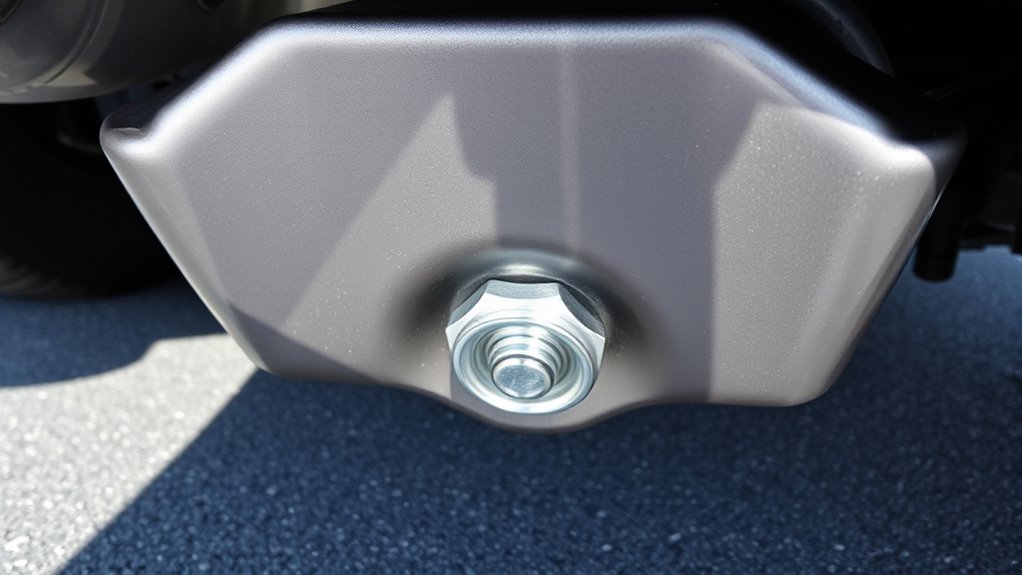
When you look under your vehicle, you’ll usually spot the oil pan by its flat, shallow metal shape attached to the engine’s bottom. The oil pan located there holds the engine oil and has key components you need to recognize for an oil change.
Under your vehicle, the oil pan’s flat metal shape at the engine’s base holds the essential engine oil.
- The oil drain plug is at the lowest point of the oil pan, often a hexagonal bolt you can remove with a wrench to let old engine oil drain out into a drain pan.
- The oil pan itself is a shallow metal reservoir sealed with a gasket, designed to contain the oil.
- Nearby, you’ll also find the oil filter, which works alongside the oil pan to keep the engine oil clean.
Knowing these parts ensures you’re ready for a smooth oil change.
How to Safely Access the Oil Pan
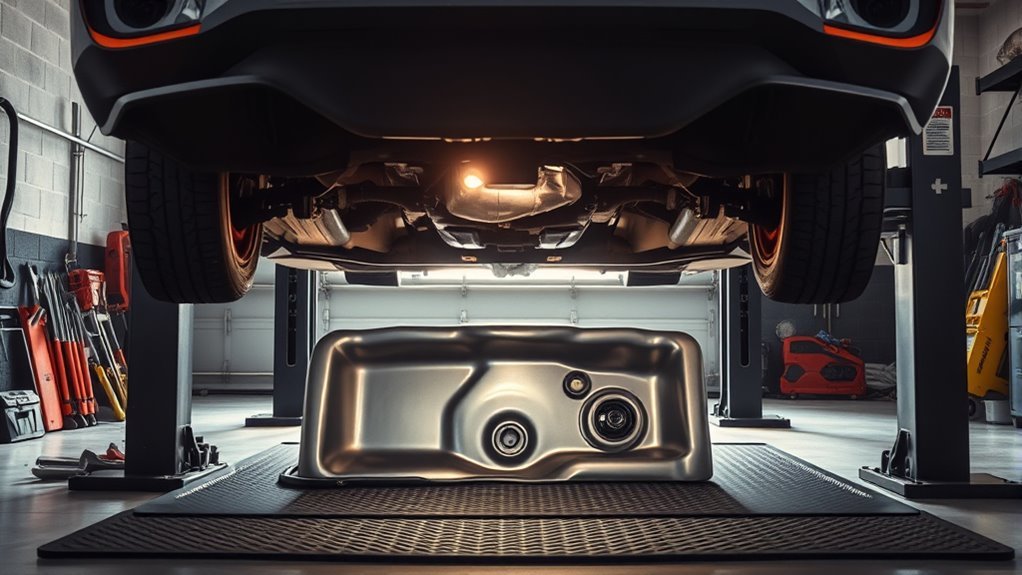
Before you start working under your vehicle, make sure you use a reliable jack and jack stands to lift and securely support it, preventing any accidents while accessing the oil pan. Once the car is safely elevated, verify the engine is cool to avoid burns from hot oil or components.
Locate the oil pan, usually found at the bottom of the engine, and remove any undercarriage shields blocking your access. Position a drain pan beneath the oil drain plug to catch oil when you loosen it.
Use the right tools, like a socket wrench, to carefully remove bolts without damaging the oil pan or surrounding parts. Following these steps helps maintain your safety and protects your car during any oil level checks or basic auto repair.
How to Inspect Your Oil Pan for Problems
Since your oil pan plays a crucial role in holding and sealing your engine oil, you should regularly inspect it for any signs of leaks, damage, or buildup. A thorough inspection helps prevent costly repairs. Here’s how to do it:
- Perform a visual inspection around the oil pan’s perimeter for oil leaks or stains. Check the gasket for cracks or deterioration that could cause leaks.
- Examine the oil pan surface for dents, corrosion, or other damage that might compromise its seal or structure. Don’t forget to inspect the drain plug for looseness or oil seepage.
- Use a flashlight to look inside the oil pan for sludge, debris, or metal shavings, which can indicate internal engine problems.
Regular oil pan inspection keeps your engine running smoothly and helps you catch issues early.
Essential Maintenance Tips to Prevent Oil Pan Damage
Although your oil pan is built to last, taking simple maintenance steps can go a long way in preventing damage and costly repairs. Regularly check the oil pan for oil leaks or visible damage, and maintain the proper oil level to ensure your engine runs smoothly.
Stick to the manufacturer’s recommended oil change schedule to prevent sludge buildup that can corrode the oil pan. When replacing the drain plug, use a torque wrench to avoid over-tightening, which can crack or strip threads. Avoid rough terrain that might physically damage the oil pan or drain plug.
If you notice any seepage or corrosion, visit a repair shop promptly for inspection and repair. These actions are key to effective oil pan damage prevention.
Frequently Asked Questions
Where Is the Oil Pan Located on a Car?
You’ll find the oil pan at the bottom of your engine, attached to the crankcase. Just look underneath your car, and you’ll see a metal reservoir with a drain plug—this is your oil pan.
How to Find an Oil Pan?
Wondering how to find an oil pan? Just look underneath your car for a flat, metal tray attached to the engine’s bottom.
You’ll often see it clearly when your vehicle is raised on ramps or jack stands.
Can You Replace an Oil Pan Without Removing an Engine?
You usually can’t replace the oil pan without removing the engine because of tight spaces.
However, if your car has enough clearance or a removable design, you might manage it without engine removal.
How Much Will It Cost to Replace an Oil Pan?
You’ll likely pay between $300 and $1,200 to replace your oil pan. Labor makes up most costs since removal’s tricky.
Expect extra charges if you need a new gasket or have a complex engine.
Conclusion
Think of your oil pan like the foundation of a house—overlook it, and small cracks can lead to big problems. Just like a friend once ignored a tiny leak, only to face costly repairs later, you don’t want to wait for damage to show.
By knowing where your oil pan is and how to care for it, you’re not just protecting your engine; you’re safeguarding your ride’s future.
Keep it clean, check it often, and drive with confidence. Regularly locating the oil pan on your car and maintaining it helps ensure your engine runs smoothly and extends the life of your vehicle.